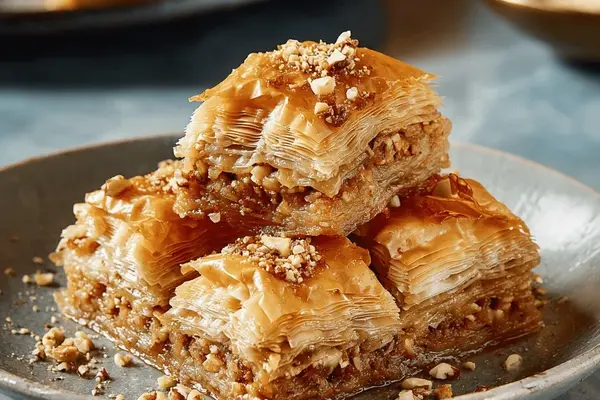
Walnut Baklava with Honey Cinnamon Syrup
By Emma
Certified Culinary Professional
·
Recipe tested & approved
Cut phyllo into squares first. Not after. After it shatters. Forty-five minutes oven time feels long but that’s the whole point—low heat so the nuts toast and phyllo stays crisp instead of burning dark in five minutes like it will if you panic and crank it up.
Why You’ll Love This Walnut Baklava
Crispy edges that actually stay crispy. Most baklava gets soggy sitting in syrup for two days. This one doesn’t—the low bake locks it. Warm honey syrup drizzled straight onto hot pastry, so it soaks just enough but doesn’t drown it. Walnuts and almonds toasted before they even hit the pan, so you get depth and not just sweetness. Cinnamon runs through the whole thing—the syrup, the filling, the layers. It’s not complicated. Takes about an hour and forty minutes total, and most of that is oven time you’re just waiting for. Keeps for ten days if you don’t eat it first. Cold or room temp. Works either way.
What You Need for Homemade Baklava
Syrup comes first. Honey—180 ml, about three quarters cup. Sugar for depth, not just to sweeten. 152 grams, close enough. Water to thin it, 80 ml, less than a third cup. One long strip of lemon zest, peeled with a knife, not a grater. One cinnamon stick. Hydromel if you have it—30 ml, optional, adds this subtle floral thing that nobody can name but tastes better. You could skip it.
For the pastry itself. Walnuts toasted. 95 grams, just under a cup. Pecans work too—earthier, less sweet, but darker. Almonds toasted. 85 grams, half cup. Mix them together and you get complexity. Not just walnut, not just almond. Both. Sugar for the filling, 17 ml—a tablespoon plus a teaspoon, dries out the nut mixture slightly so it doesn’t paste. Ground cinnamon, 1.5 ml. That’s a third of a teaspoon if you’re measuring in spoons instead of weight. Salted butter, 115 grams melted. Half cup if you’re not weighing. That’s a lot of butter. It’s supposed to be. Eight sheets of phyllo, frozen then thawed. Twenty-one point five centimeter squares, or 8 and a half inches. Cut them down before you start.
How to Make Walnut Baklava
Start the syrup first because it needs to cool a bit before it hits the hot baklava. Small saucepan, honey and sugar and water all in. Medium-high heat. Stir constantly. Don’t stop stirring. Sugar has to dissolve completely or you get grit in the syrup later and that’s the whole disaster. Around two minutes it starts looking like syrup instead of slurry. Add the lemon zest strip and cinnamon stick. Let it bubble gently—not aggressive, just lazy. Six to seven minutes it thickens, gets glossy. You’ll see the sheen actually change. Pull it off heat. Let it sit while you do everything else. It needs to be warm but not scalding or it’ll blow through the phyllo and soak it into mush. After maybe ten minutes, pull out the lemon peel and cinnamon stick. Throw them out. Stir in the hydromel if you’re using it.
Preheat to 145 Celsius. That’s 295 Fahrenheit. Low. This is intentional. Phyllo burns stupid fast and you want the nut layers to actually toast, not just char the outside. Middle rack. Air moves better there.
Butter your baking pan. Square, 20 by 20 centimeters, eight inches. Use a lot of butter. Don’t skimp. It prevents sticking and tastes good. Pulse the walnuts and almonds in a food processor. Not powder. Coarse. You want some texture, actual pieces you can feel in your mouth. Dump into a bowl and stir in the sugar and cinnamon. Looks grainy and vibrant at this point.
Layer one phyllo sheet in the pan. Brush it all over with melted butter. Do this three more times. Four sheets total, all buttered. Spread one third of the nut mixture over that. Press gently. Not hard. Just so it stays put. Layer four more phyllo sheets, each buttered. Then another third of nut mixture. Last four phyllo sheets, all brushed. Then the final third of nuts on top. Sixteen sheets total, three nut layers sandwiched in. Use a sharp knife and cut into sixteen squares before baking. Cut after and the whole thing fragments. The syrup hasn’t set the layers yet. It won’t hold.
Into the oven for 65 minutes. The top goes gold, edges get crisp, you smell the nuts toasting. Really filling the kitchen. Around minute fifty-five, watch it. Color changes from pale gold to rich amber real fast at the end. You want amber. Not burnt. Burnt tastes like regret.
Pull it out. Immediately—like right then—drizzle the warm syrup all over it evenly. It should sizzle a little when it hits the hot phyllo. If your syrup cooled down too much, warm it briefly first. Cold syrup just sits on top instead of soaking in. Let it rest uncovered on the counter for at least six hours. Overnight is better. The syrup thickens inside, phyllo stays crisp on the outside where it’s exposed, chewy where it soaked. Don’t put it in the fridge. Humidity kills the crunch.
How to Get Walnut Baklava Crispy and Perfect
The low heat is everything. 145 Celsius sounds slow. It is. But phyllo at 175 goes from nothing to black in five minutes. Slow roast means the nuts actually develop flavor instead of just charring the outside. The oven temp matters more than you think here.
Cut before baking. This is non-negotiable. After the syrup sets in, the layers bond. You can’t cut through without messing up the whole structure. Sharp serrated knife. Wiggle it as little as possible. Straight down through. Sixteen squares. Four by four grid. Done.
Syrup temperature when you pour it. Hot baklava, warm syrup. They meet and the syrup soaks in. Cold syrup just pools on top and the layers underneath stay dry. Check the syrup temp with your hand—can touch it for a second but not hold it. That’s right.
The rest time is where the magic happens. Six hours minimum, but overnight the syrup absorbs completely. The phyllo on the inside where it’s covered gets chewy from the syrup. The edges stay crisp because they’re exposed to air. By day two it’s perfect. By day ten it’s still fine if you keep it in an airtight container on the counter. Don’t refrigerate. Cold and humidity are what wreck it.
Leftover gets stale? Flash it in a toaster oven for maybe two minutes. Brings the crispness back. Not hot, just refreshed. Reheats and tastes like new.
Walnut Baklava with Honey Cinnamon Syrup
Prep:
35 min
Cook:
1h 5min
Total:
1h 40min
Servings:
16 servings
Ingredients
- Honey Hydromel Syrup
- 180 ml honey (3/4 cup)
- 152 g sugar (about 3/4 cup minus 1 tbsp)
- 80 ml water (a little less than 1/3 cup)
- 1 long lemon zest strip, peeled with a knife or fine vegetable peeler
- 1 cinnamon stick
- 30 ml hydromel (2 tablespoons, optional)
- Baklava
- 95 g walnuts, toasted (just under 1 cup; replace pecans for earthier bite)
- 85 g almonds, toasted (1/2 cup)
- 17 ml sugar (1 tablespoon plus 1 teaspoon for deeper sweetness)
- 1.5 ml ground cinnamon (about 1/3 teaspoon)
- 115 g salted butter, melted (1/2 cup)
- 8 sheets frozen phyllo, thawed, trimmed or cut into 21.5 cm squares (8 1/2 inches)
Method
- Honey Hydromel Syrup
- 1 Start with small saucepan. Honey, sugar, water into it. Turn heat medium-high. Stir constantly. Watch carefully. Sugar must dissolve fully; crystal grit ruins smooth syrup.
- 2 Add lemon zest strip, cinnamon stick. Let everything boil gently, bubbling up like a lazy creek. Around 6-7 minutes, syrup thickens slightly, glossy sheen visible. Remove from heat. Allow to cool enough so syrup still warm but not scalding.
- 3 Take out lemon peel and cinnamon stick. Compost or discard. Stir in hydromel, if using. It adds a subtle floral tang, but not mandatory.
- Baklava Assembly
- 4 Preheat oven to about 145°C (295°F)—lower than usual. Slow roast phyllo without burning edges. Rack set mid-level, air circulates better there.
- 5 Butter a square baking pan, 20x20 cm (8-inch). Use plenty of butter to avoid sticking, and flavor boost.
- 6 Pulse toasted walnuts and almonds coarsely in food processor. Not too fine; want texture and crunch. Transfer to bowl, stir in sugar and cinnamon. Mix vibrant, slightly grainy nut sugar blend.
- 7 Line pan with one phyllo layer, spread evenly, edges overlapping if needed. Brush generously with melted butter. Repeat layering three more times, each brushed with butter.
- 8 Spread one third of nut mixture evenly over this phyllo stack, firm gentle press but no smashing.
- 9 Repeat layering: 4 buttered phyllo sheets, then nut mix again. Final topping: last third nut mix followed by 4 phyllo sheets, all butter brushed. Total 16 sheets and 3 nut layers sandwiched in.
- 10 Using sharp knife, cut carefully into 16 squares before baking. Cutting after baking breaks layers and messes syrup absorption.
- 11 Pop into oven, bake about 65 minutes. Surface turns golden brown, edges crisp, nut layers toasted scent fills kitchen. Watch coloring closely last 10 minutes, brown but not burnt.
- 12 Once out, immediately drizzle warm syrup evenly over hot baklava. Syrup should soak and sizzle slightly. If syrup cools, won’t penetrate nicely.
- 13 Let rest uncovered at room temp minimum 6 hours; overnight better. Syrup thickens inside, phyllo remains crisp on edges, chewy where soaked. Don't refrigerate—humidity kills crunch.
- 14 Store leftover in airtight container on counter up to 10 days. If too sticky next day, brief flash in toaster oven refreshes layers.
- Tips and Substitutions
- 15 Pecans swapped out for walnuts - nuttier, less sweet, earthier. Almonds add crunch; try pistachios for color pop.
- 16 If no hydromel, add splash of orange blossom water or rose water for aroma.
- 17 Use unsalted butter plus pinch of salt if preferred. Salted butter gives slight briny contrast.
- 18 Phyllo sheets dry quickly; keep covered with damp towel while working to avoid tearing.
- 19 Cut cleanly with sharp serrated knife, wiggle no more than needed.
- 20 Don’t skip syrup resting time; flavor and texture evolve during soak.
- 21 Overbaking phyllo produces brittle, burned edges; note color shifts from pale gold to rich amber.
Nutritional information
Calories
330
Protein
5g
Carbs
24g
Fat
24g
Frequently Asked Questions About Homemade Baklava
Can I use pistachios instead of walnuts? Yeah. Pistachios work great. Different flavor—brighter, a bit more delicate. You could do straight pistachio and walnut baklava or pistachio and almond. The whole point is you’re building layers of flavor, so mix whatever nuts you like. Just toast them first so they actually taste like something.
What if I don’t have hydromel? Don’t worry about it. It’s optional. Orange blossom water or rose water does the same thing—adds floral notes. Splash of each, maybe half a teaspoon. Or just skip it entirely. Syrup is still good. Honey is doing most of the work anyway.
How long does it actually keep? Ten days in an airtight container on the counter. After that it starts getting too sticky. Refrigerator ruins it—the humidity softens the phyllo. Counter only. By day three the syrup’s fully absorbed and it’s the best texture. Days four through ten it’s still good. Day eleven it’s fine, just not as crisp.
Why cut before baking and not after? Because after baking the syrup hasn’t fully set into the layers yet. You slice through and the whole thing fragments. Before baking the phyllo is still flexible enough to cut clean. After it cools and the syrup thickens, the layers are bonded. Sharp knife goes through clean. After? Disaster.
Can I make this with unsalted butter? Sure. Add a tiny pinch of salt to the nut mixture then. Salted butter gives this slight briny contrast that works, but unsalted is fine. Just remember you’re losing that salt component so the filling tastes a bit flatter without it. Small pinch fixes that.
What temperature for the oven actually makes a difference? All of it. 145 Celsius takes 65 minutes and the nuts toast while the phyllo stays crisp. You go up to 160 and it’s darker in 50 minutes but the edges are already starting to burn. You go to 175 and phyllo blackens in five minutes before the nuts even warm through. The low temp is doing all the work. Don’t skip it.
You’ll Love These Too
Explore all →
Strawberry Short Cake Recipe Fresh Berries
Buttermilk Pie Recipe with Eggs & Vanilla
Eggplant S with Crispy Tofu & Green Beans
Homemade Peanut Brittle with Butter & Vanilla
Chocolate Chip Cookies with Almond Meal
Crispy Potato Lace with Thyme & Rosemary
Apple Tart with Pecans and Dried Apricots
No-Bake Pumpkin Brownies with Chocolate
Crunchy Peanut Bars with Corn Flakes
Lemon Sundae Tart with Vanilla Ice Cream
Pasta Jar Mix with Sun-Dried Tomatoes
Baked Cabbage and Bacon with Cheddar
Air Fryer Quiche with Bacon and Kale
Beef Stew with Onion Soup Mix
Oatmeal Peanut Butter Balls Recipe
Copycat PF Changs Lettuce Wraps Recipe
Lemon Yogurt Loaf with Spelt Flour & Honey

Cookie Monster Cupcakes with Buttermilk
Quick Veggie Ramen with Shiitake Mushrooms