Vietnamese Spring Rolls with Pork
By Emma
Certified Culinary Professional
·
Recipe tested & approved
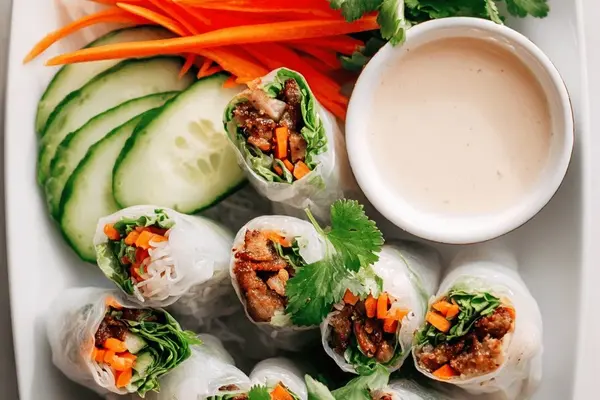
Vietnamese spring rolls filled with seasoned ground pork, vermicelli, pickled carrots, cucumber, and fresh cilantro. Wrapped in rice paper with hoisin mayo dip for a fresh, crunchy meal.
Prep:
35 min
Cook:
10 min
Total:
45 min
Servings:
2 servings
Dunk the rice paper fast. Like 4 seconds fast. Any longer and it tears when you roll, too short and it cracks like old plastic. That part matters more than people think.
Why You’ll Love These Vietnamese Spring Rolls
Takes 45 minutes total — 35 prepping, 10 cooking the pork. Most of that’s just sitting around waiting, so it’s actually fast.
Fresh. Cold. Tastes bright because of the pickled carrots and that sharp vinegar cutting through the pork and mayo. Not heavy at all.
Appetizer that works cold, travels fine, doesn’t need reheating. Roll them ahead, wrap them up, they’re good for four hours in the fridge. Grab one on your way somewhere.
You can customize every single layer — swap the pork for shrimp if you want, add more cilantro, skip the mayo entirely, use peanut sauce instead. Works either way.
Rice paper rolls have this texture thing going on. The paper gets soft but still holds itself together. Crispy noodles inside. Cold pork. It’s all different feels in one bite.
What You Need for Vietnamese Rice Paper Rolls
Ground pork — 225 grams, lean. Turkey works if you’re skipping fat. Scallions sliced thin. Olive oil and sesame oil together make the cooking base. Tamari or soy sauce for salt and depth. Chili garlic sauce — sambal oelek or sriracha, doesn’t matter which. Just a teaspoon. Five-spice powder barely — like an eighth teaspoon, or it overpowers everything.
Rice paper sheets for the wrappers. The actual kind, not thin crepes. Eight of them if you’re making four rolls. Lebanese cucumber julienned thin. Cooked rice vermicelli noodles — the kind that’s already cooked or you cook fresh and chill it. Fresh cilantro. That matters. Don’t skip it.
Pickled carrots you make while the pork cooks — just julienned carrots, vinegar, water, salt, sugar, one garlic clove smashed. Hoisin mayonnaise for dipping or serving. Three parts mayo to one part hoisin, lime juice, minced garlic. That’s it.
How to Make Vietnamese Spring Rolls
Heat the oils together until they shimmer. Drop the pork in loose — don’t break it into tiny bits, let it sit for a minute, get brown and chunky in some places. Stir once, maybe twice. You want crust, not just cooked ground meat.
Scallions go in halfway through. When the pork looks opaque and a little dry around the edges, add soy sauce, chili sauce, five-spice. Stir once, fast, then pull it off heat immediately. Taste it. Too sharp? Add a pinch of sugar. Not spicy enough? More chili sauce. It should taste strong — the cold noodles and cucumber dilute it.
Throw it in a bowl, cover it, refrigerate for at least 25 minutes. The cold makes it easier to roll and the flavors actually bond better sitting in the cold. This part is why people mess up — they try to roll hot pork and it falls apart.
While that’s chilling, julienne carrots finely. Same vinegar and water, equal parts, pinch of salt, dash of sugar, one garlic clove crushed. Let it sit 15 minutes minimum. The vinegar gets sharp and cuts through the richness of the pork and mayo perfectly. That’s the balance.
How to Get Rice Paper Rolls Perfectly Tender and Taut
Warm water, not hot. A large shallow dish works. Dunk one rice paper sheet for four to six seconds — watch the edges, they go translucent when they’re almost there. Pull it out immediately to a flat surface. Damp tea towel, cutting board, doesn’t matter.
This is where most people fail. Too long and it tears. Too short and when you try to fold it, it cracks. The edges should look almost transparent but still have tension. You learn it by feel. The paper should snap a little when you first fold it, then soften as you work.
Lay it flat. Spoon vermicelli onto the center third — about three tablespoons. Layer three tablespoons chilled pork over that. Pickled carrots, cucumber strips, cilantro on top.
Fold the short sides over the filling first. Tuck them tight. Then roll from one long end toward you, keeping everything snug, no gaps. Don’t rip it, but don’t roll it loose either. It shrinks as it sits so start tight.
Serve immediately if you want the rice paper soft, or wrap them individually in plastic and refrigerate up to four hours. If you store them, let them come close to room temperature before eating — the rice paper firms up cold and gets chewy instead of tender. Hoisin mayo on the side.
Vietnamese Spring Roll Tips and Fixes
The pork needs to be cold when you roll. Warm pork falls apart, gets mushy, releases juice that soaks the rice paper. Chill it. Don’t skip it.
Rice paper thickness varies. Thinner brands rip easier. Thicker ones need longer dunking. Watch the first one you do — feel how it behaves, adjust the next one.
The pickled carrots aren’t optional. They’re sharp, they’re crunchy, they cut the pork’s salt and heaviness. Same with the cilantro. Both are why this tastes right.
You can use collard leaves instead of rice paper for a gluten-free version. Works fine. Tougher to roll but possible. Blanch them first to soften.
Noodles should be cooked and cooled already. Cold noodles, cold pork, cold everything. The temperature matters. Room-temperature rolls taste flat.
The hoisin mayo gets thick if you don’t add enough lime juice or mayo. Too thick and it doesn’t coat your roll. Too thin and it runs off. You want it spreadable, not pourable, not paste.
Fish sauce dip works instead of mayo. Nuoc cham. That’s the traditional way. Or peanut sauce. All three work. Just not all three at once.
Vietnamese Spring Rolls with Pork
Prep:
35 min
Cook:
10 min
Total:
45 min
Servings:
2 servings
Ingredients
- Vietnamese Pork
- 225 g (7.9 oz) lean ground pork (try ground turkey if low fat preferred)
- 2 scallions sliced thin
- 15 ml (1 tbsp) olive oil
- 7 ml (1.5 tsp) toasted sesame oil - reduced slightly from usual; avoids bitterness
- 12 ml (4 tsp) tamari or soy sauce - slight reduction keeps salt balanced
- 5 ml (1 tsp) chili garlic sauce (use sambal oelek or sriracha as substitute)
- 0.5 ml (⅛ tsp) Chinese five-spice powder - less to avoid overpowering pork
- Garnish and Roll
- 8 rice paper sheets ~20 cm diameter (substitute with collard leaves for gluten-free alternative)
- 200 ml (⅘ cup) cooked rice vermicelli noodles
- 1 batch pickled carrots (see instructions)
- 1 Lebanese cucumber julienned
- 25 ml (1 ⅔ tbsp) fresh cilantro leaves
- 1 batch hoisin mayonnaise (see instructions) or plain mayo with hoisin and garlic mixed in
Method
- Prepare Pork
- 1 Heat olive oil and sesame oil in a nonstick skillet until shimmering. Add pork in loose chunks; brown on medium-high heat without stirring too often — want irregular, chunky browning and slight crispiness in places. Toss in scallions halfway through. When a golden crust forms and pork turns opaque with juices evaporating, splash in soy sauce, chili garlic sauce, and sprinkle five-spice powder. Stir quickly to coat. Remove from heat before drying out. Taste and adjust seasoning – add a bit more chili sauce if you want heat, or a pinch of sugar if too sharp. Transfer to a bowl, cover, refrigerate minimum 25 minutes. Cold pork makes rolling easier, plus flavors meld better. Don’t skip chilling.
- Pickle Carrots
- 2 Julienne carrots finely. Toss with equal parts white vinegar and water, pinch salt, dash sugar, and crushed garlic clove. Let sit minimum 15 minutes while pork chills. The sharp tang cuts pork’s richness tightly.
- Soften Rice Paper
- 3 Use a large shallow dish with warm (not hot!) water. Quickly dunk one rice paper for 4 to 6 seconds — watch edges, they start transparent and soft but not floppy. Remove immediately to a flat surface (cutting board or damp tea towel). Repeat with each sheet. Too long and it tears; too short and it’s brittle and cracks. Learning the clap of the paper as it folds tells you it’s right — supple but taut.
- Assemble Rolls
- 4 Lay rice paper flat. Spoon 45 ml (3 tbsp) vermicelli onto center thirds. Layer 45 ml (3 tbsp) chilled pork over noodles, add pickled carrots and cucumber julienne, sprinkle cilantro leaves last. Fold short sides over filling first; then roll tightly from one long end to the other; keep tension so filling stays snug, no gaps. Rolls shrink slightly as they sit, so roll nicely tight but don’t rip.
- Serve
- 5 Serve immediately for best texture or wrap individually in plastic wrap, refrigerate up to 4 hours. Hoisin mayo complements. Can swap mayo dip for nuoc cham (fish sauce dip) or peanut sauce for variation. Rolls hold well chilled but rice paper firms up so come close to room temp before eating if stored.
- Hoisin Mayonnaise
- 6 Mix 3 parts mayo to 1 part hoisin, a dash of lime juice, and minced garlic. Adjust sweetness by adding a touch of honey or brown sugar if needed. Keeps creamy but pungent. Experiment with adding a little chili for heat.
Nutritional information
Calories
340
Protein
20g
Carbs
28g
Fat
18g
Frequently Asked Questions About Vietnamese Rice Paper Rolls
Can I make these ahead? Yes. Up to four hours in the fridge, wrapped individually in plastic wrap. The rice paper firms up when cold so take them out maybe 10 minutes before eating. Otherwise they’re chewy instead of supple.
What if my rice paper keeps tearing? You’re either dunking too long or not long enough. Four to six seconds. Watch the edges go translucent. That’s your signal. Also make sure the water’s warm, not hot. And lay them flat immediately on a damp cloth or cutting board — don’t let them sit bunched up or they’ll tear when you unfold them.
Can I swap the pork? Ground turkey, ground chicken, shrimp — all work. Keep pork cold though, whatever you use. Cold rolling is the whole point. Fish makes it different. Different is fine.
What’s the rice vermicelli for? Texture. Crispy, almost, when it’s cooled. Contrast to the soft pork and tender rice paper. You could skip it but it changes the whole roll.
Do I have to make the pickled carrots? Technically no. But they’re the thing that makes this taste balanced. The sharp vinegar cuts the pork’s richness. Without it, it tastes one-note and heavy. Make them.
Can I use regular mayo instead of hoisin mayo? Yes. Just mix in hoisin and lime juice so it’s not boring. Hoisin mayo takes five minutes. Regular mayo is too bland on its own with this filling.
How long does the pork keep after cooking? Three days in the fridge. Cold. Don’t leave it out. You’re keeping it cold anyway so just leave it in the container. Use it for other stuff too — rice bowls, lettuce wraps, whatever.
What if the filling leaks out when I roll? Too much filling, probably. Three tablespoons pork, three tablespoons noodles. That’s the ratio. Or the rice paper wasn’t supple enough — it needs to be soft enough to move with the filling, not brittle.
Are these gluten-free? If you use tamari instead of soy sauce and collard leaves instead of rice paper, yes. Rice paper is usually gluten-free already but check the box. Hoisin might have gluten. Use gluten-free hoisin or skip it.
Can I fry these instead? You mean like fried spring rolls. That’s a different thing — fried. These are summer rolls. You can fry them if you want but they’re better cold and soft. The whole appeal is the tender rice paper. Frying changes it completely.
You’ll Love These Too
Explore all →
Baking Leeks with Roast Veal & Mustard
Pickled Eggs with Chipotle & Horseradish
Cucumber Appetizers with Cream Cheese

Vegan Banana Oat Biscuits with Chocolate
Beet Risotto with Arborio Rice & Ricotta

Pumpkin Chocolate Brownies with Spice
Chicken Salad with Avocado and Basil Pesto
Bread Pudding with Banana, Mandarin & Pecans

Iced Coffee Dessert with Vanilla Ice Cream
How to Make Rennet Mozzarella at Home
Cajun Chicken Alfredo with Fettuccine
Olive Oil for Dipping Bread Recipe
Pheasant Roast with Pears and Spices

Crepes Recipe with Oat Milk and Honey
Ground Beef Chili Recipe with Beans
Roasted Creamy Tomato Soup Recipe
Fermented Kimchi with Napa Cabbage
Avocado Chocolate Mousse with Tuna Tartare

Sweet Potato Casserole with Marshmallows