Vasilopita: Traditional Greek Cake Recipe
By Emma
Certified Culinary Professional
·
Recipe tested & approved
Cardamom instead of nutmeg. Orange zest folded in. A coin wrapped in foil baked somewhere in the middle. This is vasilopita—the Greek New Year cake that’s been marking January 1st in Greek homes for generations, and it’s nowhere near as fussy as it sounds.
Why You’ll Love This Greek New Year Cake
Takes 1 hour 35 minutes total. Forty minutes of prep, fifty-five minutes in the oven, done.
The citrus hits different than vanilla cake. Not overpowering. Just there, waking everything up with orange zest and fresh juice that gives the crumb moisture without heaviness.
Cardamom. That warm, almost floral spice that makes you pause mid-bite because you can’t quite name what you’re tasting. Better than the standard nutmeg move.
Buttermilk keeps it tender. Not dense. Not heavy. The kind of crumb that stays soft for days even though you made it fresh.
There’s a coin in there somewhere. Tradition says whoever finds it gets luck for the year. Honestly? It’s just an excuse to tell people to slow down and actually taste what’s in front of them.
What You Need for Traditional Vasilopita
Flour—280 grams, unbleached, all-purpose. Nothing fancy. The regular stuff works.
Baking soda and ground cardamom. Half a teaspoon each. That’s where the structure and flavor live.
Buttermilk. Three-quarters cup plus a tablespoon. Not milk. Buttermilk. The acidity matters—it tenderizes the crumb and balances the sweetness.
Two oranges. Zest them finely first. Then squeeze out the juice—you need about 25 milliliters. Fresh. Not bottled.
Butter and sugar. Seven tablespoons of unsalted butter, softened. A cup and a third of granulated sugar. Creaming these together is non-negotiable—that’s where the texture comes from.
Two large eggs. Add them one at a time. Room temperature works best but don’t panic if they’re not.
A small ceramic trinket or coin wrapped in foil. Optional, but that’s kind of the point of a vasilopita cake. The tradition. The luck.
Powdered sugar for dusting at the end.
How to Make Greek Vasilopita Cake
Oven to 350 degrees Fahrenheit. Middle rack. Now.
Butter an 8-inch springform pan. Line the bottom with parchment paper. This step saves you heartbreak later when you’re trying to unmold a warm cake and it sticks to the pan.
In one bowl, whisk together the flour, baking soda, and cardamom. That cardamom is doing heavy lifting—it’s warmer than nutmeg, slightly floral, almost creamy. Trust it.
Separate bowl: buttermilk, orange zest, and fresh orange juice. Just mix them together. The acidity in the buttermilk plus the juice is what keeps this cake tender. Skip either one and you’ll feel the difference.
Beat the softened butter with sugar. Use an electric mixer if you have one. Cream until it’s pale and light, almost fluffy. This takes maybe 3 to 4 minutes. You’re folding air into the batter—that air becomes part of the structure.
Add the eggs one at a time. Mix until each one is incorporated. Don’t overbeat. Once both are in, stop.
Now the careful part. Dry ingredients alternating with the buttermilk mixture. Start with dry. Fold gently. Add half the buttermilk mix. Fold again. Rest of the dry. Last of the buttermilk. Fold until you can’t see the white streaks. The batter should feel thick and creamy but still pourable—scoopable.
Pour it into the prepared pan. Smooth the top with a spatula.
How to Bake Vasilopita and Get the Crumb Right
The trinket goes in now. Gently press it into the batter somewhere near the center—not so deep it disappears, not so shallow someone bites it on their first fork. It’s a game. That’s the point.
Bake 52 to 57 minutes. Every oven runs different. Watch for the top to develop a golden dome with cracks spreading across it. The smell gets rich and warm—citrus and cardamom filling the kitchen. That’s when you start checking.
Stick a toothpick into the center. Pull it out. A few crumbs clinging to it? Perfect. Wet batter? Needs more time. Do this at 52 minutes, then every 2 minutes after if you’re unsure.
The top should look set. Not pale. Actually golden.
Pull it out. Let it cool on a wire rack completely. This is the hardest part because the cake is warm and smells incredible and you want to eat it now. Don’t unmold it warm. The crumb is still setting. You’ll crack it. Cool it fully—takes about 2.5 to 3 hours.
Once it’s completely cold, run a knife around the edges of the pan. Pop the springform open. Lift the cake out. If it sticks at all, run a thin knife under the parchment and it’ll slide free.
Traditional Vasilopita Tips and Common Mistakes
Dense crumb means the batter went in too wet. Next time, hold back a splash of buttermilk. Or add another tablespoon of flour. Adjust quietly, don’t announce it.
Burnt edges? Your oven runs hot. Lower the rack next time or tent the top with foil halfway through baking. Some ovens are louder than others.
Overmixing at the end breaks down the air bubbles. Mix dry and wet until combined. Feel the texture—creamy, scoopable. Stop there.
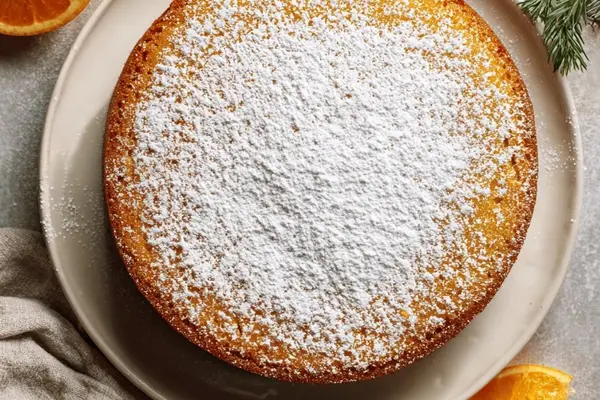
Powdered sugar dusting at the end makes it look finished. Sift it on plain or use a star-shaped stencil for something fancier. Lift the stencil straight up so the edges stay clean.
Store it covered at room temperature. Stays good for 5 days. The crumb firms up after the first day but stays moist because of the buttermilk and orange juice. Actually tastes better on day two or three.
No buttermilk in the house? Milk plus a tablespoon of vinegar or lemon juice. Let it sit for 5 minutes—it’ll curdle slightly and work fine.
No electric mixer? Cream the butter and sugar by hand with a wooden spoon or fork. Takes longer but your arm will survive. The result is the same.
Parchment paper prevents sticky bottoms. But if you don’t have it, grease the pan well and dust it with flour. I learned that lesson the hard way years ago when a cake stuck and refused to budge.
Vasilopita: Traditional Greek Cake Recipe
Prep:
40 min
Cook:
55 min
Total:
1h 35min
Servings:
8 servings
Ingredients
- 280 g (2 cups) all-purpose flour unbleached
- 2.5 ml (1/2 tsp) baking soda
- 2.5 ml (1/2 tsp) ground cardamom
- 200 ml (3/4 cup plus 1 tbsp) buttermilk
- 2 oranges zested finely
- 25 ml (1 2/3 tbsp) fresh orange juice
- 100 g (7 tbsp) unsalted butter softened
- 270 g (1 1/3 cup) granulated sugar
- 2 large eggs
- small ceramic trinket or coin wrapped in foil (optional)
- powdered sugar for dusting
Method
- 1 Get the oven rack set in the middle slot, preheat oven to 175 °C (350 °F). Butter an 8-inch springform pan, line the bottom with parchment; prevents sticking and saves pan drama.
- 2 Whisk flour, baking soda, and cardamom in a bowl. Cardamom swaps nutmeg for a warmer, slightly floral punch—trust me, no regrets.
- 3 In a separate bowl, combine buttermilk, orange zest, and juice. Buttermilk gives tenderness, acidity wakes up the batter, saves from heaviness.
- 4 Beat butter with sugar until fluffy using electric mixer; pale and light means air bubbles folded in—key texture player.
- 5 Add eggs one by one; incorporate well but don’t overbeat or risk tight crumb. Too much whipping beats out the air.
- 6 Mix in dry ingredients alternating with buttermilk-juice mix, starting and ending with dry. Fold gently, no need to beat. Feel the batter thick, creamy but scoopable. Too wet or dry? Adjust with a splash of buttermilk or tablespoon flour silently.
- 7 Pour batter into pan. Gently press the foil-wrapped trinket deep in near center—not too deep or it disappears; not shallow or easy to spot. Tradition calls for luck; I call it suspense.
- 8 Bake 52–57 min; watch for golden top dome developing cracks and toothpick comes out with few crumbs, not wet batter. Oven temps vary, smell of citrus and warming spices is a clue to start peeking.
- 9 Cool on wire rack completely, about 2 1/2 to 3 hours. Resist urge to unmold warm or cracking welcomes disappointment.
- 10 Once cold, run a knife around edges, pop springform open, lift the cake. Dust powdered sugar through star-shaped stencil or simple sifted layer. Clean edges by gently lifting stencil straight up. Presentation counts.
- 11 Store cake covered at room temp up to 5 days; moist but crumb stays firm. If you missed the trinket in your slice, better luck next year or embrace the surprise bite.
- 12 Trouble shooting: dense or gummy means mix was too wet; flour adjustment needed. Burnt edges noisier ovens? Lower rack or tent with foil halfway.
- 13 For savory variant, swap orange for lemon zest plus a splash of limoncello; changes aroma dramatically. I tried both, orange wins for brightness, but lemon pleases the sour fans.
- 14 No buttermilk? Milk plus a tbsp vinegar curdles enough. No mixer? Cream butter and sugar long with wooden spoon or fork, muscle can offset absence of tech.
- 15 Parchment helps avoid ugly stuck bottoms but if none, grease and dust with flour well. My early efforts taught me that the hard way.
- 16 The essence: watch texture not time. Smell citrus, see golden crackle, toothpick dance, and cool fully—patience, the baker’s virtue.
Nutritional information
Calories
320
Protein
5g
Carbs
45g
Fat
12g
Frequently Asked Questions About Recipe for Vasilopita
Can I make vasilopita the day before? Yeah. Cool it completely, wrap it loosely, store it on the counter. Actually tastes better—the flavors settle, the crumb gets more tender. It’s fine for days.
What if I can’t find cardamom? Don’t skip it. Cardamom is the whole thing. But if you absolutely can’t get it, nutmeg works. Half a teaspoon. It’ll be a different cake though—earthier, less floral. Cardamom is better.
How do you find the coin in vasilopita? You just do. It’s luck of the draw. Whoever bites into it gets the luck for the year. That’s the game. Some people bite soft and find it right away. Others make it all the way through. The suspense is half the tradition.
Can I use a regular cake pan instead of springform? Sure. Just grease and flour it well or use parchment. The springform makes unmolding easier because the sides pop off, but a regular 8-inch round pan works. You’ll just need to run a knife around the edges more carefully.
Does this count as a traditional Greek dessert if I change the spices? Not really. Cardamom is the signature. Without it, it’s just a citrus cake. There are plenty of other classic Greek desserts—baklava, galaktoboureko, loukoumades. But this one, vasilopita specifically, needs the cardamom.
How long does it actually take? Forty minutes prep. Fifty-five minutes bake. Then 2.5 to 3 hours cooling. You can’t speed the cooling. Do it while you’re doing something else. Total active time is closer to an hour. The cooling is just waiting.
You’ll Love These Too
Explore all →
Pimento Cheese Deviled Eggs with Mayo
Mustard-Crusted Lamb Shoulder with Root Vegetables
Eggnog Chai Cheesecake Recipe
Gruyère and Asparagus Tart Recipe
Lego Block Cake with Almond Flour & Buttercream
Mexican Salsa Verde with Serrano Peppers
Creamy Cauliflower Mussels in White Wine
Herbed Pork Beef Skewers with Sage & Coriander
No Bake Cheesecake with Cream Cheese
Creamy Flan Recipe with Half-and-Half
Creole Cornbread Dressing with Sausage

Blueberry Bread Pudding with Maple Sauce

Turkey Chili Recipe with Butternut Squash
Creamy Pumpkin Soup with Pistachios
Clams in White Wine with Pancetta & Fennel
Slow Cooker Beef Ragu with Red Wine
Crispy Salami Cups with Ricotta & Mozzarella
Dairy Free Chocolate Ganache Recipe

Smorrebrod with Blue Cheese & Fig Chutney