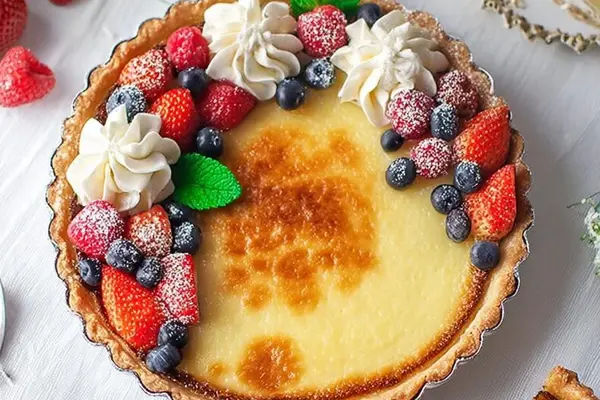
Homemade Pie Shell Recipe with Custard
By Emma
Certified Culinary Professional
·
Recipe tested & approved
Slice the vanilla bean lengthwise first—scrape those sticky seeds out before anything else matters. The pod goes into warm milk, but the seeds stay suspended in there, and that’s where all the flavor lives. Three things happen at once: dough chills in the fridge, eggs and sugar get whisked pale and frothy, milk scalds just below a simmer. It’s not complicated. It’s just pieces that have to come together at specific moments.
Why You’ll Love This Homemade Pie Shell
Takes 1 hour 15 minutes total, but most of that is hands-off baking. You’re not fussing. Just waiting. Vanilla bean makes it taste like nothing you’ve had from a box. The real seeds change everything—not the extract, the actual bean. Homemade pie crust means you know what’s in it. Butter, flour, salt. Done. Custard that jiggles slightly in the center but doesn’t slosh. That’s the texture. Not rubbery. Not soup. Lemon zest cuts through the vanilla so it doesn’t feel heavy. Works cold the next day. Maybe better.
What You Need for a Homemade Pie Shell
One batch of pie dough, chilled at least an hour—this matters. Cold dough doesn’t shrink. One vanilla bean pod. Not extract. The pod. Four cups whole milk or half-and-half if you want it richer. Six large eggs. Three quarters cup sugar. One tablespoon lemon zest, finely grated—use a microplane or the smallest holes on a box grater. That’s it. No cornstarch, no cream cheese, nothing else. The custard pie comes together from what you have.
How to Make a Homemade Pie Crust Shell
Roll the dough out to about half an inch thick. Press it into the pie dish firmly but gently—the bottom gets most of the weight, the sides get just enough pressure to hold. Crimp the edges with your fingers or a fork. Do it now, before it goes in the fridge. Pop the whole thing back in the fridge while you prep the custard. Cold dough stays cold. That stops it from shrinking during the bake.
Slice the vanilla bean lengthwise, right down the middle. Scrape all the sticky seeds out with the tip of your knife—they’re stubborn, they cling. Toss both the seeds and the scraped pod into a heavy pot with the milk or cream. Turn the heat to medium. You’re aiming for just under a simmer. Small bubbles form around the edge, a skin starts rising on the surface. No rolling boil. No scorching.
Watch it. Takes maybe five to ten minutes. The moment you see that skin rise, pull the pot off heat. Remove the vanilla pod—throw it out. The seeds stay in the milk. The aroma should hit you. Warm. Floral. Slightly sweet but not cloying.
How to Get Custard Pie Texture Right
While the milk cools slightly, whisk the eggs briskly with the sugar and lemon zest. Get it pale. Get it frothy. This isn’t optional—the air you whip in lifts the custard base. It’s the difference between dense and creamy.
Pour the hot milk into the egg mix in a slow stream. Don’t dump it. Whisk nonstop while you pour. The whisking stops the eggs from scrambling into lumps. Keep going until it’s all in there and smooth.
Preheat the oven to 395°F—one notch below the standard 400, because ovens run hot and you need room for that residual heat to finish the job without cooking the crust to black. Pour about two thirds of the custard into the pie shell. Slide it into the oven. Bake for twenty minutes uncovered.
Then—carefully, don’t slosh—pour the remaining custard in until the dish is almost full. Return it to the oven immediately. Bake forty to forty-five minutes more. You’re watching for the surface to set but still jiggle gently in the very center when you nudge the dish. The edges should turn golden. If the crust edges brown too fast, tape aluminum foil strips over them.
Cool the pie at room temperature until it’s slightly warm. Then refrigerate for a few hours. The custard firms up. Slicing it hot ruins the texture. The wait is worth it.
Custard Pie Tips and Common Mistakes
Chilling the dough stage isn’t just a suggestion—skip it and your crust shrinks. It pulls away from the sides. Not worth it.
Use a vanilla bean. Actual vanilla bean. Extract loses the aroma when it hits heat, and you’re pouring hot milk in there. The pod and seeds do the work. If you really can’t find a bean, use one and a half tablespoons of double-strength vanilla extract, but add it with the eggs and sugar, not the milk. You get something closer to the real thing.
Lemon zest can swap for orange zest if you want a different citrus twist. Same amount. Works fine either way.
Hot custard poured in two stages keeps the filling balanced and the texture consistent. Don’t dump it all in at once.
The doneness cue is real: edges firm, center has a slight wobble when you nudge the dish, no liquid sloshing around. Tap the pie surface gently with a finger—it should pop back, not crack or feel wet. That’s done.
Homemade Pie Shell Recipe with Custard
Prep:
25 min
Cook:
50 min
Total:
1h 15min
Servings:
12 servings
Ingredients
- 1 batch homemade pie crust dough chilled at least 1 hour
- 4 cups whole milk or half-and-half for richer custard
- 1 whole vanilla bean pod or 1½ tablespoons vanilla extract if skipped bean
- 6 large eggs
- ¾ cup granulated sugar
- 1 tablespoon finely grated lemon zest
Method
- 1 Roll chilled dough to about ½ inch thickness. Press firmly but gently into pie dish, crimp edges for grip and look. Pop in fridge while prepping custard. Keeps dough cold, avoids shrinking during baking.
- 2 Slice vanilla bean lengthwise, scrape all sticky seeds out. Toss seeds and pod into heavy saucepot with milk or cream. Slowly warm over medium heat, aiming for just under simmer at 180°F — small bubbles form, skin starts rising. No boiling or scorching.
- 3 Remove vanilla pod immediately once milk scalded. Discard pod; seeds stay in milk. The aroma should be warm, floral, slightly sweet but restrained.
- 4 Meanwhile, whisk eggs briskly with sugar and lemon zest until pale and frothy. This air lifts custard base—don’t skip. Pour slow stream of hot milk into egg mix while whisking nonstop to avoid scrambled lumps.
- 5 Preheat oven to 395°F — a notch below usual 400 to allow room for residual heat and slight oven quirks. Pour about two thirds of custard into pie crust. Bake uncovered for 20 minutes, then carefully pour remaining custard to almost fill dish; return immediately.
- 6 Bake 40-45 minutes more—until surface is set but still jiggles gently in center when nudged. Edges golden but not burnt; aluminum foil strips shield crust edges if they brown too fast.
- 7 Cool pie at room temperature till slightly warm then refrigerate a few hours for custard to firm up. Slicing straight from hot oven ruins texture; patience worthwhile.
- 8 If vanilla bean not available use double-strength vanilla extract but add with wet ingredients to avoid losing aroma in mic with heat. Lemon zest can swap with orange for different citrus twist.
- 9 Don’t forget chilling dough stage or risk shrinking crust. Hot custard poured in layers keeps filling balanced and texture consistent.
- 10 Custard done if edges firm, center has slight wobble but no liquid sloshing. Pie surface should pop with gentle tap, no cracks or dryness.
Nutritional information
Calories
280
Protein
7g
Carbs
32g
Fat
12g
Frequently Asked Questions About Homemade Custard Pie
Can I make this with a store-bought pie crust instead of a homemade one? Yeah. Works fine. It won’t taste as good—butter flavor matters—but it gets the job done. Just make sure it’s thawed if frozen.
What if I don’t have a vanilla bean? Then use extract. One and a half tablespoons mixed into the eggs before you pour the hot milk in. You lose some aroma but the custard pie still works.
How long does it stay good in the fridge? Three to four days. Keep it covered. After that the crust gets soggy from the custard sitting on it.
Can I freeze it? Haven’t tried it. Probably does something weird to the texture.
Why does my crust shrink no matter what I do? Because you’re skipping the chill. Or the dough was too warm to begin with. Pie dough needs cold. Cold means it doesn’t pull away.
What temperature is the custard actually done at? Around 170°F in the center if you use a thermometer. But honestly just watch it jiggle. That’s more reliable than a number.
You’ll Love These Too
Explore all →
Salmon Koulibiac Twist with Hazelnuts

Cosmopolitan Drink Recipe with Cranberry Vodka

Raspberry Cupcakes with Marshmallow Frosting

Mexican White Cheese Dip Sauce

Cheesy Garlic Bread with Mozzarella

Mojito Recipe with Raspberry Mixer
Soba Noodle Dish with Chickpeas
Homemade Pear Butter with Lemon Juice
Apple Cider Reduction with Warm Spices

Mexican Tofu Scramble with Cilantro
Peanut Butter Jam French Toast Sandwiches
No Bake Blueberry Cheesecake with Lime

Vegetable Frittata with Spinach, Zucchini & Feta

Beef Pasta with Chipotle, Corn & Cheddar

Pineapple Jello Shots with Rum

Rainbow French Bread Pizza with Fresh Veggies
Quick Polenta with Taleggio Cheese Recipe
White Chocolate Raspberry Cake with Buttercream
Tuna Pasta Salad Recipe with Lime Dressing