Roasted Bell Pepper Soup Recipe
By Emma
Certified Culinary Professional
·
Recipe tested & approved
Creamy roasted bell pepper soup made with charred red and yellow peppers, olive oil, and chicken broth. Simmered with garlic and finished with balsamic vinegar and fresh basil for a restaurant-quality dish.
Prep:
35 min
Cook:
40 min
Total:
1h 15min
Servings:
4 servings
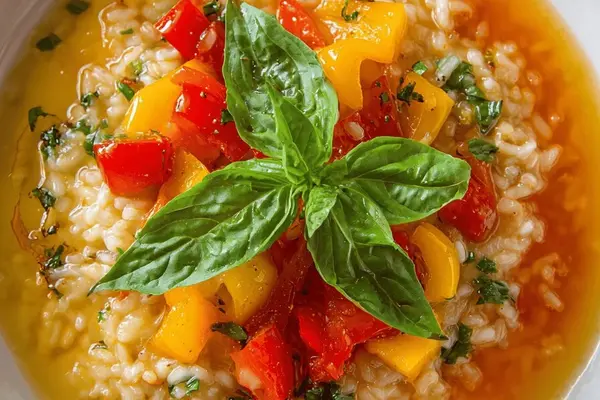
Two soups. One bowl. Yellow on the inside, red wrapped around it like it’s protecting something.
Why You’ll Love This Split Pea Soup Recipe
Looks like you spent hours in the kitchen. Took 1 hour 15 minutes total. Vegetarian, gluten free, doesn’t apologize for either one. Tastes like a restaurant made it — the kind where they charge you $18 and you don’t regret it. One bowl does the work of two soups at once. Makes sense. Leftovers taste better. They get deeper somehow. Reheat gently — add a splash of broth if it thickened up overnight.
What You Need for This Split Pea and Soup Duo
Three yellow bell peppers. Halved, seeded. Don’t throw the scraps away yet. One small shallot, minced fine. Red or regular, doesn’t matter much. Fifty milliliters of olive oil. Could use less. Probably shouldn’t. Twenty-five milliliters of converted white rice — the kind that holds its shape. Regular rice goes to paste. Five hundred fifty milliliters of chicken broth. Or vegetable if you want to keep it vegetarian. Same result. Salt. Pepper. Fresh stuff. Three red bell peppers, same treatment as the yellow. Two garlic cloves, minced. Three if you like garlic. Honestly, three is better. Twenty milliliters of balsamic vinegar. The cheap stuff works. The expensive stuff works too. Not a huge difference here. Fresh basil for the top. Green matters.
How to Make Split Pea and Soup That Looks Impossible
Get the broiler going first — rack up high, heat it hard. Lay the yellow peppers skin side up on a sheet. They’re going to char and that’s the point. Watch them. Seriously watch them. The skin needs to blacken and blister but not burn through to the flesh. Takes maybe 8 minutes, sometimes 10. You’ll know it when the whole surface looks almost destroyed. Pull the sheet out. Drop the peppers into a bowl with a cover — or seal it tight with plastic wrap. This matters. The steam loosens the skin so it peels clean instead of tearing into a mess. While those cool, warm olive oil in a medium saucepan over low heat. Add the shallot. Don’t rush it. Let it go soft and translucent, maybe 3 minutes. You want fragrant. You don’t want brown. Toss the rice in. Stir it around so every grain gets coated in oil. This prevents clumping later. Takes 30 seconds. Pour in the broth and the chopped yellow peppers. Season now — salt, pepper, taste it. Cover it. Simmer on very low heat. The rice needs to soften and thicken the soup at the same time. About 20 minutes. Don’t leave it alone though. Stir once halfway through. Rice can turn into wallpaper paste if you’re not paying attention. You want velvety. Not gluey.
How to Get That Color Contrast Right
Same broiler situation with the red peppers — blacken them, steam them, cool them, peel them. Maybe slightly longer than the yellows. Red skin sometimes needs an extra minute to really blister. Heat more olive oil in another saucepan. Add the garlic. Low heat again. Garlic burns like it’s got a grudge and tastes bitter for the rest of the soup. Soft and fragrant is the goal. Burned is the trap. Pour in the balsamic vinegar — this is the swap from the yellow side. It cuts through the red pepper sweetness and adds depth that plain broth doesn’t have. Scrape the bottom of the pan. There are flavor bits stuck there. Rice goes in. Coat it. Add the chopped red peppers and broth. Same low simmer, same 18 to 22 minutes. Red peppers sometimes cook faster than yellow. Depends on their size. Watch the rice texture, not the clock.
Both soups need to go through the blender. If you have an immersion blender, use it — less cleanup, less batching around. If you’re using a countertop blender, do it in batches so you don’t end up with one cup of smooth and one cup of chunks. Blend until it’s actually velvety. Not just pureed. There’s a difference. Taste both. Fix the seasoning now.
Split Pea Soup Tips and Common Mistakes
The ring mold trick — use a 7 centimeter ring, or just eyeball it if you don’t have one. Seven centimeters is about the size of a yogurt cup opening. The mold holds the yellow soup in place while you pour the red around it. Once you pull the mold away, the soups stay separated because the yellow is denser. This is the whole visual thing. Skip it if you want. Just pour one into the bowl, carefully spoon the other around the edges.
Thick soup that turned into sludge overnight? Whisk in warm broth or water the next day. Not a lot. Just enough to loosen it back to serving consistency. Cold soup gets thicker than hot soup. It’s chemistry or something.
The garlic situation — do not walk away while it’s heating. Turned my back once for 40 seconds and the whole thing tasted like charcoal. Sweat it gently. Low heat. Stay there.
Rice thickness matters more than you’d think. Converted white rice thickens better than long grain because of the structure. Regular rice works but expect mushier texture and thicker soup. Some people like that. I don’t.
Balsamic in the red, nothing in the yellow — this isn’t a rule. It’s what works. The vinegar balances the sweetness and makes the red side taste like something happened to it instead of like boiled peppers.
Roasted Bell Pepper Soup Recipe
Prep:
35 min
Cook:
40 min
Total:
1h 15min
Servings:
4 servings
Ingredients
- 3 yellow bell peppers halved and seeded
- 1 small shallot minced
- 50 ml olive oil
- 25 ml converted white rice
- 550 ml chicken broth (or vegetable broth)
- Salt and freshly ground pepper
- 3 red bell peppers halved and seeded
- 2 garlic cloves minced
- 20 ml balsamic vinegar
- Fresh basil leaves for garnish
Method
- Yellow Pepper Soup
- 1 Set oven rack near top and preheat broiler. Lay yellow pepper halves skin side up on a baking sheet. Broil until skin blackens and blisters, watch close to avoid burning. Transfer to a covered bowl or sealed container; steam loosens skin, making it easy to peel. Peel peppers when cool enough to handle, discard charred skin carefully.
- 2 In a medium saucepan, warm olive oil over low heat. Add minced shallot, cook gently without browning until fragrant and translucent. Add rice, stir well to coat grains. Pour in broth and chopped yellow peppers. Season with salt and pepper. Cover and simmer on very low heat. Rice should soften and thicken soup, about 20 minutes but watch texture closely; too mushy ruins body.
- 3 Remove from heat, blend until velvety smooth with immersion blender or countertop blender in batches. Adjust seasoning. Keep warm.
- Red Pepper Soup
- 4 Repeat broiling process with red peppers — same blackened skin step. Steam sealed to loosen skin and peel carefully. In another saucepan, heat a splash of olive oil over low heat. Add minced garlic and a touch of shallot if desired, sweat gently to avoid burning garlic bitter notes.
- 5 Add vinegar to deglaze pan, scraping bottom to lift flavor bits. Toss in rice, stir to coat. Add chopped peeled red peppers and broth. Simmer covered on very low heat 18-22 minutes until rice is tender. Puree and season to taste.
- Assembly
- 6 Grab a wide shallow bowl. Place a 7 cm ring mold at center. Pour yellow soup inside the ring. Remove ring gently to keep shape crisp. Spoon red soup around yellow central portion. Garnish with fresh basil leaves scattered or a small sprig on yellow center for fragrance and a pop of green contrast.
- 7 Serve hot. If soup becomes too thick while resting, whisk in warm broth or water to loosen without diluting flavor.
Nutritional information
Calories
120
Protein
2g
Carbs
12g
Fat
7g
Frequently Asked Questions About Split Pea Soup Recipe
Can you make this without the ring mold? Yeah. Just pour the yellow in first. Then slowly spoon the red around the edges. It won’t look as clean but it tastes identical. Honestly most people don’t have a ring mold. Not worth buying one just for this.
Does this work as a split pea soup without the rice? No. The rice is what thickens it and makes it actually soup instead of liquid. If you can’t do rice, use cornstarch or arrowroot at the end — stir it with cold broth first so it doesn’t clump, then whisk in.
How long does pea soup actually keep? Stays good for 4 days in the fridge, covered. Freezes for 3 months. When you reheat it, do it slow on the stove with a splash of broth. Microwave works but it heats unevenly and the texture gets weird.
Can you substitute vegetables in this soup? Not really. Yellow and red peppers are the whole thing. You could do orange or mix in one carrot or something but then it’s a different soup. This one is about the peppers. That’s the point.
What if the soup breaks when you blend it? It doesn’t break. You’re thinking of cream-based soup. This is vegetable puree. The worst that happens is it stays slightly chunky, which is fine. Blend longer if you want it smoother. Immersion blender usually gets it velvety in 2 minutes.
Should peas for pea soup or peppers work better here? Different soup entirely. Actual split peas make a thicker, heavier soup — more like stew. Peppers make this bright, almost delicate thing. Not comparable. Both are good. Just different. This recipe is the pepper version.
You’ll Love These Too
Explore all →
Pistachio Layer Cake with Honey Buttercream
Strawberry Cheesecake Recipe with Cream Cheese
Meatball Sauce with Beef, Veal & Fresh Basil
Japanese Hot Pot with Pork, Miso Broth
Brown Chicken Gravy with Roasted Wings
Pickled Carrots with Apple Cider Vinegar
Ground Beef Burger Recipe with Garlic
Lentejas Soup with Beef & Mushrooms
Crispy Coconut Chicken Tenders Recipe
Cinnamon Sugar Popovers Recipe
Chicken Spaghetti Casserole
Red Sangria Recipe with Elderflower

Bacon Cheddar Biscuits with Whole Wheat
Salmon With Mushroom Cream Sauce
Artichoke Frittata with Goat Cheese
Gingerbread Cream Cheese Dip Recipe
Iced Rhubarb Cake with Crunchy Crumble
Roasted Root Vegetables Recipe with Balsamic
Oven Roasted Cauliflower Rice with Cheddar