
Black Bean Stew Recipe with Pork & Linguiça
By Emma
Certified Culinary Professional
·
Recipe tested & approved
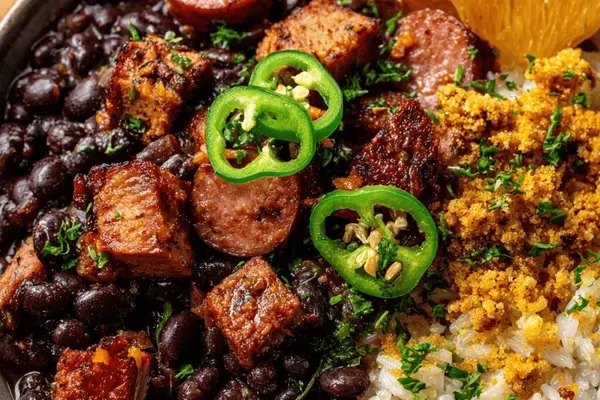
Black bean stew with pork shoulder, linguiça sausage, and jalapeño. Slow-simmered comfort food with deep, smoky flavors and tender beans that satisfy.
Prep:
25 min
Cook:
2h 35min
Total:
3h
Servings:
6 to 8 servings
Drain the soaked beans. Rinse them—really rinse them. Three garlic cloves go in near the end, not the start. The pork shoulder’s the thing that actually matters here. Bone stays in the pot because it’s sitting in there for two hours and thirty-five minutes anyway, might as well work for you.
Why You’ll Love This Pork Shoulder Stew
Takes 3 hours total but you’re barely doing anything for most of it—slow cooker energy without needing the slow cooker. Just set it and stir once in a while.
Spicy without burning your mouth. The jalapeño and smoked sausages do the work, not heat that blindsides you.
Tastes better the next day. Way better. Reheat it slow and the flavors have settled into something deeper.
Works for a crowd or just Tuesday dinner. Freezes fine too if you make extra, which you will.
The kind of pork shoulder stew that costs thirty dollars at a restaurant. This version costs maybe eight.
What You Need for Black Bean Stew
Black beans—the dry kind, soaked overnight. Not canned. The texture matters here and canned gets mushy fast.
Pork shoulder, bone-in. Around 1.6 kg. The bone isn’t decoration; it thickens the broth as it sits. Butcher can leave it on and you debone it yourself, saves money and gives you control.
Olive oil. 45 ml total, split three ways. Not extra virgin—save that for finishing. Just regular olive oil that can handle heat.
Two medium onions chopped fine. One jalapeño seeded and chopped—or leave the seeds if you like it meaner. Three garlic cloves minced, but hold them for later.
Dried salted beef. Around 180 grams. This is the salty anchor that holds everything together. Linguiça and smoked paprika sausage—both go in, both matter. Linguiça is the spicy Portuguese sausage; smoked paprika sausage is denser, smokier.
Bay leaves. Two dried ones. Water—700 ml. Salt and black pepper at the end, after you taste it.
How to Make Black Bean and Sausage Stew
Heat 15 ml of oil in a heavy pot over medium-high. The pork goes in now with the bone still attached. Listen for crackling. That sound means it’s browning right, not steaming. Don’t crowd the pan—give the meat room or it’ll sit in its own moisture and won’t brown. You want a dark crust on it. Five minutes per side maybe. Could be more. Watch it, not a timer.
Once the pork’s got color, set it aside. Leave the fat in the pot. This is where the flavor lives now.
Add half the chopped onions, half the garlic, and the jalapeño to that same pot with the remaining 15 ml of oil. Sweat them gently—medium heat, lid off. About five minutes. You’ll smell it when it’s ready. That’s not metaphorical. It’ll smell aggressively spicy and translucent-looking.
Return the pork and bone. Stir in the drained black beans, the dried salted beef, bay leaves. Pour in water just enough to barely cover everything. Too much water means watery stew. You’re concentrating flavor, not making soup.
Bring it to a rolling boil. Then immediately drop the heat. Lid askew so steam escapes but not everything does. This is where time works for you. Around 2 hours and 15 minutes, the beans will be soft—not falling apart, just yielding. The pork will pull apart with a spoon. Stir occasionally. Every 30 minutes maybe. Scrape the bottom so nothing sticks and turns bitter.
Watch the liquid as it cooks. If it’s evaporating faster than you’d expect, add small amounts of boiling water. Not cold water. Boiling.
How to Get Black Bean Stew Rich and Thick
About 30 minutes before you think it’s done, stir in the linguiça and smoked paprika sausage—both sliced thin. Thin slices meld into the stew instead of staying as chunks. They add fatty richness and that smoke that makes the whole thing click.
While that’s happening, scoop out about 200 ml of cooked beans with some of their liquid into a skillet. Add the leftover onion and garlic you didn’t use and 15 ml of oil. Medium heat. Mash this with a wooden spoon until it’s a coarse paste—not smooth, coarse. This is the trick that separates actual stew from watery beans with meat in them.
Stir the bean paste back into the pot. The whole thing thickens immediately. Don’t skip this step. Watery feijoada is the saddest outcome.
Simmer 15 more minutes. The smell deepens. The sauce gets glossy. That’s when you taste it.
Black Bean Stew Tips and What Actually Goes Wrong
Salt is tricky here because the dried beef is already salty. Taste before you add anything. Usually you just need black pepper at the end. If you taste nothing, then salt, but start careful.
The beans need to be actually soaked overnight. Unsoaked beans take forever and don’t cook evenly.
Leftovers are better. This isn’t a problem—it’s a feature. Reheat slowly. High heat dries out the pork and breaks the sauce.
The bone matters. People skip it thinking it’s hassle. It’s not. It sits there and makes broth.
Smoked sausage works if you can’t find linguiça. It’s less spicy but the stew still works. Red beans work instead of black beans, especially if you’re making a red beans and andouille sausage version. Same method, same timing.
Black Bean Stew Recipe with Pork & Linguiça
Prep:
25 min
Cook:
2h 35min
Total:
3h
Servings:
6 to 8 servings
Ingredients
- 230 ml black beans dry, soaked overnight
- 1.6 kg pork shoulder bone-in, rind removed
- 45 ml olive oil, divided
- 2 medium onions, finely chopped
- 3 garlic cloves, minced
- 1 jalapeño pepper, seeded and chopped
- 1 slice dried salted beef approx 180 g
- 700 ml water
- 2 dried bay leaves
- 180 g smoky linguiça sausage, sliced
- 150 g smoked paprika sausage diced
- Salt and black pepper to taste
Method
- 1 Drain soaked beans; rinse well under cold water. Always keep covered with fresh water while soaking; beans swell, need full coverage.
- 2 Debone pork shoulder but keep bone itself; cube meat into roughly 4 cm chunks. Plate bone for later use—it deepens broth.
- 3 Heat 15 ml olive oil in heavy pot, golden sear pork with bone on medium-high. Listen for crackling as meat browns; don’t overcrowd pan or it'll steam.
- 4 Lightly salt or skip salt altogether – dried beef adds sharp salt punch. Once browned, set meat aside, keep fat in pot.
- 5 Add half onions, half garlic, and jalapeño to pot with remaining 15 ml oil; gently sweat until translucent and spicy aroma pops, about 5 minutes.
- 6 Return meat and bone to pot, stir in black beans, dried beef, bay leaves. Pour in water just enough to cover—avoid too much to concentrate sauce.
- 7 Bring to rolling boil then immediately lower to gentle simmer. Lid askew. Stir occasionally, scrape bottom so nothing sticks or burns.
- 8 Simmer around 2 hours 15 minutes or until beans and pork soften tender but not mushy. Watch liquid—if evaporates too fast, add small amount boiling water.
- 9 About 30 minutes before done, stir in linguiça and diced smoked paprika sausage. Sausages add smoky fatty richness; slice thin so they meld quickly.
- 10 Meanwhile, scoop 200 ml cooked beans with some liquid into skillet with leftover onions and garlic and 15 ml oil. Sizzle gently over medium heat, mash with wooden spoon into coarse paste.
- 11 Return bean mash to pot, stir well. This thickens the sauce, gives body. Don’t skip; watery feijoada is saddest outcome.
- 12 Season cautiously—dried beef is salty. Taste before adding salt—usually only pepper needed.
- 13 Simmer a further 15 minutes after adding paste; smell will deepen, sauce thick and glossy.
- 14 Serve hot with fluffy white rice, toasty farofa, and orange slices crisp and juicy to cut richness.
- 15 Leftovers gain flavor overnight; reheat slowly to avoid drying meat.
Nutritional information
Calories
460
Protein
38g
Carbs
30g
Fat
22g
Frequently Asked Questions About Black Bean Stew with Pork
Can I use a slow cooker for this pork shoulder stew? Yeah. Brown the pork first on the stove, then throw everything into the slow cooker on low for 6 hours. The taste is almost the same. Almost. The stovetop version has more depth because the beans sit in the broth the whole time instead of sitting in bean-flavored water that’s been diluted by condensation.
What if I don’t have dried salted beef? It changes things. You lose that sharp salty funk that makes feijoada actually feijoada. Bacon works as a substitute—maybe 150 grams, chopped. It’s different but it works.
Do I really need both sausages? No. One works fine. But both is better. The linguiça gives you heat and spice. The smoked paprika sausage gives you smoke and fat. Together they’re deeper. If you have to pick one, linguiça. It’s the traditional choice.
How long does this actually take from start to finish? 25 minutes to prep. 2 hours and 35 minutes to cook. So 3 hours total if you’re doing the soaking the night before. If you’re soaking the beans that morning, add 8 hours.
Can I freeze leftovers? Yes. It freezes for maybe 2 months fine. Reheat on the stove over low heat, stirring occasionally. Don’t nuke it—the pork gets weird and the sauce breaks.
What do I serve this with? White rice. Fluffy rice, nothing fancy. Orange slices to cut the richness. Farofa if you have it—toasted cassava flour that sounds strange but it actually works. Honestly, rice and maybe hot sauce is enough.
You’ll Love These Too
Explore all →
Maple Butter Cookies with Orange Zest

White Chocolate Cold Brew Coffee Recipe

Sticky Chicken Recipe with Soy and Ginger

Parmesan Cream Balls with Balsamic
One Pot Meals with Ground Beef and Rice

Cinnamon Sugar Biscuits with Almond Milk

Easy Brownie Recipe with Spice Cake Mix
Grilled Red Snapper with Lemon and Garlic

Oven-Baked Cornstarch Omelette with Eggs
Crispy Fried Turkey with Smoked Paprika

Savory Mushroom Rice with Butter & Wine

Lenten Brioche with Raisins and Dates

Cabbage Soup with Ground Beef & Rice
How to Make Boiled Peanuts in Pressure Cooker
Green Salsa Mussels with White Wine Sauce

Crispy Tofu Sticks with Honey Mustard
Beef Stew with Chickpeas and Smoked Paprika

Peach Gelatin Whip Pie No-Bake Recipe

Slow Cooker Chicken Tacos with Cream Cheese