
Courtbouillon: Aromatic Poaching Broth
By Emma
Certified Culinary Professional
·
Recipe tested & approved
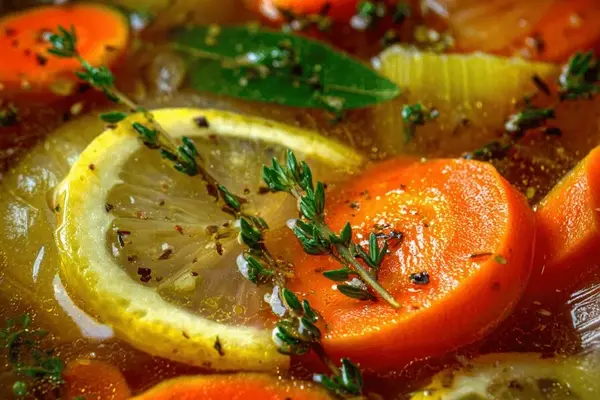
Courtbouillon is a fragrant aromatic broth made with carrot, shallot, celery, fresh thyme, bay leaves, and lemon. Perfect for poaching fish or vegetables with subtle depth.
Prep:
20 min
Cook:
10 min
Total:
30 min
Servings:
4 to 5 cups
Set the heat to medium. Clarified butter goes in first—not brown, just fragrant. Three ingredients you haven’t even touched yet and already the foundation matters. This is court-bouillon, which sounds fancy but isn’t. It’s just a vegetable broth you make at home in 30 minutes, and once you understand why each thing goes in and when, you’ll stop buying boxes.
Why You’ll Love This Homemade Vegetable Broth
Takes 30 minutes total—20 to prep, 10 to actually cook. Most of that’s just waiting. Works as a base for anything. Catfish courtbouillon. Shrimp. Fish soup. Works alone too, which almost nobody thinks about doing. No weird ingredients hiding in the ingredient list. Carrot. Shallot. Celery. Lemon. Thyme. That’s it unless you feel like fennel. Tastes nothing like the canned stuff. Bright. Herbaceous. Lemon-forward but not aggressive. Makes fish taste like it was meant to taste like this. Leftovers last two days in the fridge, maybe three. Use it as a cooking liquid, a base, a light soup. Works cold too, which is strange but true.
What You Need for Homemade Vegetable Stock
One medium carrot, peeled, sliced into coins about a quarter-inch thick. Not thin. Thick coins cook faster and don’t turn to mush.
A small shallot halved then sliced paper-thin. Shallot, not onion. Sweeter. Less harsh. Paper-thin so it doesn’t float around in big chunks.
One celery stalk rinsed thoroughly, sliced into half-moons. Thin half-moons, because uneven pieces cook at different speeds and you’ll end up with some falling apart and others still woody.
Fifteen milliliters of clarified butter. Or neutral oil if you don’t have clarified butter. Butter adds something. Oil is fine if you’re making do. Don’t use olive oil—burns too fast. Not worth it.
One litre of water. Cold. Straight from the tap works.
One fresh thyme sprig. Not dried. Fresh matters here.
Six white peppercorns cracked lightly. White, not black. Softer. Less sharp finish.
Three dried bay leaves. Just the leaves. Don’t overthink it.
One lemon thinly sliced. The lemon goes in last, right at the end. That matters.
Optional: one quarter fennel bulb sliced thin. I almost always forget this, but it brightens everything. Licorice note that shouldn’t work but does.
How to Make Court-Bouillon
Heat the clarified butter in a mid-size pot over medium heat until it’s fragrant. Watch it. Takes about a minute. Clarified butter burns easily and smells off when it does. Not brown. Just fragrant.
Toss in the carrot, shallot, and celery. Stir to coat with fat. You’ll hear a faint sizzle. No color. That’s right. You’re softening them, not caramelizing.
Add the fennel if you’re using it. Slice it thin like the shallot. It gives subtle licorice—brightens the whole thing.
Pour water directly over the vegetables. Gently, so you’re not disturbing the aromatics sitting at the bottom.
Slide in the thyme, bay leaves, and cracked white peppercorns. Turn the heat to medium-high.
Watch for the surface to start trembling. Gentle bubbles. Not violent rolling boil. Rolling boil drives off flavor and breaks down the vegetables too fast.
How to Get the Flavor Right in Homemade Broth
You’re looking for gentle fragrant steam rising up. Sharp herbal notes in the air. If the broth gets cloudy or the vegetables start falling apart, reduce the heat immediately. That’s overcooking.
Watch for vegetable translucency. Not a timer. Translucency. The carrot will go from opaque to kind of see-through. That’s when the broth is done. Usually takes about 10 minutes of gentle simmering. Maybe 8. Maybe 12. Depends on how thick you cut the coins.
Just before turning off the heat, slide the lemon slices on top. Don’t stir. The citrus oils release instantly with the residual heat. Huge mistake leaving lemon in too early—it turns bitter. Last thing. Always.
Turn off the heat. Cover the pot. Let it sit 5 to 7 minutes. Flavors marry. The vegetables infuse fully into the broth.
Strain through a fine sieve or cheesecloth. Press lightly if you want concentrated flavor. Don’t push hard or everything gets murky.
Taste it. Expect mild sweetness from the shallot. Fresh herbaceous notes. Gentle pepper warmth. Bright lemon finish.
Making Vegetable Broth Tips and Common Mistakes
White peppercorns crack just before you use them. Whole peppercorns sit and lose punch. Crack them lightly. You want broken pieces, not powder.
If you don’t have fresh thyme, use half a teaspoon of dried thyme but add it earlier. Dried needs time to extract flavor. Add it with the water, not at the end.
No fennel? Use celery tops or parsley stems instead. Needs a fresh herbaceous note to balance the sweetness.
Carrot thickness matters more than you think. Too thin and it turns to mush. Too thick and it slows infusion. Aim for uniform coins as close to a quarter-inch as possible.
Classic recipes use onion. Switch to shallot and everything changes—softer, sweeter, less harsh. You’ll never go back.
If the broth tastes bitter, the lemon was overcooked or the herbs are old. Fresh ingredients matter here. Like really matter.
Substitute clarified butter with neutral oil for dairy-free. Butter adds depth though. Use it when you can.
The simmering time is flexible. Don’t watch the clock. Watch the vegetables. Translucency. That’s your signal.
Reheat gently. Never boiling. The delicate aromatics die with heat. Warm it slowly and it stays bright.
Courtbouillon: Aromatic Poaching Broth
Prep:
20 min
Cook:
10 min
Total:
30 min
Servings:
4 to 5 cups
Ingredients
- 1 medium carrot peeled sliced into coins
- 1 small shallot halved thinly sliced
- 1 stalk celery trimmed thin half-moons
- 15 ml clarified butter or neutral oil
- 1 litre water
- 1 fresh thyme sprig
- 6 white peppercorns cracked lightly
- 3 dried bay leaves
- 1 lemon thinly sliced
- Optional 1/4 fennel bulb sliced thin (twist)
Method
- 1 Start with peeled carrot sliced thick—cannelure isn’t worth the fuss here, round is fine. Soft texture only matters at final simmer.
- 2 Shallot, not onion; halved then sliced paper thin for subtle sweetness and less bite. Get finer cuts to avoid large chunks floating around.
- 3 Celery rinsed thoroughly breaks up fibrous pieces; slice thin, half moons keep quick, even cooking.
- 4 Heat clarified butter in a mid-size pot over medium heat; can sub vegetable oil if butter unavailable for higher smoke point. Melt until fragrant but not browned—takes about 1 minute. Watch closely; clarified butter burns easily, smells off when overheated.
- 5 Toss in veggies; stir to coat with fat. You'll hear a faint sizzle but no color. Softening is key not caramelization here.
- 6 Add sliced fennel if using—gives subtle licorice, I almost always forget but it brightens the broth.
- 7 Pour water directly over vegetables; pour gently to avoid disturbing the aromatic bed.
- 8 Add thyme sprig, bay leaves, cracked white peppercorns (sub white for a softer aroma and less sharp finish). White pepper often overlooked and better here for clean subtle spice.
- 9 Turn heat to medium-high; bring to a 3-4 minute low boil. You want trembling surface bubbles not violent rolling boil which drives off flavor and dries out veggies.
- 10 Watch for gentle fragrant steam; sharp herbal notes rise up here. If broth gets cloudy or veggies break apart—that's overcooking, reduce heat.
- 11 Just before turning off, slide lemon slices on top of broth—no stirring. The citrus oils release instantly with residual heat. Easy mistake leaving lemon in too early; turns bitter.
- 12 Turn off; cover and let sit 5-7 minutes to allow flavors to marry and veggies to infuse fully.
- 13 Strain through fine sieve or cheesecloth, pressing lightly if you want concentrated flavor. Avoid pushing too hard—the broth will get murky.
- 14 Taste: expect mild sweetness, fresh herbaceous notes, gentle pepper warmth, and bright lemon zest finish.
- 15 Use immediately or refrigerate up to 2 days. Reheat gently to preserve delicate aromatics.
- 16 For substitutions—no fresh thyme use 1/2 tsp dried but add earlier for flavor extraction. No fennel then add celery tops or parsley stems for fresh note.
- 17 If broth tastes bitter, likely lemon was overcooked or herbs too old; fresh ingredients key here.
- 18 For a dairy-free version use neutral oil instead of clarified butter but butter adds depth so opt for it when possible.
- 19 Remember simmering time is flexible; watch for veggie translucency not strict minutes.
- 20 Classic court-bouillon formulas use onion but replacing with shallot transforms flavor profile—softer, sweeter, less harsh.
- 21 White peppercorns crack just before use for maximum aroma; whole peppercorns sit longer and lose punch.
- 22 Carrot too thin equals mush; too thick slows infusion. Aim for uniform coin thickness as close to 1/4 inch as possible.
Nutritional information
Calories
30
Protein
0.5g
Carbs
5g
Fat
1.5g
Frequently Asked Questions About Making Vegetable Broth
Can I use regular butter instead of clarified butter for homemade vegetable stock? Regular butter has milk solids that burn at medium heat. Clarified butter doesn’t. Use clarified if you have it. If not, use neutral oil—vegetable, canola, avocado. Works fine.
How long does homemade vegetable broth keep in the fridge? Two days. Maybe three if it’s cold enough. Refrigerate immediately after straining. Don’t leave it sitting on the counter cooling down.
Can I make this court-bouillon recipe ahead of time? Yeah. Make it, cool it, store it in an airtight container. Two days max. You can also freeze it in ice cube trays and use cubes as needed for catfish courtbouillon or shrimp recipes.
What if my homemade veggie broth tastes flat or weak? Probably didn’t let it steep long enough or the vegetables weren’t sliced thin enough. Try longer simmering next time. Also check that your thyme and bay leaves are fresh. Old herbs taste like nothing.
Can I use this vegetable broth recipe for other soups? Yes. It’s mild and herbaceous so it works as a base for almost anything. Vegetable soup. Light seafood soup. Even just a gentle broth with some bread on the side works.
Do I need to peel the carrot for making veg broth? Yeah. Unpeeled carrots bring dirt flavors into the broth. Takes two seconds to peel. Worth it.
You’ll Love These Too
Explore all →
Grilled Vegetables: Charred Three Bean

Glutinous Rice Mochi Ice Cream Recipe

Chewy Peanut Butter Cookies Recipe

Raspberry Lemon Jam Tart with Coconut Cream

Chocolate Chip Cookie Ice Cream Sandwiches
Potato Salad Recipes with Pecans & Lime
Oat Sunflower Burgers with Cheddar

Poke Re: Sushi Rice Bowl with Marinated Salmon

Mashed Sweet Potatoes with Orange Cream

Country Cabbage Soup with Gruyère Cheese

Greek Yogurt Bagels Air Fryer: No Yeast

Creamy Italian Beef Pasta with Provolone

Shrimp Scampi Recipe with Vermouth & Lemon

Caramelized Onion Dip Recipe with Gouda
Recipe for Making Fudge with Eggnog

Pistachio Layer Cake with Honey Buttercream

Vegan Chocolate Chip Cookies Recipe

Savory Cherry Tomato Tart with Goat Cheese

Lentil Wonton Tacos with Chipotle