Spicy Penne Pasta with Merguez and Harissa
By Emma
Certified Culinary Professional
·
Recipe tested & approved
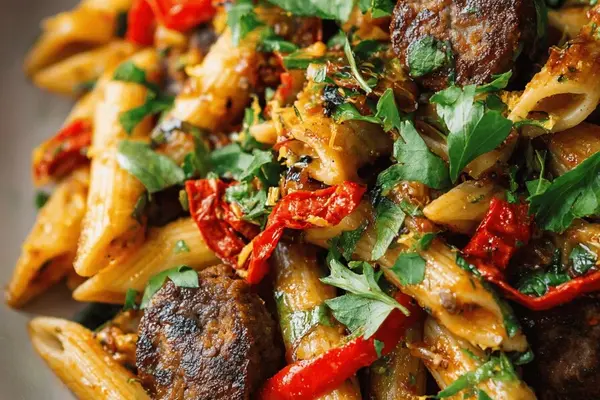
Sliced merguez. Harissa paste. Red onions going soft and sweet while the sausage snaps. Forty minutes start to finish—15 minutes prep, 25 cooking—and you’ve got something that tastes like it took way longer.
Why You’ll Love This Penne Pasta
Spicy heat hits different when it’s built into the dish instead of sprinkled on top. The harissa doesn’t just sit there—it melts into the sauce, gets tangled with the pasta, lives in every bite.
Comes together in one skillet. Merguez sausages do half the work for you, releasing their own spiced fat into the pan while the onions soften. No separate components fussing at you.
Actually tastes better the next day. Flavors knit themselves together overnight. Cold from the fridge? Works too, kind of.
Preserved lemon changes everything. That unexpected brightness—nothing like regular lemon. Can’t really swap it. Don’t bother trying.
The pasta itself doesn’t drown. It sits in sauce that clings but doesn’t cake on, which means you can actually taste the spice and the sausage instead of just paste.
What You Need for Harissa Penne Pasta
Gluten-free penne. Regular works too. The shape matters more—short pasta with ridges so the sauce actually sticks instead of sliding off.
One large red onion, sliced thin. Not white. Red onions are sweeter, which you need here to balance the harissa heat.
Three tablespoons olive oil. That’s for cooking. More if you’re heavy-handed.
Merguez sausages—300 grams, which is usually three or four links depending on the brand. Slice them diagonally, about 2 centimeters thick. The diagonal cut means more surface area to brown. Matters more than you’d think.
Two tablespoons harissa paste. The real stuff from a jar. Not powder. Paste dissolves into sauce the way you need it to.
Roasted red peppers, 100 grams chopped. Jarred is fine. Fresh is slower. Both work.
Two hundred milliliters stock—chicken or vegetable, doesn’t matter much. Just needs to be salty enough that you don’t have to oversalt at the end.
Fresh cilantro. Three tablespoons, roughly chopped. Don’t chop fine. Let it stay loose so you see the green.
Preserved lemon peel. One, finely diced. This is non-negotiable. Regular lemon won’t do the same thing.
Salt. Pepper. That’s it.
How to Make Harissa Penne Pasta
Boil a large pot of salted water first—really salted, like the sea. Once it’s actually rolling, drop the penne in and stir. Don’t let it stick to itself in clumps. Start tasting at 8 minutes. You want it to have a tiny bit of fight when you bite down, not soft all the way through. Usually hits around 9 to 11 minutes. Drain it but keep maybe half a cup of that starchy pasta water—you’ll use it if the sauce gets too thick later. Toss the drained pasta with a drizzle of olive oil so it doesn’t clump while you work on the sauce.
Heat three tablespoons of olive oil in a large skillet over medium-high. When it’s shimmering—actually shimmering, not just warm—add the sliced red onion. Stir it around every 30 seconds or so. You’re looking for the edges to go translucent and the whole thing to smell sweet and a little caramelized, which takes about 5 to 7 minutes. Don’t let it brown hard. You want gentle sweetness here, not char.
Drop in the sliced merguez. Let it sizzle without touching it too much for the first minute or two. The edges need to brown and crisp—that’s where the flavor is hiding. After about 6 minutes total, they should snap when you bite one and have dark, caramelized edges. Flip them a couple times if you want, but don’t stir constantly. Constant stirring keeps them from browning properly.
Lower the heat just a bit. Stir in the harissa paste and the roasted red peppers. Let it go for about 2 minutes. The smell gets deeper, the peppers soften a little, the harissa wakes up and binds with the onion and sausage fat. This is the moment it stops being ingredients and starts being a sauce.
Pour in the stock. Scrape the bottom of the pan where all the browned bits are stuck—that’s flavor, not mess. Bring it to a gentle simmer and let it reduce slightly, which usually takes about 10 minutes. You want it thick enough to coat the back of a spoon but still loose enough to move around the pasta. Taste it now. Salt carefully—the stock is probably salty already. Pepper generously. Pepper is your friend here.
Dump the cooked penne directly into the skillet and fold it all together. Make sure every piece of pasta gets coated with sauce. This should take maybe 3 minutes over low heat. Don’t leave it on high heat or cook it longer than that—the pasta will keep cooking and turn into mush.
Kill the heat. Sprinkle the chopped cilantro and the preserved lemon peel over the top. Don’t stir it in. Let it sit there so you see the color and taste it fresh before it wilts into the heat.
How to Get Harissa Penne Pasta Perfectly Spiced
The harissa is the spine of this dish, so it matters how you treat it. Two tablespoons is the starting point. That’s enough to make you notice the heat without making it unpleasant. If you like spicy food, you could go 2.5 tablespoons. If you’re heat-sensitive, 1.5 works but tastes different—milder, less layered.
Don’t add the harissa early. Add it after the onions are soft and the merguez is browned. If you add it while things are still cooking hard, it can taste bitter. Letting it warm gently with the peppers and sausage fat softens it, rounds it out. That’s the difference between heat that bites and heat that lingers.
The preserved lemon is what keeps this from tasting one-note spicy. It adds brightness without being sour. It’s a different kind of sharp—more aromatic, less aggressive. Regular lemon zest can’t do this because it’s too acidic and too bright in a different way. If you really can’t find preserved lemon, grate fresh lemon zest super fine and add it at the very end after plating. But it won’t taste the same. It just won’t.
Cilantro matters too. Not because it’s fancy. Because it adds a kind of coolness to the spice—a freshness that balances. If you hate cilantro, just don’t use it. The dish still works, but it tastes heavier, more aggressive. Not worse. Just different.
Taste the sauce before the pasta goes in. This is your moment to fix it. Too salty? You’re stuck—add more pasta water and cook longer. Too spicy? More peppers or more stock to dilute slightly. Not spicy enough? You can’t really add harissa now without texture problems. You’d want to add it earlier. Don’t worry about it for next time.
Penne Pasta Arrabiata Variations and Common Mistakes
The biggest mistake is overcooking the pasta before it goes in the sauce. Al dente means it still has resistance. Not crunchy, but not soft. Once it hits the pan with sauce, it keeps cooking, so undercook it slightly if you’re unsure.
Another one—not browning the merguez enough. That brown, caramelized edge is where the spiced fat comes from. If you stir it constantly, it steams instead of browns. Let it sit for long stretches. Flip it. Let it sit again.
Don’t reduce the sauce too far. If it gets thick and glossy, you’ve overshot. It should move slightly when you tilt the pan. It’ll cling to the pasta without drowning it.
The preserved lemon really can’t be swapped. Regular lemon juice tastes sharp and one-dimensional after it. Lime is weird in this context. Sumac is interesting but different. Just find the preserved lemon. Most grocery stores have it now in the international aisle or near olives. If they don’t, order online. Worth the detour.
If you can’t find merguez, spicy Italian sausage works. The flavor profile is slightly different—less North African, more Mediterranean—but the mechanics are the same. You’re still getting sausage fat, you’re still getting heat, you’re still getting something that browns and flavors the whole dish.
Gluten-free penne works identically to regular. The cooking time is sometimes 1 minute shorter, sometimes the same. Start tasting earlier just to be safe. The rest doesn’t change.
Chicken stock and vegetable stock taste different enough that you’ll notice, but both work. Vegetable stock is lighter. Chicken stock is richer. Pick whichever matches what you’re in the mood for.
Spicy Penne Pasta with Merguez and Harissa
Prep:
15 min
Cook:
25 min
Total:
40 min
Servings:
4 servings
Ingredients
- 400 g (14 oz) gluten-free penne or similar short pasta
- 1 large red onion, thinly sliced
- 3 tbsp olive oil
- 300 g (10 oz) merguez sausages, sliced diagonally 2 cm (¾ in) thick
- 2 tbsp harissa paste
- 200 ml (¾ cup) chicken stock or vegetable broth
- 100 g (¾ cup) roasted red peppers, chopped
- 3 tbsp fresh cilantro leaves, roughly chopped
- 1 preserved lemon peel, finely diced
- Salt and freshly ground black pepper
Method
- 1 Bring a large pot of salted water to a rolling boil. Drop pasta and stir often. Cook until al dente, typically 9 to 11 minutes, but start tasting at 8. Avoid mush; you want bite, slight resistance. Drain, toss with a drizzle of olive oil to stop sticking; set aside.
- 2 Heat 3 tablespoons olive oil over medium-high heat in a large skillet. When shimmering, add sliced onions. Stir occasionally, soften, edges turning translucent and sweetly aromatic, about 5-7 minutes. Avoid browning here; want gentle sweetness.
- 3 Add sliced merguez. Let sizzle without moving too much, browning those edges, releasing spicy fats and aroma. About 6 minutes until sausages snap with browned bits. Don’t rush; twice flipping works better than constant poking.
- 4 Lower heat briefly, stir in harissa paste and roasted red peppers. Cook 2 minutes to awaken the flavors, smells deepen, peppers soften but retain texture.
- 5 Pour in stock; scrape browned bits stuck on pan bottom—this is flavor gold. Bring to gentle simmer. Let reduce slightly and thicken for about 10 minutes, sauce coats back of spoon. Taste for seasoning: add salt sparingly, pepper boldly.
- 6 Toss cooked penne directly into skillet, fold carefully but thoroughly to coat each pasta with luscious sauce. Heat through just a few minutes; do not overcook pasta now, no gluey mess.
- 7 Remove from heat; sprinkle chopped cilantro and preserved lemon peel on top. The lemon adds unexpected brightness—no substitutes better than the preserved stuff here, but regular lemon zest can work if finely grated and added last minute.
- 8 Serve immediately. Leftovers reheat well with splash of water or broth to loosen sauce.
Nutritional information
Calories
420
Protein
21g
Carbs
45g
Fat
18g
Frequently Asked Questions About Penne Pasta
Can I make this ahead? Yeah. Make it, let it cool, store it in the fridge in a container. Reheats fine with a splash of water or more stock to loosen the sauce. It actually tastes better the next day because the flavors settle and marry together. Lasts about 3 days before the cilantro goes dark and sad.
What if I can’t find preserved lemon? Then it won’t taste quite right, but it’ll still taste good. Make it with regular lemon zest added at the very end, super finely grated, no juice. Add it after plating so it stays bright and doesn’t get cooked down. It’ll be more citrusy, less aromatic, but you’ll eat it and be fine.
Can I use regular pasta instead of gluten-free? Yeah. Literally makes no difference except maybe the cooking time is like 1 minute longer. Penne is penne. The shape matters. The wheat content doesn’t.
How spicy is this actually? Two tablespoons of harissa is medium-spicy. Hot enough that you notice it, not so hot that it overwhelms everything else. If you’re heat-sensitive, use 1.5 tablespoons. If you eat spicy food all the time, 2.5 works. Your tolerance matters more than the recipe.
What do I do if the sauce breaks or gets too thin? If it’s too thin, keep simmering it uncovered until it thickens. Heat will evaporate liquid. If it breaks or looks separated, you probably overheated it or added cold stock directly to hot paste—both problems that shouldn’t happen if you follow the steps, but if it does, just keep simmering gently and stir often. It usually comes back together.
Can I freeze leftovers? Yeah, it freezes fine. Thaw in the fridge overnight, reheat gently with a little water or stock. The pasta gets slightly softer after freezing, which is fine. The cilantro doesn’t freeze well—it gets dark and mushy—so add fresh cilantro after reheating if you’re storing it long-term.
You’ll Love These Too
Explore all →
Layered Pumpkin Spice Pie No-Bake Recipe
Turkey Thigh Recipes with Spiced Salt Rub
Cinnamon Scones with Honey and Ginger

Copper Mule Drink Recipe with Bourbon
Pickled Eggs with Chipotle & Horseradish
Crispy Ranch Potatoes
Butternut Squash Puree with Roasted Garlic
Korean Kiwi Beef Skewers with Soy Marinade
Porta Bella Mushroom Recipe with Polenta
Zuppa Toscana Recipe with Chorizo & Kale
Ricotta Cheesecake Recipe with Graham Cracker
Salmon Gravlax Canapés with Dill & Mustard
Recipe For Bean Salad With Wild Rice
Sausage Stromboli with Pepperoncini Peppers
Grilled Pork Chops with Pineapple Orange Marinade

White Sangria Recipe with Strawberry & Pineapple
Pork Medallions with Cherry Spice Sauce

No Bake Cheesecake Recipe with Fried Banana
Apple Cider Reduction with Warm Spices