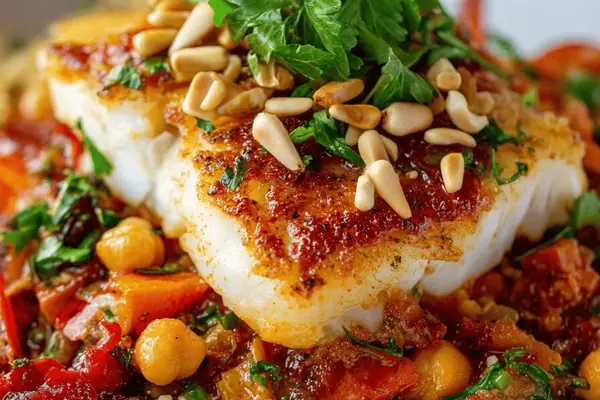
Couscous with White Fish, Chickpeas & Pine Nuts
By Emma
Certified Culinary Professional
·
Recipe tested & approved
Sear the fish first—half the oil, medium-high heat, just until the edges turn opaque. Don’t wait for it to look done all the way through. Lift it out, set it aside. Do the second batch the same way. The pan’s got all that flavor stuck to the bottom now, that’s what matters next.
Why You’ll Love This Moroccan Couscous Recipe
Takes 60 minutes total if you don’t overthink it. The fish stays tender because you sear it first, then it basically rests in the warm broth—no rubber, no dried out mess. Seafood and spice shouldn’t be complicated but this makes it feel that way anyway. One pot. One skillet. Everything builds in the same place. Works cold the next day, maybe better. Harissa gives you heat without tasting like it’s trying too hard. The couscous absorbs all that Moroccan spice-and-broth situation and actually tastes like something happened to it.
What You Need for Moroccan Couscous
Firm white fish—cod or haddock. Not delicate stuff. 600 grams, cubed.
Olive oil. 80 ml across two sears. More if your pan runs dry.
One medium onion, chopped fine. Yellow bell pepper for sweetness—dice it. Zucchini, one medium one. Just chop it.
Garlic. Three cloves. Mince them.
Spices: cumin (6 ml), smoked paprika (3 ml)—the smoked part matters, swap the regular stuff and it’s different—and turmeric (3 ml). Harissa. 5 ml. Adjust up if you want heat, down if you don’t.
Tomato paste, 25 ml. Lemon juice, 20 ml. Fresh.
Chickpeas. One 400 ml can. Rinse them. Vegetable broth or fish stock if you’ve got it. 500 ml. Fish stock hits harder flavor-wise. Not mandatory.
Couscous. 450 ml. Toasted pine nuts, 50 grams. They crunch. Flat-leaf parsley, 150 ml, fresh and chopped.
Salt. Black pepper, fresh ground.
How to Make Moroccan Couscous
Heat half the oil in a large skillet over medium-high. When it shimmers—not smoking, just that shimmer—place half the fish cubes in there. Listen for the sizzle. Not a roar. A sizzle. They’ll go opaque at the edges while the inside’s still soft. That’s when you pull them. Use a spatula. Fish breaks if you’re rough.
Repeat with the remaining fish and remaining oil. Don’t pile them on top of each other. Crowded pan means they steam instead of sear. Everything changes if they steam.
Same pan, same pan juices—that browned stuff on the bottom is gold. Turn heat down to medium-low. Onion goes in. Bell pepper goes in. Sprinkle the cumin, smoked paprika, turmeric right now. Stir. The spices will smell warm and earthy within a minute. You’ll know. Onion should go translucent, not brown. Pepper stays vibrant with a tiny bit of snap left. Takes about 7 to 8 minutes.
Add zucchini and garlic. Stir fast. Garlic releases its smell in under a minute. Zucchini just starts to soften. Three minutes, maybe four.
Tomato paste. Lemon juice. Harissa. Dump it all in. Stir constantly. The whole thing turns deep red. Spicy notes float up. It smells like Morocco now, or what Morocco tastes like anyway.
Pour in the chickpeas and broth. Bring it to a gentle boil. Then immediately drop the heat. Bubble softly for 4 minutes. The broth thickens a bit. Flavors marry. That’s the technical term, but it’s true—it tastes connected now.
Stir the couscous into the simmering liquid. Carefully, carefully—nestle the seared fish back in. Don’t break it. Mix lightly but thoroughly so the couscous starts absorbing the liquid evenly. Cover the pan tight. Foil works. A lid works better. Turn off the heat.
Let it sit for 7 minutes. Don’t peek. Peeking early means you let steam out and the couscous gets dense, thick, wrong. Seven minutes and it’s fluffy. Stealth rest period.
While that’s happening, toast the pine nuts in a dry pan. Medium heat. They’ll go golden and smell amazing. Gentle tossing. One second too long and they’re bitter. Burnt. Not worth it.
After 7 minutes, uncover. Gently fold in the pine nuts and parsley. Taste it. If it needs brightness, splash a bit more lemon. If it needs heat, more harissa. Usually needs one or the other.
How to Get Moroccan Couscous Perfectly Textured
The fish texture lives or dies in the searing step. You sear it right—edges opaque, inside still soft—and it stays that way. Drop it in the broth later and it just gentle-heats through. Two minutes in that broth and it’s still good. Five minutes and it starts getting tight. Ten minutes and it’s rubber. So pull it from the heat after the couscous steams. Don’t let it hang around simmering.
The couscous itself is easy if you follow the steam rule. Cover it. Leave it alone. The liquid-to-couscous ratio matters more than you’d think—450 ml couscous to 500 ml broth. It absorbs almost all of it. If it’s too thick after 7 minutes, sprinkle a few drops of boiling broth on top and gently fluff with a fork. Loosen it up. Don’t stir aggressively or it gets mushy.
The spice situation—harissa is the wild card. Five milliliters tastes spiced but not aggressive. Most people can eat it. Ten milliliters and you’re in heat territory. Start at 5. Taste. Add more if you want. You can’t take it out once it’s in.
Moroccan Couscous Meals—Tips and Common Mistakes
Fish cubes matter. Firm white fish. Cod. Haddock. Halibut if you’re feeling it. Soft fish breaks apart when you sear it. Skip that.
The pan juices after searing—don’t wash them out. That’s where all the taste is. The browned bits stick to the bottom and you’re literally building flavor on top of flavor. That’s the whole point.
Chickpeas give you protein and substance. They’re soft enough that they don’t add chewiness. They absorb the broth and spice. If you skip them the dish feels thin. Not worth saving a few minutes.
Toasted pine nuts vs. regular pine nuts—the toasting makes a difference. Raw pine nuts taste like nothing. Toasted ones taste nutty and crunchy. If you don’t have pine nuts, toasted sliced almonds work. Cashews work. Walnuts get weird.
If harissa sounds too spicy, dial it to 2 or 3 milliliters. Or skip it and use smoked paprika alone. The Moroccan flavor is still there. Just less aggressive.
If no fresh parsley, mint works. Cilantro works. Regular parsley from a dried jar doesn’t. It tastes like grass clippings.
Smoked paprika vs. regular paprika—they’re different things. Regular paprika tastes like pepper. Smoked paprika tastes like it sat in a smoky room. That’s why it’s in this couscous recipe. The depth matters.
Lemon juice at the end—fresh lemon. Not bottled. Bottled tastes sharp and flat. Fresh lemon tastes bright.
Couscous with White Fish, Chickpeas & Pine Nuts
Prep:
25 min
Cook:
35 min
Total:
60 min
Servings:
6 servings
Ingredients
- 600 g firm white fish cubes like cod or haddock (reduced quantity from 675 g)
- 80 ml olive oil (slightly more for searing and veggies)
- 1 medium onion finely chopped
- 1 yellow bell pepper deseeded and diced (replacing red pepper for sweetness)
- 6 ml cumin ground
- 3 ml smoked paprika (swap regular paprika to deepen flavor)
- 3 ml turmeric ground
- 1 medium zucchini chopped
- 3 garlic cloves minced (extra 1 clove to punch garlic aroma)
- 25 ml tomato paste
- 20 ml lemon juice
- 5 ml harissa (adjust to heat preference)
- 1 can 400 ml chickpeas rinsed and drained
- 500 ml vegetable broth (fish stock if available — helper for umami)
- 50 g toasted pine nuts (replacing raisins for crunch)
- 450 ml couscous (slightly reduced for better ratios)
- 150 ml fresh flat-leaf parsley chopped
- Salt and black pepper freshly ground
Method
- 1 Heat half oil in a large deep skillet or wide pot over medium-high. When shimmering, gently sear half fish cubes just until opaque edges appear but still tender inside. Listen for a light sizzle, not a roar. Transfer fish gently onto plate to avoid breakage.
- 2 Repeat searing with remaining fish using remaining oil. Don’t crowd pan — fish will steam not sear otherwise. Use a spatula to flip carefully, fish is fragile once hot.
- 3 In same pan with pan juices, reduce heat to medium-low. Toss in chopped onion and diced yellow pepper. Sprinkle cumin, smoked paprika and turmeric right away. Cook, stirring often until onion softens and spices smell warm and earthy. Should take about 7-8 minutes — onion translucence, not browning; pepper still vibrant with a bit of snap.
- 4 Add zucchini and garlic. Stir swiftly, cooking until garlic releases its scent and zucchini just starts to soften, around 3 minutes.
- 5 Dump in tomato paste, lemon juice, and harissa. Stir constantly to blend paste and aromatics without burning. The mix will deepen to a rich red with spicy notes floating up.
- 6 Pour chickpeas and broth or fish stock. Bring to gentle boil then immediately drop heat. Bubble softly for 4 minutes to marry flavors, thickening broth slightly.
- 7 Stir couscous into simmering liquid, then carefully nestle back the seared fish cubes without breaking. Mix lightly but thoroughly so couscous starts absorbing liquid evenly. Cover pan tightly with lid or foil and turn off heat.
- 8 Let couscous steam in its own heat for 7 minutes; stealth rest period swells it to fluffy perfection. Avoid peeking too soon — premature stirring ruins texture, leads to mush.
- 9 Meanwhile, toast pine nuts in dry pan until golden and aromatic. Gentle tossing and close attention — a second too long, nuts burn and turn bitter.
- 10 After couscous fluffing, uncover and gently fold in pine nuts and parsley. Check seasoning now. If lacking brightness, add small splash more lemon or harissa.
- 11 Serve warm in a large shallow bowl. Garnish with more parsley. Offer lemon wedges for those craving extra tang. Textures contrast with juicy fish and nut crunch hits satisfying. Flavors push and pull — smoky, tart, spicy.
- 12 If no pine nuts, toasted sliced almonds work well. If fish unavailable, firm tofu cubes or chickpea fritters create vegetarian spin. Use vegetable broth for vegan.
- 13 Avoid overcooking fish in broth stage; it will turn rubbery fast. Seared just right, it flakes gently when lifted with fork.
- 14 If couscous thickens too much during steaming, sprinkle few drops boiling broth and gently fluff with fork to loosen.
Nutritional information
Calories
380
Protein
25g
Carbs
45g
Fat
15g
Frequently Asked Questions About Couscous Recipes
Can I make this couscous meal recipe ahead of time? Yeah. Let it cool completely. Store it in the fridge in a covered container. It keeps 3 days. Reheat gently—low heat, splash of water or broth. The fish stays okay because you didn’t overcook it in the first place. Cold it’s also fine. Different but fine.
What’s the best way to cook couscous without a steamer? Just cover the pan. Tight. Foil if you don’t have a lid. Heat off. Seven minutes. That’s steaming without equipment. The trapped steam does the work. Don’t peek.
Can I swap the fish for something else in this couscous dish recipe? Firm tofu cubes work. Press them first so they’re not waterlogged. Chickpea fritters—homemade, fried until crispy—replace the protein. Then it’s vegetarian. Use vegetable broth instead. The couscous meals angle changes but the spice situation stays the same.
How do I know when the fish is done? Opaque edges after the sear. Then it rests on the plate. Later in the warm broth it just gentle-heats through. Fork-flakes gently when you lift it. If it breaks apart before you even pick it up, it’s overcooked. This happens if you leave it simmering too long.
Is this couscous healthy? Whole grain couscous has fiber. Chickpeas add protein. Fish is lean protein. Olive oil is fat but the good kind. Harissa and spices add flavor without calories. So yeah. It’s not a salad but it’s not heavy either. Feels balanced.
What’s the difference between regular couscous, pearl couscous, and israeli couscous? Regular couscous is tiny. Pearl couscous and israeli couscous are basically the same thing—bigger, rounder, chewier when cooked. This recipe uses regular couscous. You could swap to pearl couscous recipes or israeli couscous but cooking time gets longer—maybe 10-12 minutes instead of 7. The texture changes. Both work fine. Never tried it so maybe not.
Can I add vegetables to this moroccan couscous? It’s already got zucchini, pepper, onion. You could add more. Tomatoes. Carrots. Eggplant. Add them when you add the zucchini. Give them time to soften. Don’t add too much or you’re basically making a stew and the couscous doesn’t absorb the broth right.
Should I use fish stock or vegetable broth? Fish stock tastes deeper. More umami. Vegetable broth is cleaner and lighter. Either works. If you’ve got fish stock, use it. If not, vegetable broth is fine. Don’t stress it.
You’ll Love These Too
Explore all →
Caramel Apple Pretzel Bark Recipe
Açaí Bowl with Strawberries and Pineapple
Cajun Chicken Pasta with Creamy Tomato Sauce
Cranberry Chocolate Pull-Apart Bread
Crispy Roasted Potato Hearts with Garlic
Ginger Chutney Recipe with Fresh Grapes
Cream Cheese Frosting with Lemon
Pineapple Chicken Salad with Avocado

Kahlua Chocolate Cheesecakes with Oreo Crust
Brown Sugar Pecan Cake with Butter
Rustic Apple Galette with Cinnamon
Loaded Potato Rounds with Bacon & Cheddar
Indian-Spiced Mayo with Cilantro & Smoked Paprika
Grilled Chicken Sandwiches with Scallion Sauce
Lemon Raspberry Bars with Coconut Oil Shortbread
Black Bean Stew Recipe with Pork & Linguiça
Pear Chocolate Cake with Dark Chocolate Mousse
Berry Crumb: Raspberry Sauce Recipe
Crispy Air Fryer Corn on the Cob