Avocado Chocolate Mousse with Tuna Tartare
By Emma
Certified Culinary Professional
·
Recipe tested & approved
Cut the avocado. Toss it with lime juice before it turns brown. The tartare waits — raw tuna, sesame oil, that preserved ginger kick. Twenty-five minutes total, and you’ve got something that looks like it came from a Japanese restaurant’s sushi counter. Tastes better than it should, honestly.
Had some really good sashimi-grade tuna one Tuesday. Needed something to do with it besides soy sauce and rice. The avocado mousseline happened by accident — was making something else, pivoted. Now this is what I make when someone’s coming over and I want them to think I actually know what I’m doing.
Why You’ll Love This Avocado Mousse Recipe
Takes 25 minutes. Seriously. Prep and five minutes of heat, done.
Works as an appetizer that doesn’t feel light — the tuna, the sesame oil, it’s rich enough that people notice. Not a tiny bite. Actual food.
Sashimi-grade tuna gets a real moment here. Most recipes drown it. This one lets it sit next to something creamy and sour and a little spicy. The horseradish is weird in the best way — sharper than wasabi, less one-note.
Everything comes together cold except the croûtons. No stress. No timing games.
The avocado and chocolate angle works because avocado mousseline is basically chocolate mousse technique but green and savory instead. If you’ve made mousse before, you know the texture already.
What You Need for Avocado and Tuna Tartare
One ripe Hass avocado. Not the puffy ones. Not the hard ones. The one that gives a little when you squeeze it. Lime juice goes on it immediately — prevents that brown discoloration that kills the plate. Twenty milliliters. That’s about half a lime.
Fresh horseradish. Grated. Three milliliters. If you can’t find fresh, stop and find fresh. Jarred is vinegary and one-note. This needs bite, not shelf-stable sharpness.
Salt. A pinch. Not a measurement. You’ll know.
Sashimi-grade tuna. Four hundred fifty grams. Finely diced. Your fishmonger should know what sashimi-grade means. If they look confused, different fishmonger.
Scallions. Two. Chopped fine. White and light green parts mostly.
Tamari soy sauce. Twenty milliliters. Tamari’s less salty than regular soy, sits better with raw fish and sesame oil.
Toasted sesame oil. Ten milliliters. Toasted. Not regular. Toasted sesame smells like it came from somewhere. Regular sesame is nothing.
Toasted black and white sesame seeds. Fifteen milliliters. Mixed together. Separate ones work too if that’s what’s in your cabinet.
Lime zest. One lime. Grated fine.
Yuzu juice. Five milliliters. If you don’t have yuzu, lime works. Not the same, but it works.
Preserved ginger. Thirty grams. Diced small. That sweet-spicy pop that stops the raw fish from feeling heavy.
Baby arugula. Thirty grams. Peppery. Crisp. Acts like a palate cleanser on the plate.
Baguette croûtons. Four. Grilled, not fried. Dry. The contrast matters.
Extra virgin olive oil. A drizzle. Quality one. Fruity. Bright.
How to Make Avocado Mousse with Raw Tuna
Slice the avocado open. Get the pit out. Scoop the flesh into chunks. Lime juice goes on it right now — not in a minute, now. Toss it. Coat everything.
Food processor. Put the avocado in. Add the horseradish. Pulse. Don’t blend it to nothing. You want texture — coarse, still slightly chunky. Smooth avocado mousse tastes flat next to raw fish. Slightly rough cream catches the sesame oil better, holds the plate together.
Salt it. A pinch. Taste it. Salt lowers the earthiness, lets the lime hit different.
Plastic wrap pressed tight to the surface. Chill it while you do the other thing. The avocado mousseline can sit there for hours if it’s sealed properly. Oxidation happens fast once it breaks down. Sealed, you’ve got time.
Get a bowl. Mix the scallions, tamari, sesame oil, yuzu juice, and preserved ginger. Don’t wait. Stir it around until the ginger dissolves a bit and the whole thing smells like something — salty, nutty, a little sweet. This is your seasoning base. The tuna goes into this.
Tuna diced fine. Not minced. Diced. There’s a difference. Minced is mushy. Diced is tuna. Fold it in gently. You’re not making tartare paste. You’re mixing tuna with flavors. Fold, don’t stir hard. Fold once, maybe twice. Let it sit five minutes. The flavors marry. The fish stays fresh. More than five minutes and the tuna starts to feel warm and loose even though it’s still cold. You’ll know when it’s done just by looking at it.
How to Get Avocado Mousse Texture Right and Raw Tuna Fresh
Cold plates first. This matters more than it sounds. Cold slows everything down — the avocado doesn’t discolor as fast, the tuna doesn’t start sweating, the plate stays tight.
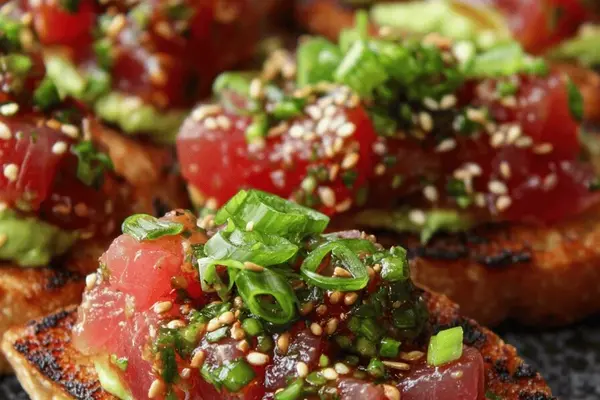
Ring mold or any circular cutter. Optional, but it changes how this looks. Pack the tuna in. Gently. Press down but don’t compact it into a hockey puck. You want it to hold shape, not turn into tartare paste.
Quenelle of avocado mousseline next to it or on top. Quenelle is just a fancy word for three spoon scoops that make it look fancy. Spoon the mousse into a warm spoon, smooth it with another warm spoon, slide it onto the plate. Doesn’t have to be perfect. Close to perfect is fine.
Sesame seeds sprinkled over both. Lime zest grated right over it — grate it fresh on the plate to release the oils. The smell hits first.
Baby arugula. Handful. Scattered. It’s peppery, it’s crisp, it stops the richness from getting too heavy.
Croûtons on the side — they have to be hot and crisp. Grilled, not fried. Dry crisp. Not oily. The crunch is the last thing you taste before the richness comes back.
Olive oil. A swirl. Light. Not a pool. Just enough to add brightness and smooth out the texture.
Serve it now. Immediately. Avocado starts turning gray after ten minutes even sealed. Tuna warms up. Everything breaks down. Timing is the only thing that matters here.
Avocado Mousse Tips and Mistakes to Skip
Avocado browning fast? Too late. Cover it, add another tear of lime juice, hope. Next time, press plastic wrap to the surface. That stops air from hitting it.
Tuna releasing juice and making the plate wet? Drain it on a paper towel before mixing. Five seconds. Keeps the tartare clean instead of swimming.
The horseradish can be swapped for fresh wasabi if you have it. They’re different — horseradish is complex, wasabi is heat. Both work. Horseradish sits better with avocado, though.
Baguette stale? Rice crackers. Toasted lavash. Nori if you want to commit to the Japanese angle. Texture contrast is why they’re there. The specific bread doesn’t matter.
Don’t prep the tartare and walk away. Make it, let it sit five minutes, plate it. Fish gets weird sitting around. The texture goes soft even when cold. The flavors start tasting like each other instead of separate things.
Avocado mousseline keeps for hours if sealed. Tartare doesn’t. Make the mousse first, chill it. Do the tartare five minutes before you plate.
Sesame oil must be toasted. Raw sesame oil is bitter and one-note. Toasted sesame is nutty and deep. There’s no substitute here.
Don’t skip the salt in the mousse. Don’t skip the lime. Don’t skip the textured bite of the horseradish. Each thing does something. Leave one out and the plate tastes flat.
The preserved ginger is the thing people ask about. Sweet-spicy, cuts the richness, sits perfect between toasted sesame and raw fish. Don’t replace it with regular ginger. Preserved is different — it’s been softened and sweetened. Regular ginger is sharp and raw.
Avocado Chocolate Mousse with Tuna Tartare
Prep:
20 min
Cook:
5 min
Total:
25 min
Servings:
4 servings
Ingredients
- Mousseline
- 1 ripe Hass avocado
- 20 ml lime juice
- 3 ml grated fresh horseradish
- pinch of salt
- Tartare
- 2 scallions finely chopped
- 20 ml tamari soy sauce
- 10 ml toasted sesame oil
- 450 g sashimi grade tuna finely diced
- 15 ml toasted black and white sesame seeds
- 1 lime zest grated finely
- 30 g baby arugula
- 4 baguette croûtons grilled
- extra virgin olive oil drizzle
- Twist additions
- 5 ml yuzu juice
- 5 g finely diced preserved ginger
Method
- Mousseline preparation
- 1 Cut avocado flesh into chunks, toss immediately with lime juice to prevent browning. Pulse briefly in food processor with freshly grated horseradish until creamy but still slightly textured — not a puree. Salt lightly to balance earthiness. Cover tightly with plastic wrap pressed to surface; chill while prepping tartare. The slight coarse texture adds more bite than smooth avocado cream, allowing it to sit better next to fish.
- Tartare assembly
- 2 Combine scallions, tamari, toasted sesame oil, yuzu juice, and diced preserved ginger in a bowl. Stir to marry flavors - this will season the tuna. Gently fold in diced tuna; careful not to mash. Taste test now and adjust salt or acidity. The preserved ginger adds an unexpected sweet-spicy pop, cutting raw fish richness and complementing toasted sesame’s nuttiness. Let sit 5 minutes to amalgamate but no longer or tuna loses freshness.
- Plating
- 3 Chill four plates beforehand; cold slows avocado and fish from softening too quickly. Use a ring mold or any circular cutter to shape tartare: pack tuna first, gently pressing down but not compacting. Layer a quenelle of avocado mousseline close by or on top for contrast. Sprinkle sesame seeds over both elements, zest lime finely atop to release oils and fragrance. Garnish with baby arugula — peppery and crisp, works like a palate refresher here.
- 4 Arrange warm grilled baguette croûtons on side; they must be dry crisp, not greasy, to add crunch. Finish with a light swirl of quality extra virgin olive oil. This oil adds fruity brightness and smooth mouthfeel, contrasting with toasted sesame’s deep aroma.
- 5 Serve promptly to avoid avocado discoloration or fish warming up. Tuna must be very fresh; if unavailable, substitute with fresh yellowfin or Arctic char for a similar texture but softer flavor profile. Wasabi replaced here by fresh horseradish because it blends better with green avocado and yuzu acidity, less one-note heat but a complex rhizome sharpness.
- Troubleshooting and tips
- 6 If avocado begins oxidizing before serving, cover tightly and add a tear or two of extra lime juice to refresh color. If tuna juice pools, drain slightly on paper towel before mixing - keeps tartare clean. For an alternative base, substitute baby arugula with micro cilantro or shiso leaf for different herbal notes. Baguette stale? Use rice crackers or toasted lavash instead; texture contrast critical.
- 7 Timing is key. Don’t prep tartare and leave it too long — fish loses texture, flavors dull. Avocado mousseline can be prepped hours ahead but keep chilled and sealed.
- 8 The goal: balance savory, acidity, creaminess, and texture. Each element matters; skipping one leads to a flat plate. Sesame oil must be toasted – raw sesame oil is bitter here. And always, trust your nose and palate — no recipe fixes bad quality ingredients.
Nutritional information
Calories
250
Protein
20g
Carbs
8g
Fat
18g
Frequently Asked Questions About Avocado Mousse and Raw Tuna Tartare
Can I make this ahead, or does everything have to be fresh? Avocado mousseline sits for hours if sealed with plastic wrap pressed to the surface. Tartare doesn’t — make it five minutes before plating. The tuna loses texture if it sits around in liquid.
What if I can’t find sashimi-grade tuna? Different fishmonger. That’s not being difficult. Bad tuna ruins the whole thing. If you truly can’t find it, yellowfin works. Arctic char too, but softer flavor. Don’t use frozen thawed. Just don’t.
Is this actually vegan if I use avocado chocolate mousse instead? The recipe as written is raw tuna tartare. You could make just the avocado mousseline for a vegan avocado mousse recipe — skip the tuna entirely, add a bit more lime and ginger, maybe some black sesame seeds for crunch. Tastes different but works.
The horseradish tastes too sharp. Use less next time. Three milliliters is already small. Go down to two. Or don’t use fresh — actually, use fresh. Jarred is worse.
Can I substitute the preserved ginger with regular ginger? Technically yes. It won’t taste the same. Preserved is sweet and soft. Regular is sharp and raw. They’re different flavors doing different things. Worth finding the preserved kind.
Do the croûtons have to be baguette? No. Just needs to be crisp and dry. Rice crackers, toasted lavash, even nori if you want to lean into the Japanese angle. Texture contrast is the point.
What if the avocado starts turning brown before I serve? Happens fast. Next time, use plastic wrap pressed to the surface, and don’t make it until the plate is ready. Right now — add more lime juice, cover it, hope. It might look okay. Might taste fine too.
Can I use regular sesame oil instead of toasted? No. Regular sesame is bitter. Toasted is nutty and deep. Completely different thing.
You’ll Love These Too
Explore all →
Lilac Fizz Lemonade with Vodka & Elderflower
Pepperoni Mozzarella Panini with Tomato Jam
Bean Salad with Grilled Chicken & Mint
Pickled Carrots with Apple Cider Vinegar
Brown Butter Sage Sauce with Garlic
Banana Bread Recipe with Oat Flour
Riesling Chicken Thighs with Shiitake Mushrooms
Crispy Battered Fish with Honey Dijon

Chocolate Cake House with Cream Cheese Frosting
Chili Con Carne Dish with Ground Beef
Chicken & Chorizo Jambalaya Recipe
Parmesan Cream Balls with Balsamic
Salmon Rosettes on Creamy Fennel
Beer Battered Onion Rings with Pale Ale
Chicken And Broccoli Rice Bake
Crispy Tofu Avocado Wraps with Arrowroot
No Bake Cookies with Strawberries & White Chocolate
Homemade Pretzels Recipe with Agave Syrup
Pork Meatballs with Mushroom Cream Sauce