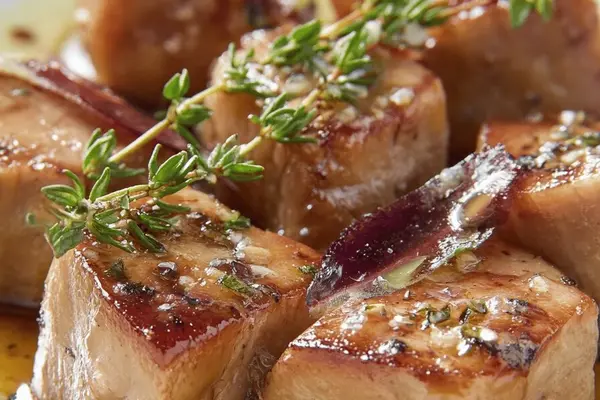
Foie Gras Appetizer with White Wine
By Emma
Certified Culinary Professional
·
Recipe tested & approved
Vein removal takes patience but it’s the whole thing — get the veins out clean and the rest happens right. Three pieces of foie gras, maybe 350 grams, and you’re doing this the French way. Torchon. Cloth wrapping. A holiday appetizer that’s honestly less complicated than it sounds, just slow.
Why You’ll Love This Foie Gras Appetizer
Looks like you went to culinary school. Didn’t. Takes 20 minutes of actual work, then the fridge does the rest for you.
Works for literally any occasion that needs impressing — New Year’s, Christmas, whenever someone important’s coming over. Homemade version costs half what restaurants charge. Maybe less.
The citrus cuts through the richness. Lemon zest right in the cure. Not fighting the fat — balancing it.
Slices clean if you follow the one thing that matters: temperature control during poaching. Get that water to 57°C and stay there.
Keeps for days. Tastes better on day two, maybe three.
What You Need for Foie Gras Torchon at Home
One whole foie gras, around 350 grams. Room temperature, not cold. Vein removal works easier that way.
Salt. Kosher if you have it. The coarser kind. Half a teaspoon of cracked black pepper — not ground. The bigger pieces stay visible, which matters visually.
Lemon zest. Fresh. One lemon. Zest it before you do anything else.
Two sprigs of thyme. Fresh. Dried doesn’t work here.
Dry white wine. Not cooking wine. An actual bottle you’d drink. Around 180 milliliters.
Bone broth. 150 milliliters. The quality actually matters — makes the poaching liquid taste like something instead of just hot water with salt.
A clean kitchen cloth. Linen works. Cotton works. Something you don’t mind using for non-food stuff afterward because it’ll have fat in it forever.
Plastic wrap. Regular kind. Nothing fancy.
How to Make Foie Gras at Home Using the Torchon Method
Get your foie gras out and let it warm up a bit. Cold foie gras shatters when you try to work the veins out. You want it just slightly soft, barely giving when you push it.
Grab a dull knife — butter knife’s perfect. Run it along the grain. You’ll see the veins. They’re darker, organized in strands. Use your fingers mostly. The knife’s just for coaxing. Pull gently. It’s softer than you think. Takes maybe five minutes. Some people do this for ten. Depends on how thorough you want to be.
Once the veins are out—and you don’t have to get every single one, just the big ones—scatter your salt and pepper all over it. Drop the lemon zest on top. Those two thyme sprigs go in there too. Everything touching the foie gras.
Find a bread pan. Loaf pan. Standard stuff. Set the foie gras in it. Pour the white wine over until it’s mostly submerged. Cover it with plastic wrap. Stick it in the fridge.
Leave it. 18 hours minimum. 24 hours is better. The wine cure softens everything. The salt starts seasoning it. The lemon zest does something quiet to the flavor.
How to Get Foie Gras Cooked Perfectly Using Sous-Vide Temperature Control
After the cure’s done, take it out. You’re going to see that foie gras has darkened slightly. The marinade’s pooling around it. Keep that liquid. All of it.
Take the cloth—clean, like actually clean, you’ll use this to poach in—and lay it flat. Set the foie gras in the center. Wrap it tight. Tighter than feels necessary. You want it shaped into a cylinder. Once it’s wrapped, wrap it again in plastic. Seal it. This is the torchon now.
Pour the marinade into a saucepan. Add your bone broth. Stir once. Clip in a thermometer.
Turn the heat to medium. Watch it. The instant it hits 57°C—that’s 135°F—stop. Don’t go higher. Just hold it there.
Submerge the wrapped foie gras. Keep it under the surface. The cloth will try to float. Let it float if it wants but keep it in the water. 20 to 25 minutes. The center of the foie gras needs to reach 57°C too. That’s when you know it’s done. Not overdone. Not underdone. Set.
Pull it out. Let it cool at room temperature for maybe 10 minutes. Then straight to the fridge. Don’t skip this part.
Foie Gras Torchon Tips and Common Mistakes
The veins are the biggest thing. People overthink it. You’re not trying to remove every molecule of vein. Just the big ones. The ones you can actually grab. If you spend 20 minutes trying to get everything, you’re wasting your time.
Temperature is the second thing. 57°C. Not 58. Not 59. A cheap thermometer will work but it has to be accurate. Your foie gras will be overcooked at 60°C. It breaks. Becomes grainy. The whole texture changes.
Don’t rush the cure. 18 hours minimum. People try to do 8 hours. It doesn’t work the same way.
The cloth wrapping keeps everything together. Keeps the shape uniform. When you slice it, those slices look intentional. Professional. It’s why restaurants do this instead of a terrine pan.
Cold slicing is the trick for plating. Take it straight from the fridge. Let it sit out for maybe 30 seconds. Wipe your knife between cuts. You want clean edges.
Citrus jam or toasted brioche. That’s it. Don’t dress it up. Foie gras doesn’t need help.
Foie Gras Appetizer with White Wine
Prep:
20 min
Cook:
20 min
Total:
24h 40min
Servings:
7
Ingredients
- 1 foie gras approx 350 g (12 oz)
- 1 teaspoon salt
- ½ teaspoon cracked black pepper
- 180 ml (¾ cup) dry white wine
- 150 ml (⅔ cup) bone broth
- Zest of 1 lemon
- 2 sprigs fresh thyme
- Clean kitchen cloth
- Plastic wrap
Method
- 1 Carefully tease out veins from foie gras with fingers and dull knife.
- 2 Scatter salt, black pepper over foie gras. Add lemon zest and thyme sprigs.
- 3 Place in bread pan; pour dry white wine over. Cover. Refrigerate 18 to 24 hours for marination.
- 4 Remove foie gras, drain liquid but keep for poaching.
- 5 Wrap foie gras tightly in clean cloth, shape cylinder. Seal with plastic wrap.
- 6 Combine marinade and bone broth in saucepan. Insert thermometer. Heat to steady 57 °C (135 °F).
- 7 Submerge wrapped foie gras. Poach gently 20–25 minutes until center liquid hits 57 °C.
- 8 Remove, cool at room temp briefly then fridge minimum 20 hours to set.
- 9 Cut slices. Serve with toasted brioche or citrus jam.
Nutritional information
Calories
450
Protein
7g
Carbs
1g
Fat
45g
Frequently Asked Questions About Foie Gras Appetizer Recipe
How long does homemade foie gras torchon keep in the fridge? Three to four days. Maybe five if the storage’s cold. After that the flavor gets weird. Not bad weird. Just less bright.
Can you freeze it? Yeah. Wrap it better though. Use the cloth, then plastic, then foil. Freezing changes the texture slightly — it gets a bit grainier when you thaw it. Still tastes good. Not the same.
What if your poaching water goes above 57°C? Pull it out. Cool it down. Start over with fresh liquid at the right temp. Don’t try to salvage it by letting it cool in the hot water. Overcooked foie gras is basically ruined.
Can you use something other than bone broth in the poaching liquid? Straight water works. You lose some flavor but it works. Chicken stock’s too aggressive. Vegetable broth tastes thin. Bone broth’s right.
The cloth won’t stay on — it keeps unwrapping — what am I doing wrong? Wrap tighter. Way tighter than feels right. The foie gras expands slightly during poaching and can push the cloth loose if it’s not sealed properly. Also make sure the plastic wrap’s sealed over the cloth. That keeps everything in place.
What’s the deal with white wine in the cure versus red wine? Red wine stains the foie gras. Turns it purple-ish. Tastes fine but looks wrong. White wine doesn’t. That’s the only reason. Use white wine or use nothing.
You’ll Love These Too
Explore all →
Herbed Chicken & Crispy Shallot Salad

Cheeseburger Pie with Bisquick Topping
Oven Baked Hard Eggs in Muffin Tin
Almond Joy Cookies Recipe | Chewy & Easy

Griddle Corn Cakes with Fresh Kernels

Lemon Cookies with Spelt Flour
Ben & Jerry's Vegan Ice Cream with Maple
Cranberry Glazed Beef Tenderloin
Homemade Peanut Brittle with Butter & Vanilla
Omble Crudo with Cranberry Vinaigrette
Glazed Beets with Grapefruit and Fresh Basil
Fudgy Brownies with Chocolate Ganache
Chicken Chorizo Olive Skewers Recipe
Double Ginger Crunch Cookies with Cardamom
Sweetbreads of Veal with Pine Nuts
How Do You Make An Omelet with Shrimp

Cookie Monster Cupcakes with Buttermilk
Honey Coconut Cream Sauce with Vanilla
Chocolate Chip Banana Bread Recipe