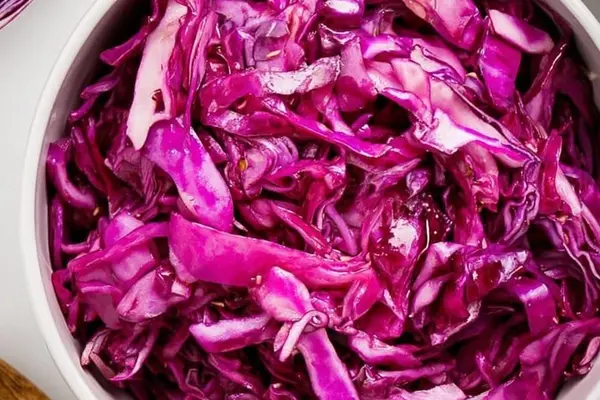
Coleslaw Recipe with Red Cabbage and Apple Cider Vinegar
By Emma
Certified Culinary Professional
·
Recipe tested & approved
Red cabbage coleslaw dressed with apple cider vinegar and maple syrup, finished with avocado oil. Tangy, crunchy, and easy to make at home.
Prep:
12 min
Cook:
0 min
Total:
12 min
Servings:
6 servings
Shred the cabbage first. You want a mix—some thin strips, some chunky pieces. Texture matters. This actually happened by accident once, knife slipped, and the slaw came out better. Toss it into a bowl that’s way bigger than you think you need.
Why You’ll Love This Coleslaw Salad
Takes 12 minutes total. No cooking. Just knife work and waiting. Works cold. Stays good in the fridge. Gets better the next day, actually—flavors keep deepening. Side dish that works with literally anything. Pulled pork. Fish. Tacos. Nothing. Just the slaw alone. Red cabbage stays purple instead of turning brown like green does. Color keeps. The dressing is simple. Four ingredients. Not mayo-heavy like some versions. Lighter. Still rich enough.
What You Need for Coleslaw Dressing
Red cabbage. The whole head. Shredded or chopped—doesn’t matter much as long as it’s not super thick.
Apple cider vinegar. Not white vinegar. White’s too sharp. Apple cider is warm, kind of woody. That’s the whole thing right there.
Maple syrup. A few tablespoons. Honey works but it’s cloying. Maple’s earthier. Tastes like fall.
Kosher salt. Coarser than table salt. Stays on the food instead of disappearing. A teaspoon.
Freshly ground black pepper. Literally just ground it. Pre-ground tastes like nothing. Quarter teaspoon.
Avocado oil. Buttery. Doesn’t get weird at room temperature like olive oil does. One tablespoon. Olive oil works if you want a different flavor. Not better, just different.
How to Make Coleslaw Dressing
The dressing is where everything happens. Whisk apple cider vinegar with maple syrup in a small bowl until they’re actually combined. Not like mixed. Combined. There’s a difference. The maple dissolves into the vinegar. This takes maybe a minute.
Pour it over the cabbage while the dressing’s still in the bowl. Right away. Don’t let it sit. The cabbage needs to soak it up while the flavors are concentrated.
Sprinkle kosher salt across the whole pile. Not in one spot. Spread it. Salt draws the moisture out of the cabbage, softens it up, makes it actually take flavor instead of just sitting there crunchy and dumb.
Cracked black pepper goes in now. Fresh. The bite matters.
Drizzle avocado oil last. It’s not doing anything chemical—it’s just there to add richness and make the whole thing slide together better. It’s buttery. Stable.
How to Get Coleslaw Salad Crispy But Tender
This is backwards from what you’d think. Crispy means raw. You want both somehow.
Cover the bowl tight. Plastic wrap. Lid. Whatever you have. Fridge.
And then time. Forty-five minutes minimum. You could wait 24 hours. Longer is fine, actually better. During this time the cabbage goes from raw and snappy to kind of surrendered, but not mushy. The purple juice starts seeping out—that’s salt and vinegar doing what they’re supposed to do. The color of the brine deepens too. It’s kind of gorgeous if you check on it.
After marinating—seriously, don’t skip this—toss it well. Everything redistributes. The excess liquid pools at the bottom. Squeeze some out if it looks too wet. You want it dressed but not drowning. Soggy coleslaw is nobody’s favorite.
Serve it cold. Straight from the fridge.
Coleslaw Recipe Tips and Common Mistakes
Too much liquid kills it. If you’ve got more than like a quarter inch of dressing pooling, drain it. Use your hands. Squeeze gently.
The dressing tastes too strong at first. Let it sit. By tomorrow it mellows. The cabbage absorbs it. Tastes balanced.
Tried red onion in here once. Good. Not necessary. If you add it, slice it thin.
Don’t shred the cabbage super fine. Sounds good in theory. Makes it turn to mush faster. Chunky pieces hold up better.
Maple syrup. Don’t skip it. Some people just use vinegar and salt. Flat. Maple rounds it out. You don’t taste maple—it just works.
Coleslaw Recipe with Red Cabbage and Apple Cider Vinegar
Prep:
12 min
Cook:
0 min
Total:
12 min
Servings:
6 servings
Ingredients
- 1 head red cabbage shredded or chopped
- 1/3 cup apple cider vinegar
- 2 tablespoons maple syrup
- 1 teaspoon kosher salt
- 1/4 teaspoon freshly ground black pepper
- 1 tablespoon avocado oil
Method
- ===
- 1 Start by shredding the cabbage using a sharp knife or mandoline. You want a mix of fine shreds and chunkier strips. Texture matters here. Toss it all into a big bowl so the cabbage has room to soak up flavors.
- 2 Whisk the apple cider vinegar with maple syrup thoroughly in a small bowl. Maple adds earthiness and avoids the cloying sweetness honey can bring. Pour this tangy mix over the cabbage immediately.
- 3 Sprinkle kosher salt evenly. It draws moisture out, softens the cabbage, and brightens natural flavors. Add cracked black pepper now — freshly ground gives a bite that pre-ground can’t compete with.
- 4 Drizzle avocado oil last. It’s buttery and stable at room temp. A good sub for olive oil if you want a milder flavor and silkier mouthfeel.
- 5 Cover bowl tightly with plastic wrap or lid. Let it rest in the fridge for anywhere between 45 minutes to nearly 24 hours. During this period, cabbage changes from crunchy and raw to tender but still snappy. Watch for the purple juice seeping out—a sign vinegar and salt did their job.
- 6 After marination, toss the slaw well to redistribute flavors and excess liquid. Drain lightly in a colander or use your hands to squeeze some excess out. Too much liquid and the slaw gets soggy fast. Serve cold, fresh-looking.
- ===
Nutritional information
Calories
55
Protein
1g
Carbs
4g
Fat
5g
Frequently Asked Questions About Coleslaw Dressing Recipe
How long does homemade coleslaw last in the fridge? Three days easy. Four if you’re not looking too close. Gets softer after day two but flavor’s usually better. The dressing keeps doing its thing the whole time.
Can you make coleslaw dressing without maple syrup? Yeah. Honey works. Brown sugar works. Regular white sugar doesn’t taste the same—too sharp. Maple’s earthier. Worth having around.
What if I use green cabbage instead of red? Works fine. Tastes basically the same. Color turns kind of brownish after a day or two. Red cabbage stays purple forever. That’s the only real difference.
Does coleslaw need to marinate overnight? No. Forty-five minutes and it’s ready. Overnight’s better—flavors blend more. But you don’t have to wait that long.
Can you substitute avocado oil in the slaw salad dressing? Olive oil works. Use less though—it’s punchier. Butter works if you eat it right away. Neutral oil works. Sesame oil changes the whole thing. Depends what you want.
Is this coleslaw recipe vegetarian? Yeah. It’s all plants. No hidden anchovies or anything.
You’ll Love These Too
Explore all →
Rocket Salad with Yellow Beans & Sherry Vinaigrette

No Bake Cheesecake with Oreo Crust
Bacon Wrapped Scallops with Paprika
Creamy Blue Cheese Penne with Toasted Walnuts
Baking Leeks with Roast Veal & Mustard
Grill Salmon Fish with Spicy Mayo Sauce

Air Fryer Spring Rolls with Cabbage
Grilled Butter Fries with Melted Cheddar

Bacon & Egg Burger with White Cheddar
No Bake Cheesecake with Chocolate Ganache
Fish Panko with Glazed Carrots & Allspice

Peanut Butter Cocoa Sandwich Cookies
Honey Glazed Brown Sugar Ham
Simple Fudge Recipe with Condensed Milk
Apple Jelly Recipe with Lemon and Sugar
Red Pepper Tomato Sauce with Garlic

Grapefruit Loaf Cake with Cardamom
Roast Chicken with Carrots, Beets & Cherry Tomatoes
Peach Pizza with Gorgonzola and Arugula