Kimchi Recipe: Napa Cabbage with Gochugaru
By Emma
Certified Culinary Professional
·
Recipe tested & approved
Toss the cabbage with salt. Massage it hard for a couple minutes—it’ll start giving up water right away. That’s exactly what you want. Let it sit at room temp for 25 minutes while you get everything else ready, and by then it’s soft but still snaps a little when you bite it.
Why You’ll Love This Homemade Kimchi Recipe
Takes 27 minutes flat. No fermenting jars, no waiting weeks. Korean spicy, sesame-forward, tastes like you know what you’re doing but you just threw it together. Works as a salad, a side for rice, a thing on top of eggs. Works cold the next day too—maybe better. One bowl. Cleanup isn’t anything. The cabbage stays crunchy even when it’s coated in that deep red chili oil. Not mushy.
What You Need for This Napa Cabbage Kimchi
Five cups of napa cabbage cut into strips about the thickness of your thumb. Not thinner—it’ll fall apart when you massage it.
Two and a half teaspoons of kosher salt. Sea salt works. The coarser kind matters because it sits on the leaves instead of disappearing.
Two tablespoons of gochugaru. That’s the Korean chili powder—smoky, not sharp like cayenne. You can dial it down or crank it up depending on your tolerance. Start with less. Add more later.
One tablespoon of toasted sesame seeds, smashed lightly before they go in. Whole seeds just roll around. Crushed ones release that nutty smell.
A tablespoon of toasted sesame oil. Not the pale kind. The dark golden bottle with the intense flavor.
One tablespoon of rice vinegar. Plain white vinegar tastes thin here. Rice vinegar has something going on.
A teaspoon and a half of fresh ginger, minced fine. The bite matters.
Two garlic cloves, minced or grated. Smaller pieces blend into everything instead of hitting hard.
Two green onions sliced thin.
A tablespoon of sugar. Honey or agave work too. It’s not about sweetness—it balances the salt and heat.
A tablespoon of fermented shrimp paste if you can find it. Or white miso. The shrimp paste is funkier and more authentic. The miso is gentler and honestly still tastes good. Either one gives you depth that nothing else does.
How to Make a Recipe to Make Kimchi at Home
Strip the cabbage into pieces about one centimeter thick—so roughly the width of your pinky. Toss it into a big bowl with the salt and go at it. Massage hard. You’re not being gentle here. After a couple minutes the cabbage starts to wilt and water pools at the bottom. That’s the salt doing its job, pulling moisture out of the leaves.
Walk away. Set a timer for 25 minutes. The cabbage needs time to get properly tender but not mushy. You’ll see the edges go almost translucent. Pick up a piece—it should bend without snapping, but you’ll still hear a crunch underneath when you chew.
While it sits, get your dressing ready. Whisk the chili powder, sesame seeds, sugar, sesame oil, shrimp paste or miso, vinegar, ginger, and garlic in a separate bowl. The smell hits different once you mix everything. Smoky. Spicy. Earthy. Funky if you went with shrimp paste.
How to Get Authentic Napa Cabbage Salad Texture and Flavor
Once the cabbage looks limp but still has some backbone, rinse it under cold water. Quick though—you’re just washing off the excess salt, not rinsing away the flavor. The cold water also stops it from getting softer.
Squeeze it. Use both hands and really press out the water without crushing the texture. If puddles are still pooling at the bottom, pat it dry with a paper towel or let it sit in the colander for a minute. Wet cabbage dilutes the dressing and makes everything taste thin instead of concentrated and spicy.
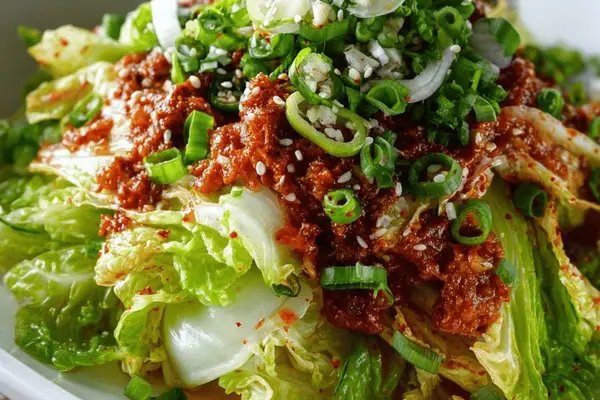
Put the damp cabbage back in the bowl with the dressing. Add the green onions. Toss hard. You want every piece coated in that red-orange mixture, and you’ll hear it crunch a little as you mix. Taste it. Is it too spicy? Add a drizzle more sesame oil or a pinch of sugar. Too flat? Rice vinegar or a dab of miso brings it back alive. It’s good right now—fresh and punchy. But if you want the flavors to get to know each other, throw it in the fridge for 10 or 15 minutes.
Korean Cabbage Salad Tips and Common Mistakes
The salt amount is the hinge. Too little and the cabbage stays rigid and tough even after massaging. Too much and you end up with something that tastes aggressively salty and never balances out. Feel the texture as you go. Soft but retaining crunch is the target. You’ll know it when you pinch a piece.
Fermented shrimp paste is the real thing if you want that authentic umami funk that makes people ask what’s in it. But it’s tricky to find and some people really don’t want that flavor in their food. White miso is milder and more approachable. It still brings depth without the funkiness.
Gochugaru is specific. Cayenne or smoked paprika will work in a pinch but they taste different. Cayenne is hotter and sharper. Smoked paprika is deeper but less spicy. Neither is bad—just different from what you’re going for.
Sesame seeds whole are useless here. Smash them slightly before adding. Releases the nuttiness instead of just having hard seeds sitting on top of everything.
This is a quick salad, not a fermented kimchi that gets better over three months in a jar. Treat it like you’d treat a slaw. Airtight container, fridge, three days tops before it starts losing crunch. It’s best fresh—that lively raw taste is the whole point.
Prep and dressing at the same time cuts your total time in half. While the cabbage is sitting there softening, your hands aren’t doing anything anyway. Get the bowl mixed and ready and you’re halfway through before you even rinse.
Kimchi Recipe: Napa Cabbage with Gochugaru
Prep:
27 min
Cook:
0 min
Total:
27 min
Servings:
3 cups
Ingredients
- 500 g (about 5 cups) napa cabbage, cut into 1 cm thick strips
- 12 ml (2 1/2 tsp) kosher salt or sea salt
- 30 ml (2 tbsp) gochugaru Korean chili powder, adjust to taste
- 15 ml (1 tbsp) toasted sesame seeds, smashed lightly
- 10 ml (2 tsp) granulated sugar, can use honey or agave
- 20 ml (1 1/3 tbsp) toasted sesame oil
- 15 ml (1 tbsp) fermented shrimp paste (optional), can substitute with white miso
- 7 ml (1 1/2 tsp) rice vinegar
- 6 ml (1 1/4 tsp) finely minced fresh ginger
- 2 cloves garlic, finely minced or grated
- 2 green onions, sliced thin
Method
- Napa Cabbage Preparation
- 1 Toss cabbage strips with salt in a large bowl. Massage vigorously for 2-3 minutes until it starts to soften and wilt. Let sit uncovered (or loosely covered) at room temp around 25 minutes until just tender but still crisp—almost translucent edges and slight bend when pinched. You’ll notice water pooling — that’s good, don’t drain yet.
- Dressing Mix
- 2 While cabbage softens, whisk chili powder, sesame seeds, sugar, toasted sesame oil, fermented shrimp paste (or miso), rice vinegar, minced ginger, and garlic in a separate bowl. Smell the layers: smoky, spicy, earthy, faintly funky if using shrimp paste. Adjust chili to your heat tolerance—start with less, can always add later.
- Rinse and Drain
- 3 Once cabbage looks limp but not mushy, quickly rinse under cold water to remove excess salt. This stops further breakdown and balances saltiness. Squeeze gently but firmly with hands to shed water without crushing cabbage texture. If too wet, pat lightly with paper towel or leave to drain for a few minutes. No puddles allowed or dressing dilutes.
- Final Assembly
- 4 Return cabbage to dressing bowl, add green onions, toss vigorously to coat evenly. Mix until cabbage glistens deep red-orange and you hear slight crunch beneath your hands. Taste. If too fiery, add a splash more sugar or a drizzle of oil. If flat, a touch more vinegar or miso. Rest in fridge 10-15 minutes if you want flavors to meld, but it’s good right away — lively and fresh.
- Tips and Tricks
- 5 • Salt quantity matters. Too little and cabbage stays tough; too much makes overly salty kimchi salad. Feel the texture—soft but retains crunch is the sweet spot.
- 6 • Fermented shrimp paste brings authentic umami but tricky to find or off-putting for some. White miso works nicely, milder but improves depth.
- 7 • If short on gochugaru, sub with cayenne or smoked paprika for different flavor profiles.
- 8 • Crushing sesame seeds lightly before adding unlocks nuttier aroma than just tossing whole.
- 9 • This isn’t a fermenting kimchi; treat as salad or quick pickle. Store in airtight container for up to 3 days but best fresh.
- 10 • To save time, prep dressing while cabbage salts—parallel work speeds kitchen moves.
Nutritional information
Calories
60
Protein
1g
Carbs
7g
Fat
4g
Frequently Asked Questions About Homemade Kimchi Recipe
Can I use a different kind of cabbage? Napa works best because it’s tender and doesn’t fight back. Green cabbage is tougher—you’d have to massage it longer and it still won’t have the same soft-crisp thing going on. Red cabbage is beautiful but assertive. Stick with napa.
How spicy should it be? Start with one tablespoon of gochugaru. Taste it. If you want more heat, add half a teaspoon at a time. You can’t take it back once it’s in there. Some people like it so hot it clears your sinuses. Some people want just enough to know something’s happening. Neither is wrong.
Can I make it ahead? You can prep everything and store it separately—salted cabbage in one container, dressing in another—and mix it the morning you want to eat it. Or just make it all at once and eat it fresh. It lasts about three days in the fridge before the crunch starts fading.
What if I don’t have fermented shrimp paste? Use white miso. It’s less funky but still tastes good. Or just leave it out entirely and bump up the salt and vinegar slightly. You lose that umami depth but it’s still a solid spicy napa cabbage salad.
Do I have to massage the cabbage? Yeah. That’s what softens it without cooking it. If you skip it, the cabbage stays tough and the whole thing feels raw and unfinished. Two or three minutes of real massage—not gentle rubbing, actual massage—changes everything.
Can I use white vinegar instead of rice vinegar? You can but it tastes sharp and thin. Rice vinegar has a roundness that makes sense with all the other flavors here. It’s worth hunting for.
Is this actually kimchi? Not by the strict definition. Real kimchi ferments for weeks and gets funky and sour. This is a quick salad that borrows Korean flavors—spicy, sesame, ginger, garlic. Call it a kimchi-style napa cabbage salad if you’re being technical. Call it delicious if you’re actually eating it.
You’ll Love These Too
Explore all →
Shrimp Toasts with Guacamole & Crispy Tortillas
Homemade Caramel Candy Recipe with Brown Sugar

Clams in White Wine with Pancetta & Fennel
Roasted Chicken With Couscous and Harissa

Homemade Pretzels Recipe with Agave Syrup

Condensed Milk Fudge with Pecans
Herb Hummus with Sunflower Seed Butter
Red Pepper Tomato Sauce with Garlic

Caesar Drink Clamato with Cilantro
Vanilla Bean Gelato Recipe with Heavy Cream
Persimmon Ginger Chutney with Cranberries

Grilled Butter Fries with Melted Cheddar
Lentil Wonton Tacos with Chipotle
Avocado Chocolate Cookies with Walnuts
Slow Cooker Garlic Dill Mash

Crispy Asparagus Appetizer with Herb Yogurt Sauce

Pear Butter Recipe with Cinnamon
Slow Cooker Meatloaf with Panko and Worcestershire
Kohlrabi Pear Salad with Figs & Manchego