
Poke Re: Sushi Rice Bowl with Marinated Salmon
By Emma
Certified Culinary Professional
·
Recipe tested & approved
Forty-five minutes total. That’s how long it takes to go from grocery bag to four perfect bowls. Rice first—that’s where everything lives or dies.
Why You’ll Love This Poke Bowl Recipe
Takes an hour if you move slow, 45 minutes if you know what you’re doing. Japanese rice technique meets Hawaiian poke, which somehow just works. One wooden bowl, one cutting board, one knife. Cleanup’s not nothing, but you’re eating sushi restaurant-quality fish in your kitchen. Cold rice kills it, so serve it warm—that sweet vinegar hits different when the rice is still soft. Sesame, nori, pickled ginger all pulling together in one bite. Works as a full meal or as lunch three days in a row.
What You Need for a Sushi Bowl With Poke
Sushi rice. Not short-grain, not jasmine. Sushi rice. The starch matters—that’s what holds the vinegar and gives it that specific stick without being glued together. Water, white rice vinegar, a bit of mirin, honey, salt. That’s your rice seasoning right there.
Sashimi-grade salmon or tuna—430 grams of it, sliced thin. Not thick. Thin enough to bend. Soy sauce, more mirin, prepared wasabi, toasted sesame seeds. Four green onions, a sheet of nori, pickled ginger. That’s the fish marinade and the toppings.
The pickled ginger matters. Sharp, cuts through the rich rice. Sesame seeds—toasted, not raw. Raw tastes like nothing. Nori shredded into those thin strips, not torn. Rough edges don’t work here.
How to Make Poke Rice That Actually Tastes Right
Rinse the rice cold water, bowl, swirl gently, drain. Do it again. And again. Four or five times until the water’s almost clear but still a little cloudy—that’s your signal the starch is gone but not stripped. Drain it in a strainer for 10 minutes minimum. Wet rice doesn’t cook right.
Pot, rice, measured water, stir once. Get it to a rolling boil medium-high heat. Bubbles forming fast, not creeping. Turn the heat down to the lowest setting the second steam starts rolling, cover tight, don’t open it. Fourteen to sixteen minutes. That’s it. That’s the whole cooking part.
Turn off heat. Keep it covered. Twelve minutes. Don’t lift the lid. Steam finishing is real. The rice keeps absorbing moisture and the grains separate instead of clumping.
While the rice is going, warm your vinegar mixture. Bowl, vinegar, mirin, honey, salt. Low heat, stir until honey dissolves. Three minutes. Don’t boil it. Heat kills the brightness.
Rice done. Large wooden or glass bowl. Pour the vinegar over it while it’s still steaming. Wooden spatula, not a spoon—fold it with slicing motions, not stirring. You’re not mashing. You’re folding. The rice cools while you work, and that fanning motion—fan it with your hand or a piece of cardboard—that’s what gives it the sheen. That glossy look. That’s the texture.
Let it sit covered until it reaches room temp. Room temp. Not cold. Cold rice is ruined rice.
How to Get the Fish and Marinade Perfect
Soy sauce, mirin, wasabi in a bowl. Mix it smooth. Taste it. Adjust the wasabi—start mild, add more if you want heat. You can always turn up the spice at the table.
Thin fish slices into the marinade. Toss once, twice. Don’t go crazy. Marinate ten minutes max at room temperature. Longer and the fish texture goes soft and the color dulls. You want it to stay translucent and bright.
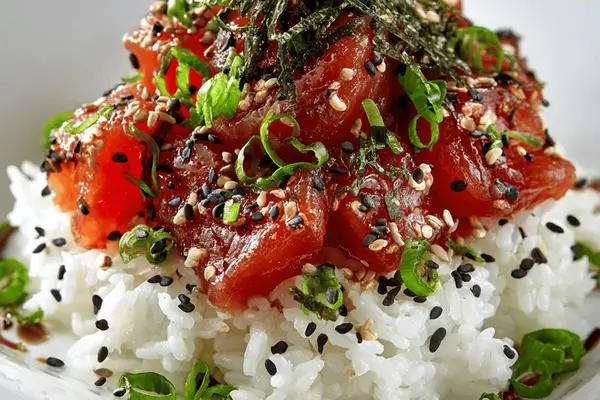
Divide the rice into four bowls, loose mounds. Lay the fish over the top, overlapping. Generous. You paid for sashimi grade, show it off. If the fish looks dull instead of glossy, it’s been sitting too long. You’ll see it.
Sesame seeds sprinkled on top. Green onions. Shredded nori. Pickled ginger on the side or right on top. Extra wasabi on the plate. Soy sauce for dipping.
Poke Bowl Tips and What Goes Wrong
Rice comes out too sticky? Probably didn’t rinse it enough. Do it five times next batch, drain it longer. Not sticky enough? Steam wasn’t long enough. Add two minutes to the rest time.
No sushi rice at the store? Short-grain rice works if you add a tablespoon more vinegar. Regular rice doesn’t work. Don’t bother.
Mirin missing? Dry sherry works. Sweet marsala works. But then cut back the honey because the sweetness changes. Fish freshness is everything. Buy from a fishmonger who knows what sashimi grade means. Keep it cold until the second before you slice it.
No wasabi paste? Horseradish mixed with a drop of soy replicates the heat. Ginger can be swapped for pickled daikon, but the flavor shifts. Nori’s optional if you hate it—furikake or toasted seaweed flakes work instead.
Fanning the rice while you fold it in the vinegar—that’s not optional. That’s the step where the texture becomes what it should be. Serving it cold ruins the whole thing. Room temperature.
Poke Re: Sushi Rice Bowl with Marinated Salmon
Prep:
45 min
Cook:
18 min
Total:
1h 3min
Servings:
4 servings
Ingredients
- Rice
- 570 ml (2 ⅓ cups) sushi rice
- 500 ml (2 cups) water
- 55 ml (3 ¾ tbsp) white rice vinegar
- 12 ml (2 ½ tsp) mirin
- 20 ml (1 ⅓ tbsp) honey
- 2,5 ml (½ tsp) salt
- Marinated Fish
- 65 ml (¼ cup plus 1 tsp) soy sauce
- 35 ml (2 ⅓ tbsp) mirin
- 6 ml (1 ¼ tsp) prepared wasabi
- 430 g (15 oz) sashimi-grade salmon or tuna, thinly sliced
- 12 ml (2 ½ tsp) toasted sesame seeds
- 4 green onions, finely sliced
- 65 ml (¼ cup plus 1 tsp) pickled ginger
- 1 sheet nori, shredded into fine julienne strips
- Extra wasabi paste
Method
- Rice Preparation
- 1 Rinse rice under cold running water in a bowl. Swirl gently, then drain. Repeat rinsing 4–5 times until water runs almost clear but still slightly milky — signals surface starch. Drain rice thoroughly in a fine mesh strainer for at least 10 minutes. Moisture affects cooking consistency.
- 2 Transfer rice and measured water to a medium pot. Stir once, bring to a rolling boil over medium-high. A hinge sound settles; bubbles should form rapidly but not scorch. Immediately reduce heat to lowest setting, cover tightly right away. Simmer 14–16 minutes. Avoid lifting the lid; steam’s job here.
- 3 Turn off heat, keep covered, let rest 12 minutes. Steam finish vital to absorb moisture evenly. Rice should be tender yet grains separate. Overcooked means mush; undercooked feels chalky.
- 4 While rice cooks, combine vinegar, mirin, honey, and salt in a small saucepan over low heat. Warm gently until honey dissolves and mixture slightly thickens, about 3 minutes. Don’t boil; acidity can diminish.
- 5 Transfer cooked rice to large wooden or glass bowl. Pour seasoned vinegar gently over steaming rice. Fold rice carefully using a wooden spatula or rice paddle with slicing motion — not stirring or smashing. Cool by fanning to give sheen and perfect sticky texture. This step is where perfect texture emerges.
- 6 Cover bowl with plastic wrap until rice reaches room temperature. Avoid refrigeration; cold rice kills texture and gloss.
- Fish Marinade and Assembly
- 7 Mix soy sauce, mirin, and wasabi paste in a medium bowl until uniform. Adjust wasabi to your heat tolerance; best to start mild, can add at plating.
- 8 Add thin slices of fish. Toss lightly, coating without mashing. Marinate no more than 10 minutes at room temp; too long will change fish texture and color.
- 9 Divide rice among 4 bowls in loose mounds. Lay marinated fish slices overlapping generously over rice. Look for translucent gloss — if dull, fish might be losing freshness.
- 10 Sprinkle evenly with toasted sesame seeds, sliced green onions, shredded nori, and spoon pickled ginger alongside or atop.
- 11 Offer extra wasabi and soy sauce on side. Mix flavors at will.
- Tips and Troubleshooting
- 12 Rice too sticky? Could be rinsing insufficient, or overcooked. Next batch rinse more thoroughly. Under sticky? Maybe not steamed long enough.
- 13 No sushi rice? Use short-grain rice but add 1 tbsp more vinegar in seasoning. Other grains won’t work.
- 14 No mirin? Dry sherry or sweet marsala can substitute, but adjust honey amount as sweetness will vary.
- 15 Fish freshness vital. Buy from trusted fishmonger labeled sashimi grade and keep chilled to last minute.
- 16 If no wasabi paste, horseradish mixed with a drop of soy replicates heat.
- 17 Ginger can be swapped for thin pickled daikon or fresh grated ginger but flavor shifts sharply.
- 18 Nori adds umami crunch but can be omitted. Toasted crushed seaweed flakes or furikake can fill in.
- 19 Fanning rice while mixing vinegar cools it and dries surface slightly. Use a handheld fan or piece of cardboard.
- 20 Serving cold rice kills taste and texture; serve at room temp to keep balance.
- 21 Try a tiny sprinkle of furikake or thin cucumber slices for fresh crunch — adds a twist without overpowering.
- Final Note
- 22 Master the rice and fish prep, and it’s a breeze. I’ve burned rice once by rushing the simmer; a loss of texture you feel immediately. Dull fish or bad rice ruins it faster than anything else. Smell sharpness from vinegar, sweet honey balance, and toasted sesame aroma pulling together. That’s when you know you nailed it.
Nutritional information
Calories
440
Protein
28g
Carbs
65g
Fat
8g
Frequently Asked Questions About Sushi Bowls and Poke
Can I make this ahead? Rice yes, fish no. Cook the rice hours ahead, let it cool, cover it. The fish marinade sits ten minutes max—do that right before you serve. Cold poke is cold rice, which kills it.
What’s the best sashimi-grade fish for a healthy poke bowl? Salmon or tuna. Salmon’s fattier, richer. Tuna’s cleaner. Both work. Just make sure it says sashimi grade. Your fishmonger will know.
Why is the rice seasoning so specific? The vinegar, mirin, honey, salt balance—that’s what makes sushi rice taste like sushi rice instead of just vinegary rice. The honey rounds the sharp edges. Mirin adds depth. You mess with it, you lose the whole thing.
Can I use regular rice instead of sushi rice? Short-grain rice might work if you add more vinegar. Long-grain rice won’t. Jasmine won’t. The starch content’s different. It won’t hold the seasoning the same way.
How fresh does the fish need to be? Sashimi grade. Bought today, used today. Buy it last, get home, into the fridge immediately, slice it right before the marinade. Don’t mess around. Bad fish is worse than no fish.
Why do you fan the rice? Cools it and dries the surface slightly. Gives it that glossy look and the right texture. You skip it, the rice stays wet and heavy. It’s the invisible step that makes the difference.
You’ll Love These Too
Explore all →
Lime Bars with Cranberry & Lime Curd

Banana Chocolate Chunk Bread Recipe

Creamy Chicken Stew with Potatoes & Dill
Creamed Spinach Side Dish with Pecorino

Easy Blackberry Cobbler with Cake Mix

White Chocolate Brownies with Cream Cheese

Asian Tofu Sandwich with Hoisin & Shiitake

Caprese Pesto Quesadillas with Fresh Mozzarella

Maple Blueberry Quick Bread Recipe

Chunky Pimento Melt with Bacon & Cheddar

Crunchy PB Chocolate Balls No-Bake

Ziti Bake with Spinach, Mushrooms & Ricotta

Cherry Chip Cake with Orange Zest & Pecans

Spinach Pesto Egg Dollops with Pecorino
Barley Salad with Halloumi & Roasted Peppers

Rustic Red Velvet Cake with Beet Powder
Halibut Papillotes with Pickled Cucumbers

Homemade Pretzels Recipe with Agave Syrup

Rustic Slow Chicken Stew with Bacon