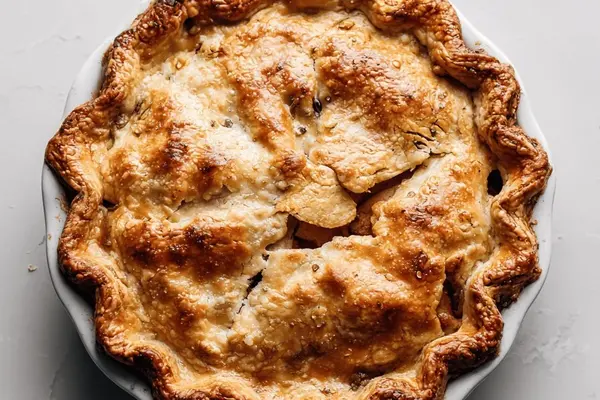
Pie Crust Recipe with Flax Egg and Canola Oil
By Emma
Certified Culinary Professional
·
Recipe tested & approved
Cut the flour and salt together first. Feels sandy, like damp beach sand. That matters more than you’d think.
Why You’ll Love This Pie Crust Recipe
Vegan, totally. No eggs, no butter, no stress. Works for literally any pie — fruit, savory, cream, doesn’t matter. The crust stays tender either way. Comes together in 15 minutes of actual work. Rest time is just sitting in the fridge. Homemade tastes different. Crispier edges, softer inside, somehow lighter than store-bought. Can’t explain it but you’ll taste it. No special equipment. One bowl, a knife, your hands. That’s the whole thing.
What You Need for a Vegan Pie Crust
All-purpose flour — 560 ml, about 2 and a third cups. Don’t sift it. Just measure and level flat.
Cold water. 125 ml. This is non-negotiable. Warm water makes the dough gluey.
Canola oil — 110 ml, which is 7 tablespoons. Olive oil won’t work here. Burns and tastes weird.
A flax egg. That’s 1 tablespoon of flaxseed meal mixed with 3 tablespoons of water, sitting for 5 minutes until it gels. This is your egg replacement. Sounds weird. Works.
Apple cider vinegar — 20 ml, roughly a tablespoon and a third. Not white vinegar. White vinegar is too sharp.
Salt. Half a teaspoon. Kosher or table salt, doesn’t matter much.
How to Make a Basic Pie Crust Recipe
Mix the flour and salt in a large bowl. Stir it thoroughly until the salt disappears into the flour completely. This takes longer than you think.
Combine the canola oil, cold water, flax egg, and apple cider vinegar in a separate small bowl. Don’t rush this. Stir slowly until the liquids start to emulsify — you’ll see a slight froth on top. That froth is important. It helps everything hold together.
Make a well in the center of the flour. Pour the liquid mixture in slowly, not all at once. Use a butter knife or dough scraper to fold the flour inward from the sides. Work from the edges toward the middle. Don’t overmix. That’s the killer mistake — overmixing creates gluey lumps and tough crust.
Keep folding until it looks shaggy and rough. Still some visible dry flour is fine. Then use your hands. Gather it into a loose ball. It should feel slightly damp but not sticky. If it clings to your fingers, sprinkle in a tablespoon of flour and mix again. Just one tablespoon though. More and you ruin it.
How to Get Crispy, Tender Pie Crust
Wrap the dough ball tightly in plastic wrap. Refrigerate for 50 to 60 minutes. Not less. Less keeps it tender but then it’s too soft to roll. More than an hour and it hardens up, gets harder to shape.
Dust your work surface lightly with flour. Roll the dough gently from the center outward. It should spread easily but still resist tearing. If it tears, that’s fine. You’ll fix it in the pan. Flip the dough over every few rolls so it doesn’t stick to the counter.
Place it in a 9-inch pie pan. Press it in with your fingertips, working up the sides. Small holes happen from rolling. Patch them with scraps or wet fingers. They disappear when baked.
Chill the dough again after fitting it into the pan. Optional technically. But it helps. Shrinkage during baking matters less when the dough’s already cold.
Pie Crust Tips and Common Mistakes
Overflouring. This is the enemy. You’ll think you need more flour than you do. You don’t. Light dust, flip the dough frequently instead. That’s the move.
If the dough cracks while you’re shaping it, pinch it back together. Fast. Crust imperfections add character. They’re fine.
Cold water is not a suggestion. Room temperature water makes everything fall apart.
The flax egg — it has to sit for 5 minutes minimum. Exactly. Before you mix it with the other liquids. Don’t skip this.
Don’t add filling right after shaping unless you want to. Crust stays in the fridge until you’re ready. You can bake it later in the day or the next day. Stays good.
When baked, the edges turn golden and crisp but still tender. You’ll smell it — the oil warming, flour lightly toasting. That’s when you know it’s done.
No par-baking needed unless your filling is watery. Even then, just 10 minutes at 375°F. Most pies, you skip it.
Pie Crust Recipe with Flax Egg and Canola Oil
Prep:
15 min
Cook:
0 min
Total:
70 min
Servings:
1 9-inch pie crust
Ingredients
- 560 ml (2 1/3 cups) all-purpose flour
- 125 ml (1/2 cup) cold water
- 110 ml (7 tbsp) canola oil
- 1 flax egg (1 tbsp flaxseed meal + 3 tbsp water, set 5 min)
- 20 ml (1 1/3 tbsp) apple cider vinegar
- 1/2 tsp salt
Method
- 1 Mix flour and salt thoroughly in a large bowl. Feels sandy, like damp beach sand when ready.
- 2 In separate small bowl combine canola oil, cold water, flax egg and vinegar. Don't rush mixing; liquids should emulsify, slight froth helps cohesion.
- 3 Make well in center of flour mix; pour liquids in slowly. Use a butter knife or dough scraper to fold inward. Avoid overmixing; gluey lumps will toughen crust.
- 4 Once shaggy dough formed, gather with hands into a loose ball. No dry cracks but no stickiness that clings to fingers. If too sticky, sprinkle tablespoon flour, not more.
- 5 Wrap dough ball tightly in plastic wrap. Refrigerate for around 50–60 minutes. Less than an hour keeps it tender and workable.
- 6 Prepare work surface with light dusting of flour. Roll gently from center outward; dough should spread easily but resist tearing.
- 7 Place dough in 9-inch pie pan (23 cm). Press with fingertips up sides, patch small holes from rolling with scraps or wet fingers.
- 8 Chilling the dough after fitting isn’t mandatory but helps minimize shrinkage during baking.
- 9 Add chosen filling straight after shaping or keep chilled until ready. No par-baking needed unless filling watery.
- 10 If dough cracks during shaping, pinch back together swiftly. Crust imperfections add character.
- 11 Common mistake: overflouring the surface. Causes tough crust. Light dust, flip dough frequently instead.
- 12 When baked, crust edges will turn golden, crisp but still tender. Scent of warmed oil and lightly toasted flour announce readiness.
Nutritional information
Calories
250
Protein
4g
Carbs
32g
Fat
12g
Frequently Asked Questions About Pie Crust Recipe
Can I use this pie shell recipe for savory pies like chicken pot pie? Yes. Works the same. No changes needed. Maybe add a tiny bit more salt if you want, but the dough itself is neutral.
What’s a good egg replacement in baking besides flax eggs? Flax eggs work best here because of the consistency. Aquafaba (the liquid from canned chickpeas) can work too — use 3 tablespoons per egg. Haven’t tried it myself but people do it.
How do I make shortcrust pastry without eggs? This is it. You’re making it right now. The flax egg plus the acid from the vinegar does what eggs do — binds everything without making it tough. Most shortcrust pastry recipes use butter and eggs. This swaps both out and it holds.
Can I freeze vegan pie dough? Yeah. Wrap it tight, freeze for up to a month. Thaw in the fridge before rolling. Takes a couple hours.
Is this a basic pie crust recipe that works for lime pie? Works for any pie. Lime, lemon, chocolate, fruit, cream. The crust stays the same. Just fill it with whatever you want.
Why do you use apple cider vinegar instead of lemon juice? Consistency. Lemon juice is thinner, throws off the hydration. Vinegar is thicker, more stable. Apple cider vinegar specifically — white vinegar tastes wrong in a pie crust.
What if my dough is too sticky after mixing? Sprinkle one tablespoon of flour. Not more. Mix it in. If it’s still sticky after that, wait — sometimes it tightens up as it sits. Patience helps.
Does this baking egg substitute work in cookies or cakes? Different things need different binders. This flax egg works great for pie crust. For cookies and cakes it gets trickier. Different ratios, different techniques. Stick with this for pastry.
You’ll Love These Too
Explore all →
Salted Dulce de Leche Bars with Buttery

Halloween Rice Krispie Cake with Marshmallow

Crispy Beer Battered Cod with Pale Ale
Chipotle Turkey Chili with Sweet Potatoes
Korean Chili Paste Gochujang Recipe

Apple Cocktail with Campari and Sparkling Cider
How to Make Rennet Mozzarella at Home

Condensed Milk Fudge with Pecans

Red Velvet Cake with Walnuts & Cream Cheese

Chai Chai Tea Recipe with Oat Milk
Mini Chocolate Surprise Cupcakes Recipe
Apple Crumble Recipes with Walnuts
Eggnog Chai Cheesecake Recipe
Herb Hummus with Sunflower Seed Butter
Make Twice Baked Potato with Chorizo
Chicken & Bacon Wrap with Ranch Dressing
Indian Tomato Poached Eggs with Potatoes
Cinnamon Scones with Honey and Ginger
Snickerdoodle Recipe with Brown Butter