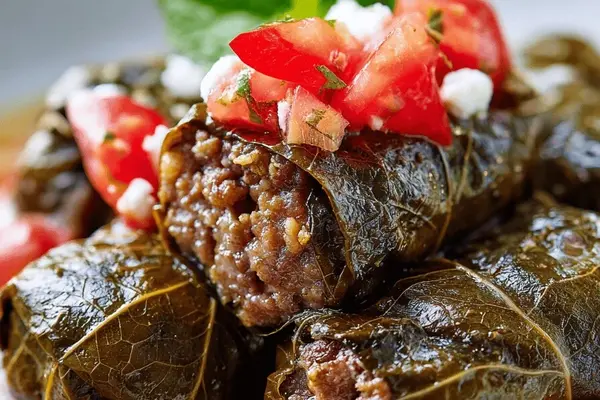
Dolmas with Ground Veal and Walnuts
By Emma
Certified Culinary Professional
·
Recipe tested & approved
Dolmas stuffed with ground veal, rice, toasted walnuts, and fresh basil. Slow-simmered in tangy tomato sauce and vegetable broth with white wine. Mediterranean comfort food.
Prep:
50 min
Cook:
35 min
Total:
1h 25min
Servings:
30
Soak the leaves first. Ninety minutes in cold water — they go from brittle to supple. Thick stems come off. Then the filling happens fast: onion, garlic, veal that browns until it’s really brown, tomatoes, basil, rice, walnuts. Roll them tight. Stack them snug. Wine, tomato sauce, broth, maple syrup. Low heat for 35 minutes. That’s it.
Why You’ll Love This Dolma Greek Recipe
Tastes like you spent all day on it. Takes 50 minutes of actual work. Mediterranean flavors — the walnut and veal thing doesn’t get old, doesn’t get boring, just tastes right.
Leftovers are better the next day. Cold or reheated. Works both ways.
You can make a whole batch and freeze them. Before or after cooking. Haven’t tried after, but logic says it works.
No skill required. Looks impressive anyway. People think you’re serious about cooking.
What You Need for Stuffed Grape Leaves
Grape leaves from a jar — about 60 of them. Get the kind packed in brine, not the loose dried ones. Thick stems come off easy if you soak them first.
Ground veal. Not ground beef. Veal’s milder, dissolves into the rice better. Beef works. Tastes different though.
Onion and garlic. One medium onion, finely chopped. Four cloves minced. Both go soft before the veal hits the pan.
Olive oil. Three tablespoons. That’s enough to coat and sweat everything down.
Rice that’s already cooked. Parboiled works best — it’s partially done already, so it finishes cooking inside the leaf. Plain white rice fine too.
Walnuts. Toasted. A quarter cup. They should crunch. Toast them yourself if you have time. Storebought toasted works.
Tomatoes — a can, drained. Not the juice. The juice waters everything down. Fresh basil, half a cup chopped. Dry basil tastes like sadness here.
Wine. Dry white. A quarter cup. Cooking wine works. The cheap stuff doesn’t matter because it’s boiling.
Tomato sauce. Homemade if you have it. Jarred works. A pint. Vegetable broth, a cup. Salt, pepper, maple syrup.
How to Make Stuffed Grape Leaves
Start with the leaves. Jar of them. Cold water. Ninety minutes. They soften completely. Drain them. Cut off the thick stem part — that bit at the very bottom where it was connected to the vine. Takes five minutes, feels pointless, but you can’t roll them with the stem on. It breaks things.
Heat olive oil in a big pan over medium. Add the onion. Let it go pale and soft — about six minutes. Add the garlic. Another minute. The pan should smell intense but not burnt.
Higher heat now. Ground veal goes in. Break it up with a spoon or your hands or whatever tool you’re using. Keep moving it. The pink disappears. Juices come out of it, then they evaporate. That takes about eight minutes. You’ll see the pan go from wet to dry. That’s done.
Diced tomatoes go in. The basil too. Stir it around. Let it bubble quietly for seven minutes. The tomatoes break down. The liquid reduces. It should look less like soup, more like paste.
Pull the pan off heat. Fold in the cooked rice and the toasted walnuts. Taste it. Salt it. Pepper it. Taste it again. This is where you fix seasoning because once it’s rolled up, you can’t get back in there.
How to Get Stuffed Grape Leaves Perfect
Rolling is the skill. Glossy side of the leaf down. The textured side up. About two tablespoons of filling in the center — closer to the bottom edge than the top. Fold the left and right sides over the filling first. Then fold the bottom up. Roll it away from you, tight, like a cigar. Not loose. Tight enough that it doesn’t unroll when you let go.
Lay them in a heavy pot seam-side down. They should fit snug. Not smashed. Snug. They hold each other up.
Pour in the wine first. Then the tomato sauce. Then the vegetable broth. Drizzle the maple syrup over the top. The sweetness balances the acid. Not a lot of maple — just enough to round things out.
Lay a small plate upside down on top of the rolls. It keeps them from floating up and unraveling. Matters more than you’d think.
Cover the pot. Low heat. Thirty-five minutes. Don’t peek much. The steam does the work. After 35 minutes, turn the heat off. Let them sit in there for ten minutes more. The carryover cooking finishes the rice inside.
Stuffed Grape Leaves Tips and Common Mistakes
Don’t oversoak the leaves. Ninety minutes. More than that and they get mushy and tear when you roll them.
The filling should be warm when you roll. Cold filling in a warm leaf means the leaf tears. Let it cool a few minutes. Not all the way cool.
Roll them all the same size if you can. Different sizes cook unevenly. Some are mushy. Some are still firm. Not the end of the world, but even is better.
The plate on top matters. Without it, they float. They come unrolled. With it, they stay in place. Actually matters.
Maple syrup sounds weird. It is. Works though. Honey works too. Just a touch.
Don’t use fresh grape leaves if you’re starting out. Jarred ones are easier. They’re already prepped. They don’t fall apart as much.
The wine and broth ratio is important. Too much broth, too mild. Too much wine, too sharp. The recipe balances it.
Dolmas with Ground Veal and Walnuts
Prep:
50 min
Cook:
35 min
Total:
1h 25min
Servings:
30
Ingredients
- 60 grape leaves (1 jar approx 600 g)
- 1 medium onion, finely chopped
- 4 garlic cloves, minced
- 45 ml olive oil (3 tbsp)
- 320 g ground veal
- 1 can 400 ml diced tomatoes, drained
- 30 ml chopped fresh basil leaves
- 180 ml cooked parboiled rice
- 125 ml chopped walnuts, toasted
- 125 ml dry white wine
- 500 ml homemade tomato sauce
- 250 ml vegetable broth
- 15 ml maple syrup
- Salt and freshly cracked black pepper
Method
- 1 Soak grape leaves in cold water for 90 minutes to soften; drain and cut off thick stems
- 2 Heat olive oil in a pan over medium heat; sweat onion and garlic until translucent about 6 minutes
- 3 Add ground veal, higher heat. Crumble meat thoroughly, cook until no pink remains, juices evaporate, around 8 minutes
- 4 Stir in diced tomatoes and basil; simmer 7 minutes to thicken
- 5 Remove from heat; fold in cooked rice and walnuts. Season with salt and pepper to taste
- 6 Lay one grape leaf glossy side down; place about 20 ml filling at center bottom edge, fold sides over, roll firmly from stem end into a tight cylinder. Repeat for all leaves
- 7 Arrange rolls snugly in a large heavy pot. Pour in wine, tomato sauce, vegetable broth, and drizzle maple syrup over
- 8 Place a small inverted plate on top of rolls to hold them down
- 9 Cover pot, simmer gently on low heat 35 minutes. Turn off heat, let rest 10 minutes in pot
- 10 Serve slightly warm as appetizer or light main
Nutritional information
Calories
180
Protein
12g
Carbs
15g
Fat
7g
Frequently Asked Questions About Dolmas Grape Leaves
Can I make these ahead and freeze them? Yes. Before cooking or after. Before is easier — just roll them, layer them in a container, freeze. Thaw and cook when you want them. After cooking, cool them all the way down, freeze. Reheat gently in the oven.
What if I can’t find grape leaves? Cabbage leaves work. They’re thicker, tougher. Boil them to soften first. Takes longer to cook though. Maybe 45 minutes instead of 35.
Can I use ground beef instead of veal? Yeah. Tastes beefier. Less delicate. Still fine. Lamb works too if you want to go heavier.
How do I know when they’re done? The rice inside is tender. The leaf is soft. When you bite one, it shouldn’t resist. Should give way. The broth should be mostly absorbed or reduced.
Can I make this in a slow cooker? Set it to low. Four hours. The rice inside takes longer on low heat. Check at three hours. The leaf should be soft. The filling should be cooked through.
Do I have to serve them warm? No. Cold works. Room temperature works better actually — flavors come through more when they’re not steaming. Serve them slightly warm or at room temperature as an appetizer.
What goes wrong most often? Rolling too loose. They unravel in the pot. Or not draining the canned tomatoes well enough — too much liquid in the filling makes them mushy. Or forgetting the plate on top — they float and fall apart.
You’ll Love These Too
Explore all →
Apple Cider Vinegar Dressing Recipe

Chocolate Poke Cake with Vanilla Pudding

Pizza Dough Recipe with Bread Flour
Veal Stew with Peppers and Espelette

Kitchen Sink Cookies with Chocolate Chips
Red Velvet Brownies with Mascarpone Swirl
Chocolate Fun Dip with Cake Mix & Whipped Cream
Ziti Bake with Ground Beef and Cheddar
Cream Cheese Carrot Dip with Cinnamon
Fig Jams with Onion & Apple Cider Vinegar
Slow-Baked White Beans with Soft-Boiled Eggs
Pistachio Brioche Twist with Cardamom
Bean Pinto with Garlic, Cumin & Cheddar

Making Sugar Cookies with Butter & Colored Sugar
Passionfruit Coconut Pudding with Mango Sauce

Chunky Pimento Melt with Bacon & Cheddar
Pork Appetizers with Spinach & Walnuts
Asian Style Sirloin BBQ with Soy & Ginger
Chicken Salad Chick with Pepperoncini