
Asian Salmon Recipes with Citrus-Soy Marinade
By Emma
Certified Culinary Professional
·
Recipe tested & approved
Lime juice straight into soy sauce—that’s where this starts. Three parts citrus, one part salt, then ginger and jalapeño do the heavy lifting. The salmon gets a 90-minute bath and comes out tasting like something you’d actually pay for at a restaurant. Takes 27 minutes total if you move without rushing.
Why You’ll Love This Asian Salmon Dish
Steamed salmon comes out silky. Not dry like the oven version. Not falling apart. Just tender all the way through, and the ginger-soy sauce sticks to it because you reduce it down until it’s almost sticky.
Healthy seafood that tastes indulgent. Salmon’s got omega-3s. The citrus and ginger aren’t doing anything except making you feel like you’re eating something intentional.
Works as a weeknight dinner or something you’d serve when people come over. Either way, same 15 minutes of prep. Same impression.
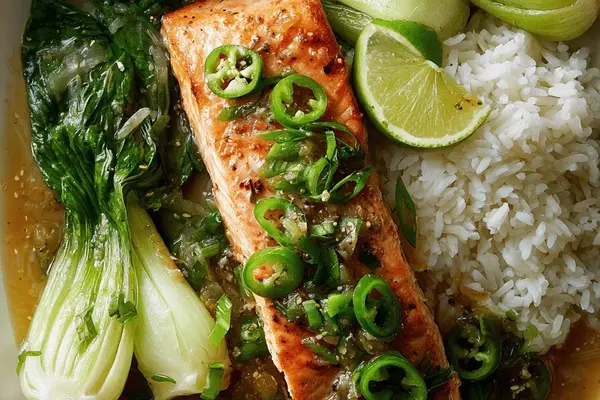
Jasmine rice soaks up the sauce. Bok choy gets sautéed in garlic and sesame. Suddenly you have a full bowl instead of just a fish fillet on a plate.
The marinade doubles as a glaze—reduce it while the salmon steams. No separate sauce component to worry about. One bowl, one pan, done.
What You Need for Steamed Salmon with Asian Marinade
Lime juice. Three-quarters of a cup. Not lemon. The flavor’s different—brighter, sharper. Soy sauce. The regular kind. Apple cider vinegar instead of rice vinegar. It’s more aggressive, which works because the honey and maple syrup pull it back. Honey. A bit of maple syrup too. They balance the acid.
Ginger. Fresh, grated. More than you’d think—three teaspoons. Garlic. Two cloves, minced small. Jalapeño. Five slices, thin. The seeds matter if you want serious heat. Fresh oregano leaves, chopped. Replaces green onions because it holds up better during steaming.
Salmon fillets. Four of them, center cut if the store has it, about 170 grams each. That’s the good part of the fish. Salt and black pepper. Olive oil at the end if you want it glossy. Serve it over jasmine rice and bok choy that you’ve sautéed with garlic and sesame oil.
How to Make an Asian Salmon with Citrus-Ginger Glaze
Whisk the lime juice, soy sauce, apple cider vinegar, honey, maple syrup, ginger, garlic, jalapeño, and oregano in a bowl. Keep going until the honey dissolves completely. No graininess. The marinade should smell intense—bright from the citrus, warm from the maple, spicy from the jalapeño. Just keep whisking.
Get your salmon fillets into the marinade. A zip-lock bag saves space in the fridge. Turn them gently so they coat all over. This soaks for 90 minutes minimum. Could go two hours. Any longer and the texture gets weird. Not good.
While the salmon sits, make space for cooking. You need a steamer—bamboo basket works, metal insert works, even a colander over simmering water works as long as you cover it. The water shouldn’t touch the fish. That’s the only rule.
Before the salmon goes in, drain it. Save the marinade. Pour it into a small saucepan and bring it to a simmer. Reduce it for 6 to 8 minutes, watching the whole time. You want it thick enough that it coats the back of a spoon. Too hot and the sugars burn. Too low heat and it stays runny. The moment it clings and gets shiny, that’s when you’re done.
How to Steam Salmon in a Steamer Until It’s Perfect
Set up your steamer over simmering water. The fillets go in spaced apart—not crowded. Crowding means uneven steam. Some pieces cook through and others stay raw in the middle. Space them out.
Sprinkle salt and pepper lightly on the dry surface. This isn’t about heavy seasoning. Just enough. Put oregano sprigs on top if you want the herbal fragrance going while it cooks. Cover the steamer. You’re listening now, not timing.
Listen for the gentle hiss. The steam should burst occasionally. The salmon changes color as it cooks—from translucent to opaque. That’s your visual cue. When you gently press a fillet with your finger, it should separate slightly in the flakes. That means done. Depends on thickness. Could be 7 minutes. Could be 12. The look and touch matter more than a timer.
Pull it out carefully. It’s hot and delicate. Drizzle the thickened sauce over it while the salmon’s still warm. If you want it glossy, add a small splash of olive oil. Just a half teaspoon. That’s enough.
Asian Salmon Tips and Common Mistakes
The biggest mistake is crowding the steamer. Even one extra fillet means uneven cooking. Some parts overdone, some underdone. Don’t do it. Work in batches if you need to.
Overcooking happens fast with salmon. The flake separation matters more than time. It takes practice to see it, but it matters. Your finger should feel slight resistance when you push. Not mushy. Not firm. In between.
If the marinade doesn’t reduce to syrupy, you went too low heat or didn’t give it enough time. It should coat the back of a spoon. If you tilt the spoon, it should cling for a second before sliding off. That’s when you stop.
Jalapeño seeds are optional. Leave them in for serious heat. Remove them if you want the flavor without the burn. Both ways work.
No bamboo steamer? Use a metal insert that fits over a pot. Or a colander. Or a sieve. Just keep water below it and cover tight. Water level matters—check it so the pan doesn’t dry out.
Short on time means one hour of marinating instead of 90 minutes. The flavor’s less layered but still punchy. Won’t wreck the dish.
Leftover sauce works on tofu. Works on roasted vegetables. Works cold as a dipping sauce. Don’t waste it.
Asian Salmon Recipes with Citrus-Soy Marinade
Prep:
15 min
Cook:
12 min
Total:
27 min
Servings:
4 servings
Ingredients
- Marinade
- 135 ml lime juice (3/4 original 180 ml orange juice, replaced with lime)
- 60 ml soy sauce (unchanged)
- 45 ml apple cider vinegar (instead of rice vinegar, 3 tbsp)
- 20 ml honey (reduced from 30 ml)
- 10 ml maple syrup (added, 2 tsp)
- 15 ml freshly grated ginger (3 tsp, slightly more than original 2 tsp)
- 2 garlic cloves finely minced (unchanged)
- 5 slices fresh jalapeño thinly sliced (instead of 1 ml red chili flakes)
- 1 tbsp fresh oregano leaves chopped (instead of green onions)
- Salmon
- 4 skinless salmon fillets about 170 g each (6 oz), prefer center cut
- Salt and black pepper to taste
- 1 tbsp olive oil (optional for finishing)
- Steamed jasmine rice and sautéed bok choy for serving
Method
- Marinade
- 1 Whisk lime juice, soy sauce, apple cider vinegar, honey, maple syrup, grated ginger, garlic, jalapeño, and oregano in a bowl until honey dissolves well. Intense aroma—bright but with warmth from maple and spice sharpness from jalapeños. No settling.
- 2
- Salmon
- 3 Submerge salmon fillets in marinade, turning gently to coat fully. Use a zip-lock bag to save space. Refrigerate at least 90 minutes, up to 2. This soaking infuses sharp citrus tang and layered heat. Not too long or texture breaks down.
- 4 Before cooking, drain salmon, reserve marinade mix. Pour marinade into a small saucepan and bring to simmer. Reduce gently 6–8 minutes until syrupy and thick enough to coat the back of a spoon. Watch carefully—too hot burns sugars, too cold stays runny. Thick sauce clings, shiny glaze.
- 5 Set up steamer—bamboo basket or metal insert over simmering water. Make sure water doesn’t touch fish. Place salmon fillets spaced apart to generate steam evenly. Sprinkle salt and pepper lightly to dry surface.
- 6 Cover fillets with oregano sprigs for herbal fragrance during cooking—replaces green onions’ fresh zing but milder, earthier.
- 7 Steam salmon 7–12 minutes, depending on thickness. Listen: gentle hiss and steam bursts. Fillet colors change from translucent to opaque, slight separation in flakes when gently pressed by finger signals done. Avoid overcooking or firmer texture dries out.
- 8 Carefully remove salmon, drizzle thickened sauce over while still warm. Optional: a small splash of olive oil adds glossy richness.
- 9 Serve immediately with fluffy jasmine rice and quick-sautéed bok choy lightly seasoned with garlic and sesame oil for texture contrast. Bright sauce cuts fat, herbs balance.
- 10
- 11 Tips:
- 12 If no bamboo steamer, use colander or sieve inside pot with lid, just enough water below. Check water level to avoid drying out.
- 13 If short on time, marinade 1 hour; less depth but still punchy flavor.
- 14 Leftover sauce thrifty idea—glaze tofu or roasted veggies.
- 15 Jalapeño seeds optional for heat level; remove to tame.
- 16 Don’t crowd fillets; steam evenly or some will overcook.
- 17 Use kitchen timer as guide but trust look and touch cues.
Nutritional information
Calories
320
Protein
35g
Carbs
14g
Fat
12g
Frequently Asked Questions About Asian Salmon Recipes
Can you make this steamed salmon in a rice cooker? Yes. Put water in the rice cooker, use the steaming tray that comes with it, arrange salmon spaced apart. Same timing. Same result. Maybe slightly faster because rice cookers hold heat tight. Haven’t tested it exhaustively but people say it works.
What if I don’t have apple cider vinegar for the asian marinade? Rice vinegar is the obvious swap. It’s softer. The sauce becomes less sharp. White vinegar would be too aggressive—skip it. Apple cider’s not negotiable here.
How long does leftover asian salmon keep in the fridge? Three days max. Salmon dries out. The glaze helps but it still happens. Eat it cold the next day if you’re into that. Heat it gently over steam, not in the microwave. Microwave breaks the texture.
Can you grill salmon instead of steaming it? Different dish. Grilling gets you char. Steaming gets you tender. You could do it, but you’re not making the same thing anymore. Both are good. This one’s steamed.
What does the soy ginger salmon sauce taste like if you make it without the maple syrup? Harsher. The maple rounds it out. Honey alone doesn’t do the same thing. If you skip the maple, add more honey to compensate. Maybe half a teaspoon extra. Taste it and adjust.
Is this recipe actually healthy or is the glaze too much sugar? The maple and honey add sweetness but not crazy amounts. Two teaspoons of maple syrup and one tablespoon of honey spread across four fillets. That’s minimal. The ginger and citrus are doing the heavy lifting flavor-wise. Salmon itself is healthy—omega-3s, lean protein. The glaze just makes it taste good.
Can you make the marinade ahead and store it? Yes. Two days in a jar in the fridge. The flavors don’t change much. Could go three days but the ginger loses sharpness. Make it fresh if you can. Takes five minutes.
You’ll Love These Too
Explore all →
Red Wine Poached Pear Almond Cake

Chunky Candy Brownies with Chocolate Chunks
Spinach Pesto Egg Dollops with Pecorino
Grilled Chicken Breasts with Honey Soy Marinade

Coconut Oil Baking: Ginger Steamed Pudding

Cherry Cobbler Muffins with Cinnamon Streusel

Salted Caramel Blondies with Butterscotch

Strawberries Mousse with Gelatin and Whipped Topping
Gherkins: Quick Pickled Persian Cucumbers
Grilled Chicken Peach Salsa Recipe
Pineapple Cheese Casserole with Crackers

Peach Pizza with Gorgonzola and Arugula
Roasted Spaghetti Squash with Tomato Sauce
Cream Of Broccoli Soup with Roasted Garlic
Caramelized Peppers with Smoked Bacon
Garlic Aioli with Crudité Vegetables
Red Pepper Tomato Sauce with Garlic

French 75 Cocktail with Gin and Cranberry
Veal Stew with Peppers and Espelette