
Tteokbokki Recipe with Pork and Gochujang
By Emma
Certified Culinary Professional
·
Recipe tested & approved
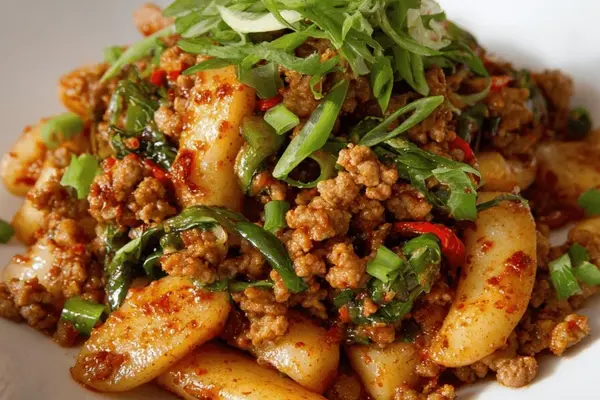
Tteokbokki with sliced rice cakes, ground pork, and gochujang in a spicy stir-fry. Bell peppers and onions add crunch while mirin and soy sauce create umami depth.
Prep:
25 min
Cook:
22 min
Total:
47 min
Servings:
6 servings
Forty-five minutes total and you’re eating spicy chewy rice cakes coated in glossy gochujang sauce with crispy pork scattered through. This is tteokbokki — the Korean rice cake dish that looks complicated but absolutely isn’t.
Why You’ll Love This Korean Tteokbokki Recipe
Comes together in under an hour. That’s faster than ordering it. Ground pork instead of just sauce — turns it into actual dinner, not a snack. Works as a side or standalone. The heat hits you but doesn’t wreck your mouth. Spicy the way it should be. Leftovers taste better the next day. Rice cakes soften more, sauce gets deeper. Cold from the fridge works too. One pan by the end. Cleanup’s fast.
What You Need for Korean Rice Cakes Tteokbokki
Korean rice cakes. The sliced kind. Get frozen ones if fresh aren’t around — thaw them but don’t rinse. The starch matters. Gochujang is the whole thing. It’s fermented chili paste. Not the same as regular chili powder. Don’t swap it. Mirin sweetens it. Balances the heat. Use the real stuff or honey, not fake corn syrup versions. Sesame oil. A little goes a long way. Toasted sesame oil only — the regular kind is flavorless. Soy sauce. Regular. Nothing fancy. Ground pork. Lean works, fattier is fine too. Chicken if you want lighter, but pork has better texture when it browns. Red bell peppers. Just ones that look good. Not green. They’re sweeter. One onion. Sliced thin. Scallions and cilantro at the end. Fresh. Changes everything.
How to Make Korean Tteokbokki
Start with the rice cakes. Cold water. Bowl. Cover them and let them sit — about 35 minutes. You want them soft enough to bend but not falling apart. This is important. The soaking water gets used later, so don’t toss it.
While that’s happening, make the sauce. Whisk together mirin, water, gochujang, sesame oil, and soy sauce in a separate bowl. Taste it now. It should be salty, spicy, slightly sweet — all three hitting at once. Adjust if it’s too salty or not spicy enough. This is your chance before it hits the rice cakes.
Heat up a large non-stick skillet on high. Add half the vegetable oil. Crumble the ground pork in — spread it thin across the pan. Don’t just dump it. You want it to brown in actual pieces, not steam. Listen for sizzling. No liquid pooling. Takes about 5 to 7 minutes. The pork should look light brown and crumbly when it’s done.
Toss in the sliced peppers and onion. Stir-fry for 6 minutes. They need snap still — soft but not limp. Once they’re there, move everything to a plate and set aside.
How to Get Korean Rice Cakes Perfectly Tender
Drain the rice cakes really well. Don’t rinse them. The starch on them is what thickens the sauce and helps soften the cakes more. Save about 250 milliliters of that soaking water — measure it out.
Wipe the skillet. Add the remaining oil, heat to medium. Add the drained rice cakes and stir gently for about 6 minutes. They’ll start puffing up, edges getting tender and sticky. Watch them, don’t walk away.
Pour in that reserved soaking water. Let it simmer gently while stirring — 4 minutes. The cakes will swell more, sauce will thicken. They should still hold shape. Not falling apart.
Return the pork and veggie mix to the pan. Pour in the gochujang sauce. Stir gently for 3 to 4 minutes. Everything should get coated in this glossy red sauce. The whole pan smells nutty and sharp and sweet at once. That’s the sign it’s working.
Korean Tteokbokki Tips and What Goes Wrong
Finish with fresh scallions and cilantro right before serving. Bright herbal punch. Serves immediately — rice cakes firm up as they cool, so eat them hot.
Rice cakes too tough? Soak longer next time. Or add a splash of water when you reheat.
Want less heat? Use half the gochujang. Add mild chili flakes on the side so people can adjust.
Ground chicken works fine if you want it lighter. Avocado oil smells better than vegetable oil if you care about that. But don’t overcook. Cakes get gummy and weird.
Stir constantly during that final simmer. Prevents sticking. Makes sure the sauce coats everything evenly. Color should be rich red, pork browned, peppers still vibrant. Sesame smell mixed with chili and sweet mirin. When you hear gentle bubbling, not aggressive boiling — that’s right.
Tteokbokki Recipe with Pork and Gochujang
Prep:
25 min
Cook:
22 min
Total:
47 min
Servings:
6 servings
Ingredients
- 950 g sliced rice cakes (tteok)
- 60 ml mirin
- 60 ml water
- 60 ml fermented chili paste (gochujang)
- 15 ml toasted sesame oil
- 15 ml soy sauce
- 210 g lean ground pork
- 40 ml vegetable oil
- 2 red bell peppers, seeded and julienned
- 1 onion, thinly sliced
- 1 scallion, sliced
- 30 ml chopped fresh cilantro
Method
- 1 Start by placing rice cakes in a large bowl; cover with cold water and soak about 35 minutes at room temp. Aim for pliability without mushiness. The soaking water will be handy later.
- 2 While soaking, whisk mirin, water, gochujang, sesame oil, and soy sauce in a bowl. This spicy-sweet tangy mix is the backbone. Taste it raw; it should hit salty, spicy, slightly sweet notes.
- 3 Heat non-stick skillet on high; add half the vegetable oil. Crumble ground pork in—spread it out thinly so it browns instead of steams. Listen for sizzling; no liquid pooling—renders fat and browns bits in 5-7 minutes.
- 4 Once the pork looks lightly seared and crumbly, toss in sliced peppers and onions. Stir-fry for 6 minutes until veggies soften but still hold crunch. Avoid limp veggies; they need snap. Remove the mixture onto a plate.
- 5 Reserve 250 ml of soaking water; drain the rice cakes well. Don’t rinse. This starchy water helps thicken sauce and soften cakes.
- 6 Wipe skillet, heat remaining oil on medium. Add drained rice cakes; stir gently for 6 minutes. Cakes will start to puff slightly, edges turning tender and sticky.
- 7 Pour in reserved soaking water, simmer gently stirring for 4 minutes. Watch for cakes swelling, softening but not falling apart. The starchy water thickens now.
- 8 Return pork and veggie mix to pan. Add mirin-gochujang sauce. Stir gently for 3-4 minutes, letting sauce thicken and coat everything in a glossy spicy glaze.
- 9 Finish with fresh scallions and cilantro sprinkled on top for bright herbal punch. Serve right away; rice cakes firm up on cooling.
- 10 Pro tip: if rice cakes are overly tough, soak longer or add a splash of water when reheating. For less heat, halve gochujang and add mild chili flakes later. Swap pork for ground chicken for lighter profile, or use avocado oil for milder scent. Avoid overcooking or cakes get gummy or dry. Stir constantly during final simmer to prevent sticking and ensure even coating.
- 11 Watch colors—rich red sauce clings, pork browned, peppers vibrant but softened. Smell nutty sesame mingled with sharp chili and sweet mirin. Sound cues: sizzling during sear, gentle bubbling when simmering. Texture goal: chewy tender cakes, crisp-tender veggies, crumbly juicy pork. Timing flexible, rely on these signs over clocks.
Nutritional information
Calories
350
Protein
20g
Carbs
30g
Fat
15g
Frequently Asked Questions About Korean Tteokbokki Recipe
Can I make this with store-bought Korean rice cake instead of fresh? Yeah. Frozen works perfectly. Just thaw them first. Some places sell them already sliced, which saves time. The starch on them is still there either way, so don’t rinse.
What if I can’t find gochujang? Don’t bother substituting with regular chili powder. Get gochujang online or at any Korean market. It’s fermented, completely different thing. Not worth making this without it.
How spicy is this actually? Medium heat. Gochujang is spicy but not brutal. The mirin and soy sauce balance it. If you hate spice, cut the gochujang in half and taste as you go.
Can I use ground chicken instead of pork? Works fine. Texture’s lighter, less juicy. Pork browns better and stays crumbly, but chicken does the job.
Do the rice cakes really need to soak for 35 minutes? Yeah. They soften without turning to mush. Skip this and they’ll be too firm. Soak longer if they’re still tough — 40 minutes is fine.
What’s the starch water for? It thickens the sauce and helps the rice cakes soften more evenly. This is why you don’t rinse them and why you save the soaking water. Matters more than you’d think.
Can I make this ahead? Sort of. Prep everything separately. Keep the sauce, pork mixture, and rice cakes in different containers. Combine and heat when you eat. Tastes better fresh but leftovers are actually good cold from the fridge the next day.
You’ll Love These Too
Explore all →
Roasted Veg and Salmon with Carrot Purée
Braised Veal Cheeks in Red Wine Reduction
Roast Chicken with Carrots, Beets & Cherry Tomatoes

Lemon Popcorn With Marshmallow
Duck Breast Red Wine Cocoa with Kale
Poaching Eggs Recipe with Za'atar Chickpeas
Mustard-Crusted Lamb Shoulder with Root Vegetables

No Bake Chocolate Cheesecake Recipe

Brownie Pie Recipe with Dark Chocolate & Walnuts

Clams in White Wine with Pancetta & Fennel
Pan Fried Tofu with Peanut Ginger Glaze
Sweet Potato Muffins with Whole Wheat

Ham Egg Cheese Biscuit Wafflewiches
Vegetable Broth Recipe with Smoked Paprika

Crispy Fried Calamari Rings with Panko
Braised Pork Shoulder with Orange Juice

Chocolate and Chocolate Chip Muffins
Rabbit with Pancetta and Mushrooms
Herbed Spatchcock Chicken with Roasted Vegetables