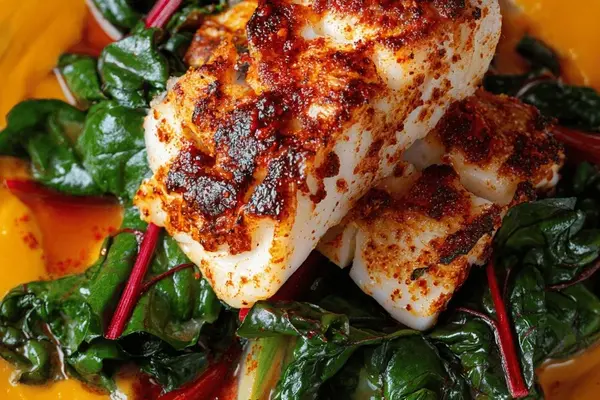
Roasted Veg and Salmon with Carrot Purée
By Emma
Certified Culinary Professional
·
Recipe tested & approved
Roasted veg and salmon featuring spice-rubbed white fish with creamy carrot purée, Swiss chard, and smoked paprika. Quick, balanced, and allergen-free.
Prep:
25 min
Cook:
28 min
Total:
53 min
Servings:
4 servings
Fifty-three minutes total. Carrot purée simmering while the fish gets a spice crust and hits the pan hot. Swiss chard gets blanched and then just sits there, waiting to soften against the warm plate. Tried this once with tilapia instead of cod—fell apart. Switched to something firmer and it held.
Why You’ll Love This Roasted Veg and Salmon
Takes 25 minutes to prep, 28 to cook. No stress. One skillet for the fish, one pot for the purée—that’s it. Healthy but tastes indulgent. The smoked paprika gets spicy without being aggressive, brown sugar balances it just enough, and the butter keeps everything rich. Works as a weeknight dinner or when you’re trying to impress someone. Swiss chard adds color. Carrot purée looks fancy but requires basically nothing—you simmer and blend. The fish stays moist. Cod’s firm enough to hold a crust but flakes tender once it’s cooked through. Not dry. Leftovers are fine cold, better reheated gently with a little butter.
What You Need for Roasted Veg and Salmon
Carrots. Not baby carrots. The full-size ones, sliced into rounds. They cook faster that way. One celery stalk and one French shallot minced fine—adds depth without being loud. Two garlic cloves. Chicken stock or vegetable broth. Butter. That’s the carrot purée base.
For the fish: firm white fish. Cod, walleye—something that doesn’t flake apart at the wrong moment. Anything too delicate gets ruined. Four portions, cut from bigger fillets if you need to. Swiss chard, blanched first for three minutes in salted water—takes the bitterness down but keeps some texture.
The spice mix is where the dish gets interesting. Smoked paprika. Garlic powder. Brown sugar. Celery salt. Cayenne pepper—just a pinch. Not supposed to burn your mouth. The salt content in that mix matters, so don’t oversalt the fish after. Grapeseed oil or butter for cooking. Grapeseed works if you want less dairy. Either one gets hot enough to crust the spices onto the fish properly.
How to Make Roasted Veg and Salmon
Start with the carrot purée because it takes longest. Slice your carrots into rounds—quarter inch, maybe. Throw them in a medium saucepan with the chopped celery, minced shallot, minced garlic, and the stock. Bring it to a simmer. Just bubble gently. Don’t boil hard. Let it go for 18 to 23 minutes. You’ll know it’s ready when a fork slides through a carrot piece without resistance.
This is when you can get the fish ready. Mix your spices together in a shallow bowl. Smoked paprika, garlic powder, brown sugar, celery salt, and cayenne. Just a pinch of cayenne. Press that mixture onto the fish fillets—both sides, but do the top side really firmly. The crust matters. That’s your flavor.
While you’re doing that, if you haven’t blanched the Swiss chard yet, do it now. Three minutes in salted boiling water. It’ll go from tough to tender but not mushy. Drain it. Set it aside.
How to Get Salmon Roasted Perfectly Crispy
Once the carrots are done, blend everything with an immersion blender or throw it in a food processor. Butter goes in now. Blend until it’s silky smooth. No chunks. Taste it and adjust salt and pepper—the stock already has salt so go easy. Keep it warm. Lid on, low heat. Or set the pot in a larger pot of warm water if you’re worried about it drying out.
Now the fish. Heat a non-stick skillet over medium-high. Add your butter or oil. Watch for the smell—there’s this faint nutty smell when butter foams or when oil shimmers just right. That’s your signal you’re at the right temp. Not screaming hot. Not low.
Place the fish spice-side down first. Don’t crowd the pan. Four fillets should fit without touching. Cook for three to four minutes. You’re waiting for a crust to form. The edges should start turning opaque. Then flip—use a thin spatula and be gentle about it.
Cook the other side for two to three minutes. Two if they’re thin, closer to three if they’re thick. You’re looking for that moment where the fish flakes with slight resistance. Still moist inside. Not firm all the way through. Not falling apart either.
Salt and pepper go on after cooking. The spice mix already has celery salt in it, so don’t overdo it. Let the fish rest off heat for a minute while you plate. Carryover heat finishes the inside gently.
Roasted Veg and Salmon Tips and Common Mistakes
Crowding the pan kills the crust. Space matters. Cook in batches if you need to instead of jamming four fillets in there fighting for room.
The carrot purée shouldn’t be thick. If it’s too dense when you blend it, add a splash more broth. But not too much or it gets soupy. You want something that holds on the plate but moves.
Swiss chard can get bitter if you don’t blanch it first. Three minutes is enough. Not longer. And blanch it in salted water—that matters.
Don’t cook the fish past the point where it flakes gently. One more minute and it goes from moist to dry. Watch the edges getting opaque. That’s your timer.
If you’re reheating fish leftovers, use low heat and cover it. Add a pat of butter. It’ll dry out otherwise. The purée reheats fine with a little extra broth stirred in.
Brown sugar in the spice mix—sounds weird. Don’t skip it. Balances the paprika and the heat from the cayenne. Makes it less aggressive.
Roasted Veg and Salmon with Carrot Purée
Prep:
25 min
Cook:
28 min
Total:
53 min
Servings:
4 servings
Ingredients
- Carrot Purée
- 420 g carrots sliced into rounds
- 1 celery stalk finely chopped
- 1 French shallot minced
- 2 garlic cloves minced
- 320 ml chicken stock or vegetable broth
- 25 ml unsalted butter
- Fish
- 14 ml smoked paprika
- 16 ml garlic powder
- 4 ml brown sugar
- 6 ml celery salt
- 1 pinch ground cayenne pepper
- 670 g firm white fish fillets (cod, walleye), cut into 4 portions
- 230 g Swiss chard leaves, blanched for 3 minutes in salted boiling water
- Salt and freshly ground pepper
- 10 ml grapeseed oil (optional replacement for butter)
Method
- Carrot Purée
- 1 1 Bring carrots, celery, shallot, garlic, and stock to a simmer in medium saucepan. Let bubble gently 18-23 minutes until carrots pierce easily with a fork.
- 2 2 Puree vegetables and butter with immersion blender or food processor until silky smooth. Season carefully with salt and pepper, taste for balance. Keep warm—lid on, low heat or double boiler setup avoids drying and crusting.
- Fish
- 3 3 Combine smoked paprika, garlic powder, brown sugar, celery salt, and cayenne in shallow bowl. Press spice mix firmly onto fish portions, coating tops evenly.
- 4 4 Heat non-stick skillet over medium-high. Add butter or grapeseed oil—watch for the faint nutty smell or foaming to signal right temp.
- 5 5 Place fish spice-side down first, no crowding; cook about 3-4 minutes till crust forms and edges start opaque. Flip gently with thin spatula. Cook 2-3 minutes more but no more—fish should flake with slight resistance, moist inside.
- 6 6 Season lightly with salt and pepper after cooking; don’t overseason before—spice mix has salt content. Rest fish briefly off heat; carryover cooks gently while you plate.
- Assembly
- 7 7 Spoon carrot purée centrally on warm plates. Fan Swiss chard leaves alongside; they soften with residual heat but keep a slight bite.
- 8 8 Arrange fish atop or next to greens; spoon any buttery pan juices if desired.
- 9 9 Serve immediately. Fish texture delicate; purée velvety but with body. The lightly peppery greens cut richness.
- 10 10 Leftovers? Purée reheats gently with splash broth or cream substitute. Fish reheats quickly but tends to dry—refresh on low heat with lid, add a pat of butter or oil.
Nutritional information
Calories
340
Protein
35g
Carbs
20g
Fat
12g
Frequently Asked Questions About Roasted Veg and Salmon
Can I use a different white fish for this recipe? Yeah. Walleye, halibut, whatever’s firm enough to hold together. Skip tilapia—too delicate, falls apart. Anything that flakes easily when overcooked is a no.
How thick should the carrot purée be? Thick enough it doesn’t slide around the plate, but not like peanut butter. Spoon it and it should hold shape but still have some flow. If it’s too thick, add broth. If it’s too thin, cook it down a bit longer before blending.
What if I don’t have smoked paprika? Regular paprika works. It’ll taste less complex but still fine. The other spices carry it. Smoked paprika adds something though—use it if you can.
Can I make the carrot purée ahead? Make it the morning of. Keep it in the fridge. Reheat gently with a splash of broth or water. Microwave it, low heat, stirring every thirty seconds. Or pot on low with a lid.
Is the cayenne supposed to be that spicy? It’s a pinch. Not even half a teaspoon. Just enough to make you notice something sharp underneath the paprika and brown sugar. If you hate heat, use half a pinch or skip it.
Why does the fish dry out when I reheat it? Fish has less fat and water than other proteins. Once it’s cooked, reheating concentrates what’s left. Low heat with a lid and some butter keeps it from getting tough. Add moisture. Don’t just blast it.
Can I roast everything in the oven instead? The purée goes on stovetop. The fish could technically bake—four hundred degrees, maybe twelve to fifteen minutes depending on thickness. But you won’t get the crust. Pan-sear gets you that crispy spiced exterior. Baking gets you cooked through. Different things.
What’s the carrot puree recipe ratio if I want to make more? Roughly four hundred twenty grams carrots to three hundred twenty milliliters broth, one celery stalk, one shallot, two garlic cloves, and twenty-five grams butter. Simmer until the carrots fall apart. Blend. That’s the formula.
You’ll Love These Too
Explore all →
Kung Pao Chicken with Peanuts & Peppers
Cauliflower Spelt Gratin with Cheesy Béchamel
Red Pepper Tomato Sauce with Garlic
Pork Chop Marinade with Smoked Paprika
Sausage Pasta with Spinach and Tomatoes
Lamb Tagine with Spiced Tea and Dried Fruits

Mint Chocolate Profiteroles with Dark Chocolate Sauce

Deviled Eggs Recipe with Dijon & Smoked Paprika

Mint Chocolate Patties with Sweetened Condensed Milk
Marshmallow Fluff Fudge with Pecans
Pumpkin Mac and Cheese with Cheddar
Greek Yogurt Breakfast with Carrot Jam
Italian Meatball Soup with Turkey & Pasta

Lemon Granita Affogato with Coconut Milk

Chicken Tacos with Chipotle & Mango

Pepperoni Mozzarella Panini with Tomato Jam

Shredded Tofu Sliders with Maple Chipotle
Cauliflower Pistachio Biryani with Basmati Rice
Bulgur Chicken Soup with Spiced Tomato Broth