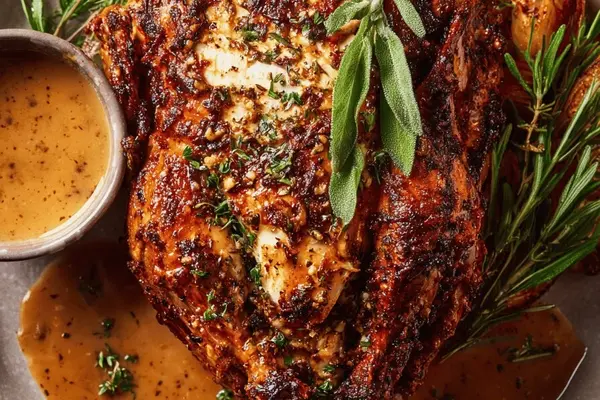
Roast Turkey with Spiced Herb Butter
By Emma
Certified Culinary Professional
·
Recipe tested & approved
Roast turkey with spiced herb butter, dry brined with salt for crisp skin. Features cinnamon, allspice, smoked paprika butter and cognac-enriched pan sauce with apple cider vinegar.
Prep:
50 min
Cook:
2h 15min
Total:
2h 65min
Servings:
10 servings
Forty-eight hours before the table fills. That’s when this starts. Turkey needs time to sit in salt—inside, outside, everywhere. Frozen solid? The salt thaws it while the flavor seeps in. Skin tightens. Meat stays juicy. Two hours fifteen minutes in the oven after that, and you’ve got the kind of roasted thanksgiving turkey that makes people quiet down mid-conversation to actually taste it.
Why You’ll Love This Roasted Thanksgiving Turkey
Skin cracks when you cut into it. Actually cracks. The butter under the skin handles that—renders the fat from inside out, bastes the meat without you standing there with a spoon every twenty minutes.
Takes 50 minutes to prep if you’re moving. Two hours fifteen total from cold oven to resting on the board. Smaller birds go faster, bigger ones barely longer—the technique doesn’t change.
Works for eight people easy. Leftovers last four days cold. Maybe five if nobody’s touching it constantly.
Holiday dinner gets simple when the main thing isn’t stressing you out. This one mostly sits. You’re mostly waiting.
The spice blend isn’t heavy. Cinnamon and allspice—not nutmeg, different warmth. Smoked paprika instead of the usual. It tastes like thanksgiving without tasting like you dumped a whole spice rack on it.
What You Need for Roasted Thanksgiving Turkey
One fresh or frozen turkey. Seven kilograms, sixteen pounds, somewhere around there. Size doesn’t matter as much as people think.
Salt. Forty-five milliliters fine table salt. Not kosher—fine. It goes under the skin and all over the outside. Stays put. Does the work.
Butter. A hundred and twenty-five milliliters softened, mixed with dry mustard powder—ten milliliters. Ground cinnamon. Ground allspice instead of nutmeg. Smoked paprika instead of coriander. Two and a half milliliters each. Mix it all together, rub under the skin. This is where the magic lives.
Chicken stock for the pan. Five hundred milliliters. Keeps the drippings from burning while the skin gets crispy.
For the sauce: another forty-five milliliters of butter. One onion diced. Four garlic cloves crushed. Cognac—seventy-five milliliters. Skip it if you want, use dry white wine instead, apple juice even. Two liters chicken broth. One tomato diced. Apple cider vinegar—fifteen milliliters, not Worcestershire, it’s less aggressive. Three bay leaves. Cornstarch slurry to thicken: forty-five milliliters cornstarch stirred into forty-five milliliters water.
Salt and black pepper. Freshly ground.
How to Make a Thanksgiving Dinner Turkey
Cavity goes dry first. Pat it out with paper towel—get inside there. Sprinkle ten milliliters of fine salt in the cavity. Rub the remaining thirty-five milliliters all over the skin. Thighs especially. Under the wings. Every surface that’s going to see heat.
Cover it. Into the fridge. Forty-eight hours minimum. Frozen bird? Salt it while it thaws. The salt does both jobs at once.
Position your oven rack low. Preheat to two hundred and thirty degrees Celsius. Four forty-five Fahrenheit. Hot. This matters—it seals the skin fast, starts rendering the fat before the inside even knows what’s happening. The sizzle, the pop, that sound that fills the kitchen. That’s what you want.
Take the butter mixture—the one with the spices mixed in. Pat the turkey skin dry with paper towel. Work your fingers between the skin and the meat on the breast, along the thighs. No tears. Use the back of a spoon for spots that won’t separate. Spread that butter mixture under there, evenly, as much as you can fit. This is the secret. Fat bastes the meat from underneath. Skin gets crispy. You don’t have to stand there with a spoon the whole time.
Place it breast-side up on a rack in the roasting pan. Pour five hundred milliliters of stock into the bottom—not the bird, the pan. Creates a moisture barrier. Drippings don’t burn. Skin doesn’t steam.
Slide the whole thing into the hot oven for thirty minutes. Just thirty. The skin bubbles. Fat renders. Aroma hits different.
After thirty minutes, drop the heat to one hundred and sixty degrees Celsius. Three hundred and twenty-five Fahrenheit. Leave it uncovered. Roast another hour and forty minutes. Maybe longer depending on the bird. Use an instant thermometer—check the inner thigh. Seventy-nine degrees Celsius, one seventy-five Fahrenheit, that’s your signal. But I pull it slightly before that, let the rest finish the cooking. Avoids that dry texture.
Skin should crackle when you poke it. Not charred. Juices run clear.
How to Get a Roasted Turkey Breast Crispy and Juicy
Remove it from the oven. Tent it loosely if the skin’s cooling too fast and drying out. Then let it rest thirty minutes uncovered. This is non-negotiable. Rest redistributes the juices back into the meat. Cut it now and everything runs onto the board instead of staying in the bird.
The skin stays crisp because you didn’t cover it during the rest. Foil traps steam. Steam makes it soggy. Just sit there and wait.
Check doneness however you want. Thermometer works. Feel works better once you’ve done this twice. Leg wiggles slightly. Thigh skin is tight but gives a little when you press. Juices run clear. That’s done.
Carving tip: let it cool another thirty minutes before you actually cut into it. Cuts clean. Skin doesn’t shatter everywhere.
Thanksgiving Turkey Sauce and Common Mistakes
Dice an onion. Crush four garlic cloves. Butter in a pan over medium heat. Let them soften, turn golden. Aroma ramps up. Don’t brown it dark—stops there.
Pour in seventy-five milliliters of cognac. It’ll ignite if you’re careful with flame. Let it burn a second. Caramel notes deepen, alcohol cooks off. No cognac? Dry white wine does the same thing. Apple juice if you want sweetness.
Add two liters of broth. One tomato diced. Fifteen milliliters apple cider vinegar—this brightens it, balances the sweetness, less harsh than Worcestershire. Three bay leaves. Simmer. Watch it reduce. By half, maybe a bit less. Sauce thickens, color deepens, it stops tasting like broth and starts tasting like something.
Mix forty-five milliliters cornstarch with forty-five milliliters water. Stir it until it’s smooth—no lumps. Drizzle it into the sauce while you whisk constantly. Lumps happen if you dump it in. One minute simmering after, the sauce solidifies. Has body now.
Taste it. Salt it. Pepper it. Strain it if you want clean, or leave the tomato chunks for rustic. Serve warm or pour it over the turkey. Either way.
Mistake one: covering the turkey with foil while it cooks. Traps steam. Skin gets soggy. Don’t do it.
Mistake two: basting constantly. Every time you open the oven, heat escapes. Skin dries out. The butter under the skin handles the moisture. Pan juices do their work. Let it be.
Mistake three: skipping the dry brine. Two days ahead is gold. Timing’s flexible up or down half a day but not less than twenty-four hours. Salt breaks down the protein, makes the crust actually crisp. Frozen bird? Salt while it thaws. Saves time and ensures depth.
Mistake four: overcooking it to be safe. Pull it slightly shy of one seventy-five. Residual heat finishes it. Keeps it juicy.
Mistake five: cutting it immediately. Rest uncovered thirty minutes minimum. Juices redistribute. Meat stays tender. Skin stays crisp.
The butter under the skin—be gentle peeling it back. Tears mean butter loss. Spoon back works for stubborn spots.
Roast Turkey with Spiced Herb Butter
Prep:
50 min
Cook:
2h 15min
Total:
2h 65min
Servings:
10 servings
Ingredients
- 1 fresh or frozen turkey about 7 kg (16 lb)
- 45 ml (3 tbsp) fine table salt
- 125 ml (½ cup) unsalted butter softened
- 10 ml (2 tsp) dry mustard powder
- 2.5 ml (½ tsp) ground cinnamon
- 2.5 ml (½ tsp) ground allspice instead of nutmeg
- 2.5 ml (½ tsp) smoked paprika instead of coriander
- 500 ml (2 cups) reduced-salt chicken stock
- 1 onion diced
- 4 garlic cloves lightly crushed
- 45 ml (3 tbsp) unsalted butter
- 75 ml (1/3 cup) cognac
- 2 liters (8 cups) reduced-salt chicken broth
- 1 tomato diced
- 15 ml (1 tbsp) apple cider vinegar replacing Worcestershire sauce
- 3 bay leaves
- 45 ml (3 tbsp) cornstarch
- 45 ml (3 tbsp) water
- Salt and black pepper freshly ground
Method
- = Turkey =
- 1 Start with a dry turkey, cavity dry - salting inside with 10 ml fine salt. Rub remaining salt on skin, thighs. Cover. Fridge 48 hours. Frozen? The salting thaws it naturally, flavor seeps in. Skin tightens, less water. Keeps bird juicy but skin crisp later. I’ve tried brining, but salt only, yields better roast.
- 2 Position oven rack low, preheat to 230 °C (445 °F). Hot start seals skin fast, renders fat early, sounds start—sizzle, pop.
- 3 Mix softened butter with dry mustard, cinnamon, allspice, smoked paprika. Not nutmeg here; allspice adds deeper warmth, smoked paprika a hint of smoke. Tweak spices if you want heat or earthiness — try chipotle for bold.
- 4 Pat turkey skin dry with paper towel. Carefully loosen skin with fingers from breast and thighs — no tears. Use spoon back for stubborn spots. Spread butter mix evenly beneath skin. This trick renders the skin flavorful, fat bastes meat directly. Saves basting later.
- 5 Place bird breast-side up on rack in roasting pan. Pour stock into pan bottom—it creates moisture barrier preventing drippings from burning. Doesn't drown the skin.
- 6 Slide turkey into hot oven 30 minutes. Crisp skin forms, bubbling fat, rich aroma fills kitchen.
- 7 After 30, reduce heat to 160 °C (325 °F), roast uncovered about 1hr 40 min more, use instant thermometer to check inner thigh 79 °C (175 °F). I prefer slightly less temp inside to avoid dryness but let rest time finish cooking. Skin should crackle when poked but not burn. Juices run clear.
- 8 Remove from oven, tent loosely if cooling aggressively dries skin. Let rest 30 minutes uncovered. Rest is vital to redistribute juices—cutting now steals it all.
- = Sauce =
- 9 Sauté diced onion and crushed garlic in butter over medium heat. Softening until golden, aroma ramps up. Avoid browning too dark.
- 10 Flambé with cognac carefully—flames ignite, caramel notes deepen sauce. No cognac? Use dry white wine or apple juice for sweetness.
- 11 Add broth, diced tomato, apple cider vinegar, bay leaves. Vinegar brightens acidity, balances sweetness. Simmer, reduce by half—watch for rich sauce bubbling, thickening, deep color.
- 12 Mix cornstarch with water to slurry, drizzle slowly into sauce whisking constantly to avoid lumps. Simmer 1 min solidifies body. Add salt and pepper to taste.
- 13 Strain if needed or leave chunky for rustic feel. Serve warm alongside turkey slices, pour over or dip.
- = Tips & Tricks =
- 14 Butter under skin key: protects breast meat from drying, flavors skin from inside out. Be gentle peeling skin; tears cause butter loss.
- 15 Dry brine two days ahead is gold. Timing is flexible up or down half day but not less than 24 hours; saliva breaks down protein, makes crust crisp. Frozen bird? Salt while thawing, saves time and ensures depth.
- 16 High heat start seals skin fat causally. Finish low and slow cooks evenly. Don’t cover with foil while cooking—traps steam, soggy skin. Rest uncovered.
- 17 Sauce acidity balanced carefully; apple cider vinegar less harsh than Worcestershire, works better if you want tang subtle but real. Tomato adds umami.
- 18 Check doneness by feel. Leg should wiggle slightly, thigh skin tight but pliable, juices clear. Thermometer is backup, not sole judge.
- 19 Avoid overcooking at expense of skin and flavor. Remove bird from heat slightly shy of target, use residual heat to finalize.
- 20 I avoid basting during roast; disturbs heat, dries skin. Rely on butter, pan juices, humidity from broth in roasting pan bottom.
- 21 Substitutions: Use ghee for butter if lactose-sensitive, increase salt a touch as ghee less salty. No cognac — try apple brandy or omit, replace volume with broth.
- 22 If stock too salty, dilute with water, taste frequently. Sauce thickens quickly — remove from heat once thickened to prevent glue.
- 23 Best carving tip: cool 30 min before slicing. Cuts clean, juices won’t spill everywhere. Skin stays crisp.
- 24 By experience, no covering during rest maintains crackle; tight foil creates steam and sogginess.
- 25 Perfect for holiday spreads but adaptable any time — smaller birds cook shorter, apply same techniques.
Nutritional information
Calories
480
Protein
58g
Carbs
4g
Fat
27g
Frequently Asked Questions About Roasted Thanksgiving Turkey
Can I dry brine the turkey for less than 48 hours? Not less than twenty-four. Salt needs time to break down the protein. Twelve hours and it’s barely started. Twenty-four is minimum. Forty-eight is ideal. You can go up to seventy-two if your schedule allows. Frozen bird? Salt while it thaws. Counts toward your time.
What if I don’t have cognac for the sauce? Dry white wine works. Apple juice works. Apple brandy works. Or skip it entirely, replace the volume with more broth. The sauce tastes fine. Less caramel depth maybe, but fine.
How do I know when the turkey is actually done? Thermometer in the inner thigh reads seventy-nine degrees Celsius. But pull it slightly before that—residual heat finishes it. Leg wiggles a little. Thigh skin is tight but gives slightly. Juices run clear, not pink. That’s done. Pick two of those three and you’re safe.
Why apple cider vinegar instead of Worcestershire? Less aggressive. Brighter tang. Worcestershire gets lost in the broth. Vinegar cuts through, balances the sweetness without making the whole sauce taste funky.
Can I cook a smaller bird with this same method? Yes. Times adjust down. Smaller bird, less time in the oven. Technique stays the same. Low rack, hot start, drop the heat, rest uncovered. Works every time.
Should I cover it while it rests? No. Foil traps steam. Skin gets soggy. Leave it uncovered. Rest thirty minutes. Skin stays crisp, juices redistribute into the meat.
What if the skin starts burning before the meat is done? Skin burns because the oven’s too hot or the bird’s too close to the element. Lower the rack next time. Or tent loosely with foil for the last thirty minutes if it’s charring bad. But ideally the high heat start sears it, then lower heat finishes it without burning.
Can I use ghee instead of butter? Yes. Ghee works fine. Increase salt slightly—ghee’s less salty than butter. Rest of it stays the same.
How long can I keep turkey leftovers? Four days cold in the fridge. Maybe five if nobody’s constantly opening the container and letting warm air in. After five, don’t risk it.
You’ll Love These Too
Explore all →
Oven Risotto with Leeks, Spinach & Ricotta
Gluten Free Hors D'Oeuvres with Sunflower Seeds
Coleslaw With Salad Dressing: Ramen Noodle
Lamb's Lettuce Salad with Lemon Vinaigrette
Maple Pudding Cake with Cream Sauce
Peppercorn Cream Sauce with Whiskey
Ricotta Tartlets with Fresh Tomatoes
Chermoula Sauce with Parsley and Mint
Asian Tofu Sandwich with Hoisin & Shiitake
Cucumber Feta Avocado Salad Recipe
White SOS: Béchamel Sauce with Olive Oil
Grilled Chipotle Tofu Sandwiches with Lime Mayo
Herbed Ranch Salt Mix with Smoked Paprika

Cookie Dough Ice Cream with Chocolate Chips
Red Velvet Crinkle Cookies with Buttermilk
Ground Beef Pasta Recipes with Southwestern Twist
Beef Steak Marinade with Spice Rubs
Frozen Popsicles with Raspberries and Peaches
Pecan Tart Bars with Marzipan & Toasted Nuts