Japanese Hot Pot with Pork, Miso Broth
By Emma
Certified Culinary Professional
·
Recipe tested & approved
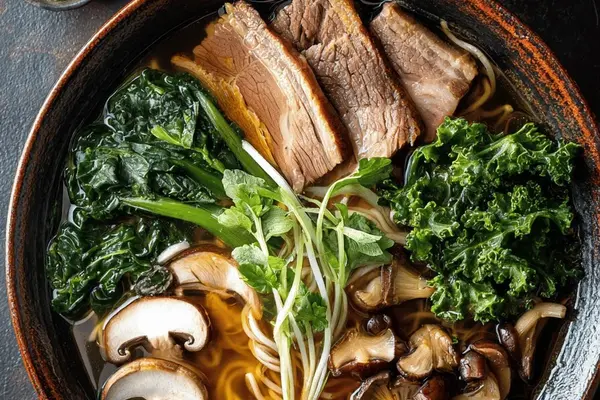
Japanese hot pot with vegetable stock, miso paste, and ginger broth. Pork shoulder, soba noodles, oyster mushrooms, and baby kale simmer table-side with ponzu and wasabi.
Prep:
25 min
Cook:
20 min
Total:
45 min
Servings:
4 servings
Bring pork slices to the table sizzling. Watch them turn pink-to-pale in seconds. Dip in ponzu. Eat. That’s shabu-shabu—except this version uses miso broth instead of the traditional kombu-only stock, which means more depth, more staying power, less fiddling with flavor halfway through dinner. 45 minutes total, mostly standing around watching things cook, which is kind of the point.
Why You’ll Love This Asian Hot Pot
Takes 45 minutes and half of that is just heating broth—actual work is maybe 20 minutes. Pork hot pot without a specialty pot. Works in any heavy-bottomed pot or even a fondue set sitting on a tabletop burner. Miso broth is forgiving. Tastes good hot, tastes good the next day cold, tastes good reheated. Not finicky. Guests cook their own food. One person isn’t stuck at the stove while everyone eats. Also weirdly fun—people actually engage. Japanese hot pot without the stress. No special equipment, no hunting down weird ingredients. Stock, miso, ginger, done.
What You Need for Easy Japanese Hot Pot
One litre vegetable stock. Reduced-sodium. Regular stuff works. White miso paste—two tablespoons. Red miso works too if that’s what’s in your fridge. Slightly different taste, saltier, adjust accordingly. Soy sauce. A tablespoon. Ginger. A knob about the size of your thumb. Smash it flat with the side of your knife. Bruising it matters more than slicing. Kombu seaweed. One strip, maybe five centimetres long. If you can’t find it, wakame flakes work but add them near the end or they get slimy. Four medium carrots, peeled, cut into four-centimetre sticks. They’re in there to absorb the broth flavor while it steeps. Pork shoulder, sliced thin. 450 grams. Ask the butcher. Seriously. Say “hot pot thin” and they’ll slice it right. Don’t try a knife—it falls apart. Soba noodles. Cooked, drained, tossed in a little toasted sesame oil so they don’t stick together. 225 grams. Oyster mushrooms. Cleaned, halved. 225 grams. Enoki or shiitake if oyster’s gone. Baby kale. 25 grams. Handful. Nothing fancy. Scallions. Two of them, cut into four-centimetre lengths. Ponzu sauce for dipping. Wasabi if you want heat.
How to Make Asian Hot Pot with Miso Broth
Get the stock heating in your pot. Don’t let it boil yet. In a small bowl, whisk the miso with some warm stock—do this first or you’ll get lumps and they won’t dissolve and you’ll taste them later. Pour it back gently. Add soy sauce. Throw in the smashed ginger and the kombu strip.
Keep heat at medium-low. You want quiet bubbles, not a roaring thing. Steaming gently coaxes flavor out. Roiling boils cloud everything and cook the seaweed wrong. Let it sit like this for seven to eight minutes. Ginger softens. Kombu gets tender and releases that briny thing that makes the whole broth taste intentional instead of like hot water with stuff in it.
Watch the surface. Film forms sometimes—skim it off gently or it tastes bitter. Squeeze a piece of ginger with your spoon. If it’s soft all the way through, you’re done steeping. If it’s still firm, another minute.
Now add the carrot sticks straight into the broth. About six minutes till they’re tender but still have resistance—test with a fork. Feels weird poking hot broth with a fork but that’s the move. Pull them out with a slotted spoon when they’re right. Set them in a warm serving bowl. They’ll sit there looking good.
Leave the broth simmering low. Not boiling. Just barely moving.
How to Get Pork Hot Pot Cooked Right
Move the pot to a tabletop burner or fondue set. Adjustable heat. You want it just below boiling—hot enough to cook thin pork in seconds, not boiling or the meat gets tough and weird.
Arrange everything within reach: pork slices, noodles tossed in sesame oil, mushrooms, kale, scallions. Ponzu in small bowls. Wasabi nearby.
People start picking up a pork slice with chopsticks or a fondue fork. Dunk it into the broth. Watch it go pink-to-pale. Takes like twenty seconds. Maybe less. Pull it out before you think it’s done. It keeps cooking in the air for a second. Overcooking happens fast here.
Same with mushrooms—just warm them through, seconds. Kale wilts almost immediately. Noodles go in later, just to reheat them. Don’t let them sit or they get mushy.
Keep an eye on the broth level. It evaporates. Boiling water or extra stock keeps it topped off. You don’t want it to reduce too much or you lose the flavor—taste and add more miso or soy if needed.
The smell changes as dinner goes on. Ginger and seaweed fade into something sweeter. Miso’s earthy thing stays the whole time. Wasabi cuts through all of it if you want sharp.
Pork Shabu Shabu Tips and What Goes Wrong
Kombu is traditional but if you can’t find it, wakame flakes work. Add them late though or they turn into seaweed slime. Not appetizing.
Red miso instead of white is fine. It’s saltier so maybe use a tablespoon and a half instead of two. Taste as you go.
No pork shoulder around? Chicken breast slices work but watch harder because they overcook faster. Beef works too if that’s what you have.
Mushrooms. Oyster, enoki, shiitake—any of them. Just rinse quick, don’t soak them or they lose flavor into the water.
Carrots shouldn’t turn to mush. Trick is parboil them ahead of time, shock them in cold water to stop the cooking, then warm them back up in the broth at the table. They stay firm with bite.
If broth clouds up—too much boiling or aggressive stirring. Gentle simmer the whole time is the fix. Less evaporation too.
Keep the pot covered between people eating. Holds heat and keeps moisture in.
Noodles clump fast. Toss them hot in sesame oil beforehand. If they still stick, loosen them in the broth at table but pull them out quick.
Broth reduces as people cook. Top up with boiling water but know it dilutes flavor. Taste and add soy or miso to fix it. That’s normal.
Japanese Hot Pot with Pork, Miso Broth
Prep:
25 min
Cook:
20 min
Total:
45 min
Servings:
4 servings
Ingredients
- Broth
- 1 litre (4 cups) reduced-sodium vegetable stock
- 2 tablespoons white miso paste
- 15 ml (1 tablespoon) soy sauce
- 1 knob ginger, peeled, about 3 cm (1¼ in), smashed
- 1 strip kombu seaweed, 5 cm (2 in)
- 4 medium carrots, peeled, cut in 4 cm (1½ in) sticks
- Accompaniments
- 450 g (1 lb) thinly sliced pork shoulder
- 225 g (1/2 lb) soba noodles, cooked al dente, lightly tossed in toasted sesame oil
- 225 g (1/2 lb) oyster mushrooms, cleaned and halved
- 25 g (1 cup) baby kale leaves
- 2 scallions, cut in 4 cm (1½ in) lengths
- Ponzu sauce
- Wasabi paste (optional)
Method
- Broth Preparation
- 1 Start heating vegetable stock in a heavy-bottomed pot or fondue vessel. Before it boils, dissolve miso paste by whisking in a small bowl with some warm stock first; avoid lumps. Pour back in gently. Add soy sauce, smashed ginger, and kombu strip. Keep heat medium-low—no roiling boils here; you want quiet bubbles to coax flavor out without clouding stock. Let steep gently for 7–8 minutes till subtle aromas rise, ginger softens, kombu imparts that briny note. Watch for slight film forming on surface—gently skim off to avoid bitterness.
- 2 Remove ginger and kombu precisely when scent is right—overbrewing makes broth bitter, underwhelming flavor. If unsure, squeeze a piece of ginger; a soft bite signals readiness.
- 3 Add carrot sticks directly into broth—cook until tender but still with bite, about 6 minutes. Use fork test; fork should pierce with resistance, not mush. Remove carrots carefully with slotted spoon; set aside warm in serving bowl. Leave broth simmering at the lowest gentle bubble, do not boil.
- Setting the Table
- 4 Transfer pot to tabletop burner or fondue set with adjustable heat. Choose function preset for broth or keep temperature just below boiling point—the aim is to cook thin pork slices quickly without toughening. Have accompaniments arranged: pork shoulder, soba noodles tossed with toasted sesame oil to prevent sticking, oyster mushrooms, baby kale, and scallions.
- 5 Serve with small bowls of ponzu; have wasabi on hand. The sharp horseradish punch cuts through the miso richness.
- Cooking and Eating
- 6 Bring pork slices to broth individually with chopsticks or fondue forks; submerge briefly—watch color flip from pink to lightly opaque, usually under 20 seconds. Don’t overcook or meat toughens. Same for veggies; mushrooms dunk just to warm through, kale wilts fast, seconds suffice.
- 7 Noodles go in later; just enough time to reheat, avoid breaking down. Keep broth topping off with hot water or extra stock if evaporates during meal.
- 8 Savor textures: firm noodles, tender pork, crisp-tender carrots; layering heat and cool dipping ponzu. The smell—ginger and seaweed fading sweetly in the air, combined with miso’s earthiness. Wasabi optional but punches plate.
- Tips, Substitutions and Fixes
- 9 If no kombu, seaweed flakes (wakame) can be used, but add late to avoid slimy texture. Miso can be white or red, adjust saltiness. If pork unavailable, thinly sliced chicken breast works but watch for overcooking. Oyster mushrooms can be replaced with enoki or shiitake; rinse mushrooms quickly without soaking to keep flavor.
- 10 Carrots mustn’t over soften, trick: parboil then blitz in cold water to stop cooking, rewarm in broth at table. For thicker broth, fold in grated daikon radish at end, stirring till translucent. Sometimes broth clouds—sign of overboiling or too aggressive stirring; gentle simmer saves day, plus less evaporation.
- 11 Keep broth covered between guests to retain warmth and moisture. Prep noodles ahead but toss hot to loosen, or they clump quickly.
- 12 Don’t panic if broth reduces; topping up with boiling water maintains pace but reduces flavor intensity—taste and adjust with soy or miso if needed.
Nutritional information
Calories
320
Protein
30g
Carbs
28g
Fat
9g
Frequently Asked Questions About Pork Hot Pot
Can I make the miso broth ahead of time? Yeah. Make it, let it cool, stick it in the fridge. Reheat at the table. Tastes good cold too if someone wants to drink it later. Flavor doesn’t go anywhere.
What if the broth tastes bland? Underseasoned on miso or soy. Stir in a bit more of whichever—not all at once. Taste between. Also ginger should smell obvious. If you can’t smell it, add more or let it steep longer next time.
How long do leftovers last? Three days covered in the fridge. The noodles get softer but the broth’s still good. Reheat gently.
Do I have to use a special hot pot vessel? No. Any pot works. Fondue set if you have one keeps things warm during the meal but it’s not required. Some people use a slow cooker on warm setting.
Can I prep this for a crowd ahead? Broth yes—make it morning of, reheat at dinner. Vegetables and pork prep yes but keep pork sliced right before serving or it starts to brown. Noodles toss in sesame oil an hour before, no more.
What if someone doesn’t eat pork? Chicken works. Tofu works. Even just vegetables and noodles in the broth is fine. Mushrooms, kale, carrots, scallions—that’s a whole meal without meat.
You’ll Love These Too
Explore all →
Jalapeno Popper Chicken Breast with Cream Cheese

No Bake Cheesecake with Pecan Filling
Cherry Tomatoes Recipe with Maple Glaze

Italian Osso Bucco with Veal and Cheddar

Pumpkin Muffins with Cream Cheese

Hearty Veg Chili Twist with Aubergine
Curried Chicken Toasts with Cucumber

Crunchy Oat Biscuits with Maple Syrup
Cilantro Lime Rice Pilaf with Smoked Paprika
Hard Boil Quail Eggs with Tarragon Mayo
Omble Crudo with Cranberry Vinaigrette

Beef Hash Brown Bake with Sharp Cheddar

Deviled Eggs Recipe with Crispy Bacon

Cheesy Salsa Chicken Rice One-Pan Bake
Chicken Pasta with Turmeric and Preserved Lemon
Cream Of Broccoli Soup with Roasted Garlic

Pizza Dough Recipe with Bread Flour

Keto Spicy Bacon Chili with Ground Beef

Rustic Chocolate Chess Pie with Dutch Cocoa