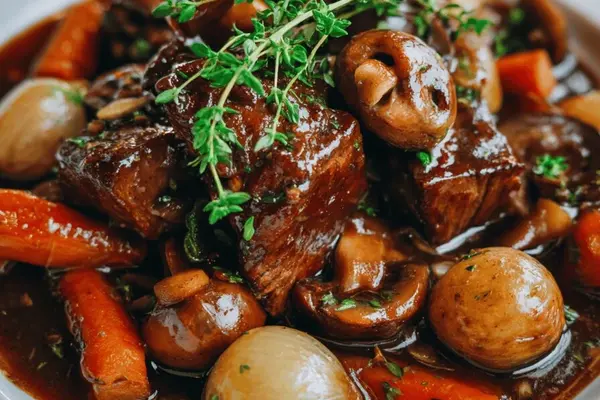
Seitan Bourguignon with Red Wine & Mushrooms
By Emma
Certified Culinary Professional
·
Recipe tested & approved
Vegan bourguignon featuring seitan seared crisp, slow-simmered in red wine with cremini mushrooms, carrots, shallots, and pearl onions. Rich umami depth from miso.
Prep:
40 min
Cook:
1h 20min
Total:
2h
Servings:
6 servings
Dust the seitan in flour. Get the pan smoking hot—oil and butter together—before anything touches down. Browning matters here. Crispy edges lock in flavor. You’ll feel the difference between a stew that tastes flat and one that tastes like you actually cared. Salt it early. Pepper too. That’s how you get a real crust.
Why You’ll Love This Vegan Bourguignon
One pot. Everything stays in there from sear to serve, which means cleanup doesn’t happen at midnight. Tastes like you slow-cooked it all day. Takes two hours total—forty minutes prep, eighty minutes on the stove—but it reads like comfort food that simmered forever. Works cold the next day. Maybe better. Wine mellows overnight, seitan softens further. No meat but the seitan gets texture—chew and crust—that makes it actually satisfying. Pearl onions go translucent and sweet. Mushrooms brown instead of steam if you don’t crowd them. Vegan but feels like the opposite. Miso paste deepens everything without tasting like miso. People won’t figure out what you did.
Plant-Based Stew Ingredients You Actually Need
Seitan cubes—750 grams, one centimeter size—lightly floured before they hit the pan. Not breaded. Just dusted. The flour helps browning, nothing else.
Sunflower oil and unsalted butter. Fifteen milliliters oil, twenty-five milliliters butter. Olive oil works if you’re dairy-free but it burns faster, so watch it.
Salt and pepper. Coarse salt. Grind it fresh. Makes a difference.
Three garlic cloves, finely chopped. Not minced into nothing. Pieces you can see.
Shallots—one hundred and fifty milliliters sliced thin. Sharper than onions. If you hate them, white leek works, just adds more of it.
Celery. Diced. One hundred and twenty milliliters. Adds depth without tasting like celery, somehow.
Carrots—four hundred and eighty milliliters diced, peeled. They take longer to soften than you think.
Dry red wine. Three hundred and seventy-five milliliters. Cabernet or pinot noir. Avoid anything overpowering. The wine is the base, not the star.
Vegetable broth—four hundred milliliters. Quality matters. Cheap broth tastes thin.
Brown miso paste. Five milliliters. Sounds small. Changes everything. Use tamari if soy bothers you.
Fresh thyme and a bay leaf. One sprig, one leaf. That’s it.
Pearl onions, cremini mushrooms, parsley, butter for glazing. The finish that makes it look intentional.
How to Make Seitan Bourguignon That Actually Works
Get your pan hot. Smoking. Not just warm. This matters.
Dust the seitan cubes in flour—light coating, nothing caked on. Oil and butter hit the pan. Seitan goes in single layer. No crowding. Crowding turns it into steam instead of sear. You’re not cooking it here. You’re browning it. Listen for the sizzle. That sound means crust is happening.
Let each side go three to four minutes. You’re looking for golden, almost crunchy edges. That’s when you know the flavor locked in. Pull the seitan out. Set it aside. Don’t rinse the pan. The brown bits stuck to the bottom are going to be your whole base.
Same pan. Melt the rest of the butter. Garlic, shallots, celery, carrots go in. Stir constantly for three to four minutes. The smell has to open up. You’ll know when the garlic’s getting soft—the raw edge disappears, the room smells alive. Watch garlic. It burns fast. Burnt garlic tastes like ash.
Salt and pepper at this stage. Not later. Now. It draws moisture out of the vegetables, seasons the whole thing evenly.
Seitan goes back in. Pour the wine slow—deglaze the pan while you pour. Scrape those brown bits from the bottom with a spoon. They break apart, dissolve into the wine. That’s your whole flavor base right there.
Then vegetable broth. Miso paste—stir until it dissolves completely, no lumps. Thyme sprig and bay leaf go in. Taste it. Season lightly. Wine and broth vary in salt already.
Bring it just to a boil. Then cover and simmer low. Thirty-five to forty minutes.
Slow Simmered Seitan Stew With Carrots and Shallots
Stir it occasionally so nothing sticks to the bottom. Watch the carrots. Fork-tender but not mushy. That’s the target. The sauce thickens slight on its own—wine reduces, seitan releases gelatin, miso adds body.
The smell changes over time. Wine smell fades. Tannins soften. That bitter edge goes away. This is time working. Don’t rush it.
Meanwhile—glazed onions. Pearl onions need their skins off. Blanch them in boiling water for thirty seconds. Shock them in ice water right after. The skins slip off easy. Saves so much time.
Melt butter in a separate pan. Add water, sugar, and the peeled onions. Very low heat. Simmer fifteen to eighteen minutes until the water evaporates completely and the onions turn translucent—shiny like little jewels. Salt and pepper them at the end. That sharpens the sweetness.
Mushrooms separate. One hundred and eighty grams cremini, quartered. They have deeper flavor than button. Heat butter or oil hot in a skillet. Mushrooms in a single layer. Don’t stack. Don’t crowd. Crowding releases water and they stew instead of brown.
Wait until one side’s golden. Flip carefully. Repeat until all sides brown nicely. This takes maybe seven to eight minutes total. Salt them once—doesn’t need it twice.
One Pot Vegan Bourguignon Assembly and Finish
Last step happens off heat. The stew’s done—seitan tender but still has chew, carrots yield without falling apart, sauce glossy without being watery. Add the glazed onions and browned mushrooms. Stir in fresh parsley. Don’t stir too long or the texture breaks.
Serve warm over mashed potatoes or crusty bread. The sauce soaks in.
If the wine tastes too bitter or overpowering—and this depends on the bottle—splash in a little maple syrup or balsamic vinegar. Balances acid. Rounds it out.
Paprika twist: optional. Add a small pinch with the garlic stage for layered warmth. Use sparingly. A little goes far. Makes it taste smoky without tasting like paprika.
Don’t skip the browning. Rush it and the texture flattens. Everything tastes like you boiled it.
Reserve the oil from browning seitan. Use it to sauté the mushrooms. Extra flavor. Costs nothing.
Seitan Bourguignon with Red Wine & Mushrooms
Prep:
40 min
Cook:
1h 20min
Total:
2h
Servings:
6 servings
Ingredients
- 750 g seitan, cut in 1 cm cubes, floured lightly
- 15 ml sunflower oil
- 25 ml unsalted butter (sub olive oil for dairy-free)
- Salt and freshly ground black pepper
- 3 garlic cloves, finely chopped
- 150 ml thinly sliced shallot (sub for white leek, sharper)
- 120 ml celery diced
- 480 ml (2 cups) diced carrots, peeled
- 375 ml dry red wine (cabernet or pinot noir, avoid overpowering)
- 400 ml vegetable broth
- 5 ml brown miso paste
- 1 sprig fresh thyme
- 1 bay leaf
- Glazed Onions
- 24 pearl onions (pickled or fresh small), outer skins removed
- 125 ml water
- 15 ml sugar
- Mushrooms
- 227 g cremini mushrooms quartered (deeper flavor than button)
- 15 ml butter or oil
- 15 ml chopped flat-leaf parsley
Method
- Browning Seitan and Veggies
- 1 Dust seitan cubes with flour. Get pan smoking hot before oil and butter in. Aim for even browning; no overcrowding or it steams. Crisp crust signals flavor locked in. Salt and pepper here—season early to draw moisture and also flavor the crust. When seitan’s golden and almost crunchy edges show, pull out. Rest to avoid soggy.
- 2 Same pan—add rest of butter. Toss garlic, shallot, celery, carrots in. Stir for 3-4 minutes. Smell has to open up, veggies softening. Salt and pepper at this stage enhances their natural sweetness. Watch garlic don’t burn, it turns bitter fast.
- 3 Return seitan to pot. Deglaze with wine: pour slow, scrape brown bits from bottom. That’s your base. Then broth, miso paste (stir till dissolved), thyme, bay leaf. Season again lightly; broth or wine vary in salt. Bring just to boil.
- 4 Cover pot. Simmer 35-40 minutes. Watch carrots; test with fork, want tender but not mushy. Stir occasionally to avoid sticking. Sauce will thicken slight, smell deepening, wine mellowing to soft tannins.
- Glazed Onions
- 5 Blanch pearl onions in boiling water ~30 sec. Shock in ice water, peel skins slip off easy. Small trick that saves time.
- 6 Melt butter gently in sautée pan, add water, sugar, and onions. Simmer on very low for 15-18 minutes until water evaporates and onions look translucent, shiny like little jewels. Salt and pepper here sharpen sweetness.
- Mushrooms
- 7 Heat butter or oil hot in skillet. Mushrooms in single layer. Don’t crowd—crowding releases water, they stew instead of brown. Salt once side is golden, flip carefully. Repeat until all browned nicely. Reserve.
- 8 Last step: to stew add glazed onions, mushrooms, stir in fresh parsley off heat. Stirring too long breaks texture.
- 9 Serve warm, ladled over mashed potatoes or crusty bread.
- 10 You’ll know stew is done when seitan bites tender yet retain chew, carrots yield without losing shape, and sauce is glossy without being watery or gluey.
- 11 Smoky paprika addition: optional twist to add with garlic stage for layered warmth. Use sparingly; a little goes a long way.
- 12 Alternative miso: use tamari for saltiness or skip if hypersensitive to soy. Adjust salt accordingly.
- 13 If wine too bitter or overpowering, add splash of maple syrup or balsamic vinegar to balance acid and round flavor.
- 14 Don’t rush browning. Skip seitan crust and texture flattens.
- 15 Reserve seitan cooking oil to sauté mushrooms for extra flavor.
- 16 If tired of pearl onions peeling, frozen pearl onions are decent substitute; thaw before glazing.
Nutritional information
Calories
280
Protein
30g
Carbs
18g
Fat
9g
Frequently Asked Questions About Seitan Red Wine Stew
Can you make this in a slow cooker? Yeah. Brown the seitan and vegetables on the stove first—that part matters. Then dump everything into the slow cooker with the wine and broth. Six to eight hours on low. The pearl onions and mushrooms go in the last hour so they don’t fall apart. It works but the stove version tastes better. More control.
What if you can’t find seitan? Tempeh works. Different texture—crumbles more—but it absorbs flavor. Tofu takes longer to brown and won’t get crispy edges. Chickpeas—canned, drained, pressed dry—could work if you’re okay with softer texture and less chew.
Does the miso really matter? It changes everything. Five milliliters—tiny amount—adds savory depth without tasting like miso at all. If you skip it, the stew tastes thinner. You could use tamari or soy sauce instead. Use same amount. Adjust salt because it’s already salty.
How do you store this? Refrigerator three to four days in an airtight container. Freezes fine for two months. Thaw in the fridge overnight, reheat low on the stove so the sauce doesn’t break. Actually tastes better the next day. Wine mellows.
What wine should you use? Dry red wine. Cabernet or pinot noir. Something you’d actually drink. Avoid anything labeled “cooking wine”—it’s garbage. The wine becomes the sauce. Bad wine makes bad sauce. If it’s too tannic or overpowering, add a splash of maple syrup.
Can you use pearl onions from frozen? Frozen works. Thaw them first. Skip the blanching and shocking step—they’re already cooked. Glaze them the same way. Won’t be quite as shiny but you save thirty minutes.
What’s the deal with not crowding the pan? Crowding releases moisture. Everything steams instead of browns. Steamed seitan tastes rubber. Steamed mushrooms taste like nothing. You need those brown crispy bits. They taste like flavor. Takes longer if you do it right. Worth it.
Can you make this without wine? Technically yes. Use more vegetable broth and add an extra tablespoon of balsamic or red wine vinegar for acid. It won’t taste the same—wine has tannins and body that vinegar doesn’t—but it’s drinkable. Haven’t tried it. Might work fine.
You’ll Love These Too
Explore all →
Oatmeal Chocolate Chip Cookies Recipe

Crispy Oven Bacon Recipe with Maple Glaze

Homemade Sorbet with Lime & Grapefruit

Ambrosia Salad with Sour Cream Recipe

No-Churn PB Chocolate Sundae Recipe

Recipe For Chicken Enchilada

Eggnog Cheesecake Recipe with Speculoos Crust

Make Ranch Dressing with Lemon & Lime

Pumpkin Bars Recipe with Spiced Filling
Crispy Fried Eggplant Pita Sandwich

Braised Italian Sausages Red Wine Recipe

Bread Pudding Recipe with Cinnamon & Caramel
Crispy Ranch Potatoes

Peanut Butter Pretzel Chocolate Cookies
Roasted Vegetable Salad with Feta & Walnuts

Soft Peanut Butter Cookies with Almond Extract

Pumpkin Cake Cheesecake Recipe

Sausage Shepherd's Pie with Parmesan

Gingerbread Men Cookies with Cream Cheese