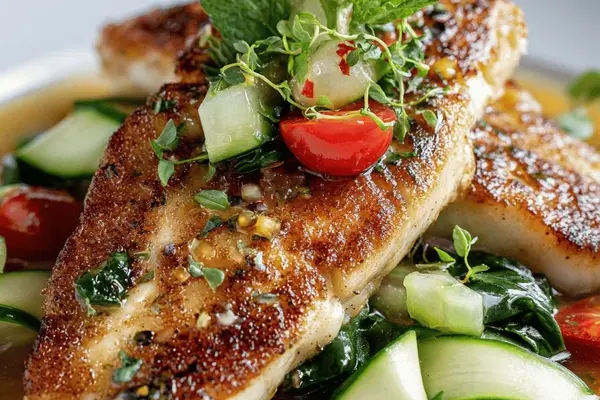
Pan Seared Tilapia with Warm Grapefruit Sauce
By Emma
Certified Culinary Professional
·
Recipe tested & approved
Pan seared tilapia fillets with warm grapefruit sauce made from fresh grapefruit juice, shallots, and honey. Bright citrus flavors with mint and cucumber ribbons. Quick healthy seafood dinner.
Prep:
25 min
Cook:
10 min
Total:
35 min
Servings:
4 servings
Tilapia hits the pan, doesn’t move. That’s the whole thing — let it sit until the edges turn opaque and the bottom releases clean. Three minutes. Maybe four if your fillets are thick.
Why You’ll Love This Seared Tilapia with Grapefruit Sauce
Thirty-five minutes total. Tastes bright and clean without being heavy — citrus does that, the warm grapefruit sauce hits different than cold dressing. One pan, mostly. You sear the fish, make the sauce in the same spot, and you’re done. Works as an actual dinner that feels composed but isn’t fussy. Greens on the plate, warm fish, sauce that’s sweet and tart at once. Healthy without the lecture. White fish, grapefruit, honey — nothing fighting each other.
What You Need for Seared Tilapia with Grapefruit Sauce
Tilapia fillets. Six hundred grams. Skin off if you want — doesn’t matter much either way.
Olive oil. Fifty milliliters. Not extra virgin if you’re doing high heat — regular works better.
Two shallots, finely diced. Not red onion. Shallots go soft and sweet instead of sharp.
One garlic clove, minced. That’s it. More than that overpowers the grapefruit.
Fresh grapefruit juice. A hundred milliliters. Not concentrate. Not from a bottle that’s been sitting around. Fresh means it actually tastes like grapefruit.
Supremes from a pink grapefruit. That’s the segments with the membrane stripped off. Takes five minutes. Worth it because they hold their shape when warm instead of falling into nothing.
Honey. Ten milliliters. The sauce needs something to balance the tart. This is it.
Fresh mint leaves, chopped. Fifteen milliliters. Dried doesn’t work here.
Mâche or baby spinach. Two hundred grams. The cooler green underneath everything. Makes it look intentional.
Salt, black pepper, olive oil for the greens. Optional cucumber ribbons if you want crunch — they work.
How to Make Seared Tilapia with Grapefruit Sauce
Pat the fillets dry first. Paper towels. Get the surface actually dry or the fish steams instead of sears.
Heat fifty milliliters of olive oil in a heavy skillet over medium-high. Watch it. The surface should shimmer and move fast when you tilt the pan. Not smoking. Just ready.
Lay the tilapia away from you — your hands stay further from the heat that way. Don’t touch it. Let it sit. Three minutes, maybe four depending on thickness.
You’ll see the edges go opaque and creep up the sides. That’s how you know it’s time. Flip it once. Two more minutes on the other side — don’t press it down, that squeezes the moisture out and makes it dry.
The fish should spring back a little when you press it gently with your finger. That’s done. Season with salt and pepper right before you flip, not before — salt pulls water out if it sits too long.
Pull the fish onto a plate. Tent it loosely with foil and set it somewhere warm. Low oven works. Or just leave it on the counter — it’ll hold warmth for a couple minutes.
How to Get the Warm Grapefruit Sauce Right
Don’t rinse the pan. The browned bits matter here.
Drop the heat to medium-low. Add your diced shallots and the minced garlic. Stir constantly. Two to three minutes. You want them soft and fragrant, not brown — brown tastes bitter and ruins this.
Drizzle the honey over the shallots. Let it bubble and catch the heat for about a minute until it starts turning amber at the edges. That caramelization adds sweetness underneath the sour.
Pour the grapefruit juice in slowly. It’ll hiss. Stir and let the whole thing reduce down to about half what it was — you’re looking for something that coats the back of a spoon instead of running off like water.
Toss in the grapefruit supremes and the fresh mint. Stir once. Taste it. Add salt and pepper to balance the tart. It should taste bright, not sour. Not sweet. Somewhere between.
The sauce goes on warm, right off the heat.
Seared Tilapia with Grapefruit Sauce Tips and What Goes Wrong
The fish cooks faster than you think. Tilapia is thin. If you walk away and set a timer for five minutes like you would with salmon, it’ll be overcooked and dry. Watch it. Actually look at it.
Shallots burn if you’re not paying attention. Medium-low heat is not negotiable. You’re not searing them, you’re softening them. Takes longer. That’s the point.
The grapefruit juice matters. Bottled or concentrate and the whole thing tastes flat. Fresh grapefruit has that sharp, almost bitter edge underneath the sweet. That’s what makes this work.
Don’t skip supreming the grapefruit. It looks nicer, yeah, but also the membrane is bitter and the whole segment falls apart when it hits the warm sauce. Supremes stay intact.
Mâche wilts if it’s hot. Don’t put the fish directly on it. Let it cool thirty seconds. Then plate. Or plate it on the side — it’s a textural thing anyway, not a bed.
Pan Seared Tilapia with Warm Grapefruit Sauce
Prep:
25 min
Cook:
10 min
Total:
35 min
Servings:
4 servings
Ingredients
- 600 g tilapia fillets (skin removed if preferred)
- 50 ml olive oil
- 2 shallots finely diced
- 1 clove garlic minced
- 10 ml honey
- 100 ml fresh ruby grapefruit juice
- Supremes of 1 large pink grapefruit
- 15 ml chopped fresh mint leaves
- 200 g mache or baby spinach
- Salt and black pepper
- Optional cucumber ribbons for texture
Method
- 1 Pat tilapia dry with paper towels. Heat olive oil in a heavy skillet over medium-high heat. Lay fish away from you in oil. Cook undisturbed until edges lift and flesh is opaque about 3 minutes per side depending on thickness. Fish should spring back when pressed gently. Season lightly with salt and pepper just before flipping. Remove fish and keep warm loosely tented in lowest oven setting.
- 2 In the same pan (don’t rinse), reduce heat to medium-low. Add shallots and garlic. Stir often until softened and fragrant, about 2–3 minutes. Watch carefully to prevent browning which turns bitter.
- 3 Drizzle honey over shallots, let bubble until it starts to turn amber, roughly 1 minute. Pour grapefruit juice in to deglaze—should hiss a little. Stir, let sauce reduce to about half its volume; watch for syrupy texture and nap the back of a spoon consistency. Add grapefruit supremes and chopped mint last. Season with salt and pepper to balance the tartness.
- 4 Toss mache or spinach with a tiny bit of olive oil and a pinch of salt—serves as cooler fresh counterpoint.
- 5 Plate fish on greens or alongside. Spoon warm vinaigrette over fillets. Add cucumber ribbons for crunch if using. Serve immediately.
- 6 Optional sides: small roasted new potatoes or radishes provide earthy note and soak up sauce well.
Nutritional information
Calories
280
Protein
30g
Carbs
10g
Fat
12g
Frequently Asked Questions About Seared Tilapia with Grapefruit Sauce
Can I use a different white fish instead of tilapia? Halibut works. So does flounder — cooks even faster so watch it. Cod is thicker and takes longer. The point is something mild that lets the grapefruit be the main thing. Not swordfish. Too firm and assertive.
What if I can’t find fresh grapefruit juice? Squeeze it yourself. Takes five minutes if you have a reamer. Bottled tastes like nothing. Haven’t found one that works.
How do I know when the fish is actually done? It springs back when you press it. Not bouncy — just gives a little then comes back. If it feels mushy, it’s cooked through but probably dry. If it feels firm like rubber, it needs maybe thirty more seconds.
Can I make the sauce ahead? Not really. The mint turns black if it sits. The grapefruit supremes fall apart if they’re warm too long. Make it while the fish rests — takes three minutes and everything stays bright.
Should the grapefruit sauce be sweet or sour? Both. Not one or the other. The honey brings sweetness, the juice brings tart, the salt balances them. Taste and adjust. You’re not trying to make candy and you’re not trying to make vinegar.
What sides work with this? Small roasted new potatoes. They’re neutral and soak up the sauce. Radishes if you want something sharp. Or nothing — just the greens and the fish and the sauce. That’s actually cleaner.
You’ll Love These Too
Explore all →
Cosmopolitan Drink Recipe with Cranberry Vodka
Celeriac Puree with Leek and Pecorino
Tequila Sour Cocktail Recipe
Mushroom Swiss Burger with Cremini & Dijon
Braised Beef with Peppers and Cherry Tomatoes
Almond White Hot Cocoa Recipe
Slow Cooker Meatloaf with Panko and Worcestershire
Amaretto Peanut Butter Pie Recipe No Bake
Peppery Ranch Cheeseball with Cream Cheese
Homemade Caramel Candy Recipe with Brown Sugar
Pan Roasted Turkey Breast with Pear Stuffing
Neapolitan Pine Nut Pizzas with Ricotta
Honey Puffed Quinoa Vanilla Yogurt Bowl
Holly Jolly Jello Shots with Vodka & Condensed Milk
Balsamic Rosemary Chicken with Garlic
No Bake Cheesecake with Peach Preserves
Maple Cream Cheese Frosting with Honey
Beef and Broccoli Stir Fry Recipe
Melon Aloe Refresher with Lime & Mint