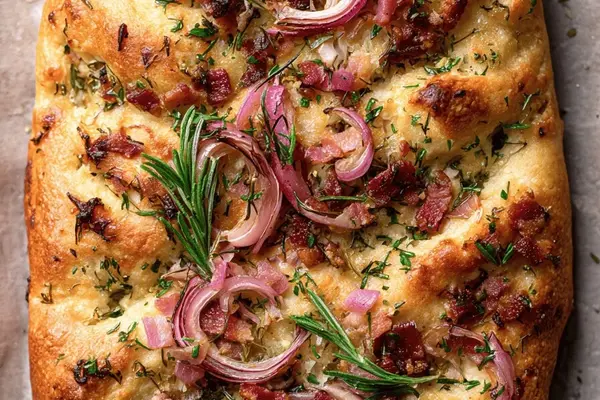
Savory Herb Fougasse with Pancetta
By Emma
Certified Culinary Professional
·
Recipe tested & approved
Sharp knife or lame in hand. Dough’s puffed and ready. You’re about to cut that leaf pattern and turn twenty minutes of prep into something that smells like a Paris bakery for the next hour.
This is herb fougasse — a French bread that looks way harder than it actually is. Red onion and pancetta go into the dough. Fresh thyme. Garlic. The thing bakes up with a crust that cracks when you bite it and an inside that’s chewy and open. Homemade bread that tastes like you’ve been baking for years.
Tried to make this with store-bought dough once. Tasted fine. Wasn’t the same thing.
Why You’ll Love This Herb Fougasse Bread
Makes actual crusty French bread at home without a Dutch oven or wild yeast starter. Just twenty minutes of work, then the oven does the rest.
Pancetta and caramelized onions are already in the dough. No topping to brush on at the last second. No garnish that falls off.
The leaf pattern isn’t decorative — it opens up the crust so you get crackling edges and a softer center at the same time.
Works fresh from the oven or day-old. Cold, it’s still good. Sliced thick, torn apart with butter, used for sandwiches. Doesn’t matter.
One dough. One bowl. Cleanup isn’t nothing, but it’s genuinely fast.
What You Need for Homemade Herb Fougasse
Red onion — one small one, chopped coarse. Pancetta strips, thin. Four slices. Not bacon. Pancetta doesn’t shrivel the same way.
Olive oil. Thirty milliliters split between cooking and the dough. The rest at the end for brushing.
Warm milk — two hundred fifty milliliters, about 40 degrees Celsius. Not hot. Temperature matters here because yeast dies above 45 or so. One tablespoon of honey goes in. Stir until it dissolves.
Flour — 312 grams, all-purpose unbleached. Instant yeast, not the active dry kind. Sea salt. Fresh thyme leaves. One minced garlic clove. Rosemary sprigs if you want them, but honestly, skip it if you don’t have them.
That’s it. Eight ingredients before you account for the pancetta and onion.
How to Make Herb Fougasse
Start with the pancetta and onion. Medium heat. Half the oil in a skillet. Pancetta goes in first — let it render. Onion follows. Seven to eight minutes total. You’re waiting for the pancetta to actually crisp and the onion to soften and turn darker. Not burnt. Darker. There’s a difference.
Drain it on paper towel while it’s still warm. Don’t let it cool completely — you want it to fold into the dough later without being cold and stiff.
Mix your milk with honey. Stir it until the honey dissolves. This step feels pointless but it’s not. Even temperature throughout means yeast wakes up evenly.
Large bowl. Whisk together flour, yeast, salt, thyme, and garlic. Everything dry goes in here first. Pour in the milk mixture and the remaining oil. Stir with a spatula until the dough looks shaggy and holds together.
It’s going to look wet. Don’t add more flour. This is the moment people panic.
Flour your workspace generously. Tip the dough out. Knead for seven to eight minutes — heel of your hand, push, fold, turn, repeat. The dough should go from sticky to smooth to elastic. Still slightly tacky. Not dry. You’ll feel when it’s right because it stops sticking to your hands as much.
Fold the cooled pancetta and onion in gently. If the dough gets too slack, just dust your hands lightly. Avoid dumping more flour on it or the bread gets dense.
Shape into a ball. Coat lightly with oil. Place in an oiled bowl. Cover with a damp kitchen towel.
Let it sit in a warm spot for about thirty-five minutes. Not in direct heat. Just somewhere that’s not cold. Watch for it to roughly double in size. Press your finger into it — the dent should slowly bounce back. If it snaps right back, not ready. If it stays dented, overproofed. Somewhere in between is the sweet spot.
How to Get the Herb Fougasse Crust Perfect
Oven to 230 Celsius (450 Fahrenheit). Center rack. Line a baking sheet with parchment.
Tip the dough onto the sheet. Press it gently into an oval shape — about 30 by 18 centimeters. Not too aggressive. Let the dough tell you when it’s the right size.
Sharp knife or lame. Make one long cut down the center. Leave about 3 centimeters at each end untouched — that keeps the whole thing from falling apart. Then angle cuts along the sides. Five per side. Mimics a leaf pattern. Open the cuts gently after you make them. Careful. You’re creating those “leaves” without tearing the dough.
Let it rest uncovered for fifty to fifty-five minutes. The dough puffs again. The surface dries slightly. Beneath, it stays soft. This is the second rise. Same rules apply — you’re waiting for it to feel puffy and pillowy.
Brush the whole thing gently with the last bit of olive oil. Not soaking. Just a light coating. Brush off excess flour with a soft brush or your hand.
Bake twenty-five to twenty-eight minutes. Listen. You’ll hear the crust crackle. Look for golden brown. Tap the bottom — should be hollow and firm. Every oven is different. Some run hot. Some run cool. If the top’s browning too fast, lower the heat slightly. If it’s not browning after 25 minutes, bump the temp up five degrees.
Overbaked means a dry crumb. Underbaked means the center stays gummy. There’s a window where it’s right. You’ll nail it after one or two tries.
Savory Herb Fougasse Tips and Common Mistakes
The biggest mistake is adding flour during kneading. Dough looks scary when it’s wet. It’s supposed to. Trust the process. Seven or eight minutes of kneading fixes everything.
Second mistake is rushing the rise. Thirty-five minutes might not be enough if your kitchen is cold. Might be too long if it’s hot. Watch the dough, not the clock. Puffy and slow-bouncing finger test beats any timer.
Third — slicing before it cools. I know the smell makes you want to cut into it immediately. Don’t. The steam inside is still working. Cutting early traps that steam and the crust gets soft. Wait until it’s completely cooled. Your patience pays off in crust that actually cracks.
Pancetta weight matters more than you’d think. Four slices if they’re thin. Six if they’re thick. You want just enough fat to flavor without making the dough greasy. Too much pancetta oil and the crumb gets dense.
Thyme goes in the dough, not on top. Some recipes brush the top with herbs. This one doesn’t. The herbs are inside. They distribute through every bite instead of just sitting on the surface.
If you can’t find instant yeast, active dry works. Add an extra five minutes to the rise. It’s slower but gets there.
Rosemary is optional. I usually skip it. Thyme and garlic and the pancetta flavor is already there. Rosemary sometimes fights with them instead of blending.
Savory Herb Fougasse with Pancetta
Prep:
20 min
Cook:
28 min
Total:
48 min
Servings:
1 loaf
Ingredients
- 1 small red onion, coarsely chopped
- 4 slices pancetta, cut into thin strips
- 30 ml (2 tbsp) olive oil, divided
- 250 ml (1 cup) warm milk (~40°C)
- 15 ml (1 tbsp) honey
- 312 g (2 1/3 cups) unbleached all-purpose flour
- 4 ml (3/4 tsp) instant yeast
- 7 ml (1 1/2 tsp) sea salt
- 2 tsp fresh thyme leaves
- 1 garlic clove, minced
- fresh rosemary sprigs (optional)
Method
- 1 Heat a skillet medium, pour half the oil. Add onion and pancetta. Sauté slowly until pancetta crisps, onions soften and caramelized, about 7-8 minutes. Drain on paper towel, let cool enough to handle but still warm. This step tricks the dough with infused fat without sogginess.
- 2 Mix warm milk with honey, stir until dissolved. Warm but not hot, important for yeast vitality.
- 3 In a large bowl, whisk flour, instant yeast, salt, fresh thyme, and minced garlic evenly. Add milk mixture and remaining oil. Stir with spatula until shaggy dough forms. It looks sticky but resist adding flour yet.
- 4 Generously flour your workspace. Tip dough out. Knead 7-8 minutes, pushing with heel, folding, turning. Dough becomes smooth, elastic, springy but slightly tacky—a good tease between under- and over-proofed dough. Avoid flour overdose. Pancetta and onions incorporated in next step.
- 5 Fold cooled pancetta and onions gently into dough. If dough slackens too much, dust hands lightly with flour only to avoid dense loaf.
- 6 Shape into round ball, coat with minimal oil, place in oiled bowl. Cover with damp kitchen towel, keep in warm draft-free spot about 35 minutes until nearly doubled. Proof times vary; dough should feel puffy, finger indentation slowly bounces back. Don't rush.
- 7 Preheat oven to 230°C (450°F) with rack centered. Line baking sheet with parchment.
- 8 Transfer dough to sheet. Press gently into oval approx 30 x 18 cm (12 x 7 inches). Using sharp knife or lame, make central long cut, leaving 3 cm (1 1/4 inch) at ends untouched. Along sides, make 5 angled slashes per side, resembling a leaf pattern.
- 9 Stretch dough carefully at cuts to open 'leaves' wider without tearing. This controls crust thickness and crunch contrast. Let rest uncovered for 50-55 minutes to puff again, skin dry and firm but dough soft beneath.
- 10 Before baking, brush gently with remaining olive oil, dust off excess flour with soft brush or hand. This adds shine and crisps crust further.
- 11 Bake 25-28 minutes. Listen for crackling crust, golden brown hues, and firm hollow tap underneath. Every oven differs; adjust by watching colors and feel. Overbaked means dry crumb; underbaked gummy center.
- 12 Remove to wire rack, cool completely before slicing. Crust loosens from steaming moisture, crumb sets with chewy openness. Early slicing traps steam and dulls crispy edges.
Nutritional information
Calories
290
Protein
8g
Carbs
45g
Fat
7g
Frequently Asked Questions About Homemade Herb Fougasse Bread
Can I make this dough ahead? Absolutely. Mix everything, let it rise in the fridge overnight instead of on the counter. Pull it out an hour before you want to shape it. Cold dough rises slower but develops more flavor. Some people swear the bread’s better this way.
What if my pancetta is thick? Chop it smaller instead of leaving it in strips. Distributes through the dough more evenly. You still want it to render and crisp though. Don’t skip the cooking step.
How do I know if the milk is the right temperature? Dip your pinky in. Should feel warm, not hot. Like a bath that’s comfortable but you wouldn’t soak in it for hours. If you have a thermometer, aim for 40 Celsius. If you don’t, the pinky test works fine.
Can I use dried thyme instead of fresh? Yeah. Use less though. Dried thyme is stronger. Cut the amount in half. It won’t taste exactly the same — fresh is better — but it still works.
The dough is too sticky even after kneading. You might have added flour anyway, or your hands are still wet, or the kitchen’s really humid. Oil your hands instead of flouring them. Keep a small bowl of oil nearby. Wet hands stick; oiled hands don’t. Changes everything.
How long does the bread keep? Day-old is actually good. Texture shifts slightly — crust softens a tiny bit, crumb becomes chewier. After two days, slice it and toast it. Gets the crispness back. By day three or four it’s dry enough that you probably shouldn’t eat it anymore.
What’s the difference between a leaf pattern and just slashing it randomly? Honestly? It’s mostly looks. The pattern controls where the steam escapes and how the crust breaks. Random slashes work fine. The leaf pattern just looks intentional when it’s done right. If you’re not confident with a knife, just make two or three straight cuts and call it done.
You’ll Love These Too
Explore all →
Sticky Chicken Recipe with Soy and Ginger

Lemondrop Martini Recipe with Vodka
Salisbury Steak Meatballs with Mushroom Gravy
Creamy Chicken Stew with Potatoes & Dill
Lemon Fennel Roasted Chicken Breasts
Focaccia with Potatoes and Smoked Beef

Slow Cooker Pulled Pork with Orange & Lime
White Chocolate Brownies with Cream Cheese
Roaster Chicken with Wine & Thyme Pan Sauce
Orange Beet Cubes with Thyme & Coconut Oil
Chilled Almond Soup with Garlic & Grapes
Wendy's Apple Pecan Salad Recipe
Cannellini Bean Salad with Grilled Shrimp
Autumn Spice Tea Punch with Mango Nectar
Bacon Lettuce Tomato Sandwich Recipe
Herbed Cheese Pull-Apart Bread Recipe
Crunchy Asparagus Tuna Salad with Eggs
Cinnamon Sugar Mix with Brown Sugar
Potato Gratin with Rosemary and Piave Cheese