
Salmon Rosettes on Creamy Fennel
By Emma
Certified Culinary Professional
·
Recipe tested & approved
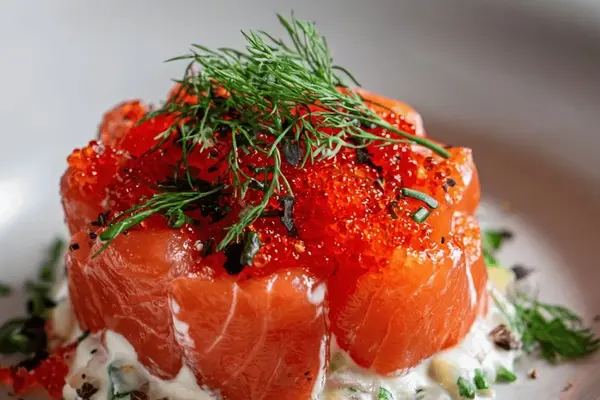
Elegant salmon rosettes arranged over creamy fennel sautéed in crème fraîche, topped with tobiko roe and fresh dill. Simple, impressive appetizer.
Prep:
25 min
Cook:
18 min
Total:
43 min
Servings:
4 servings
Slice the salmon thin. Like sashimi thin. Set the oven to 210°C and let it heat while you work on the fennel—that’s the whole move here. Three ingredients do the heavy lifting: butter, fennel, crème fraîche. Everything else is just dressing it up.
Why You’ll Love This Salmon Appetizer
Takes 43 minutes total but looks like you spent an hour in the kitchen. Salmon rosettes with tobiko are impressive enough for company. Honest enough for a Tuesday night when you want something that actually tastes good. The creamy fennel salmon base is sweet and silky at the same time. Not rich in a way that sits heavy. Fresh salmon fillet works because the cooking time is so short—it stays moist. Actually tastes like salmon, not something you regret halfway through. No fancy equipment needed. A ring mold helps but you can fudge it with whatever you have. The real part is keeping your hands steady while you layer.
What You Need for Salmon Rosettes on Creamy Fennel
One medium fennel bulb. Not the fronds, not the tough parts—the actual bulb. Slice it thin, about 2 mm. Thinner cooks faster. Faster means it doesn’t get mushy.
Fresh salmon fillet, skin already off. 400 grams. Get sashimi-grade if you can. Matters when you’re eating it raw-ish, just barely kissed by heat.
Crème fraîche. The real stuff, not sour cream. Sour cream works but it’s sharper. You don’t want sharp here.
Unsalted butter. 20 ml. That’s one and a third tablespoons. Measure it or just eyeball—doesn’t have to be exact.
Tobiko for the top. Flying fish roe. It pops when you bite it. That’s the whole point. Capers work if you hate fish eggs. Trout roe if you want something milder.
Preserved lemon zest, fresh dill, sea salt, black pepper. These are what make it actually taste like something instead of just creamy and salmon-y.
Parchment squares. Four of them. 12.5 cm. They’re the base each rosette sits on while it bakes.
Lemon juice is optional. Only if the fennel tastes too sweet. Mine usually doesn’t, but fennel varies.
How to Make Salmon Rosettes with Fennel
Preheat to 210°C. Middle rack. Line a baking tray with your four parchment squares while that’s happening.
Cut the fennel bulb in half. The core is tough and bitter—slice it vertically and pop it out. Then go thin. Two millimeters. Hold it up to the light if you want to check. Almost see-through is the goal here.
Melt butter in a medium pan over medium heat. Let it foam up a bit—that takes about a minute. Dump the fennel in. You want it to soften but not fall apart. That’s about three minutes of stirring. Listen for the sizzle. Watch the slices go a little translucent at the edges.
Pour in the crème fraîche. Stir gently until it coats everything evenly. Salt it. White pepper. Then lower the heat and cover it loosely. Seven minutes. Stir once or twice. The fennel should get tender but still hold its shape when you push it.
Take it off the heat. Let it cool down. Room temperature is where you want it before you build anything. If it tastes too sweet—and fennel can be—add a splash of lemon juice. That cuts through the cream.
While that’s cooling, slice your salmon. Thin. Uniform. Like you’re making gravlax or sashimi. A sharp knife matters here. Steady hand matters more.
How to Get Salmon Rosettes Perfectly Cooked
Put a ring mold down on one of your parchment squares. A 7.5 cm diameter ring, 5 cm tall. If you don’t have one, use a small glass or whatever fits.
Spoon about a quarter of the fennel mixture inside. Press it down gently with the back of a spoon. Not hard. You need moisture to protect the salmon from the dry heat of the oven.
Layer your salmon slices over that. Cover the fennel completely. Then take 2 or 3 more slices and overlap them on top so they look like a loose flower. The petals should almost unfold.
Salt and pepper the top lightly.
Wiggle the ring mold out. Lift straight up. Repeat three more times for the other portions.
Into the oven at 210°C for 12 to 14 minutes. Watch it. The fennel should be tender and creamy still. The salmon just cooked through—not opaque, not dry. The edges curl a tiny bit when it’s done.
Pull it out. Transfer it to warm plates with a metal spatula. Be gentle. The whole thing wants to fall apart if you’re not careful.
Tobiko on top. A generous scatter. Dill over that. Preserved lemon zest. Thin strips.
Serve warm. The fennel is sweet and soft underneath. The salmon is floral and silky. The roe pops on your tongue. The lemon zest cuts through all of it.
Salmon Rosettes Tips and Common Mistakes
The fennel can be made ahead. Cook it, cool it, refrigerate it. Bring it back to room temperature before you assemble anything. Saves about 15 minutes on the day-of.
Salmon has to be fresh. Sashimi-grade. Slice it right before you build the rosettes or it gets sad and oxidized looking.
Don’t overpack the fennel layer. It needs to stay creamy in the oven. Too tight and it gets weird.
The ring mold is helpful but not required. You can shape it freehand with two spoons. Takes longer. Less pretty. Still tastes the same.
Crème fraîche over sour cream. Always. Sour cream is too sharp and it breaks when it gets hot.
If you’re short on butter or worried about richness, you can cut it to 15 ml. The sauce gets thinner but it still works. The fennel still gets soft.
Tobiko can be expensive. Capers taste completely different but they add crunch and salt. Trout roe if you want something between the two. Fresh roe from actual trout or salmon works too if you can get it.
Salmon Rosettes on Creamy Fennel
Prep:
25 min
Cook:
18 min
Total:
43 min
Servings:
4 servings
Ingredients
- 1 medium fennel bulb, trimmed (approx 300 g)
- 20 ml unsalted butter (1 1/3 tbsp)
- 125 ml crème fraîche (about 1/2 cup)
- 400 g fresh salmon fillet, skin removed
- Tobiko (flying fish roe), for garnish
- Fresh dill sprigs, roughly chopped
- Preserved lemon zest, finely minced
- Sea salt and freshly cracked black pepper, to taste
- 4 sheets parchment paper, about 12.5 cm square each
- Optional: 1 tsp lemon juice, if fennel too sweet
Method
- 1 Set an oven rack to middle position. Preheat oven to 210 °C (410 °F). Line baking tray with parchment squares.
- 2 Reserve leafy fennel fronds for garnish later. Cut fennel bulb in half. Remove tough core by slicing vertically and popping out. Slice thinly — aim for near-transparent pieces for quick cooking, about 2 mm thick.
- 3 In a medium pan over medium heat, melt butter until foaming but not browned (about 1 minute). Toss fennel slices in. You want them softened but still with a bit of crunch; cook about 3 minutes, stirring occasionally—listen for gentle sizzle, see faint translucency.
- 4 Add crème fraîche. Stir gently; it should coat fennel evenly and start simmering softly. Season with salt and white pepper. Reduce heat to low, cover loosely, and cook for 7 minutes, stirring once or twice. Look for tender cloves that don’t fall apart but yield to pressure.
- 5 Remove pan from heat. Let mixture cool to near room temperature. If fennel tastes too sweet or mild, add splash of lemon juice to cut richness.
- 6 Meanwhile, slice salmon thinly — like for sashimi or gravlax; aim for uniform thinness to fold easily. Use sharp knife, steady hand.
- 7 Place a metal ring mold (7.5 cm diameter, 5 cm height) atop parchment. Add one quarter of fennel mixture inside. Press lightly with back of spoon to create even base, not compacted too hard though—need moisture to keep salmon from drying out in oven.
- 8 Layer one quarter of salmon slices over fennel, covering completely. Finally, arrange 2-3 overlapping slices to form a loose flower shape on top. Sprinkle lightly with salt and black pepper.
- 9 Gently remove ring mold by wiggling slightly, lift straight up. Repeat for all four portions on separate parchment squares.
- 10 Bake at 210 °C for about 12-14 minutes. Watch carefully. The fennel should be tender, creamy; salmon just cooked through but not opaque or dry—edges slightly curling indicates done. Pull from oven promptly.
- 11 Using a metal spatula, carefully transfer rosettes onto warmed plates. Garnish with dollops of tobiko (red roe adds crunch and salty pop), scatter dill over top, and finish with tiny strips of preserved lemon zest. The lemon zest cuts richness and adds zing.
- 12 Serve immediately. Best eaten warm; fennel base brings sweetness and creaminess, salmon floral and silky, roe bright and popping.
- 13 If short on time, you can cook fennel mixture a day ahead; refrigerate, then bring to room temp before using. Salmon should be fresh, sashimi-grade, sliced just before assembly to keep texture intact.
- 14 For substitutions: crème fraîche can be replaced by whole milk yogurt thinned with a splash of cream but expect slightly less richness. Tobiko can be swapped with finely chopped capers or roe from trout as milder variation. Butter amount can be adjusted down if feeling too rich.
Nutritional information
Calories
320
Protein
28g
Carbs
4g
Fat
22g
Frequently Asked Questions About Salmon Appetizers with Creamy Fennel
Can I make the entire dish ahead? Fennel yes. Salmon no. Slice and assemble the salmon right before it goes in the oven. The creamy fennel mixture keeps for a day in the fridge. Cold or room temperature when you build it, either works.
What if I don’t have a ring mold? Use the side of a wide glass. Use two spoons and shape it freehand. It won’t look like a rosette but it’ll taste the same. The shape doesn’t matter as much as the layers.
Is crème fraîche necessary or can I use yogurt? Crème fraîche is better. Yogurt works if it’s whole milk yogurt thinned with cream. Expect it to be thinner, less rich. Sour cream is too sharp.
How thin should the salmon really be? Like sashimi. You should almost see through it. If you can’t, it’s too thick. Thick salmon in this dish doesn’t cook right and it chewy instead of silky.
What temperature salmon is done? Not opaque all the way through. Slightly translucent in the very center is perfect. The edges curl a tiny bit when it’s right. Pull it out. Don’t wait for it to turn completely pink.
Can I substitute the tobiko? Capers work. Completely different flavor but they’re salty and crunchy. Trout roe if you want something milder than tobiko. Fresh salmon roe if you have access to it.
How long does this keep as leftovers? Eat it warm. It’s okay cold the next day but the salmon gets firmer, less silky. Not bad. Just different. Store it in the fridge covered. Doesn’t last more than a day or two.
You’ll Love These Too
Explore all →
Caramelized Figs with Greek Yogurt & Honey
Caprese Salad with Tomatoes and Fresh Tarragon

Marinated Flank Steak with Cilantro Avocado
Molasses Pumpkin Cheesecake Bars Recipe

Chocolate Chip Cookies with Almond Meal
Roasted Veggie Soup with Chickpeas & Thyme
Pan-Seared Salmon with Mushrooms & Orange

Cheesecake Almond Cookies with Candied Cherry

Açaí Bowl with Strawberries and Pineapple

Banana Pineapple Bundt Cake Recipe
Lemon Bars with Lime and Cornstarch
Balsamic Rosemary Chicken with Garlic

Lemon Popcorn With Marshmallow
Pickle Dip with Cream Cheese Recipe
Lobster White Chocolate Soup with Striped Bass
French Toast Casserole with Cranberry Pecan
No-Knead Overnight Rye Bread Recipe
Gruyère Morel Fondue with Pinot Gris

Chicken Wonton Soup Recipe with Mushroom Broth