Salmon Koulibiac Twist with Hazelnuts
By Emma
Certified Culinary Professional
·
Recipe tested & approved
Salmon filet, half-cooked. Kale pressed dry. Hard-boiled eggs lined up like soldiers. Wrapped in spelt dough. Baked until the whole thing cracks when you tap it. This is koulibiac, but different—hazelnuts instead of pine nuts, tart cherries that snap against the fatty salmon. Takes an hour forty total. Prep takes fifty-five minutes of actual work, baking another forty-five. Sounds complicated. Isn’t.
Why You’ll Love This Salmon Pastry
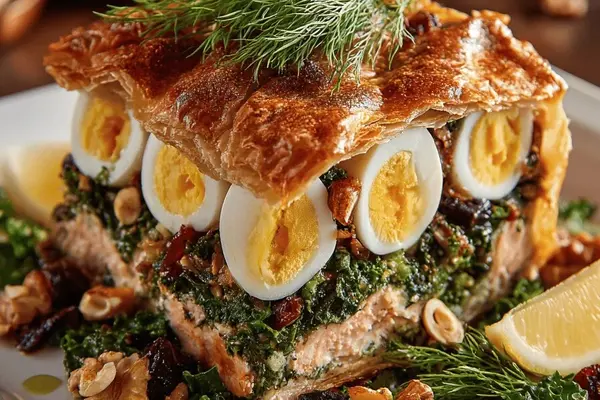
One piece reveals everything at once—the flaky golden crust, kale still bright underneath, then the salmon, then eggs sliced perfectly in half. It’s a meal that looks like you spent all day but doesn’t take all day.
Hazelnuts and cherries work because they’re unexpected with salmon but not in a weird way. Hazelnuts ground into the kale add an earthy warmth. Cherries are tart and almost spicy against the richness. You’ll taste them in every bite.
Works warm or room temperature. Leftovers actually taste better the next day because everything settles into each other. Cold too, if you need it.
Seafood en croute sounds fancy. It’s really just fish wrapped in pastry. The technique works for so many things once you understand it—but this version, with the spelt and the hazelnut cherry filling, feels like an occasion meal without being fussy about it.
What You Need for Salmon with Hazelnuts and Cherries
Spelt flour. Not all-purpose. It browns differently, has a nuttiness that matters here. All-purpose works if you’re in a bind but the crust gets less interesting.
Cold butter. 300 grams. Diced small. This is non-negotiable—warm butter makes tough dough. Stick it in the freezer for ten minutes before you start.
Olive oil for the dough. 40 milliliters. It adds a subtle chew, keeps the crust from being too crumbly. Extra butter instead would make it heavy.
Skinless salmon filet. About 1.3 kilograms. One piece. Pat it dry before roasting or moisture ruins the pastry from underneath.
Baby kale. 200 grams. Not mature kale—the leaves are too tough and bitter. Baby kale wilts faster, stays tender.
Toasted hazelnuts. 60 grams. Rough chop them. Toast them yourself on a dry skillet for about three minutes, stirring constantly. Store-bought toasted is fine if you’re rushed. The nuttiness is what matters.
Dried tart cherries. 75 grams. Not sweet ones. The tart pop is the whole point here—they cut through the salmon fat.
Hard-boiled eggs. Eight of them. Peel them, slice lengthwise later.
One beaten egg for brushing the pastry. This makes it golden and snappy.
Dill and lemon slices for the salmon before roasting—optional but worth it. Salt and avocado oil for cooking the fish.
How to Make Salmon en Croute
Dough first. Pulse spelt flour and salt with cold butter cubes in a food processor. You’re looking for coarse peas with some pea-size lumps still visible. Don’t overprocess. Overprocessing kills the crust.
Drizzle in the olive oil while pulsing. Add the beaten eggs gradually. Then the icy water. Just a drizzle at a time. Stop when it comes together into a shaggy ball. Don’t add more water than you need.
Turn it out onto a floured surface. Divide into two disks. Wrap them tight in plastic. Chill for at least thirty minutes. Cold dough is essential—butter needs to stay cold for flakiness.
While the dough chills, prep the salmon. Position your oven rack low. Preheat to 210 Celsius. Line two baking sheets with parchment.
Place the salmon filet on the first sheet. Pat it completely dry. Season generously with salt and pepper. Drizzle with avocado oil. Scatter dill sprigs and lemon slices on top. This roasts for seven to eight minutes. The fish won’t be cooked through. It firms slightly and picks up the herb aroma. That’s the whole point.
Remove the herbs and lemon debris when it’s done. Reserve the salmon.
How to Get Crispy Spelt Pastry Around Salmon
Melt butter in a large skillet over medium-high heat. Add baby kale leaves. Stir until just wilted. It should still be vibrant green. Season with salt and pepper.
The key moment: drain the kale. Use a fine mesh sieve. Press the moisture out firmly but gently. Soggy kale soaks into the pastry from underneath and ruins it. Takes maybe two minutes but it matters.
Transfer the wilted kale to a bowl. Fold in the toasted hazelnuts and dried cherries. These two things together are what make this different from every other salmon pastry you’ve had. The hazelnuts are earthy. The cherries are sharp. Together they’re a flavor that works.
Flour your work surface lightly. Roll both dough disks into elongated ovals, roughly the same size as the salmon, about five millimeters thick. Place one dough piece on the second baking sheet.
Center the roasted salmon filet on top of the dough. Pile the kale mixture evenly over the salmon. Now line up the hard-boiled eggs straight down the center of the fish. This matters because when you slice it later, each slice has an egg in it. The visual is half the point.
Fold the filling sides up slightly to cradle the eggs. Prevents them from shifting during the bake.
Brush the dough edges with beaten egg. Top with the second dough oval. Press the edges firmly to seal. Trim excess dough. Sealing is critical—gaps let steam escape and the filling dries out.
Cut narrow strips from the dough scraps, about three millimeters thick. Weave them into a lattice pattern or just lay them in a design on top. Brush the lattice generously with beaten egg. This gives you that ultimate golden shine and crispy finish.
Using a sharp knife, make three small slits spaced on the top crust between the eggs. Steam needs an exit. Place the baking sheet in the oven at 200 Celsius. Bake for thirty-eight to forty-two minutes. The pastry should puff slightly. It’ll turn deep amber. Tap the top lightly—it should crackle.
Remove carefully. Let it rest on a rack for at least twelve minutes. This is not something to rush. Resting lets the interior settle so you can slice it without everything sliding around.
Cut thick servings. Each one should reveal the vibrant green kale, the ruby cherries, the golden eggs sliced in cross section. The visual matters as much as the taste here.
Salmon Pastry Tips and Common Mistakes
Dough softens too much during shaping. Chill it again briefly. The dough doesn’t need to be stiff but it shouldn’t be warm to the touch.
Kale is too wet. This is the most common failure. Always press it. Two minutes with a sieve and firm pressure prevents a soggy bottom crust that never crisps.
Underbaking the pastry. If you’re not sure, lift the corner gently and peek at the bottom. It should be golden, not pale. If the bottom is soft after forty-two minutes, the salmon was already partially cooked, so a bit more time won’t dry it out.
Salmon slightly underdone is actually fine. Residual cooking happens in the pastry shell.
Eggs sliding around during slicing. Tuck the kale tightly around them before sealing the dough. Press the filling down so nothing has room to move.
Spelt flour vs all-purpose. Spelt is nuttier and browns faster but cracks easier. All-purpose gives a tougher, more forgiving dough. Pick based on what you have and your comfort level.
Avocado oil for the salmon. More neutral than olive oil. Olive works but leaves a stronger flavor that some people find competes with the subtle fish and hazelnut. Avocado’s cleaner.
Toast hazelnuts yourself. Dry skillet, medium heat, stir constantly for three to four minutes. The moment the aroma releases, pull them off. One minute too long and they burn.
Salmon Koulibiac Twist with Hazelnuts
Prep:
55 min
Cook:
45 min
Total:
1h 40min
Servings:
8 servings
Ingredients
- Dough
- 400 g (3 1/4 cups) spelt flour or all-purpose
- 3 ml (1/2 tsp) fine sea salt
- 300 g (1 1/4 cups) cold unsalted butter diced
- 40 ml (3 tbsp) extra virgin olive oil
- 45 ml (3 tbsp) icy water
- 2 large eggs beaten
- Salmon
- 1 1.3 kg (about 2 3/4 lb) skinless salmon filet
- 20 ml (1 1/2 tbsp) avocado oil or olive oil
- 1 small bunch fresh dill
- 1 lemon thinly sliced
- Filling
- 200 g (10 cups) baby kale leaves
- 25 g (3 tbsp) unsalted butter
- 60 g (1/3 cup) toasted hazelnuts roughly chopped
- 75 g (1/2 cup) dried tart cherries
- 8 hard-boiled eggs peeled
- 1 egg beaten for brushing
Method
- Dough
- 1 Start by pulsing spelt flour, salt, and cold butter cubes in a food processor until mixture resembles coarse peas with some pea-size lumps remaining. Don’t overprocess or dough gets tough. Add olive oil and 2 eggs gradually; then drizzle icy water while pulsing between additions to bring dough together into a shaggy ball. Turn out onto floured surface; split into 2 disks, wrap tightly with plastic; chill minimum 30 min. Cold dough essential to flaky crust; butter must be cold, olive oil adds silkiness and slight chew.
- Salmon preparation
- 2 Position oven rack low, preheat oven to 210°C (410°F). Line two baking sheets with parchment paper. Place salmon filet on first sheet. Pat dry; season generously with salt and pepper. Drizzle with avocado oil for subtle buttery flavor; scatter dill sprigs and lemon slices atop. Roast roughly 7-8 minutes. The fish won’t be cooked through but infuses aromas and firms slightly—key for the wrapping phase. Remove herb and lemon debris, reserve salmon.
- Filling
- 3 In large skillet over medium-high, melt butter. Add baby kale leaves; stir until just wilted, still vibrant green. Salt and pepper. Key here: kale must be drained well to avoid soggy crust. Use fine mesh sieve, press moisture out firmly but gently. Transfer greens to bowl, fold in toasted hazelnuts and dried cherries—hazelnuts swapped for pine nuts for deeper earthiness, cherries add a lively tart pop complementing fatty salmon.
- Assembly
- 4 Flour work surface lightly. Roll both dough disks into elongated ovals roughly matching size of salmon, about 5 mm (1/4 inch) thick. Place one dough piece on second baking sheet. Center roasted salmon filet atop the dough. Pile kale mixture evenly over salmon. Now, gently but firmly line up hard-boiled eggs straight down center of fish. Fold filling sides up slightly to cradle eggs, prevents shifting.
- 5 Brush dough edges with beaten egg; top with second dough oval. Press edges firmly to seal, trimming excess dough. Sealing is critical—no gaps or steam escapes. Cut narrow strips from dough scraps about 3 mm (1/8 inch) thick, weave lattice or design pattern atop. Brush lattice generously with egg for ultimate golden shine and crispy finish.
- 6 Using sharp knife, make 3 small slits spaced on top crust between eggs. This lets steam out naturally. Place baking sheet in oven at 200°C (390°F). Bake 38-42 minutes. Pastry should puff slightly, turn deep amber with crackling sound when tapped lightly.
- 7 Remove carefully; rest on rack at least 12 minutes. Resting lets interior settle—not rushing the slice. Cut thick servings ensuring slices reveal vibrant green kale, ruby cherries, golden eggs sliced perfectly in cross section.
- 8 Hollandaise sauce optional, but recommended for brightness. Or plain lemon wedges. Holds up well served warm or room temp.
- To troubleshoot
- 9 If dough softens too much during shaping, chill again briefly. Too wet kale will leak juice—always press. Underbaking pastry yields soggy bottom; if unsure, lift corner to peek. Salmon slightly underdone is OK; residual cooking in shell. If eggs slide around, tuck kale tightly around them before sealing. Lattice adds not just beauty but venting and extra crisp.
- On substitutions and tips
- 10 Spelt flattens out more than all-purpose, adding nuttiness but slightly crumblier crust. Olive oil in dough helps pliability—extra butter can make crust greasy and heavy. Avocado oil preferred for salmon as more neutral than olive oil, but olive works. Toast hazelnuts on dry skillet until aroma releases, roughly 3-4 min stirring constantly to avoid burning. Cherry tartness can be substituted with dried cranberries or chopped dried apricots for another flavor profile.
Nutritional information
Calories
650
Protein
40g
Carbs
30g
Fat
42g
Frequently Asked Questions About Salmon Pastry
Can I prep the components ahead and assemble the day of? Yes. Dough keeps two days wrapped in the fridge. Cooked salmon, cooled kale, hard-boiled eggs—all keep separately three days. Assemble and bake fresh. Don’t bake ahead; reheating makes the crust soggy.
What if I don’t have a food processor for the dough? Use a pastry cutter or two forks. Cut the cold butter into the flour until it resembles coarse peas. Takes longer but works. The goal is cold butter distributed throughout the flour, so temperature matters more than method.
Should I cook the salmon all the way through before wrapping? No. Seven to eight minutes—it should be translucent in the center. The pastry shell finishes the cooking. Fully cooked salmon dries out in the oven.
Can I swap cherries for something else? Dried cranberries work. So do chopped dried apricots. Cranberries are more tart. Apricots are milder and slightly sweet. The cherry sharpness is what cuts through the hazelnut richness but both swaps work.
How do I know when it’s done baking? Deep amber color and a crackling sound when you tap the top lightly. The bottom should be golden, not pale. If unsure, lift one corner gently and peek. Thirty-eight minutes minimum, forty-two minutes maximum. After that, it starts drying.
Why does it rest for twelve minutes after baking? The interior is still cooking slightly and everything is hot. Slicing too early tears the pastry and everything falls apart. Resting lets it all set. You can serve it warm or let it cool to room temperature.
You’ll Love These Too
Explore all →
Making Sugar Cookies with Butter & Colored Sugar
Layered Candy Corn Cookies Recipe
Monster Rice Treats with Candy Eyes
Blueberry Danish with Cream Cheese & Lemon
Almond and Broccoli Soup Recipe
Crispy Oven Bacon Recipe with Maple Glaze

Donut Chicken Sandwich with Maple-Dijon
Ina Garten Parmesan and Thyme Crackers
Salted Dulce de Leche Bars with Buttery
Mini Meatloaf Cupcakes with Mashed Potato Topping
Instant Pot Turkey Breast with Herb Crust
Breakfast Burrito with Eggs, Mushrooms & Spinach

Red Sangria Recipe with Elderflower
White Fish Recipes with Ginger & Soy
Grilled Pork Chops with Wild Rice & Sesame
Chicken Enchilada Recipe with Spinach
Oat Sunflower Burgers with Cheddar
French Onion Pork Loin Roast
Biscuits and Gravy Casserole Recipe