Rustic Stone Fruit Tart with Yogurt Crust
By Emma
Certified Culinary Professional
·
Recipe tested & approved
Slice the fruit first. Yogurt dough comes together in maybe five minutes, then everything just sits there waiting. The tart itself—the part that actually matters—takes 30 minutes in a hot oven. By then you’re smelling caramelized peaches and burnt sugar at the edges, which is exactly what you want. Had a ton of nectarines sitting around one July and refused to make a pie. Too formal. This happened instead.
Why You’ll Love This Rustic Stone Fruit Tart
Pulls together in 35 minutes if you don’t overthink the rolling. Seriously. No special equipment. Just a baking sheet.
Summer peaches, nectarines, apricots—whatever’s actually ripe at the farmers market. Works with all of them. Works with just one.
The yogurt butter dough is different. Tangier than regular pie crust. Holds together without being dense. Crunchy edges because you sprinkle sugar on top, and it actually stays crunchy instead of turning into the crust.
Breakfast tart with yogurt. Dessert tart with ice cream. Cold the next day. Somehow better the next day, which never happens.
No crimping. No special shaping. Rustic means the edges look folded, not perfect. That’s the whole point.
What You Need for Stone Fruit Tart with Yogurt Crust
Crust: All-purpose flour. Two and a half tablespoons powdered sugar. One teaspoon baking powder. Quarter teaspoon salt. That’s your dry stuff—110 grams cold butter cut small, then 60 ml yogurt and the juice from one fresh lemon. Milk for brushing. Sparkling sugar for the edges.
Fruit: A kilogram of whatever stone fruit is good right now. Peaches, nectarines, apricots, doesn’t matter. Slice them thin. Half a cup sugar minus a tablespoon. One and a quarter teaspoons cornstarch—keeps the bottom from getting soggy without tasting starchy.
How to Make a Rustic Peach Tart
Oven to 420 degrees. Center rack. Line a baking sheet with parchment.
Throw flour, sugar, baking powder, salt into a food processor. Pulse until it looks mixed. Add the cold butter pieces. Pulse until it looks like coarse sand with some pea-sized bits still visible. Don’t overdo it. Overmix and the crust gets tough.
Pour in yogurt and lemon juice. Pulse—just briefly. The dough should start clumping. If it looks too dry, add five milliliters cold water. One teaspoon max. Handle it as little as possible. Warm hands destroy everything. Form it into a disk with your hands—rough, no smoothing—and dust the counter.
Roll it out to about 35 centimeters across. Don’t stress about the edges being perfect. Honestly, rough edges are better. Rustic means it looks like you didn’t care, and you shouldn’t care. If the dough gets too soft, slide it onto the baking sheet and chill it for ten minutes. It’ll firm up.
How to Get the Crust Golden and Fruit Perfectly Caramelized
Toss your sliced fruit with sugar and cornstarch in a bowl. Let it sit. Five minutes. That’s it. Longer and the fruit breaks down into mush.
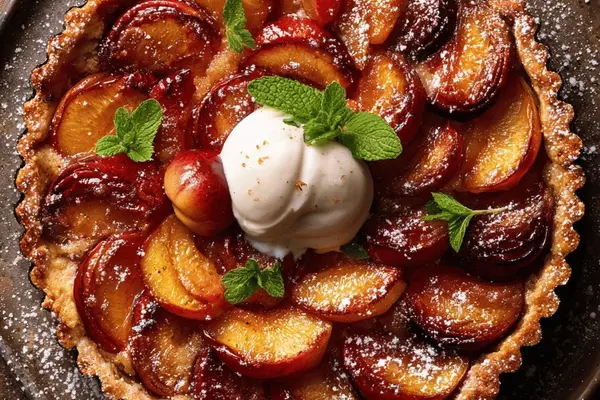
Pile the fruit into the center of the dough, leaving about two inches of bare dough around the edge. It’ll look like way too much fruit. That’s correct. Fold the dough up and over the fruit, pleating every couple inches as you go around. The fruit stays mostly exposed in the middle—this is a tart, not a pie. The dough partially folds around it.
Brush milk onto the dough edges. Sprinkle sparkling sugar generously over the crust. This is where the crunch comes from. Regular sugar dissolves.
Bake 28 to 32 minutes. Every oven is different. Look for the edges to turn deep golden. Listen for gentle crackling. You want to see fruit juice bubbling through the folds. The crust should be dark but not burnt. The fruit should be soft but not collapsed into nothing.
Cool it for a few minutes so the juices thicken up. Serve warm with yogurt if you’re eating it for breakfast. Vanilla ice cream if it’s dessert. Cold the next day it actually tastes better—the crust holds together differently when everything’s cooled down.
Rustic Stone Fruit Tart with Nectarines and Apricots — Tips and Common Mistakes
Dough temperature matters more than skill. Cold butter stays separate and creates flake. Warm dough becomes paste. If your kitchen is hot, chill everything first.
Don’t overwork the dough trying to make it smooth. Visible butter bits are good. Streaks are good. That’s what creates layers.
The yogurt replaces some of the water you’d normally use. It makes the crust tangier and keeps it tender without being fragile. Greek yogurt works. Regular yogurt works. Don’t use flavored.
Fruit thickness is real. Thin slices cook through and caramelize at the edges. Thick slices stay firm in the middle and wet on the bottom. Aim for a quarter inch or so. Not paper thin. Not thick medallions.
The cornstarch isn’t for texture. It’s specifically to absorb juice so the bottom crust doesn’t turn soggy. You’re not thickening a sauce here. One and a quarter teaspoons is enough.
Lemon juice in the dough brightens it without tasting sour. Fresh lemon matters. Not bottled.
Don’t seal the edges. The whole rustic thing falls apart if you crimp like a pie. Fold, pleat, let some fruit show. That’s the look.
Sugar on top stays crunchy because you add it right before baking. It doesn’t have time to dissolve into the dough.
Rustic Stone Fruit Tart with Yogurt Crust
Prep:
35 min
Cook:
30 min
Total:
65 min
Servings:
8 to 10 servings
Ingredients
- Crust
- 215 g (1 1/2 cups minus 1 tbsp) all purpose flour
- 23 g (2 1/2 tbsp) powdered sugar
- 5 ml (1 tsp) baking powder
- 1 ml (1/4 tsp) salt
- 110 g unsalted butter, cold diced
- 60 ml plain yogurt
- 15 ml lemon juice (freshly squeezed, replaces part of water)
- Milk, for brushing
- Sugar, for sprinkling
- Fruit
- 1 kg (6 cups) thinly sliced nectarines, peaches, apricots
- 100 g (1/2 cup minus 1 tbsp) sugar
- 6 ml (1 1/4 tsp) cornstarch
Method
- Crust
- 1 Position rack center oven. Preheat to 215°C (420°F). Line baking sheet with parchment.
- 2 Pulse flour, sugar, baking powder, salt in food processor just to mix. Add butter; pulse until bits resemble coarse peas, some pea size bits okay but avoid overmixing or too crumbly.
- 3 Pour yogurt and lemon juice; pulse briefly. Watch dough – stops clumping? Add 5 ml cold water only if dry. Handle quickly. Form a disk — don't overwork; warm hands ruin texture.
- 4 Dust surface, roll dough gently into 35 cm (13.5 in) circle. Don’t worry about perfect edges.
- 5 Transfer dough carefully to pan using rolling pin or hands. Chill 10 mins if too soft to handle.
- Fruit
- 6 Toss sliced fruits with sugar and cornstarch in large bowl. Let sit to macerate and release juice, 5 minutes max or fruit mush.
- 7 Heap fruits to center of dough, leaving 5 cm (~2 in) border bare. Fruits pile high but balanced to avoid sogginess.
- 8 Fold edges up and over fruit, pleating dough every 5 cm to gather and partially enclose filling. No seal needed; rustic look preferred.
- 9 Brush dough edges with milk, sprinkle sparkling sugar generously over crust for crunch and shine.
- 10 Bake 28 - 32 mins, adjust time slightly based on oven patterns. Look for golden crust edges, bubbling fruit juices visible through folds, slight caramelization. Listen for gentle crackling edges.
- 11 Remove when crust is deep golden but not burnt, fruit softened but not collapsed.
- 12 Cool intentionally a bit so juices thicken; serve warm or slightly cooled with plain yogurt (for breakfast vibe) or vanilla ice cream (dessert style).
Nutritional information
Calories
285
Protein
3g
Carbs
38g
Fat
12g
Frequently Asked Questions About Peach Tart and Summer Stone Fruit Recipes
Can I make this with frozen peaches? Frozen works but the texture changes. They release way more liquid. If you go that route, thaw them first and drain. Pat them dry. Maybe use a full two teaspoons cornstarch instead of one and a quarter.
How long does it keep? Three days. Cover it. The crust softens after the first day but it actually tastes better—the flavors settle. Cold from the fridge. Warm it gently if you want that just-baked thing again.
Can I use honey instead of sugar in the filling? Not really. Honey browns differently and the texture gets weird. Stick with regular sugar.
What if my crust is too sticky to roll? Chill it. Seriously. Ten minutes on ice and it transforms. Dough this tender needs cold. Alternatively flour your counter and your rolling pin more generously.
Why yogurt in the crust instead of water? Tanginess. Also keeps it from getting tough. Water makes crust work harder to hydrate. Yogurt’s already mostly liquid but it adds fat and acid, which keeps everything tender. It’s just different. Better, honestly.
Can I make the crust ahead? Dough keeps in the fridge for two days. Form it into a disk, wrap it, store it. Pull it out 15 minutes before rolling so it’s not rock hard. Dough frozen for a month works too.
What’s the difference between this tart and a galette? Nothing really. Galette’s just the French word. This is rustic, free-form, partially folded. Same concept. Pretentious restaurants call them galettes. This is a tart because it stays mostly open in the middle.
You’ll Love These Too
Explore all →
Chicken Pasta with Turmeric and Preserved Lemon
Balsamic Vinaigrette Recipe with Avocado Oil
Blueberry Corn Bread with Honey & Polenta
Peanut Butter Jam French Toast Sandwiches
Crispy Coconut Chicken Tenders Recipe
Chocolate Cake House with Cream Cheese Frosting
Quick Pickled Cauliflower with Mustard Seeds
Marinated Chicken With Yogurt & Chickpeas

Ginger Tea For Sore Throat Relief
Rice Chicken Soup with Wild Rice & Cranberries
Pear Ricotta Blue Canapés Recipe
Creamy Mushroom Sauce with Veal
Cognac Foie Gras with Palm Sugar
Slow Cooker Beef Stroganoff with Greek Yogurt
Corned Beef and Cabbage Soup Recipe
Homemade Self-Rising Flour Blend Recipe
Braised Veal Marsala with Potatoes

Ham Cheddar Soufflé with Crispy Bacon
Pasta with Roasted Peppers and Asparagus