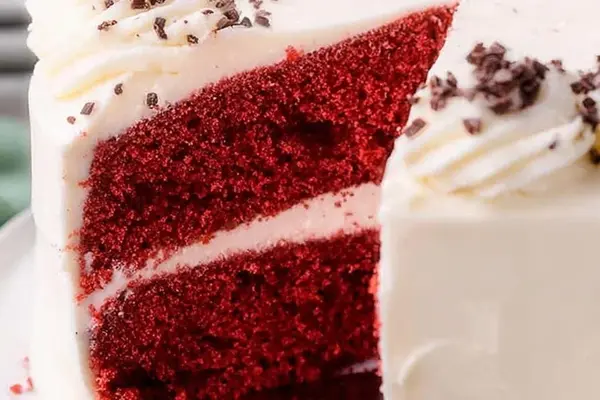
Rustic Red Velvet Cake with Beet Powder
By Emma
Certified Culinary Professional
·
Recipe tested & approved
Cream the butter and sugar first—this part matters. Three layers, beet powder hidden in the batter, espresso powder you won’t taste but you’ll feel, and frosting thick enough that it doesn’t slide around while you’re stacking. Total time is 57 minutes from cold oven to plating. Not bad for a homemade cake that looks like you’ve been baking since dawn.
Why You’ll Love This Red Velvet Cake
Beet powder gives you that actual red without food coloring. The crumb stays moist and tender—cocoa and espresso do that, even though you won’t identify them as flavors. Works as a dessert for basically any occasion. Frosting is thick, holds its shape, doesn’t need decorating skills. Tastes better the next day. American layer cake energy without the fussiness. Cleanup isn’t nothing, but three pans means done faster.
What You Need for Homemade Red Velvet Cake
All-purpose flour. Two and a half cups. Cocoa powder—don’t skip it, it’s not a lot but the flavor sits underneath everything. Baking powder and espresso powder. The espresso doesn’t taste like coffee. It deepens cocoa and makes red look deeper. One teaspoon salt.
Butter and sugar for creaming. A cup of each. Vegetable oil—a quarter cup. Vanilla extract. Three eggs, cracked in separate. Yogurt and buttermilk mixed together—the acidity activates the color. Beet powder. One tablespoon. That’s the whole red velvet cake with beet powder story right there.
For frosting: cream cheese and butter. Powdered sugar sifted—clumps ruin texture. Vanilla, heavy cream, lemon zest. The lemon cuts sweetness you don’t even taste as sweetness. Just rounds it out.
How to Make a Rustic Red Velvet Cake
Heat oven to 350. Three 8-inch pans sprayed and lined with parchment. Parchment matters. Spray alone leaves crusty stuck bottoms.
Cream butter and sugar in a stand mixer. Keep going until it’s light and fluffy—not grainy, not greasy. This takes longer than you think. Maybe 4 minutes. Patience here changes the whole crumb.
Add oil and vanilla. Mix until blended. Don’t over-mix. That’s how you get tough cake.
Crack eggs in one at a time. Let each one fully incorporate before the next one drops. Don’t rush this part.
Whisk flour, cocoa, baking powder, espresso powder, salt in a separate bowl. Cocoa clumps will wreck your texture if you don’t whisk hard.
Combine yogurt and buttermilk in a cup. Set aside. The acidity works on the beet powder.
Add a third of dry mix to the butter mixture. Beat on low-medium until no dry spots show. Add half the wet liquid. Mix until combined. Repeat alternating—dry, then wet, then dry again, finishing with the dry mix.
Fold in beet powder gently but completely. Check the batter color in natural light. Should glow deep red with earthy undertones underneath.
How to Get Rustic Red Velvet Cake Layers Baked Perfect
Divide batter evenly. Tap pans hard on the counter to expel air bubbles. A good crust forms when you do this.
Bake 20 to 22 minutes. Walls pull slightly away from pan edges. Top springs back when you touch it. Toothpick comes out with just a few moist crumbs. Don’t overbake. Dryness bleeds in fast after 22 minutes.
Cool in pans for 12 minutes. The cake is fragile hot. Remove to wire racks. Once cooled, peel parchment off the bottom carefully. Helps the cake hold its shape.
Red Velvet Layer Cake Tips and Common Mistakes
Frosting goes in last. Beat cream cheese and butter for 4 to 6 minutes until fluffy. Lemon zest cuts the sweetness—add it here.
Add powdered sugar in two parts. Mix slowly. Powdered sugar explodes everywhere if you’re not careful. Add vanilla and heavy cream on low speed. Bump the speed up for 1 to 2 minutes for air incorporation. Should be glossy, thick, not runny. Too soft? Chill 10 minutes and whip again.
Stack layers face down. Flatter top against the plate. Spread 1 1/2 to 2 cups frosting per layer. Don’t rush. Light pressure prevents crumbs mixing in.
Reserve half the frosting for a crumb coat. Apply a thin smooth layer all over the exterior. Chill in the fridge for 20 minutes. Firm enough to hold the next coat without slippage. Apply remaining frosting generously. Offset spatula and bench scraper for clean edges. Minimal swirling for the rustic look.
Serve at room temperature within 4 hours. After that, refrigerate covered. Prevents drying out or fridge flavors invading the cake.
Rustic Red Velvet Cake with Beet Powder
Prep:
15 min
Cook:
22 min
Total:
57 min
Servings:
12 servings
Ingredients
- 2 1/2 cups all-purpose flour
- 1/2 cup cocoa powder
- 1 1/2 teaspoons baking powder
- 1 teaspoon espresso powder
- 1 teaspoon salt
- 1 cup unsalted butter softened
- 1 cup granulated sugar
- 1/4 cup vegetable oil
- 2 teaspoons vanilla extract
- 3 large eggs
- 1/2 cup plain whole milk yogurt
- 1/2 cup buttermilk
- 1 tablespoon beet powder
- 1 1/2 cups cream cheese softened
- 1/2 cup unsalted butter softened
- 4 cups powdered sugar sifted
- 2 teaspoons vanilla extract
- 3 tablespoons heavy cream
- 1 teaspoon lemon zest
Method
- 1 Heat oven to 350F. Three 8-inch round cake pans need spraying, then lined with parchment—not just sprayed. Prevents war and crusty stuck bottoms later.
- 2 Cream butter and sugar together in stand mixer until lighter, fluffy but not greasy. Patience here pays off; grainy sugar ruins crumb texture.
- 3 Add oil and vanilla extract. Mix just till blended. Over mixing leads to tough cake later.
- 4 Crack eggs in one at a time, fully incorporating each. Don’t rush this or your batter can split.
- 5 Measure flour, cocoa, baking powder, espresso powder, and salt. Whisk vigorously in separate bowl. Cocoa clumps are cruel to cake texture.
- 6 In another cup, combine yogurt and buttermilk. Acidity interacts with baking soda color and crumb. Set liquid aside.
- 7 Add a third of dry mix to butter mixture; beat on low-medium until no dry spots linger. Add half the wet liquid; mix until combined. Repeat alternating additions, finishing with dry mix.
- 8 Incorporate beet powder at the end gently but fully. Check batter color against natural light; should glow deep red with earthy undertones.
- 9 Divide batter evenly in pans. Tap pans sharply on counter to expel air bubbles; a good crust forms here.
- 10 Bake for 20-22 minutes, walls pulling slightly away from pan edges, top springing back on touch, toothpick emerges with just a few moist crumbs. Avoid overbaking or dryness bleeds in.
- 11 Cool in pans for 12 minutes—not less. The cake is fragile hot. Remove to wire racks. Invert or peel parchment off bottom carefully once cooled; helps maintain shape.
- 12 Frosting time. Beat cream cheese and butter for 4-6 minutes until fluffy. Lemon zest goes in here for depth and cutting sweetness.
- 13 Add powdered sugar in two parts; mix slowly to prevent dust clouds. Incorporate vanilla extract and heavy cream on low speed till combined.
- 14 Boost speed for 1-2 minutes for air incorporation. Should be glossy, thick, and not runny. Too soft? Chill 10 minutes and whip again.
- 15 Stack layers face down—flatter top against plate. Spread 1 1/2 to 2 cups frosting per layer. Don’t rush. Smooth light pressure prevents crumbs mixing in.
- 16 Reserve half frosting for crumb coat. Apply thin smooth layer all over exterior. Chill in fridge 20 minutes till firm enough to hold next coat without slippage; patience again.
- 17 Apply remaining frosting generously. Use offset spatula and bench scraper for clean edges. Minimal swirling preferred for rustic look.
- 18 Serve at room temp within 4 hours. Beyond that, refrigerate covered to prevent drying or fridge flavors invading.
- 19 Tried this? Tell me if your cake cracked or sank. Usually batter temp or oven hot spots cause trouble. Next time adjust accordingly.
Nutritional information
Calories
420
Protein
5g
Carbs
50g
Fat
22g
Frequently Asked Questions About Red Velvet Cake
Can I make this cream cheese frosting red velvet cake without beet powder? Food coloring works. Not the same though. Beet powder has earthy undertones. Coloring is just color. Tried it once. The cake tasted flatter. Stick with beet powder.
Why does this natural red velvet cake with beet powder need both yogurt and buttermilk? Acidity. Yogurt’s tanginess, buttermilk’s tang. Together they activate the beet powder color and keep the crumb moist. One alone doesn’t do it.
How long does this homemade cake last? Room temperature? Four hours max. Covered in the fridge? Three days. Frosting hardens slightly when cold. Bring it out 30 minutes before eating. Texture comes back.
What does the espresso powder do in this red velvet layer cake with cocoa? Deepens the cocoa flavor without tasting like coffee. Makes the red look redder. Don’t skip it. Doesn’t seem like much. Changes everything.
Can I use a different frosting for this American red velvet dessert? Cream cheese frosting is the move. Buttercream would be too sweet. This frosting balances cocoa and beet. Don’t mess with it.
Should I chill the batter before baking? No. Room temperature batter mixes in evenly. Cold batter bakes unevenly. Warm spots, cold spots. Just mix and bake.
You’ll Love These Too
Explore all →
No Knead Bread Recipe with Yogurt

Parsley Vierge Sauce Remix with Cilantro

Creamy Cajun Pasta With Andouille Sausage

Shrimp Quiche with Leeks and Tarragon
Strawberries Mousse with Gelatin and Whipped Topping

Pastis Snail Mini Skewers with Garlic Butter

Roasted Sweet Potato Broccoli Salad

Caramelized Shallot Dip with Greek Yogurt

Chai Chai Tea Recipe with Oat Milk

Griddle Corn Cakes with Fresh Kernels

Gingerbread Men Cookies with Cream Cheese

Gluten Free Puff Pastry Appetizers

Mini Chicken Pot Pies with Cheddar Biscuits
Salty Sweet Monster Bars with Pretzels
Pumpkin Cream Cheese Dip Recipe

Chocolate Pudding Fruit with Berries

Cold Salmon Taboulé with Peas Recipe
Coffee Cake Recipe with Lemon Cream Cheese
Banana Chocolate Chunk Bread Recipe