Rustic Pici Pasta with Spelt & Chickpea Flour
By Emma Kitchen
Certified Culinary Professional
·
Recipe tested & approved
Flour hits the bowl—spelt and chickpea, not the usual suspects. Hot water goes in and you’ve got a dough that’s actually different. Forty minutes to make this from nothing, seven minutes to cook. Italian, homemade, the kind of pasta you can’t buy.
Why You’ll Love This Rustic Pici Pasta
Takes 47 minutes total if you move through it. Most of that’s just your hands doing the work. Spelt flour and chickpea flour together—tastes like something real happened. Not white flour bland. You shape it yourself. The thick, hand-rolled strands aren’t precious. They’re just pasta, made by you, in your kitchen. No semolina required. Works fine without it. Holds sauce better than thin pasta does because it’s thick enough to actually grip something.
What You Need for Homemade Pasta Without Semolina
Spelt flour. 180 ml. This is the backbone—nutty, slightly sweet. All-purpose doesn’t work the same way. Chickpea flour. Another 180 ml. Gives it color, gives it protein, changes the whole texture. Adds something that feels substantial. Sea salt. Five ml. Just salt it properly from the start. Hot water. 160 ml. Not boiling. Hot enough that your hand says “yeah, that’s hot” but you can still hold the bowl. Fine cornmeal for dusting. Not fine flour. Cornmeal doesn’t absorb into the dough and turn it sticky.
That’s it. Five ingredients for a spelt and chickpea pasta dough that actually works.
How to Make Pici Pasta with Chickpea Flour
Combine the spelt flour, chickpea flour, and salt in a bowl. Food processor if you want. Doesn’t matter much. Pour the hot water in gradually. Not all at once. You’re watching it come together, about 1-2 minutes of mixing until it starts forming a shaggy mass. It’ll look rough. That’s right. Transfer it to a lightly floured surface—use chickpea flour for dusting, not wheat. Less likely to stick to itself. Now knead. Seven minutes. Firm pressure. You’re developing the gluten, making it smooth and elastic. It’ll go from looking like rough crumbles to something that actually holds together. By minute 5 you’ll feel it change. Divide the dough in half. Wrap one half in cling film so it doesn’t dry out while you work the other half.
How to Get Pici Pasta Thick and Hand-Rolled
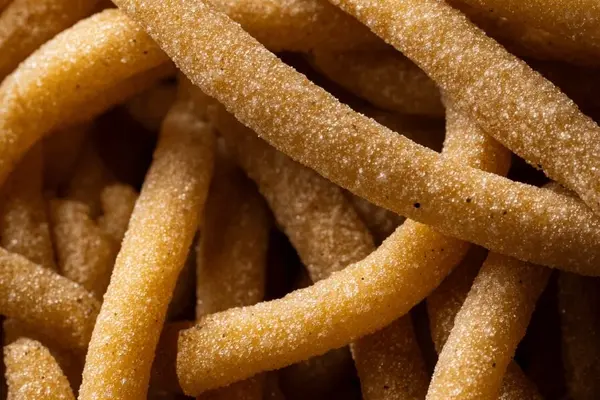
Roll the first half into a rectangle. Roughly 16 cm wide, 4 mm thick. Use your hands or a pasta roller. The thickness matters—too thin and it falls apart, too thick and it doesn’t cook right. Cut strips. Four mm wide, 16 cm long. You’re aiming for noodles that are distinctly thick. The next part is optional but worth doing: roll each strip under your fingers on an unfloured surface to form those thick, rounded pici strands. Takes maybe 30 seconds per strand. No skill needed. Just pressure and movement. Dust everything generously with fine cornmeal. This is crucial. Prevents sticking. Coat the strands, coat the tray, coat your hands if you need to. Set them on a tray or plate. Don’t stack them. Work through the second half of dough the same way.
Rustic Pici Pasta Tips and Common Mistakes
The water temperature matters. Too cold and the dough doesn’t come together. Too boiling and it seizes. Hot enough that you feel it but can still touch it. Don’t skip the kneading. Seven minutes feels long. Do it anyway. That’s when the dough stops being angry and becomes smooth. Cornmeal is non-negotiable. You skip it, the strands stick together and you’re scraping apart clumps for 20 minutes. Boil them in salted water. Seven minutes, no less. They’ll float when they’re close. That’s not done yet. Wait for them to taste firm with some give. Not mushy. The spelt and chickpea flour take the time. Reserve some pasta water before draining. A cup, maybe. Use it to adjust sauce later—it thins things out, makes the whole dish come together. Toss with olive oil immediately after draining. Prevents clumping. Good drizzle.
Rustic Pici Pasta with Spelt & Chickpea Flour
Prep:
40 min
Cook:
7 min
Total:
47 min
Servings:
4 servings
Ingredients
- 180 ml spelt flour
- 180 ml chickpea flour
- 5 ml sea salt
- 160 ml hot water
- fine cornmeal for dusting
Method
- 1 Combine spelt flour, chickpea flour, and salt in a bowl or food processor.
- 2 Add hot water gradually and mix until dough starts to form, about 1-2 minutes.
- 3 Transfer to a lightly floured surface (using chickpea flour preferred). Knead dough firmly for about 7 minutes until elastic and smooth.
- 4 Divide dough in half. Wrap one half in cling film to prevent drying.
- 5 Roll the other half into a rectangle roughly 16 cm wide and 4 mm thick.
- 6 Cut dough into strips about 4 mm wide and 16 cm long.
- 7 Optional: On unfloured surface, roll each strip under fingers to form thick rounded pici strands.
- 8 Dust strands generously with fine cornmeal to prevent sticking. Place on tray.
- 9 Repeat shaping and dusting with remaining dough half.
- 10 In large pot of boiling salted water, cook pici about 7 minutes until tender yet firm.
- 11 Drain, reserving some pasta water.
- 12 Toss pici with good drizzle of olive oil to prevent clumping.
- 13 Use reserved water to adjust sauce consistency if used.
Nutritional information
Calories
210
Protein
6g
Carbs
44g
Fat
1.5g
Frequently Asked Questions About Spelt Pasta Recipe
Can I use regular flour instead of spelt flour? You could. Won’t be the same pasta. Spelt has flavor. Regular is just structure. If you need to swap it, all-purpose works but tastes like nothing.
Why chickpea flour? Can I leave it out? It adds protein and body. Without it you’ve just got spelt, which is thinner and less interesting. You could use regular flour instead but again—less going on flavor-wise. The chickpea flour is why this tastes like something.
Do I really need to knead for seven minutes? Yeah. That’s when the texture changes. You’ll feel it. If you stop at three minutes the pasta falls apart when you cook it. Not worth cutting corners.
How long can I store the uncooked pici? A few hours on the counter dusted with cornmeal. Longer than that, wrap and refrigerate. They’ll keep 2-3 days. Longer still, freeze them. Cook straight from frozen—adds maybe 2 minutes.
What sauce works with this pasta? Anything. It’s thick enough to hold weight. Butter and sage. Tomato. Olive oil and garlic. The chickpea flour and spelt flavor work with bold sauces—doesn’t need to be delicate.
Is this pasta gluten-free? No. Spelt flour has gluten. If you need gluten-free, this isn’t the pasta.
You’ll Love These Too
Explore all →
Chocolate Biscuit Turnovers with Vanilla Glaze
Plum Cherry Shortcakes with Maple Whipped Cream
Butter Chicken with Tofu and Cream Sauce
No Bake Cookies Recipe with White Chocolate
French 75 Cocktail with Gin & Lemon
5 Vinaigrette Recipes: Olive Oil & Balsamic
French Onion Soup with Shallots
Sausage Egg Cheese Crescent Rolls

Apple Cocktail with Campari and Sparkling Cider
Clams Casino with Bacon and Cracker Topping
Compound Butter with Mushrooms and Walnuts
Grilled Peach Appetizer with Burrata
Braised Beef with Peppers and Cherry Tomatoes
Smorrebrod with Blue Cheese & Fig Chutney
Honey Coconut Cream Sauce with Vanilla
Roasted Chicken Thighs with Garlic & Rosemary
Caprese Salad with Tomatoes and Fresh Tarragon
Dinner Rolls Recipe with Instant Yeast
Chicken Tortilla Soup with Crispy Tortilla Strips