Fermented Kimchi with Napa Cabbage
By Emma
Certified Culinary Professional
·
Recipe tested & approved
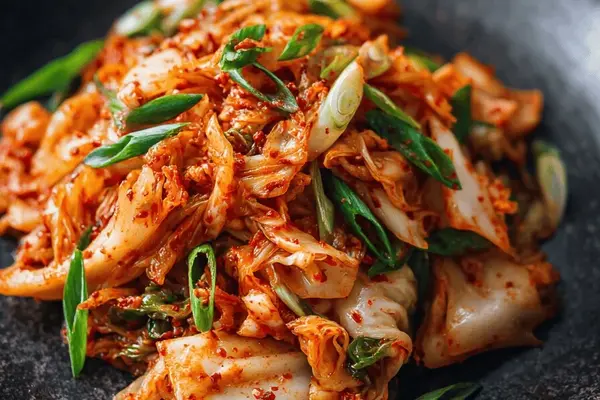
Fermented kimchi made with napa cabbage, daikon, and Asian pear. Smoked paprika and cayenne create heat, while tamari adds umami depth. Tangy, crunchy, and aromatic.
Prep:
25 min
Cook:
5 min
Total:
5h 30min
Servings:
2 liters
Cut the cabbage in half lengthwise first. Four-centimeter chunks — bigger than you’d normally go. That’s the whole point. Smaller pieces break down to mush during fermentation. Five and a half hours total from chopping to sealed jars, but most of that’s sitting around while salt does its thing.
Why You’ll Love This Homemade Kimchi
Works as a condiment for basically everything. Eggs, rice, tacos, sandwiches, straight from the jar at midnight.
Tastes sharper and more alive than store bottles. Two parts smoked paprika to one part cayenne means the heat creeps up — not a wall of fire.
You make it once. Then it keeps making itself. Nine to eleven months in the fridge if you don’t mess with it too much.
Vegetarian and vegan without thinking about it. No fish sauce in this version. Asian pear and tamari handle the umami.
The Asian fermented vegetables angle — you’re not just eating cabbage. Daikon, carrot, scallions all break down differently, so texture stays weird and interesting the whole time you’re eating it.
What You Need for Homemade Kimchi With Asian Pear
One head of napa cabbage. About a kilogram and a quarter. Size matters less than cutting it right — four-centimeter cubes, not ribbons.
Daikon. Peeled. Sliced thin but kept in four-centimeter sticks so it doesn’t dissolve into nothing. Two hundred sixty grams.
Carrot diced small. One hundred grams. Adds sweetness you don’t expect.
Kosher salt. Fifty grams. Not sea salt. Not regular table salt — the kind that clumps. Kosher salt dissolves slower, pulls water out steadier.
Scallions. Ten of them cut into segments. Whites and greens separate — that matters for timing.
Four large garlic cloves. Peeled. Raw.
One medium Asian pear. Peeled, cored, cut into cubes. This is the secret nobody mentions. It adds sweetness and ferments into nothing — just dissolves into the brine and makes everything taste rounder.
Smoked paprika and cayenne pepper mixed together. Four tablespoons of the blend, two parts paprika to one part cayenne. Brown sugar. A tablespoon and a half. Fresh ginger chopped rough. Tamari sauce. Not soy sauce — tamari has more going on.
How to Make Spicy Fermented Cabbage Condiment
Cut the cabbage lengthwise down the middle, then chop into four-centimeter squares. No fine dicing. Bigger chunks hold up.
Mix the cabbage with daikon, carrot, and kosher salt in a large bowl. Don’t rinse it yet. Salt pulls the water straight out of the vegetables — that’s the whole first step. Press it down with something heavy. A plate and some canned goods work. Put it in the fridge for one hour and forty-five minutes. The salt quantity here is smaller than most recipes, so it takes longer to pull liquid. That’s intentional.
After time’s up, drain the liquid through a sieve. Rinse the vegetables under cold water twice — just enough to wash off excess salt. But don’t go crazy rinsing or everything gets mushy. Let it drain again for fifty to fifty-five minutes with weight on top. That tightens everything back up and squeezes out the excess brine.
Discard whatever liquid pooled. Transfer the vegetables back to the bowl. They’re ready for seasoning now.
How to Get Kimchi Fermentation Right
While the cabbage is draining the second time, get your jars clean. Boil them or run them through a hot dishwasher cycle. Sterilization matters — fermentation won’t happen right in a dirty jar.
In a food processor, pulse the scallion whites, garlic, Asian pear cubes, smoked paprika and cayenne blend, brown sugar, ginger, and tamari until it’s a thick paste. Don’t purée it smooth. You want some texture. Bursts of flavor. Not uniform heat throughout.
Add that paste to the drained vegetables. Throw in the scallion greens. Put on gloves — save your nails — and knead everything together until every single piece is coated thickly. This step is crucial. If you skip it or do it halfway, you get flavor pockets. Uneven fermentation. Spots that taste like nothing and spots that taste like everything.
Pack the kimchi into jars tight. Press down hard to squeeze out air pockets. Leave two and a half centimeters of space at the top. Air trapped in the jars can make them explode during fermentation. Wipe the rims clean with a damp cloth.
Cover with cheesecloth or thin linen. Secure the rings loosely — gas needs to escape but dust can’t get in.
Set the jars somewhere cool and dark. Between seventeen and nineteen degrees Celsius. That’s cooler than most fermentation guides tell you. Slower fermentation means more balanced flavor. After three and a half days you’ll see bubbles forming and smell something slightly sour. Check daily. Push the vegetables down if they float up — submerged vegetables ferment best. By day four, the smell gets sharp. Not unbearable. Just sharp.
Spicy Kimchi Tips and Common Mistakes
Swap the cheesecloth for solid lids once bubbling starts. Move them to the fridge. Cold slows fermentation way down. The crunch stays longer. The tang doesn’t get aggressive.
Press down the vegetables every time you open the jar. Trapped air breaks the anaerobic environment. You want it airless in there.
Keep it submerged. If cabbage floats above the brine, that part gets moldy fast. Press it under. Every time.
Nine to eleven months if you keep it sealed and submerged. Longer if your fridge is colder. Shorter if you opened it fifty times to taste it.
The smell gets weird sometimes. Ammonia-ish. That’s normal. Fermentation smells like something died. It didn’t. Just keep it in the fridge.
You can adjust the heat next time. Too spicy? Less cayenne. Not spicy enough? More. It’s not complicated. Takes one batch to figure out.
Don’t use iodized salt. Use kosher. The iodine kills fermentation. Seriously. Kills it dead.
Fermented Kimchi with Napa Cabbage
Prep:
25 min
Cook:
5 min
Total:
5h 30min
Servings:
2 liters
Ingredients
- 1 head napa cabbage around 1 1/8 kg (2 1/2 lb), chopped into 4 cm (1 1/2 in) cubes
- 260 g (1 3/4 cups) daikon peeled, sliced into 4 cm (1 1/2 in) thin sticks
- 100 g (3/4 cup) carrot, peeled and diced small
- 50 g (3 tablespoons plus 2 teaspoons) kosher salt
- 10 scallions cut in 4 cm (1 1/2 in) segments, whites and greens separated
- 4 large garlic cloves peeled
- 1 Asian pear medium size, peeled, cored, cut into cubes
- 35 g (4 tablespoons) smoked paprika and cayenne pepper blend (2 parts smoked paprika to 1 part cayenne)
- 25 ml (1 1/2 tablespoon) light brown sugar
- 25 ml (1 1/2 tablespoon) fresh ginger roughly chopped
- 30 ml (2 tablespoons) tamari sauce
Method
- 1 Cut cabbage lengthwise then chop into 4 cm squares. No fine dicing here — bigger chunks mean crunch remains post-fermentation.
- 2 Mix cabbage, daikon, carrot, and kosher salt in a large bowl. No rinsing yet. Salt pulls water out, softens toughness. Press down with weight (a heavy plate and canned goods work well). Refrigerate 1 hour 45 minutes — a slight extension because smaller salt quantity means slower draw.
- 3 Drain liquid through a sieve. Rinse veggies under cold running water twice to wash excess salt but don't overdo or they’ll be mushy. Let drain set 50-55 minutes with weight again to tighten texture and remove excess brine.
- 4 Discard drained water. Transfer veggies back to bowl ready for seasoning.
- 5 Meanwhile sterilize jars by boiling or dishwasher sanitize on hot cycle. Avoid contamination — ferment won't happen right without clean environment.
- 6 In a food processor, pulse scallion whites, garlic, Asian pear cubes, smoked paprika/cayenne mix, brown sugar, ginger, and tamari until thick paste forms. Not pureed smooth – some texture here; you want bursts of flavor throughout.
- 7 Add mix to vegetable bowl along with scallion greens. Knead with gloved hands (save your nails) until every piece wears the seasoning thickly. This step crucial — incomplete mixing results in uneven fermentation and flavor pockets.
- 8 Pack kimchi tightly into jars leaving 2.5 cm (1 inch) space at top. Press down well to squeeze out air pockets — bubbles can cause jars to explode during fermentation if left trapped. Wipe rims clean with damp cloth.
- 9 Cover jars with cheesecloth or thin linen; secure rings loosely to allow gases to escape but keep dust out.
- 10 Set jars in a cool, dark place between 17 and 19 °C (63 to 66 °F). Slightly cooler than usual, slows fermentation for more balanced flavor. Expect 3½ days for first bubbles and slight sour aroma. Check daily, press down veggies if needed—submerged veggies ferment best. After 4 days, smell should be sharp but not unbearable.
- 11 Swap cheesecloth for solid lids after initial fermentation. Refrigerate to slow process. Keeps crunch and tang for 9 to 11 months if sealed and constantly submerged in brine.
- 12 Each time you use some, press down the mix to expel trapped air and maintain anaerobic environment.
Nutritional information
Calories
45
Protein
1.5g
Carbs
9.5g
Fat
0.3g
Frequently Asked Questions About Vegetarian Kimchi With Napa Cabbage and Daikon
Can I use regular cabbage instead of napa cabbage? Green cabbage works. Red doesn’t ferment the same way. Napa has the right texture — not too tough, not too soft.
How do I know when it’s done fermenting? Taste it. After four days it’ll be sour but still have crunch. If you like it less sour, move it to the fridge earlier. Keep fermenting if you want sharper.
Can I skip the Asian pear? Technically yes. The sweetness comes from somewhere else then — sugar gets sharper, garlic gets louder. Pear dissolves into the brine and smooths everything out. Don’t bother skipping it.
What if my kimchi tastes too salty? Didn’t rinse enough after the salt pull. Next time, rinse three times. Or use less salt upfront — forty grams instead of fifty if your tap water is particularly hard.
Does it keep getting spicier in the fridge? Kind of. The heat spreads more as fermentation continues, but it doesn’t spike like hot sauce does. After a month it’s about as spicy as it’s going to get.
Can I use a different kind of ginger? Powdered ginger doesn’t work. Crystallized is too sweet. Fresh or nothing. It adds a bite that gets softer as fermentation happens.
What temperature kills the fermentation? Above twenty degrees Celsius and fermentation races — you lose control over flavor. Below fifteen and it barely happens. Seventeen to nineteen is the sweet spot. Most home fridges sit around four, which is fine for storage but too cold to ferment.
You’ll Love These Too
Explore all →
Vegan Lemon Butter Asparagus with Almonds
Homemade Apple Pie with Lattice Crust

Slow Cooker Apple Balsamic Chicken
Pear Upside-Down Spice Cake Recipe
Chive Blossom Butter Recipe

Crispy Chicken with Spicy-Sweet Glaze
Chocolate Chip Cookie Recipe with 3 Chips

Homemade Orange Juice Drink Recipe
Lamb Tagine with Spiced Tea and Dried Fruits
Beet Pomegranate Sorbet with Ginger
Lentejas Soup with Beef & Mushrooms
Chunky Candy Brownies with Chocolate Chunks

Creamy Garlic Chicken with Bacon & Peas

Christmas Cocktails with Melon Liqueur
Classic Deviled Eggs Remix with Dijon
Kung Pao Chicken with Snap Peas
Vegetable Broth Recipe with Smoked Paprika
Caramel Apple Cheesecake Dip Recipe
Chicken Soup With Wild Rice Recipe