
Rustic Chicken Noodle Soup Recipe
By Emma
Certified Culinary Professional
·
Recipe tested & approved
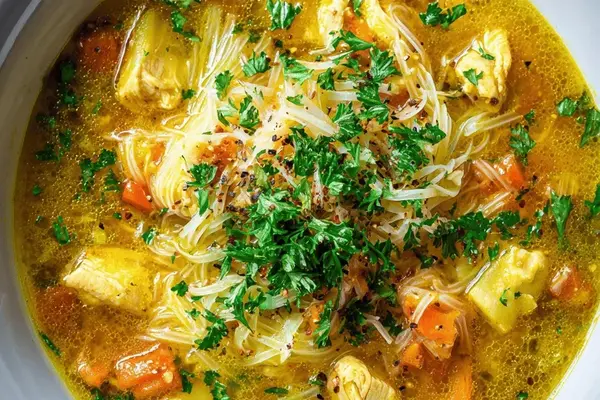
Slow-simmered chicken noodle soup with turmeric, ginger, carrots, and celery. Homemade broth simmered 2¼ hours yields deep flavor. Vermicelli noodles and fresh parsley finish.
Prep:
25 min
Cook:
2h 15min
Total:
2h 40min
Servings:
6 servings
Chicken carcass in cold water. That’s where this starts. You’re not rushing it, not using a pressure cooker, not buying stock from a box. Just time and heat and the bones breaking down into something that tastes like actual chicken. Takes 2 hours 15 minutes of barely simmering before the noodles even touch the pot, but that’s the point.
Why You’ll Love This Rustic Chicken Noodle Soup
Comfort food that doesn’t taste like it came from a can. You made the broth yourself, watched it turn golden with turmeric, tasted it getting deeper.
Takes 2 hours 40 minutes total, which sounds like a lot until you realize most of that is just sitting there while the stove does the work. Twenty-five minutes of prep, then you’re done with your hands.
Works in a slow cooker. Dump everything in the morning, come home to broth that’s already built itself. Less babysitting that way.
Freezes. Split the broth into portions, freeze for a month, pull one out on a Wednesday night when you need easy dinner but you want it to taste like you spent the day cooking.
Cold the next day, better somehow. The flavors settle. Reheat it gently, add fresh noodles so they don’t turn to paste.
What You Need for Homemade Chicken Broth
Chicken carcass. Two pounds. Can be from a roasted bird you ate, or buy one raw from a butcher. Doesn’t matter.
Water. Cold. Fifteen cups. The carcass needs to be completely covered with room to move around as it cooks.
Turmeric. Ground. Not fresh ginger—turmeric. The ginger’s optional later. Turmeric gives earthiness and color without heat. One and three-quarter teaspoons.
One onion, medium, skin still on. Rinse it. Chop it roughly. The skin adds depth. That matters.
Celery and carrots. Two stalks, two medium carrots. Chop them into chunks. Keep the skin on the carrots—more flavor stays locked in there.
A leek. White and light green parts only. Chop it. The dark green goes bitter if it simmers too long.
Two garlic cloves, small. Don’t peel them. Just crush them with the side of your knife. The skin keeps things clean and adds flavor anyway.
Bay leaves. Two dried ones. Kosher salt—two and a half teaspoons. Cracked black peppercorns, half a teaspoon. Handful of fresh parsley stems. Save the leaves for later.
Olive oil. Seven milliliters. One and a half teaspoons. This is the only oil worth using here. Vegetable oil tastes like nothing.
For the noodles: broken wheat vermicelli, about half a cup. Chopped flat-leaf parsley for the top. Shredded chicken, about one cup, from the meat that stuck to the carcass.
How to Make Homemade Chicken Soup
Submerge the carcass in cold water. Medium heat. You’re watching it constantly now—this part matters. As soon as bubbles start rising steadily, stop. Pull out the foam and scum that floats up. Use a fine mesh skimmer or a ladle. Takes five to seven minutes depending on how hot your stove runs.
This is patience. You’re clarifying the broth, making it clean and deep instead of murky and bitter. Worth the five minutes.
Mix the turmeric and olive oil together in a small bowl until it’s smooth. No lumps. A paste, almost. Swirl it into the broth. The oil helps it disperse evenly—turmeric by itself clumps and sinks. This way it distributes throughout, gives you that golden color all the way through and earthiness in every spoonful instead of turmeric pockets that taste too strong.
Dump everything in now: onions, celery, carrots, leek, crushed garlic, bay leaves, salt, peppercorns, parsley stems. Reduce the heat to the lowest simmer you can manage. The broth should barely bubble. Leave the lid ajar—let some steam escape but keep the heat in. You want gentle cooking. A rolling boil turns it cloudy and breaks down the vegetables too fast, and then you’ve spent two hours making something that tastes rushed.
How to Get Rustic Chicken Broth Deep and Clear
Let it go for 2 hours and 15 minutes. Don’t stir it. Don’t mess with it. Check once at the halfway point—carrots should be starting to soften but still holding their shape. The broth deepens in color, gets golden-amber. Smells like turmeric and chicken and root vegetables all at once. That’s how you know it’s working.
Set up a fine sieve lined with cheesecloth or thick paper towels over a clean pot. Pour the broth slowly through. This is the filtering step. Press gently on the solids if you want every drop of flavor, but don’t squeeze hard or the broken vegetable bits cloud the whole thing up.
Cool it before you skim the fat. Put the pot in a cold water bath, or stick it in the fridge for 2 hours. The fat congeals on top. Scrape it off with a spoon. This is the fast way if you have time.
If you’re rushing, line the sieve with thick paper towels and filter the hot broth right away. The towels trap fat as it passes through. Not as clean as chilling, but it works.
Pick the meat off the carcass. Shred it. That’s about a cup. You’ll use this later. The bones, aromatics—throw them out. They’ve given everything they have.
Slow Cooker Chicken Soup and Finishing It Right
You can dump everything into the slow cooker on low for 8 hours instead of simmering on the stove. Same result. Different timing. Works if mornings are busy.
Bring the skimmed broth back to a boil over medium heat. Add the fresh chopped parsley and the broken vermicelli noodles. Watch them. They cook fast. Three to six minutes, depending on how thick the noodles are. They should be tender but still have bite. Not mushy. Not crunchy.
Stir in the shredded chicken. Just enough heat to warm it through—don’t let it boil. Overheating dries the meat out and clouds the broth. Thirty seconds, maybe a minute. That’s all.
Taste it. Salt it if it needs it. A crack of black pepper. Serve it hot. That’s it.
Rustic Chicken Noodle Soup Recipe
Prep:
25 min
Cook:
2h 15min
Total:
2h 40min
Servings:
6 servings
Ingredients
- Broth
- 900 g chicken carcass (approx 2 lb)
- 3.8 litres (about 15 cups) cold water
- 8 ml (1 ¾ tsp) ground turmeric
- 7 ml (1 ½ tsp) olive oil
- 1 medium onion, unpeeled, rinsed, roughly chopped
- 2 celery stalks, cut into chunks
- 2 medium carrots, unpeeled, chopped
- 1 leek, white and light green parts only, chopped
- 2 small cloves garlic, unpeeled, crushed
- 2 dried bay leaves
- 12 ml (2 ½ tsp) kosher salt
- 2 ml (½ tsp) cracked black peppercorns
- Handful of fresh parsley stems
- Garnish
- 20 ml (1 ¼ tbsp) chopped fresh flat-leaf parsley
- 65 g (about ½ cup) broken wheat vermicelli noodles
Method
- Broth
- 1 Carcass submerged in cold water, slowly bring to boil over medium heat. Watch closely; as soon as bubbles rise steadily, skim the foam and scum with a fine mesh skimmer or ladle. Patience here; this clarifies broth better and avoids bitterness. Usually 5–7 minutes depending on heat source.
- 2 Mix turmeric with olive oil in small bowl till smooth paste. Swirl into broth—oil helps turmeric disperse evenly so no clumps. Turmeric adds earthiness and vibrant color rather than heat.
- 3 Dump onions, celery, carrots, leeks, crushed garlic, bay leaves, salt, peppercorns, and cilantro stems in. Reduce to the lowest simmer—the broth should barely bubble. Cover partially, leave lid ajar to let some steam escape but retain heat. You want a gentle cooking, not a boil that turns cloudy broth.
- 4 Let simmer for about 2 hours 15 minutes. Check veggies: carrots should start softening but hold shape; broth will deepen in color and smell fragrant with turmeric and aromatics. No hurry. If impatient, risk greasy or unfinished flavors.
- 5 Set up a fine sieve lined with cheesecloth or multiple layers of paper towel over a large clean pot. Pour broth slowly, filtering out solids. Press gently if you want maximum flavor, but no squeezing hard to avoid cloudiness from broken veggies.
- 6 Broth must cool before skimming fat. Transfer pot into a cold water bath or fridge for 2 hours. Fat congeals on surface. Scrap off with spoon or paper towel. If rushed, line sieve with thick paper towels and filter hot broth slowly to trap fat. I prefer chilling; clearer broth every time.
- 7 Pick all remaining meat off carcass—reserve. Discard bones, aromatics.
- Garnish
- 8 Return skimmed broth to stove; bring back to boil over medium heat. Add chopped parsley, then broken vermicelli noodles. They cook fast; watch their texture closely. 3–6 minutes usually. Noodles should be tender but still with bite, not mushy.
- 9 Stir in approx 230 ml (1 cup) shredded cooked chicken. Heat just enough to warm chicken through. Overheating dries the meat and clouds broth.
- 10 Serve hot. Adjust salt and pepper if needed—taste important here. If too salty, a splash of water helps.
- 11 Hints: Ginger chunk can replace garlic for gentle sharpness without overwhelming. Olive oil lends richness compared to vegetable oil's neutrality. Parsley can be swapped for cilantro or basil for herbal twist.
- 12 Storage tip: Broth freezes well in portions. Noodles will get soggy so add fresh at serving. Chicken meat keeps for 2 days refrigerated.
Nutritional information
Calories
180
Protein
12g
Carbs
15g
Fat
7g
Frequently Asked Questions About Homemade Chicken Broth
Can I use a store-bought rotisserie chicken instead of simmering a carcass? You can, but it’s less flavorful. The broth won’t be as deep. The bones from roasted chicken break down better than raw ones anyway. Buy a raw carcass from the butcher if you don’t have one.
What if I don’t have turmeric? Skip it. The broth still tastes like chicken. Turmeric adds color and earthiness, but it’s not the whole thing. Ginger works too—use the same amount, fresh ginger sliced thin instead of ground turmeric. Different flavor, still good.
How long does the broth keep frozen? A month, easy. Maybe longer. Freeze it in portions so you’re not thawing a whole pot when you just need a cup or two. Add fresh noodles when you reheat—they get soggy if they sit in the broth overnight.
My broth came out cloudy. Did I mess up? Probably boiled too hard or squeezed the vegetables through the strainer. Cloudy doesn’t taste bad—it just looks less clean. Next time simmer lower and filter gently. You can’t fix it once it’s cloudy.
Can I make this in a regular pot instead of a slow cooker? Yeah, the recipe is built for a pot. 2 hours 15 minutes on the stove. You’re already doing that. A slow cooker is just an option if you want to set it and forget it overnight.
Should I peel the vegetables? No. Skins add flavor. Rinse the onion and carrots, that’s enough. The dark green from the leek you should skip—cut it away. It turns bitter. Everything else stays on.
What’s the difference between leaving the lid ajar vs. covering it fully? Ajar lets steam escape so the broth doesn’t get too watery. Fully covered traps too much liquid and dilutes everything. Barely ajar is the move.
You’ll Love These Too
Explore all →
No Bake Cookies Recipe with White Chocolate

Zucchini Appetizers with Hummus and Feta
White Chocolate Brownies with Vanilla

Raspberry Cheesecake Cookies with Milk Chocolate
Recipe for Making Fudge with Eggnog
Fig Jams with Onion & Apple Cider Vinegar
Brown Sugar Bacon Kielbasa Bites Recipe

Lemon Meringue Tart with Swiss Meringue

Mashed Sweet Potatoes with Orange Cream

Homemade Taquitos with Chicken and Cheese

Chocolate Biscuit Turnovers with Vanilla Glaze

Copper Mule Drink Recipe with Bourbon
Hot Honey Mustard Sauce Recipe

Ground Chuck Burgers with Cilantro & Shallots

Rice Chicken Soup with Wild Rice & Cranberries

Making Sugar Cookies with Butter & Colored Sugar

Sweet Potato Casserole with Pecans & Marshmallows

Deviled Eggs Recipe: Three Gourmet Flavor Styles
Sausage Pasta with Spinach and Tomatoes