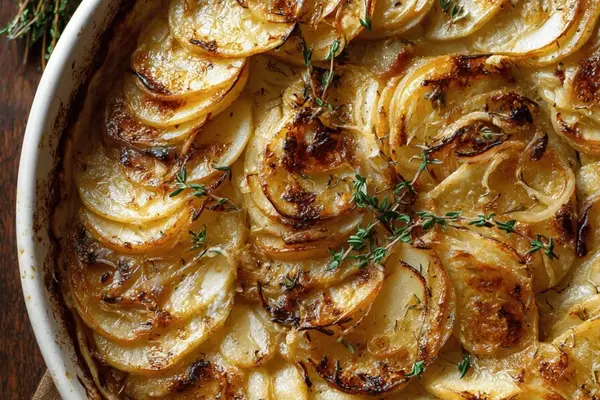
Potato Casserole with Caramelized Onions
By Emma
Certified Culinary Professional
·
Recipe tested & approved
Thinly sliced Russet potatoes layered with caramelized onions, fresh thyme, and dry vermouth, baked in vegetable broth until tender with a golden buttery crust.
Prep:
35 min
Cook:
2h 15min
Total:
2h 50min
Servings:
8 servings
Cut the onions first—960 grams, which sounds like a lot until you realize they shrink to almost nothing. Seven medium ones. Not eight. The sweetness needs to stay balanced. Then there’s this moment where everything goes quiet in the oven for two hours and you realize you’ve built something that actually tastes like comfort food without any real tricks.
Why You’ll Love This Potato Casserole
Takes 2 hours 50 minutes total but most of that’s the oven doing the work. Vegetarian. Actually filling as a side dish. Works cold the next day, maybe better. One buttered pan. Real butter. The edges get crispy in a way that matters. Layers of thin potatoes that go soft all the way through but don’t fall apart. The caramelized onion potato casserole angle here—onions turn sweet and deep without burning, which takes patience but works.
What You Need for a Layered Potato Bake
Seven medium onions. Sliced thin. The whole 960 grams of them. Unsalted butter. Divided. You use half to cook the onions, half to dot the top. About 70 grams total. Dry vermouth. Not white wine. The herbal notes go deeper and don’t taste thin after two hours. 250 milliliters. Fresh thyme leaves. Not dried. Dried tastes like dust in this. 12 milliliters. Just the leaves, not the stems. Five pounds of Russet potatoes—that’s 2.3 kilograms if you’re weighing. Scrubbed. Skin stays on. The texture matters. Vegetable broth. Rich, if you can find it. 400 milliliters. Swap from chicken to keep it vegetarian or to add actual depth. Salt. Pepper. That’s it.
How to Make Buttery Potatoes Cooked in Vegetable Broth
Set the oven rack low. Preheat to 160 degrees Celsius—that’s 320 Fahrenheit. Slower cook. More even. A 28 by 20 centimeter casserole dish. Buttered. Straight sides if you have it.
Melt half the butter in a wide saucepan over moderate heat. Add the sliced onions. Don’t crowd them or they’ll steam instead of sweat. Stir often. Wait for them to go translucent and soft, like ribbons. No browning yet. Pour in the vermouth and turn the heat up. You want a vigorous simmer. Watch until it’s dry—maybe 12 minutes, maybe 20. You’ll smell that sweet wine aroma when it’s right. The fond on the pan goes sticky. That’s the signal. Salt it. Pepper it. Stir in the thyme. Let it rest off heat.
Slice the potatoes thin. 2 millimeters if you have a mandoline. A sharp knife if you’re careful. Keep them uniform—this matters for cooking evenly. Stack them separated by paper towels. Keep them dry.
How to Get Layered Potatoes with Wine and Onions Crispy and Perfect
Layer half the potatoes into the dish. Sprinkle salt and pepper. Generous. This is the layer that needs seasoning.
Spread all the onions over top. Press lightly. Don’t smash. Cover with the rest of the potatoes. Light salt and pepper again. Pour hot broth over everything. Listen for it. Gentle splashes mean good coverage. Puddles mean too much.
Dot the remaining butter in small pats across the top. Even distribution. This gets the browning.
Cover tight with foil. Seal the edges. That traps the steam. Place in the oven for about 2 hours. Check by lifting the foil briefly. If the liquid’s gone too far down, add a splash more broth. Not too much. Just enough.
Remove the foil. Bake another 10 to 15 minutes. The edges start showing golden caramelization. Juices bubble gently. Pierce the center with a fork. Potatoes should slip apart. Not mushy. Just soft all the way through.
Let it sit at room temperature for 15 minutes. The liquid settles. Layers firm up a bit.
Russet Potato Gratin Tips and What Actually Goes Wrong
Onions burn before the wine evaporates? Lower the heat. It takes longer but it works. Broth disappears too fast mid-bake? Add warm water. Or more broth. Either one fixes it. Uneven slicing ruins everything—some potatoes cook twice as fast as others. Use the mandoline if you have it. Butter. Don’t skip it. Olive oil works if you need dairy-free but it tastes different. Add minced garlic when you cook the onions if you want something else happening. Yukon Gold potatoes stay creamier but watch them—they cook faster. Maybe subtract 10 minutes.
Potato Casserole with Caramelized Onions
Prep:
35 min
Cook:
2h 15min
Total:
2h 50min
Servings:
8 servings
Ingredients
- 960 g thinly sliced onions (about 7 medium, not 8, to keep sweetness balanced)
- 70 g unsalted butter (divided, 1/4 cup total)
- 250 ml dry vermouth (substitute for white wine for deeper herbal notes)
- 12 ml fresh thyme leaves (instead of romarin, more subtle earthy aroma)
- 2.3 kg Russet potatoes (roughly 5 lb), scrubbed but skin on for texture
- 400 ml rich vegetable broth (swap from chicken to keep vegetarian or add depth)
- Salt and freshly ground black pepper
Method
- Oven Setup
- 1 Set oven rack low, preheat to 160 °C (320 °F) instead of 165. Slower cook, more even doneness.
- 2 Butter a 28 x 20 cm (11 x 8 inch) casserole, or a shallow ovenproof pan with straight sides to encourage uniform cooking.
- Onion Prep
- 3 Melt half the butter in a wide saucepan over moderate heat.
- 4 Add sliced onions in batches if needed; no crowding or they'll steam.
- 5 Sweat gently, stirring often, until translucent and beginning to caramelize—look for soft ribbons, no browning yet.
- 6 Add vermouth; raise heat to get vigorous simmer. Reduce until dry, watching for that sweet wine aroma and sticky fond forming on the pan.
- 7 Season with salt, pepper; stir in fresh thyme leaves. Remove from heat; let rest.
- Potato Slicing
- 8 Use a mandoline on the thinnest setting (2mm), or sharp knife if careful.
- 9 Keep slices uniform, vital to even cooking. Stack slices separated by paper towels to keep dry.
- Assembly
- 10 Layer half the potatoes evenly in the buttered dish; sprinkle salt and pepper generously at this stage.
- 11 Spread all onions over the first potato layer, pressing lightly.
- 12 Cover with remaining potatoes, season again lightly.
- 13 Pour hot vegetable broth evenly over all—listen for gentle splashes signaling good coverage, not puddling.
- 14 Dot remaining butter in small pats evenly on top to encourage browning.
- 15 Cover tightly with foil, seal edges well to trap steam.
- Baking
- 16 Place in oven. Cook for approx 2 hours, then check.
- 17 Remove foil briefly to check liquid level; add a splash more broth if drying excessively.
- 18 Return uncovered, bake another 10-15 minutes to develop crust; edges will show golden caramelization and juices bubble gently.
- 19 Test doneness by piercing center slices; they should be fork-tender, slipping apart easily but not mushy.
- 20 Let rest at room temp for 15 minutes to settle liquid and firm up layers.
- 21 Serve warm; surface may crackle slightly with crisp, rich butter flavor.
- Troubleshooting
- 22 If onions over-brown before wine evaporates, lower heat; patience key.
- 23 If broth reduces too fast mid-bake, add warm water or broth to avoid drying out.
- 24 Uniform slices prevent lumpy texture or uneven cooking.
- 25 Butter substitution: olive oil for dairy-free, add minced garlic when sweating onions for twist.
- 26 Potatoes alternatives: Yukon Golds guard creaminess but watch bake times.
Nutritional information
Calories
220
Protein
4g
Carbs
38g
Fat
6g
Frequently Asked Questions About Potato Casserole
Can I make this ahead? Yes. Assemble it completely, cover, refrigerate. Bake the next day but add maybe 20 minutes to the total time because it’s cold going in.
What if I don’t have vermouth? Dry white wine works. Doesn’t taste the same—the herbs matter. Just use wine.
Should I peel the potatoes? No. Skin stays on. The texture gets better and you don’t have extra work.
How do I know when it’s actually done? Fork goes through easy. Not mushy. The edges of the potato slices turn golden and barely separate from each other. That’s the moment.
Can I use chicken broth instead of vegetable? Yeah. It’s not vegetarian anymore but it tastes fine. Maybe even better, depends what you like.
Does it reheat well? Reheats in a 160 degree oven covered for maybe 20 minutes. Stays good for three days in the fridge. Cold is fine too.
You’ll Love These Too
Explore all →
Vegetarian Chili Recipe with Beans

Herb Scones with Spelt and Oat Flour
Lemon Granita Affogato with Coconut Milk

Jam Thumbprint Cookies with Almond Glaze
Iced White Chocolate Mocha with Lemon Zest

Donut Hole Cake Pops with Chocolate

No-Bake Protein Bites with Honey & Chocolate
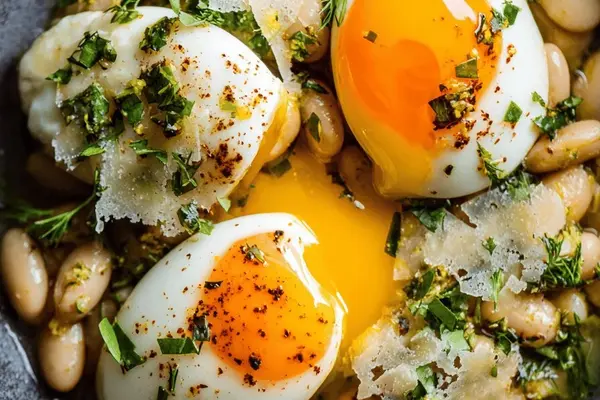
Baked White Beans with Soft Eggs & Lemon

Nutty Reindeer Rice Cakes with Hazelnut

Condensed Milk Fudge with Pecans

Mango Coconut Shaved Ice with Tapioca
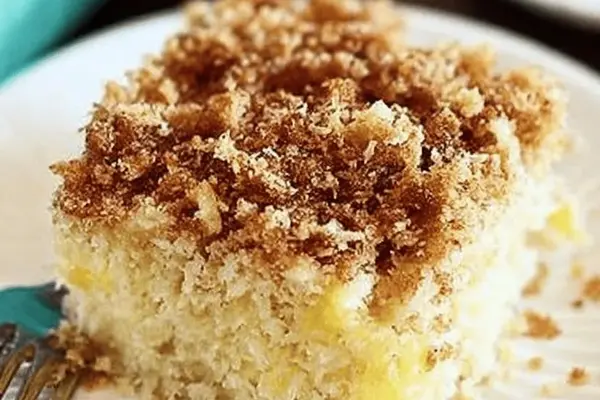
Pineapple Cake with Coconut Crumb Topping

Mac and Cheese Bites with Spinach
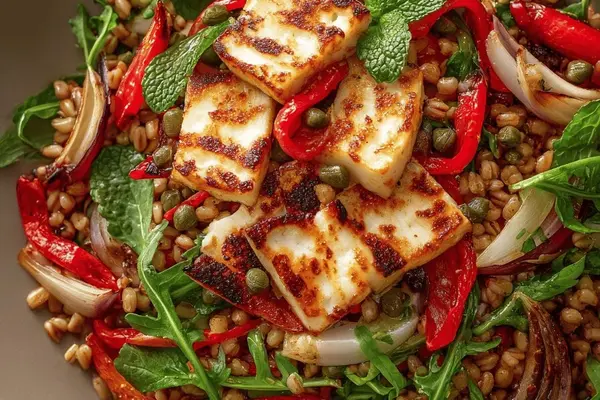
Barley Salad with Halloumi & Roasted Peppers
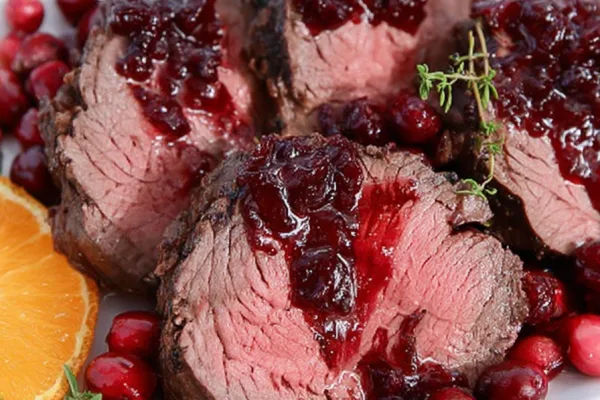
Cranberry Glazed Beef Tenderloin

Rustic Berry Cobbler with Buttermilk Biscuits
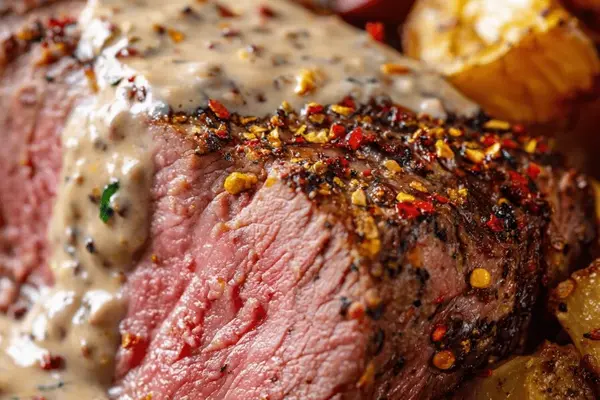
Grilled Sirloin Roast with Peppercorn Sauce
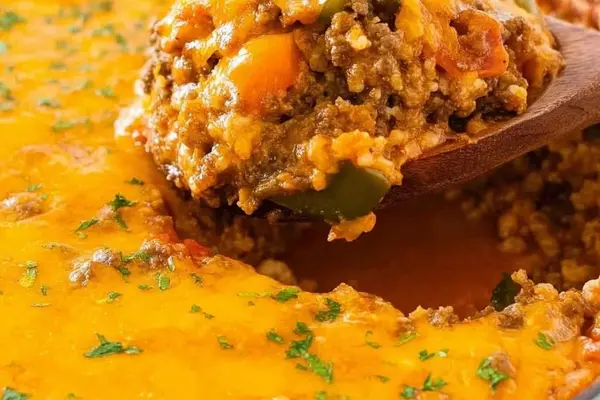
One Pot Meals with Ground Beef and Rice
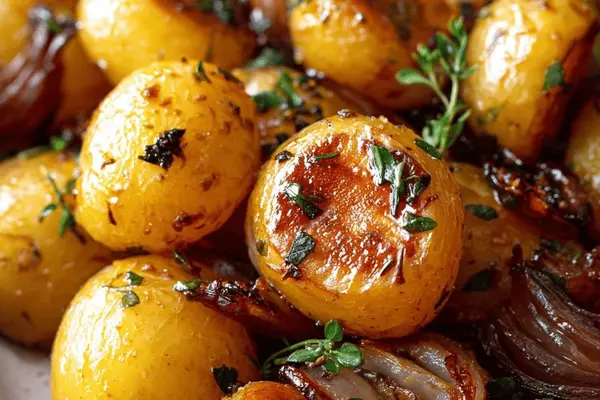
Roasted Potatoes with Duck Fat and Maple Syrup