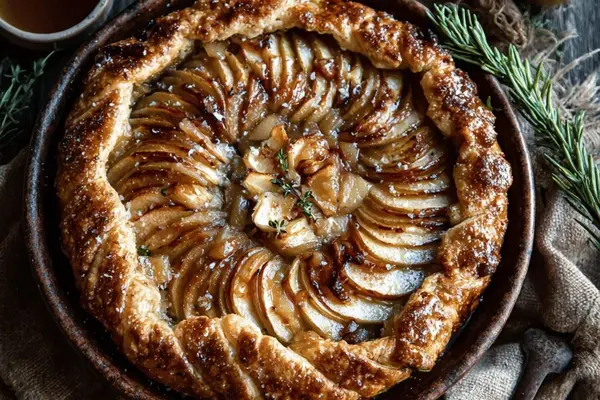
Rustic Apple Tart with Cardamom and Ginger
By Emma
Certified Culinary Professional
·
Recipe tested & approved
Cut the apples—mixed varieties, so they don’t all break down at the same time. McIntosh goes soft. Cortland holds. That’s the whole idea. Brown sugar and cardamom do the work while the crust gets actual color, not just pale and sad.
Why You’ll Love This Rustic Apple Tart
Takes 80 minutes total, most of it just sitting there. Thirty minutes prep if you move at a normal pace. One bowl. Two pie crusts from the store—don’t bother homemade unless you’re bored.
Looks like you spent hours. Nobody needs to know it didn’t.
Fall desserts don’t get easier than this. The spices are already mixed into the filling, so you’re not standing there measuring cardamom twice and questioning your life choices. Works with whatever apples you have. That’s not a weakness—it’s the whole point.
Tastes warm, tastes cold. Works with cheddar if you’re into that kind of thing, or just eat it plain standing at the counter. Crust gets crispy where it matters, filling thickens while it cools so it doesn’t collapse the moment you slice it.
What You Need for an Easy Apple Tart
Six apples. Mixed varieties—McIntosh, Cortland, Empire, whatever. Not all the same kind. The softer ones break down, the firmer ones keep texture.
Brown sugar. A half cup. Light brown, not dark. Different thing.
Cornstarch. Two and a half tablespoons. Thickens without tasting floury. Use it cold, not cooked first.
Cardamom and ginger. A half teaspoon and a quarter teaspoon. Fresh spices. Stale ones taste like dust—check when you open the jar, if it smells like nothing, replace it.
Olive oil. Light olive oil, warmed slightly. Not virgin, not butter. Butter makes it dense.
Two pie crusts. Store-bought. 11 inches each. That’s normal size.
One egg yolk mixed with a tablespoon of milk and two teaspoons of pear vinegar. The vinegar cuts through sweetness, makes the crust brown better. Regular vinegar works. Apple cider too. White vinegar is sharper—use less.
How to Make a Rustic Apple Tart
Heat your oven low. 365 degrees. Bottom rack matters—the crust cooks from underneath, filling from above. Anything hotter and the edges burn before the middle sets.
Mix the egg wash first. Yolk and milk and vinegar, whisk it, set it aside. You’ll need it later and having it ready means you’re not scrambling halfway through.
Toss brown sugar, cornstarch, cardamom, ginger into a big bowl. Smell the spices. Really smell them. If they’re blank and dusty, they won’t do anything. Check the dates on your jars.
Add apples. Cut them into 16 pieces each, so they’re chunks but not huge. Pour in the warm olive oil. Fold everything gently—fold, don’t stir. You want the apples to stay whole-ish, not turn into mush before they even get in the oven. The mixture should look wet and sticky and the apples should glisten.
Roll out your first crust into a 9-inch pan. Press it in carefully, no air pockets along the bottom. Prick the bottom with a fork, just a few times. Pour the filling in. Press it down lightly until it’s mostly even but you can still see apples poking through. This isn’t a smooth filling situation. It’s rustic. Apples stick out.
Wet the edges with cold water. Just enough to make them tacky. Not enough to make them wet. There’s a difference and it matters.
Lay the second crust over the top. Trim the edges with a sharp knife—don’t use a dull knife, it drags and tears. Pinch the edges hard with your fingers or a fork. Seal it tight. Press like you mean it.
How to Get a Rustic Apple Tart Crispy and Golden
Cut a two-inch slit in the center. One slit. Vent the steam. Don’t do this and the crust bursts—learned that the hard way, filling everywhere, oven mess, whole situation.
Brush the entire top with egg wash. The whole thing. Head to toe. Thick and even. Don’t miss the edges or they brown dull and flat. If you have leftover dough, shape it into tiny apples or leaves, stick them on with more egg wash. Adds a thing. Charming. Just watch them because the edges brown fast and sugar burns quick.
Slide it onto the bottom rack. The oven’s already hot. Listen while it bakes. You’ll hear it bubble and pop. That’s the filling releasing juice. Good sound. If it roars and boils loudly, temp’s too high.
Bake 50 minutes. Around 50. Maybe 48, maybe 52. When the crust edges start going dark—darker than you’d think looks good—tent it with foil. Just the edges, just to slow the browning. You want golden amber. Not brown. Not dark. Golden.
Check for doneness. Crust should be golden. Filling should bubble through the vents. When you poke the filling with a fork, it should give but not feel completely liquid. The juices should look thickened and glossy.
Pull it out. It looks way too soft right now. That’s normal. Cool it on a rack for 20 minutes minimum. The filling thickens as it cools—cut into it hot and you get runny juice everywhere. Your plate becomes a mess. If you’re impatient, chill it in the fridge for a few minutes after the rack cooling.
Slice it with a serrated knife. Gentle sawing. Don’t press down hard or you squeeze the juices out before you even serve it.
Rustic Apple Tart Tips and Common Mistakes
Crust shrinks? Your dough was warm. Chill it before rolling. Warm dough warps.
Soggy bottom crust next time—blind bake. Roll it into the pan, prick it, bake it empty for 8 minutes at the same temp. Brush the base with a beaten egg white. Creates a moisture barrier. Works. Doesn’t add much time.
Filling too runny? More cornstarch next time. Go to 3 tablespoons. Or cook the apples in a skillet for a few minutes first to soften them down and release excess moisture before mixing in the filling.
Spices taste too strong. Grate some lemon zest into the filling. Brightness cuts spice. Or swap the cardamom for star anise—floral instead of warm.
No pie dough in the house? Puff pastry works. Expect it to rise more, look less rustic, more fancy. Still tastes good.
Apples you don’t recognize? Doesn’t matter. Mix whatever you have. The point is different textures.
Rustic Apple Tart with Cardamom and Ginger
Prep:
30 min
Cook:
50 min
Total:
80 min
Servings:
8 servings
Ingredients
- 125 ml (1/2 cup) light brown sugar
- 35 ml (2 1/2 tbsp) cornstarch
- 2.5 ml (1/2 tsp) ground cardamom
- 1 ml (1/4 tsp) ground ginger
- 6 apples mixed varieties (McIntosh, Cortland, Empire or others), peeled, cored, cut into 16 segments
- 30 ml (2 tbsp) light olive oil, warmed
- 2 pie crust sheets 28 cm (11 in) diameter
- Egg wash
- 1 egg yolk
- 15 ml (1 tbsp) milk or cream
- 10 ml (2 tsp) pear vinegar
Method
- Preparation
- 1 Position rack low in oven, preheat to 185 °C (365 °F). Slightly lower temp slows crust browning, lets filling bubble through before burn.
- 2 Whisk egg yolk and milk with vinegar, set aside. Vinegar cuts sweetness, aids browning.
- 3 Toss brown sugar, cornstarch, cardamom, and ginger in big mixing bowl. Check spices for freshness; stale make tart flat.
- 4 Add apples and warm olive oil, fold gently. Olive oil avoids butter’s heaviness, adds subtle fruitiness. Avoid squeezing apples too much—they should hold shape while releasing juices. Mixture should glisten, look sticky.
- 5 Roll out first pie dough thin into 23 cm (9 in) pie pan, pressing carefully to avoid air pockets. Prick bottom lightly with fork. Pour filling, press lightly until mostly even but apples peek through gaps.
- 6 Moisten dough edges with cold water — just enough to make edges tacky, don’t overdo or crust gets soggy.
- 7 Lay second dough sheet over, trim excess with sharp knife, pinch edges hard with fingers or fork to seal tight.
- 8 Cut a two-inch slit in center to vent steam evenly; no vent or crust bursts messily—learned hard way. Brush entire top head to toe with egg wash, thick and even. Avoid missing edges, they brown dull otherwise.
- 9 Optional: Use leftover dough to shape mini apples or leaves, stick on top with egg wash. Adds charm but extra sugar might burn faster — watch closely.
- Baking
- 10 Oven preheated? Slide tart onto bottom rack. Bubbly juices sound wriggle and pop as tart cooks—listen for quiet simmer, no roaring boil.
- 11 Bake approx 50 minutes; if crust edges brown too fast, tent with foil halfway through to avoid bitter burnt bitterness.
- 12 Checks: crust golden amber, not too dark. Filling bubbling through vents and edges, thickened juice has glossy coat on apples. Slightly soft when poked.
- 13 Cool on wire rack minimum 20 minutes. Filling thickens more upon cooling; cutting too hot means runny juices all over. Chill briefly if impatient.
- 14 Slice with serrated knife, gentle sawing avoids dragging juices out.
- 15 Serve lukewarm or chilled, plain or with dollop crème fraîche or sharp cheddar for counterbalance.
- Troubleshooting
- 16 - If crust shrinks, chill dough well before rolling. Too warm, it warps.
- 17 - Soggy bottom? Bake a blind crust 8 mins before adding filling next time. Brush base with beaten egg white for moisture barrier.
- 18 - Filling too runny? Next time increase cornstarch to 40 ml (3 tbsp), or cook apples briefly in skillet to soften excess moisture.
- 19 - Spices overpower? Add grated lemon zest for brightness or swap cardamom for star anise for floral notes.
- 20 - No pie dough handy? Use puff pastry but expect more rise, less rustic look.
Nutritional information
Calories
320
Protein
2g
Carbs
48g
Fat
12g
Frequently Asked Questions About Homemade Apple Tart with Pie Crust
Can I make this apple dessert ahead of time? Yeah. Bake it completely, cool it, cover it. Lasts three days. Tastes better the next day honestly—the filling thickens more, the spices settle in. Warm it up if you want, or eat it cold.
What if I don’t have pear vinegar? Apple cider works. Regular white vinegar works too but it’s sharper—use a teaspoon instead of two. It still helps the crust brown and cuts sweetness.
Why does the recipe say mixed varieties of apples? Because one type of apple cooks one way. McIntosh breaks down fast. Cortland stays firm. You want both textures in the filling so it’s not a puree or a pile of hard chunks. Both at once.
Can I skip the cardamom? Sure. Leave it out and you have a basic fall dessert. Add ginger. The spices aren’t mandatory but they’re why this tastes different from every other apple tart. Stale spices taste like nothing, so if yours are old, replace them.
How do I know when the tart is actually done baking? The crust is golden, not pale and not burnt. The filling bubbles through the vents around the edges. Poke it with a fork—the apples should give but not feel soupy. The juice coating them should look thickened and glossy, not clear and runny.
Why use olive oil instead of butter? Butter makes the filling dense and heavy. Olive oil keeps it lighter, adds subtle fruitiness without being obvious. Works. Don’t use extra virgin or it tastes grassy—light olive oil only.
You’ll Love These Too
Explore all →
Maple Pear Cheesecake with Browned Butter
Berry Salad with Vanilla Syrup Recipe
Egg White Stiff Peak Soufflé Omelette
Creamy Cauliflower Mussels in White Wine
Slow Cooker Pulled Pork with Orange & Lime
Seafood Cabbage Omelette with Shrimp
Easy Naan Bread Recipe with Labneh
Creole Cornbread Dressing with Sausage
Mini Quiches with Ham, Endive & Gruyère
Grilled Zucchini with Peppers and Eggplant
Pistachio Layer Cake with Honey Buttercream
Creamy Cheese Tortellini with Pancetta
Strawberry Ricotta Cheesecake with Cake Mix
Herbed Creamy Potato Salad with Basil Pesto
Chestnut Apple Dressing with Raisins
Dry Pancake Mix with Cinnamon | Fluffy
Brie and Cheese Puff Pastry Bites
Sesame Salmon Wonton Soup Recipe
Pickled Cabbage with Ginger & Apple Cider