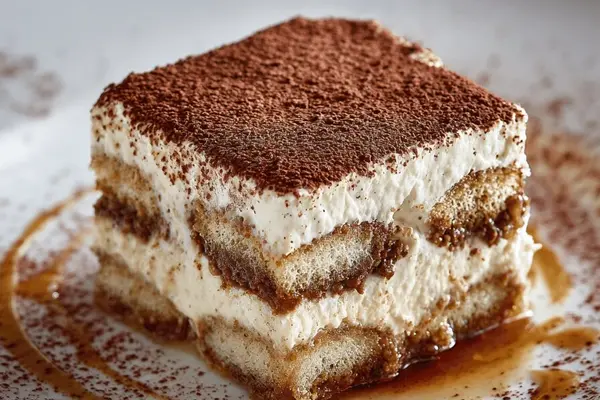
Tiramisu Dessert with Ricotta & Espresso
By Emma
Certified Culinary Professional
·
Recipe tested & approved
Tiramisu dessert reinvented with ricotta, light sour cream, and espresso. Amaretto liqueur adds nutty flavor while whipped egg whites create an airy, lighter texture than traditional versions.
Prep:
30 min
Cook:
20 min
Total:
50 min
Servings:
8 servings
Dip the ladyfingers quick—like a second per side—or they turn to mush. That’s the whole thing right there. Ricotta instead of mascarpone. Sour cream for tang. Espresso that’s actually cold before it touches anything. Thirty minutes of prep, twenty to chill the coffee, fifty total if you’re moving. No oven. No baking. Just layering and waiting.
Why You’ll Love This No Bake Tiramisu
Takes fifty minutes start to finish and most of that’s waiting in the fridge. Ricotta coffee tiramisu sounds weird until you taste it—lighter than the traditional version, actual flavor instead of just richness. No mascarpone needed. Works with what you probably have. Sour cream cuts through the sweetness in a way that actually matters. Espresso and amaretto do the heavy lifting. You taste them. Not buried. Cold dessert. Make it hours ahead or the night before. Texture gets better, flavors marry slowly, zero stress when people arrive.
What You Need for Ricotta Tiramisu with Ladyfinger Biscuits
Strong brewed espresso—two hundred forty milliliters, still hot. Sugar split two ways: twenty going into the coffee, the rest for whipping egg whites. Whole milk ricotta, four hundred fifty grams. Light sour cream, one hundred twenty-five milliliters, room temp matters because cold ricotta clumps. Amaretto liqueur—thirty milliliters. Three egg whites, clean bowl and beaters essential. Fourteen ladyfinger biscuits. Cocoa powder, sifted, fifteen milliliters. That’s it. Nobody needs to buy special stuff.
How to Make Espresso Tiramisu Without Mascarpone
Brew the espresso hot. Stir in twenty milliliters of sugar while it’s still steaming. The sugar dissolves into the bitterness and shifts it—sharp aroma becomes smooth, hints of sweetness underneath. Then chill it in the fridge. Cold matters more than you think because warm coffee breaks the egg whites when you dip the ladyfingers later.
While that’s cooling, whisk the ricotta and sour cream together with the amaretto. Hand mixer, low speed. The combo beats mascarpone for tang and actual lightness—ricotta’s less dense, sour cream adds brightness. You want velvety. No lumps. But don’t overmix or it breaks down, gets grainy. Stop when it’s smooth.
How to Get the Airy Texture Right in Lightened Tiramisu
Clean bowl. Dry beaters. Whip the egg whites on medium until soft peaks form—tips curl gently, not stiff yet. Then add the remaining one hundred thirty milliliters of sugar gradually while whipping. Keep going until stiff shiny peaks. Overwhip and it dries out, gets grainy, mixes badly into the cheese. You’ll feel when it’s right.
Fold the whites into the ricotta mixture slowly. Use a spatula. Big motions. Preserve the volume—don’t deflate it by stirring like you’re making soup. Uneven mixing kills the texture. It should feel light, almost fluffy but still stable enough to hold the ladyfingers up. Check as you go.
Layering and Chilling Tips for No Bake Tiramisu
Dip each ladyfinger one second per side. One second. Two if you’re slow. More and they’re soggy mush, less and they’re crunchy. It’s quick.
Lay half the soaked ladyfingers in a three-liter glass dish—the clear sides matter because you see the layers, makes it look intentional. Spread half the cream mixture over them. Don’t press down. Smooth it with a spatula but leave it airy.
Repeat with the rest. Tap the dish gently to settle everything and release air bubbles trapped between layers.
Sift cocoa powder on top with a fine mesh. Go light—heavy cocoa turns bitter. Cover it tight. Refrigerate minimum two and a half hours. Overnight is better. The texture firms up, the flavors marry gradually. No drowning in moisture if you let it sit.
Before serving, let it sit ten minutes at room temperature. The aroma wakes up. The texture softens slightly. Easier to slice. Use a long spoon or fork—fork actually works better because it separates the layers clean instead of dragging them.
Tiramisu Dessert with Ricotta & Espresso
Prep:
30 min
Cook:
20 min
Total:
50 min
Servings:
8 servings
Ingredients
- 240 ml brewed espresso strong and hot
- 150 ml sugar divided
- 450 g whole milk ricotta
- 125 ml light sour cream room temperature
- 30 ml amaretto liqueur
- 3 egg whites
- 14 ladyfinger biscuits
- 15 ml cocoa powder sifted
Method
- 1 Brew espresso; stir in 20 ml sugar while hot. Let cool in the fridge to just cold—sharp, bitter aroma shifts to smooth with a hint of sweetness. Keep close, moisture matters.
- 2 Whisk ricotta and sour cream with amaretto until velvety, no lumps. This combo beats mascarpone for tang and lightness. Use a hand mixer low speed to avoid overmashing. Set aside.
- 3 Clean, dry bowl. Whip egg whites on medium speed until soft peaks form—tips gently curl. Add remaining 130 ml sugar gradually while whipping to stiff shiny peaks. Tip: overwhip and it dries out, making mixing tough.
- 4 Fold whites gently into cheese mix—use spatula, slow, big motions. Preserves volume, no deflating. Uneven mixing ruins airy texture. Check consistency: light, almost fluffy but stable.
- 5 Dip ladyfingers quick—1 sec max per side, sogginess kills the dessert. Lay half in a 3-liter glass dish. Layer half cream mixture evenly, smoothing with spatula but don’t press down hard.
- 6 Repeat with remaining soaked ladyfingers and cheese cream. Tap dish gently to even out layers and release air bubbles.
- 7 Sift cocoa powder on top with fine mesh—go light, too heavy turns bitter. Cover tightly, refrigerate minimum 2.5 hours—overnight better. Texture firms, flavors marry gradually but no drowning in moisture.
- 8 Before serving, let sit 10 minutes room temp. Aroma wakes up, texture softens slightly, easier to slice. Serve with a long spoon or fork—fork pokes textures well.
Nutritional information
Calories
280
Protein
8g
Carbs
28g
Fat
14g
Frequently Asked Questions About Coffee Cake Tiramisu
Can you make ricotta tiramisu without raw egg whites? Pasteurized eggs work. Whip them the same way. Some people heat the sugar to one hundred sixty degrees first, let it cool, then whip the whites into it. Safer, same result mostly.
Why ricotta instead of mascarpone? Mascarpone’s heavier, greasier. Ricotta’s tangier, lighter. The sour cream helps there too. Tried mascarpone after this—feels dense. Doesn’t work as well.
How long does this keep? Three days in the fridge covered tight. After that the ladyfingers absorb more liquid, texture changes. Tastes fine. Different though.
Can you freeze tiramisu with ricotta and sour cream? Haven’t tried it. Probably separates when it thaws. Not worth it.
What if the espresso’s still warm when you need to dip? Wait. Cold coffee matters because hot coffee on the whites breaks them, makes them weep. Ruins the whole thing. Put it in the coldest part of your fridge. Takes maybe twenty minutes.
Does amaretto taste strong in the finished tiramisu? No. You taste it but it’s soft, almost vanilla-like. Thirty milliliters in all this cream means it’s just a whisper. Add more if you want it louder. Can’t go back once you’ve built it though.
What’s the difference between this and traditional tiramisu? This one’s lighter. Less alcohol. Tangier because of the sour cream and ricotta. People expect the heavy mascarpone version. This surprises them—tastes cleaner, less sweet, coffee flavor comes through better.
You’ll Love These Too
Explore all →
Pasta with Peas, Butter & Aged Cheese
Turkey Meatballs Recipe with Spinach
Grape Juice Pie with Arrowroot Filling
Blueberry Muffins with Cake Flour
Crispy Tofu Avocado Wraps with Arrowroot
Pumpkin Olive Oil Cake with Maple Glaze
Rustic English Scones with Sour Cream
Maple Pear Pudding Upside-Down Cake
Crispy Fried Spring Rolls with Pork

Cosmopolitan Drink Recipe with Cranberry
Homemade Condensed Milk Recipe
Smoked Salmon Hors D'Oeuvres Tart

Citrus Syrup Recipe with Fresh Lemon Juice
Brown Butter Banana Cake with Pecans
White Chocolate Cold Brew Coffee Recipe
Coleslaw Recipe with Spicy Tomato Salsa
Kung Pao Chicken with Peanuts & Peppers
Fig Jams with Onion & Apple Cider Vinegar
Peeps Layered Krispies Treats Recipe