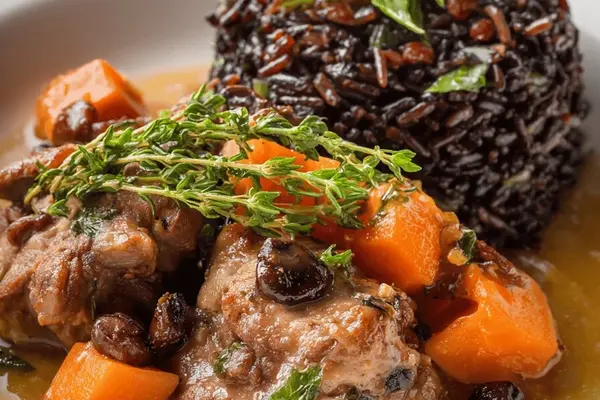
Rabbit Stew with Dark Rum and Carrot Juice
By Emma
Certified Culinary Professional
·
Recipe tested & approved
Tender rabbit stew enriched with Caribbean dark rum and fresh carrot juice. Butter-browned rabbit pieces slow-simmer into a nuanced, lively sauce without cream.
Prep:
20 min
Cook:
50 min
Total:
1h 10min
Servings:
4 servings
Cut the rabbit into eight pieces. Heat the clarified butter low and slow—medium heat at most, because high just burns everything and you lose the whole thing. Shallot goes in after. Then rum. Then carrot juice carries it all home. Fifty minutes and you’ve got something that tastes like it took you all afternoon.
Why You’ll Love This Caribbean Stew
Takes an hour total, maybe less if your stove runs hot. Most of that is just sitting there simmering—you’re not actually doing anything. Comfort food that doesn’t taste like comfort food. Tastes like rum and carrots and meat that fell apart on its own. Works cold the next day, maybe better. The flavors sit overnight and get quieter, smoother. Easy dinner without feeling boring. One pot. No sides required, though black mushroom rice is the move if you’ve got it. Rabbit gets tender without falling to pieces. Not the worst thing if it does, but the point is meat that’s soft all the way through and still holds its shape.
What You Need for Rabbit Seventh Heaven
Rabbit—one large one, cut into eight pieces. Not chicken. Rabbit’s gamey, denser, holds up to long cooking without getting stringy. Clarified butter or ghee. About three and a half tablespoons. Regular butter has water in it and burns faster. Not worth the trouble. One shallot, thin sliced. Not onion. Shallots are milder, sweeter, don’t overpower the meat the way a whole onion would. Caribbean dark rum. Fifty milliliters. The kind that costs a bit more. Light rum tastes thin here. Skip it. A litre of fresh carrot juice. Not the bottled stuff that’s been sitting. Taste it first—some brands are weird, too sweet or metallic. You might need more as it cooks. Sea salt and black pepper. Grind your own pepper. Pre-ground tastes like dust after a month.
How to Make Easy Rabbit Stew
Get a heavy pot. Thick bottom. Heat the clarified butter until it shimmers—not smoking, just shimmering. Medium heat. Maybe medium-low if your burner runs hot.
Rabbit pieces go in skin-side down first. Don’t crowd them. Work in batches if you have to. Let them sit. Twelve to fifteen minutes before you even think about flipping. You’re looking for deep golden color, almost mahogany in spots. That’s where the flavor lives.
Season as they brown. Salt and pepper right then, not later. Dries the surface. Helps everything brown darker.
The shallot comes next. Stir it gently for four minutes until it goes soft and translucent. Not brown. Brown tastes bitter. You want sweet, delicate.
Pour the rum in slow. You’ll hear it sizzle. The alcohol burns off, vapor rises. Scrape the bottom of the pot with a wooden spoon—all those brown bits that stuck. That’s what makes the sauce worth eating.
How to Get Caribbean Rabbit Stew Tender and Rich
Add about a hundred thirty millilitres of carrot juice. That’s a bit more than half a cup. Bring it to a gentle simmer. Then turn the heat down to low. This matters. Low heat, not medium. High heat toughens meat.
Cover the pot but leave the lid ajar. Not sealed. You want some moisture to escape so the sauce thickens and coats the meat instead of drowning it.
Check every four minutes or so. If it looks dry or the rabbit’s starting to look leathery on top, add thirty to forty millilitres more carrot juice. Keep doing this. The stew should barely bubble. Not a rolling boil. Barely. That takes thirty to thirty-five minutes total.
You’ll see the sauce darken. It’ll coat the back of a spoon with a faint sheen when you drag a finger across it. That’s the sign.
Fork test. Tap a piece of meat with a fork. It should give without shredding. Still hold its shape. If it’s tough, keep going. No timer matters more than what the meat tells you.
Rabbit Stew Tips and Common Mistakes
Don’t flip constantly. People do this. Flip, flip, flip, flip. Stop. Let it brown. Patience is the whole thing.
Shallot—not onion. I’ve tried it both ways. Onion makes it taste like French onion soup instead of Caribbean stew. Shallot stays quiet.
Rum should peek through. Not bite. If it tastes like you’re drinking from the bottle, you either used too much or didn’t let enough evaporate. The alcohol should be gone; the sweetness and oak should stay.
Carrot juice matters. Bottled stuff that’s been sitting tastes processed. Fresh is different. Tastes like actual carrots got juiced yesterday. Also—some brands are naturally sweeter than others. Taste first.
The meat cooks low and slow because rabbit is lean. High heat makes it tough. Doesn’t matter how long you cook it then.
Rabbit Stew with Dark Rum and Carrot Juice
Prep:
20 min
Cook:
50 min
Total:
1h 10min
Servings:
4 servings
Ingredients
- 1 large rabbit cut into 8 pieces
- 50 ml clarified butter or ghee (about 3 1/2 tbsp)
- 1 shallot thinly sliced
- 50 ml Caribbean dark rum
- 1 litre fresh carrot juice, more if needed
- Sea salt and freshly ground black pepper
Method
- 1 Start by heating clarified butter in a heavy-bottomed pot. No high heat; medium to medium-low works better to brown without burning.
- 2 Add rabbit chunks skin-side down first. Let each piece get golden and crispy, about 12 to 15 minutes. Turn only when you see deep color forming. Resist poking or flipping constantly — patience builds flavor.
- 3 Season with sea salt and black pepper as they brown, don’t wait till the end. This step locks in taste and dries the meat’s surface for better browning.
- 4 Add sliced shallot, stir gently for about 4 minutes or until soft and translucent, but not browned. Onion can overpower sometimes; shallots add a milder, sweeter touch—my personal tweak here.
- 5 Pour in the dark rum slowly. You’ll hear a soft sizzle, liquid evaporating. Scrape the brown bits stuck to the bottom with a wooden spoon—this dissolves richness into the sauce.
- 6 Immediately add about 130 ml carrot juice (a bit more than half a cup). Bring to a gentle simmer, then reduce heat to low.
- 7 Cover partially —lid ajar— to let the sauce thicken gradually while moisture stays controlled. Check every 4 minutes or so; add 30-40 ml more carrot juice if it looks dry or rabbit surfaces appear leathery.
- 8 Keep the stew barely bubbling so pieces remain tender but not falling apart; about 30 to 35 minutes. You’ll see the sauce darken slightly, coat the back of a spoon with a faint sheen.
- 9 Tap a piece with a fork. The meat should be tender, give without shredding. If tough, simmer a bit longer with additional carrot juice; no rush, no jerky bites.
- 10 Adjust seasoning now, salt and pepper to your liking. The rum must peek subtly, not bite or overwhelm.
- 11 Turn off heat; let sit covered 5 minutes so flavors settle.
- 12 Serve alongside djon djon black mushroom rice or any earthy starch to balance sweetness and gamey notes.
Nutritional information
Calories
350
Protein
35g
Carbs
12g
Fat
18g
Frequently Asked Questions About Rabbit Seventh Heaven
Can I use chicken instead of rabbit? Technically, yeah. Tastes completely different though. Chicken’s bland next to this. Rabbit’s gamey—that’s the whole point. If you don’t have rabbit, pick something else.
How long does this actually take? Twenty minutes prep, fifty minutes cooking. One hour ten minutes total. Most of that cooking time is just heat doing the work. You’re standing there maybe five minutes actually doing something.
What if I can’t find fresh carrot juice? Bottled works. Not ideal. Tastes a bit more processed. Haven’t found a brand that’s perfect. Fresh is worth finding if you can.
Does it freeze? Yeah. Cool it completely first. Freeze in portions. Thaws fine. Tastes the same or maybe better. The flavors settle more.
Can I make this in a slow cooker? Brown the rabbit and shallot in a pot first—that browning step matters. Then transfer to the slow cooker with the rum and carrot juice. Four to five hours on low. Check it doesn’t dry out. Add more juice if needed.
What starch goes with this? Djon djon rice if you can get black mushrooms. Otherwise any earthy starch—polenta, regular rice, even just bread. The stew’s got sweetness and gamey notes. Something neutral balances it. Potatoes work. Nothing fancy required.
Is the rum necessary? Pretty much yeah. It adds something you can’t replace. The sweetness, the depth. Leaving it out makes it taste like regular stew. Skip it if you need to, but don’t pretend it’s the same dish.
You’ll Love These Too
Explore all →
Crispy Chicken with Chili Garlic Sauce

Pimento Cheese Appetizers with Bacon

Pumpkin Spice Latte Pancakes Recipe

Crustless Spinach Quiche with Roasted Tomatoes
Crunchy Peanut Caramel Bars Recipe
Sautéed Cauliflower Rice with Lemon

Sausage Egg Cheese Crescent Rolls
Apple Turnover With Puff Pastry

Simplest Beef Lasagna with Ricotta
Caramel Sheet Cake with Espresso & Brown Sugar
Dark Chocolate Ganache with Coconut Cream
Spinach Pie with Ricotta and Feta

Crispy Yukon Gold Fries with Pancetta

Rice Noodle Salad with Tahini, Tofu & Mango

Baked Cheese with Mushroom Sauté & Mustard
Maple Glazed Roasted Potatoes with Pecans
Sirloin Steak with Mushrooms and Tomato
Eggnog Cheesecake Recipe with Speculoos Crust

Fluffy Pancakes Recipe with Buttermilk