Pumpkin Cake Cheesecake Recipe
By Emma
Certified Culinary Professional
·
Recipe tested & approved
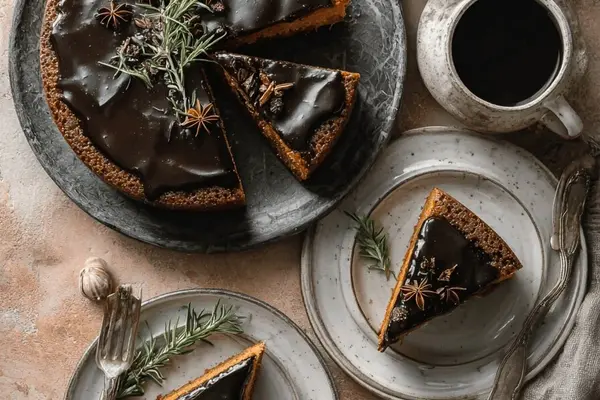
Kabocha squash gets roasted until edges crackle. Then pureed smooth. Then turned into a cake that sits between two layers of bittersweet chocolate ganache. That’s the whole thing. Tastes like fall forgot to leave.
Why You’ll Love This Pumpkin Cake Cheesecake Recipe
The spice blend actually works—ginger, star anise, fennel, black pepper. Not pumpkin spice from a jar. It tastes like something.
Two-layer cake. One chocolate ganache. Takes 2 hours 35 minutes total but most of it’s cooling. You’re not standing there the whole time.
Roasting the squash yourself means you know what’s in it. No canned puree sitting on a shelf. The edges caramelize and add something bitter and good.
The ganache is coconut cream and chocolate. Silkier than you’d expect. Works cold the next day, maybe better.
Fall dessert that doesn’t need twelve ingredients or a mixer running forever.
What You Need for Pumpkin Cake Cheesecake
Kabocha squash. One, about a kilogram. Cut it in chunks. Butternut works if that’s what you have—dryness varies but the puree will get there.
All-purpose flour. 200 grams. Whole wheat pastry flour adds depth, 65 grams of it—makes the crumb heavier, richer. Skip it if you want something softer. Just use more all-purpose.
Baking powder and baking soda. Teaspoon of baking powder, half a teaspoon of soda. They do different things. Don’t swap one for the other.
Spices: ground ginger—a quarter teaspoon. Ground star anise, same. Fennel powder. Black pepper, just a pinch. Not typical pumpkin spice. It tastes different because it is different.
Unsalted butter. 170 grams, softened. Dark brown sugar. The molasses in it matters. 260 grams packed down.
Three large eggs at room temperature. Temperature actually matters here.
For the ganache: 400 grams bittersweet chocolate chopped up. 430 milliliters coconut cream—full fat, from a can. Chill it first if you have time. Heavy cream works if you’re in a hurry but coconut cream is silkier.
How to Roast the Squash and Make the Pumpkin Cake
Oven to 175 Celsius. Middle rack. Line your pans—two springform pans, 20 centimeters each. Butter the sides, parchment on the bottom. Line a baking sheet too.
Squash chunks go on the sheet. Roast for 40 minutes. Stir once or twice. You’ll know it’s done when edges start to crackle and caramelize—that’s where the depth comes from. Times vary wildly depending on your oven. Check it.
Cool it down. Puree it smooth in a food processor. Not watery. Velvety. You need about 375 milliliters. If it’s too dry, add a splash of milk or cream. Just a splash.
While that cools, sift the flours together. Baking powder, baking soda, all the spices, the black pepper. Smells earthy and complex. Set it aside.
Beat the softened butter with the dark brown sugar using an electric mixer. This takes patience. Keep going until it’s lighter in color and creamy. Add the eggs one at a time. Make sure each one is fully incorporated before the next one goes in. Then fold in the squash puree gently. Mix it well but don’t go crazy.
Add the dry ingredients gradually. Stir until you can’t see streaks of flour anymore. The batter should be thick but pourable. Scrape the bowl. Make sure everything’s mixed evenly.
Divide the batter between the two pans. Smooth the tops with a spatula. Shimmy them a little to settle and remove air pockets. Bake for 30 to 35 minutes. Don’t just set a timer and walk away. Watch for the edges to lift and the center to set but still look moist. A toothpick should come out with a few crumbs, not wet batter. Not totally clean either. Pull them out when they’re right.
Cool in the pans for 15 minutes. Then loosen the sides and remove them. Flip them onto a wire rack. Let them cool completely. This takes about 2 hours. Don’t skip this step or the next part gets messy.
How to Make Chocolate Ganache for Cake and Assemble
Chop the bittersweet chocolate. Put it in a bowl.
Heat the coconut cream slowly. Watch it. You want it hot but not scorching or forming a skin on top. Pour it over the chocolate. Let it sit for 3 minutes without touching it.
Whisk it smooth. Gently. No lumps, no streaks. Let it cool at room temperature until it’s thick but still spreadable. This takes roughly 2 to 3 hours. Stir it occasionally to check. If it gets too thick or hardens in the fridge, warm it gently over a double boiler before you use it. Don’t microwave it.
Once the cakes are completely cool, slice each one horizontally into two layers. Use a serrated knife. Saw gently. You’re not trying to make crumbs everywhere.
Place one layer on a plate. Spread ganache on it generously and evenly. Repeat twice more. The top layer stays plain—keeps moisture in—but brush a thin layer of ganache on it anyway.
Use the rest of the ganache for the sides. An offset spatula works for smooth. Or just swirl it. Both look good.
Chill it briefly if spreading gets messy. Then let the whole cake sit at room temperature for 30 minutes so the ganache sets properly.
Dust with powdered sugar before serving. Or toasted pepitas. Something for contrast.
Pumpkin Cake Cheesecake Tips and Common Mistakes
Kabocha’s best. Butternut or buttercup squash work but they’re drier. Add milk cautiously when you puree. Just enough to get it smooth.
Whole wheat pastry flour is worth the effort. Boosts flavor, adds heft to the crumb. But if you want it softer, use all all-purpose flour instead.
Coconut cream ganache is silkier than dairy cream. Use the canned stuff. Chill it first. Heavy cream is the backup plan if you’re in a hurry. It works fine. Not the same but fine.
Watch the squash while it roasts. Caramelized edges are good. Burnt spots mean you weren’t paying attention.
Don’t rush the cooling. Warm layers crack. Warm ganache slides off. Patience is the whole move here.
If the pan bottom sticks after baking, grease better next time. Use a sharp knife to loosen the edges. Parchment underneath helps.
Dark brown sugar gives molasses notes and keeps things moist longer than light brown. Switch and you’ll taste the difference.
Eggs and butter need to be room temperature. It matters for how the batter rises and holds together. Cold ingredients make dense cake.
The black pepper is subtle. Highlights the spice blend without being obvious. Skip it if kids are eating or you don’t like pepper in dessert. Honestly it doesn’t wreck anything if you leave it out.
Cover the cake and it stays moist for 3 days. Ganache firms up in the fridge. Bring it back to room temperature before slicing or it cracks.
Pumpkin Cake Cheesecake Recipe
Prep:
60 min
Cook:
35 min
Total:
2h 35min
Servings:
8 servings
Ingredients
- 1 kabocha squash about 1 kg cut in chunks
- 200 g all-purpose flour (1 1/2 cups)
- 65 g whole wheat pastry flour (1/2 cup packed)
- 5 ml baking powder (1 tsp)
- 2.5 ml baking soda (1/2 tsp)
- 1 ml ground ginger (1/4 tsp)
- 1 ml star anise ground (1/4 tsp)
- 1 ml fennel powder (1/4 tsp)
- pinch black pepper
- 170 g unsalted butter softened
- 260 g dark brown sugar (1 1/4 cups packed)
- 3 large eggs
- = Ganache =
- 400 g bittersweet chocolate chopped
- 430 ml coconut cream full fat
Method
- Cake
- 1 Preheat oven to 175 C (350 F). Rack in middle. Lining baking sheet with silicone mat or parchment. Butter sides of two 20cm (8 in) springform pans, bottoms lined with parchment.
- 2 Roast squash chunks on baking sheet. Check after 40 minutes. Stir once or twice. Squash should be tender, tiny crackling audible as edges caramelize. Times vary with oven quirks.
- 3 Puree squash in food processor until velvety but not watery. Cool to near room temp. Need about 1 1/2 cups (375 ml) puree. If dry, add a splash of milk or cream.
- 4 Sift together flours, baking powder, soda, spices, pepper. Smells earthy and spicy combined. Set aside.
- 5 Beat butter with dark brown sugar until creamy, lighter in color, using electric mixer. Patience here, crucial for good crumb. Add eggs one by one, fully incorporated each time. Then fold in squash puree gently but well mixed.
- 6 Add dry ingredients gradually. Avoid overmixing; batter should be thick but pourable and spread easily. Scrape bowl cuts sides to mix evenly.
- 7 Divide batter evenly in pans. Smooth tops with spatula. A little shimmy to settle the batter and remove air pockets.
- 8 Bake about 30-35 minutes. Don’t rely blind on time. Cake edges lift, center set but still moist. Insert toothpick should come out with few crumbs. Remove from oven promptly to avoid dryness.
- 9 Cool in pans 15 minutes before loosening sides. Remove cakes, invert onto wire rack. Cool completely, about 2 hours, before layering.
- Ganache
- 10 Place chopped bittersweet chocolate in bowl.
- 11 Bring coconut cream to near boil over low heat; watch carefully to avoid scorching or skin forming. Pour hot cream over chocolate, rest 3 minutes.
- 12 Whisk gently until glossy and smooth. No lumps, no streaks. Let cool at room temp until thick but spreadable, roughly 2-3 hours. Stir occasionally to check consistency.
- 13 If ganache thickens too long or hardens in fridge, warm gently over double boiler to soften before using.
- Assembly
- 14 Slice each cake horizontally into two even layers. Use serrated knife and saw gently to avoid crumbs flying everywhere.
- 15 Place one layer on serving plate. Spread generous amount of ganache evenly. Repeat two more times. Top layer left plain to seal in moisture but brush with thin ganache layer.
- 16 Use remaining ganache to coat sides. Use offset spatula for smooth finish or rustic swirls. Chill briefly if spreading gets messy.
- 17 Let cake rest at room temp 30 minutes for ganache to set properly.
- 18 Serve with powdered sugar dust or toasted pepitas for texture and punch contrast.
- = Tips and Troubleshooting =
- 19 If kabocha unavailable, use butternut or buttercup squash—the dryness varies but puree similarly. Add moisture cautiously.
- 20 Whole wheat pastry flour boosts flavor and crumb heft but if you want softer, swap fully for all-purpose flour.
- 21 Coconut cream gives ganache subtle sweetness and silkier texture than dairy cream. Use canned, chill well beforehand. In hurry, heavy cream works as classic substitute.
- 22 Watch closely when roasting squash; caramelized edges bring depth but burnt spots show neglect.
- 23 Don’t rush cooling cake layers or ganache; unstable layers twist or crumble when warm.
- 24 If baking pan bottom sticks, grease well and sharp knife to loosen edges after baking. Paper underneath always helps.
- 25 Dark brown sugar adds molasses notes and moisture better than light sugar.
- 26 Eggs room temp, butter softened, all crucial for proper batter mixing and rise.
- 27 A pinch of black pepper highlights spice blend subtly; don’t omit unless sensitive or kids eating.
- 28 Storage: Cake stays moist covered up to 3 days. Ganache firms up in fridge; bring to room temp before slicing.
Nutritional information
Calories
450
Protein
6g
Carbs
45g
Fat
30g
Frequently Asked Questions About Pumpkin Cake Cheesecake Recipe
Can I use canned pumpkin puree instead of roasting kabocha squash? Yeah. Use the same amount—about 375 milliliters. Flavor’s different. Canned is smoother, milder. Roasted squash has more depth because the edges caramelize. Canned works but it’s not the same thing.
Why does the recipe call for both all-purpose flour and whole wheat pastry flour? Texture and flavor. All-purpose alone makes it lighter, fluffier. Whole wheat pastry adds earthiness and makes the crumb denser in a good way. You can use all all-purpose if you want it softer. Won’t break anything.
How do I know when the ganache is the right thickness for spreading? It should coat a spoon without running off immediately. Still glossy, still moves. If it’s too thick, it won’t spread. If it’s too thin, it slides. Takes a couple hours at room temperature. Stir it occasionally to check.
What’s the difference between this and a spiced pumpkin pie? This is cake. Pie is custard in a crust. Different technique, different texture. This one has chocolate ganache layers. Pie doesn’t. They taste nothing alike even if both have pumpkin in them.
Can I make this a pumpkin roll instead of layer cake? Not really. Rolling a pumpkin roll means making a thin sponge, spreading filling, and rolling it tight. This is a structured layer cake with ganache. Different move entirely. You’d need a different recipe.
Do I have to use coconut cream for the ganache? No. Heavy cream works fine. Coconut cream is silkier and adds subtle sweetness. Cream is more classic. Both work. Just use what you have.
How long does this keep? Three days covered. Ganache firms up in the fridge—bring it to room temperature before slicing or it’ll crack. After 3 days it starts getting dry. Doesn’t go bad exactly but texture changes.
What should I do if my squash puree is too watery? Drain it through cheesecloth or a fine strainer. Or just add the flour gradually and check the batter. If it’s too wet, the cake won’t rise right and the crumb gets gummy. Better to be slightly dry than slightly wet.
Can I make this ahead and freeze it? Freeze it after ganache sets. Wrap it well. It’ll keep for a month. Thaw in the fridge overnight. Don’t try to slice it frozen.
Why use dark brown sugar instead of light brown? Molasses. Dark brown has more of it. Adds flavor and keeps things moist. Light brown is milder and drier. Use dark and you’ll taste the difference. Not interchangeable.
You’ll Love These Too
Explore all →
Lenten Brioche with Raisins and Dates
Sour Cherries For Pie With Brandy
No-Bake Berry Cheesecake Bars with Lemon

Salmon Miso Papillotes with Asparagus
Spinach Artichoke Dip Recipe with Puff Pastry
Milk Chocolate Mousse with Coconut Cream
Tomato Pie with Mozzarella and Fresh Basil
Chocolate Martini with Hazelnut Liqueur
Sausage Pasta with Spinach and Tomatoes

Air Fryer Cauliflower with Tahini-Dijon Sauce
Spanish Potato Omelet with Manchego Cheese

Deviled Eggs: Three Elegant Styles

Lemon Fennel Roasted Chicken Breasts

Buttered Tofu Recipe with Tomato Cream Sauce

Jalapeño Popper Grilled Cheese with Bacon
White Chocolate Brownies with Vanilla

Meat Pie Recipe with Pork, Lamb & Potato

Grilled Peach Appetizer with Burrata

Poaching Eggs Recipe with Za'atar Chickpeas