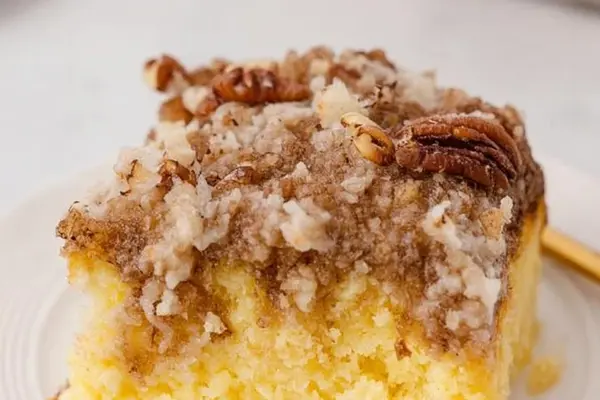
Pineapple Cake with Pecans and Coconut
By Emma
Certified Culinary Professional
·
Recipe tested & approved
Poke the cake. That’s the whole secret right there.
Why You’ll Love This Pineapple Cake
Forty-two minutes and you’re done. Not the fancy kind of baking where you’re nervous the whole time. Tastes like you spent an actual day on it. Nobody needs to know it started with a box. The topping gets this nutty, caramel thing going on—coconut and pecans doing most of the work. Pecans aren’t required but they’re why people ask for the recipe. Cold is fine. Warm is better. Room temperature is fine too, honestly. Feeds a crowd or sits in your fridge for days. Works both ways.
What You Need for Pineapple Cake
Yellow cake mix. That’s the base. One box.
Three eggs. Large. Room temperature doesn’t matter for this one, but it doesn’t hurt.
Half a cup of vegetable oil. Not butter. Oil keeps it moist in a way butter doesn’t. Olive oil works if that’s all you have. Tastes a little weird but not bad weird.
One cup crushed pineapple with the juice still in it. The juice matters—that’s what makes the cake actually taste like pineapple and not just look it. Canned mandarin oranges do the same job. Different flavor, same structure.
Three more egg yolks for the topping. Save the whites or don’t. They just sit in your fridge.
Three-quarters cup sugar. Granulated.
Three tablespoons butter for the topping. Different from the oil. This one matters.
Vanilla extract. A teaspoon.
Half a cup pecans, chopped. Toast them first if you feel like it. Makes them taste like pecans. Un-toasted still works.
Half a cup coconut flakes. Sweetened. Not the unsweetened stuff—too dry.
Tablespoon of butter for the pan.
How to Make Pineapple Cake
Set the oven to 350 degrees. Let it heat while you do everything else.
Grease a 9x13 pan with that butter. Get into the corners. Cake sticks if you don’t. It’s not a gentle situation.
In a big bowl, whisk the cake mix, eggs, oil, and three-quarters cup evaporated milk. Use a mixer if you have one, don’t if you don’t—hand whisking takes longer but works. Mix for about two minutes. Batter should be smooth and light but not beaten to death. Air helps, overmixing kills it.
Pour in the pineapple with all its juice. Stir until it just combines. Stop there. Overmixing makes the cake tough and weird. The pineapple doesn’t need to be perfectly spread—it’ll settle as it bakes.
Pour the batter into the pan evenly. Bake for 38 to 42 minutes. Every oven runs different. Check at 38. Toothpick goes in, comes out mostly clean, maybe a few crumbs. Edges pull back from the pan slightly. Top bounces back when you touch it gently. Not dry. Not wet.
How to Get the Topping Right on Pineapple Cake
While the cake bakes, make the topping. Medium saucepan, heat it up—not screaming hot, just warm enough to start melting butter.
Whisk the egg yolks and the remaining quarter cup evaporated milk. Whisk hard. No lumps. Add the sugar and butter. Let the butter melt completely before you let this bubble.
Once it boils—and it will, watch it—turn the heat down to a simmer. Stir constantly. This is five, maybe six minutes. Mixture thickens. Turns this golden deep amber color. Coats the back of a spoon with a shiny layer. Burnt sugar smells like nothing else and tastes like regret. Don’t let it get there.
Pull it off heat. Throw in the pecans and coconut. Mix once or twice. That’s it.
Take the cake out of the oven. Let it cool for maybe three minutes—still hot but not screaming. Use a wooden spoon handle to poke it all over. Not stabbing. Poking. Just breaking through the top crust so the topping can soak down.
Spread the topping on. Do it gently but actually cover the whole thing. Warm cake absorbs it. Cold cake won’t. That’s why timing matters here.
Let it cool at least 20 minutes before you cut it. Room temperature is fine. Don’t throw it in the fridge right after—topping seizes up, loses the gooey texture. Fresh is when it’s actually good.
Pineapple Cake Tips and Common Mistakes
Crushed pineapple with juice in it. Not drained. The juice is where the flavor lives and also where the moisture for the cake comes from.
Don’t skip the poking step. Cake without it stays dry on top, wet on bottom. Poke it evenly. Thirty seconds of work that changes everything.
Topping burns if you’re not paying attention. Keep the heat low. Stir constantly. It doesn’t need to boil hard—just bubble gently.
Eggs in the topping need to be whisked with the milk before you add the sugar. Prevents lumps. Lumpy topping is worse than burnt topping.
Cake reheats fine. Topping texture changes when you reheat it—gets softer, loses that little bit of crunch. Eat it fresh if you can.
Pecans are optional but they’re there for a reason. Nutty flavor cuts the sweetness. Coconut alone is fine. Pecans and coconut together is better.
Pineapple Cake with Pecans and Coconut
Prep:
15 min
Cook:
42 min
Total:
1h
Servings:
12 servings
Ingredients
- 1 box yellow cake mix
- 3 large eggs
- ½ cup vegetable oil
- 1 cup evaporated milk, divided
- 1 cup crushed pineapple with juice (substitute canned mandarin oranges for twist)
- 1 tablespoon butter (for greasing)
- 3 large egg yolks
- ¾ cup granulated sugar
- 3 tablespoons butter
- 1 teaspoon vanilla extract
- ½ cup chopped pecans (toasted optional)
- ½ cup sweetened shredded coconut flakes
Method
- Cake
- 1 Oven at 350 degrees Fahrenheit, grease 9x13 pan thoroughly with butter, set aside. Greasing crucial; stickiness kills cake vibes.
- 2 In a large bowl, whisk cake mix, eggs, oil, and ¾ cup evaporated milk on medium speed. About 2 minutes till batter smooth, light but not overbeaten — air is friend here. Don't rush mixing the crushed pineapple next, juice and all. Stir in until just combined; overmixing ruins texture, makes cake tough.
- 3 Pour batter evenly in the pan. Bake 38-42 minutes. Toothpick test mandatory. Cake edges pull back slightly, top bounces back and golden but not dry. Oven quirks matter; watch the cake, not just clock.
- Topping
- 4 Heat medium saucepan, whisk egg yolks and remaining ¼ cup evaporated milk vigorously—no lumps. Add sugar, butter, vanilla. Melt butter fully before mixture bubbles.
- 5 Once boils, reduce heat to simmer and stir constantly. Five, maybe six minutes until thickened, a golden deep amber, coat back of spoon shiny layer. Patience essential here—burnt sugar smells doom and bitterness. Add pecans and coconut off heat; mix to keep texture.
- 6 Right out of oven, poke cake top evenly with a wooden spoon handle. Don’t stab too deep — aim just to pierce crust, let topping soak bottom layers.
- 7 Spread topping gently but thoroughly. Warm cake absorbs it better, sticky promises of texture. Cool at least 20 minutes before slicing. Cool too fast in fridge, topping seizes, lose gooey magic.
- 8 Enjoy with strong coffee or late night fix. Cake reheats okay but topping texture softens; consume fresh for crunch contrast.
Nutritional information
Calories
560
Protein
6g
Carbs
65g
Fat
31g
Frequently Asked Questions About Pineapple Cake
Can I use fresh pineapple instead of canned? Canned works better. Fresh pineapple is watery in a different way and doesn’t have as much juice to soak into the cake. If you’re using fresh, drain it but save the juice and pour it in anyway.
What if I don’t have evaporated milk? Regular milk works. Use a little less—evaporated milk is thicker, so regular milk substitutes at maybe three-quarters the amount. Cake gets wetter but still fine.
How long does it keep? Three days in a container at room temperature. Longer in the fridge, loses its texture. Freezes okay for a month—topping gets grainy when it thaws but tastes the same.
Can I make the topping ahead? Not really. It thickens as it cools and seizes if you refrigerate it. Make it while the cake is baking. Timing is the whole thing.
Should I use mandarin oranges instead of pineapple? Yeah. Completely different cake but it works. Mandarin is lighter, less assertive. Same amount. Drain it, but save the juice and use it like you would pineapple juice.
Why does mine come out dry? Either the cake baked too long or you’re not poking it enough. Both things happen. Lower your oven temp five degrees next time and check early. Poke the whole top, not just a few spots.
Can I skip the pecans? Yes. Coconut alone is fine. Pecans add something but they’re not structural—it’s still cake without them.
You’ll Love These Too
Explore all →
How Do You Make An Omelet with Shrimp

Oven-Baked Cornstarch Omelette with Eggs
Molten Chocolate Lava Cake with Espresso
Kentucky Butter Cake Recipe with Rum Glaze
BLT Salad with Pasta and Shrimp

Saffron Rice with Shrimp and Smoked Sausage
Herbed Ranch Salt Mix with Smoked Paprika
Pork Chops With Pears: Honey Maple Glazed
Latkes Recipe: Crispy Potato Pancakes

Tim Hortons Apple Cinnamon Tea Recipe
Dark Chocolate Chip Muffins with Sour Cream
Recipe for Making Fudge with Eggnog
Pineapple Fried Rice with Crispy Bacon
Corned Beef and Cabbage Soup Recipe
Slow Cooker Turkey Breast with Herb Butter
Mango Coconut Shaved Ice with Tapioca

Roasted Potato Salad with Bacon & Cheddar
Raspberry Cheesecake Cookies with Milk Chocolate
Butter Sauce with White Wine and Lime