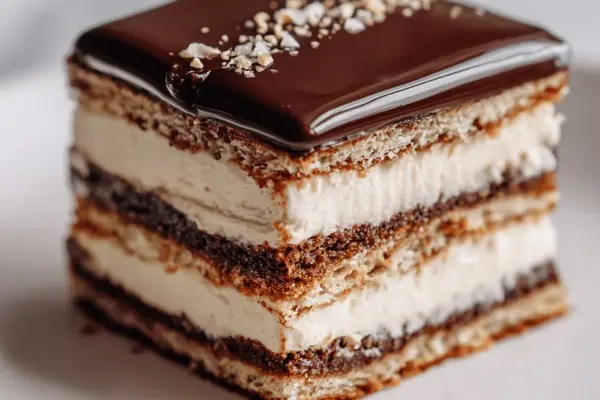
Opera Cake with Hazelnut and Espresso
By Emma
Certified Culinary Professional
·
Recipe tested & approved
Layered opera cake with ground hazelnuts, espresso buttercream, and dark chocolate ganache. This elegant dessert features almond sponge soaked in espresso syrup and stacked with three flavored buttercreams for sophisticated flavor.
Prep:
1h 15min
Cook:
15 min
Total:
1h 30min
Servings:
10 servings
Cut the sponge. Soak it. Layer three buttercreams—chocolate, coffee, vanilla—and watch it transform into something that looks nothing like how it started. This is opera cake redux. 1 hour 15 minutes of prep, 15 minutes in the oven, then assembly that actually isn’t as fussy as it sounds once you understand the pieces.
Why You’ll Love This Opera Cake
Takes 1 hour 30 minutes total and tastes like you spent all day on it. People assume it’s impossible. They’re wrong.
The sponge is hazelnut-almond, so it’s not just a sugar delivery system—it actually has something going on. Doesn’t crumble when you soak it either. That matters.
Three buttercreams stacked in one cake. Chocolate, espresso, vanilla. Each layer tastes different. You could eat this thing three times and catch something new.
Ganache on top. Dark, shiny, that specific snap when you bite through it. Looks fancy. Isn’t complicated.
Works cold. Tastes better the next day. Freezes fine. Slice it the night before if you’re doing an event—easier than fresh.
What You Need for an Opera Cake with Espresso Buttercream
Flour. Not cake flour. All-purpose, unbleached. Ground hazelnuts—finely ground, not hazelnut butter. Baking powder. Salt. Cream of tartar if you have it. Lemon juice works if you don’t.
Eggs. Three egg whites and two whole eggs, room temperature. Temperature matters here. Cold eggs won’t whip right. Sugar. Vanilla. Melted butter that’s still warm but not hot.
For the buttercream: egg yolks. Water. More sugar. Honey. Butter at room temp—this is non-negotiable. Instant espresso powder. Hot water. Dark chocolate, melted and tempered. Vanilla again.
Soaking syrup is just strong espresso and sugar. Hot. Decaf works fine if you’re not sleeping.
Ganache: bittersweet chocolate, chopped fine. Heavy cream, 35% fat. That’s it.
How to Make an Opera Cake with Almond Sponge
Oven to 175 Celsius. Middle rack. Line a 43 by 30 centimeter tray with parchment—let it hang off two sides so you can lift the whole thing out when it’s done. Butter the pan. Dust with flour. Pat off the excess.
Whisk flour, ground hazelnuts, baking powder, salt together. Set it aside.
Egg whites go in a bowl. Cream of tartar with them. Whip until soft peaks form—you’ll see peaks that kind of droop back on themselves. Then add half the sugar, gradually. Keep whipping. You want firm peaks now, but not dry. They should still look glossy. Not chalky. The difference is small. Pay attention.
Other bowl. Whole eggs. Remaining sugar. Vanilla. Whip this on high speed. It takes 9 to 11 minutes. It’ll go from pale to very pale. The volume triples. When you lift the whisk, batter drips back in ribbons, not splatters. That’s when you stop.
Fold the dry mix into the eggs gently. Spatula, not a whisk. You’re trying not to deflate what you just whipped into existence. Then the warm melted butter goes in as a drizzle, folded in carefully. Last: fold in the meringue in two parts. This is where people panic. Don’t. It’ll look streaky, then you fold again, and it comes together. Stop when you don’t see white streaks anymore. The batter should be light. Should pour.
Spread it on the tray with an offset spatula. Thickness should be roughly uniform. About 1 centimeter. Into the oven for 11 to 13 minutes. The surface dries. Turns golden. Edges pull slightly from the pan but the center’s still tender when you poke it. Cool on a rack. Fully. Don’t rush.
How to Get Layered Chocolate Almond Cake Perfect with Buttercream
The buttercream is where people mess up.
Egg yolks in a large bowl. Water, sugar, honey in a saucepan. Boil. Watch a candy thermometer—you want 105 to 107 Celsius. If you don’t have one, the syrup thickens. Bubbles form steadily. That’s roughly right. Takes about 3 to 4 minutes. Don’t walk away. It goes fast after a point.
Beat the yolks on medium until frothy. Then stream the hot syrup into them slowly. Avoid the whisk blades or it splatters everywhere and you’ve got little bits of cooked egg. Stream it. Keep beating on high. This stage takes 12 to 15 minutes. The mixture goes pale. Gets cool to touch. If your kitchen’s cold, maybe 10 minutes.
Butter goes in next. Chunks. Beat between additions. It should emulsify into something fluffy and smooth, not greasy or curdled. If it curdles—gets grainy, separates—chill it briefly and whip again. Sometimes that fixes it.
Now divide the buttercream three ways. One third stays vanilla—add vanilla extract, that’s it. One third gets melted dark chocolate folded in. Last third: dissolve instant espresso powder in hot water, cool it slightly, fold it in. Taste each one. Adjust. More sugar if it’s too bitter. More coffee if it’s not bitter enough.
Soaking syrup: hot espresso and sugar, mixed until the sugar dissolves. Cool it a bit before you use it. You can use decaf. Strong chicory works too. Adjust the sugar based on how acidic your coffee is.
Ganache is simple. Chopped bittersweet chocolate. Pour boiling cream over it. Stir until it’s smooth and glossy. Cool to room temperature but don’t let it set hard—you want it spreadable.
Opera Cake with Ganache: Assembly and Tips
Lift the sponge using those parchment edges. Trim it into a neat rectangle. 30 by 13 centimeters. Cut it into three equal strips.
First strip on your serving plate. Brush it liberally with soaking syrup. This sponge is absorbent. Let it soak. Don’t fear it. Just don’t turn it into soup. Spread chocolate buttercream evenly. Second strip on top. Soak it. Spread coffee buttercream. Third strip. Soak. Spread vanilla buttercream on the top and smooth it with an offset spatula.
Refrigerate for at least 25 to 30 minutes. The layers need to set. They’ll hold better when you move the cake, when you slice it.
Optional: trim the edges now for clean lines. Makes it look professional. Doesn’t change how it tastes.
Ganache goes on last. Pour it over the top. Smooth it with a spatula. You want a sheen, not a thick coat. Chill again until the ganache firms up. This usually takes 15 to 20 minutes in a normal fridge.
Slice with a hot knife. Wipe the blade between cuts. Warm knife glides through the layers without dragging crumbs into the chocolate. Makes a difference.
Pro tip: make this the day before if you’re serving it at an event. It holds up better. Flavors come together overnight. Hazelnut flavors the almond sponge cake more when it’s sat for a bit.
If you swapped almond flour in instead of hazelnuts, that works. Lightly toast it first if you do. Changes the whole flavor profile but in a good way. Different, not worse.
Buttercream too soft? Chill it briefly. Whip it again. Sometimes that fixes the texture. If you forgot cream of tartar for the egg whites, use a pinch of lemon juice or vinegar instead. Stabilizes them fine.
Ganache temperature matters. Too hot and it melts the buttercream layers underneath. Too cool and it won’t spread smoothly. Room temperature is the sweet spot.
Opera Cake with Hazelnut and Espresso
Prep:
1h 15min
Cook:
15 min
Total:
1h 30min
Servings:
10 servings
Ingredients
- 170 ml unbleached all-purpose flour
- 110 ml finely ground hazelnuts
- 3 ml baking powder
- 1 pinch salt
- 3 egg whites, room temp
- 1 pinch cream of tartar
- 150 ml sugar
- 2 whole eggs
- 3 ml vanilla extract
- 12 ml melted unsalted butter, warm
- Buttercream
- 2 egg yolks
- 70 ml water
- 110 ml sugar
- 10 ml honey
- 230 ml unsalted butter, room temp
- 3 ml instant espresso powder
- 7 ml hot water
- 20 g melted tempered dark chocolate
- 3 ml vanilla extract
- Soaking syrup
- 110 ml strong espresso or decaf, hot
- 25 ml sugar
- Ganache
- 50 g bittersweet chocolate, chopped
- 25 ml 35% cream, boiling
Method
- Sponge
- 1 Oven rack centered. Preheat to 175 C. Line a 43 x 30 cm baking tray with parchment leaving two sides overhang for lifting. Butter and dust lightly with flour.
- 2 Whisk together flour, ground hazelnuts, baking powder, salt. Set aside.
- 3 Whip egg whites with cream of tartar until soft peaks form. Gradually add half sugar, beat to firm peaks but not dry. Check texture; should cling but still glossy.
- 4 In separate bowl, beat whole eggs, remaining sugar & vanilla on high until pale, triples volume and ribbons drip slowly from whisk (about 9-11 mins).
- 5 Fold dry mix gently into eggs with spatula - don't deflate too much. Add melted butter in drizzle, fold carefully till just combined. Then fold in meringue in two increments. The batter should be airy, but no streaks.
- 6 Spread batter evenly on tray with offset spatula. Thickness roughly uniform, about 1 cm. Bake 11-13 mins. Surface dry and golden, edges pulling slightly from pan but still tender when poked. Cool fully on rack.
- Buttercream
- 7 Separate yolks in large bowl; reserve.
- 8 Combine water, sugar, honey in saucepan. Boil till sugar syrup reaches 105-107 C on candy thermometer or when small bubbles form steadily in thickened syrup (about 3-4 mins).
- 9 Beat yolks on medium speed until frothy. Stream hot syrup slowly into yolks, avoiding whisk blades to prevent splattering. Whip on high 12-15 mins till pale and cool to touch. (Less time if cooler kitchen.)
- 10 Incorporate butter in chunks slowly, beating between additions. Should emulsify into fluffy texture, not greasy. Troubleshoot: if curdled, chill and whip again.
- 11 Divide buttercream equally: flavor one with vanilla extract, one with melted chocolate, one with dissolved espresso (instant coffee + water). Taste each; adjust bitterness or sweetness with small sugar or coffee additions.
- Soaking syrup
- 12 Mix hot espresso and sugar until sugar dissolves. Cool slightly before use. Can substitute decaf or strong chicory brew. Adjust sugar for acidity and bitterness of your coffee.
- Ganache
- 13 Combine chopped bittersweet chocolate and boiling cream; stir till smooth and glossy. Cool to room temp but not set, spreadable consistency.
- Assembly
- 14 Using the parchment edges, lift cake sheet and trim edges for neat 30 x 13 cm strips. Cut into three equal bands.
- 15 Place first strip on serving plate. Brush liberally with soaking syrup, absorbent sponge will take a good soaking but avoid soggy. Spread chocolate buttercream evenly. Layer second strip, soak, spread coffee buttercream. Top with third strip, soak, then vanilla buttercream, smoothing surface with offset spatula.
- 16 Refrigerate at least 25-30 mins to set layers firmly. Optional: trim edges for clean lines.
- 17 Finish by pouring tempered ganache over top, smoothing with spatula for sheen. Chill again until ganache firms up.
- 18 Slice with a hot knife between cuts, wiping blade to avoid crumb drag.
- Tips & Notes
- 19 Moisture control critical; if buttercream too soft, chill briefly then rewhip. Swapping almond flour for hazelnut changes flavor and texture; works well if lightly toasted beforehand.
- 20 Use instant espresso powder plus hot water rather than ready espresso to intensify coffee notes.
- 21 If no candy thermometer, watch syrup closely: too short means weak meringue, too long makes brittle meringue and grainy buttercream.
- 22 Frozen cake slices defrosted in fridge maintain structure better than fresh-cut for events.
- 23 Skipping cream of tartar? Lemon juice or vinegar pinch will stabilize whites.
- 24 Ganache temp: too hot melts buttercream; too cool won't spread smoothly.
Nutritional information
Calories
480
Protein
8g
Carbs
40g
Fat
35g
Frequently Asked Questions About Opera Cake with Espresso Buttercream
Do I really need a candy thermometer for the buttercream syrup? Not totally necessary. Watch the syrup closely. It should thicken noticeably and form steady bubbles. Takes about 3 to 4 minutes. Too short and your buttercream stays grainy. Too long and it gets brittle. A thermometer removes the guesswork.
Can I make this the day before? Yeah. Actually tastes better the next day. The sponge absorbs more flavor. The layers set firmer. Slice it cold if you’re transporting it somewhere.
What if my buttercream curdles? Chill it for 10 minutes. Whip it again on high speed. Usually comes back together. If it’s really gone, start over with new butter—can’t fix everything.
Should I use instant espresso powder or brewed espresso? Instant espresso powder dissolved in hot water. Tastes stronger than brewed. That’s the point. If you just use brewed espresso, the coffee flavor gets lost in the layers.
How much soaking syrup should I actually use? Brush it on liberally but don’t turn the sponge into soup. The hazelnut almond cake absorbs it fast. You want it moist, not soggy. If you oversoak one layer, the cake gets mushy when you stack it.
Can I substitute almond flour for the ground hazelnuts? Works fine. Toast it lightly first if you want it to taste like something. Hazelnuts are nutty and warm. Almonds are milder. Either way, grind them finely—don’t use almond butter by accident.
What if I don’t have 35% cream for the ganache? You need something with decent fat content or the ganache won’t set right. Heavy cream at 35% or higher. Don’t use light cream. It won’t work.
You’ll Love These Too
Explore all →
Orange Mousse with Dark Chocolate
No-Bake Strawberry Cream Pie Recipe

Hamburger Beef Pasta with Ginger & Lime
Yellow Cake Recipe with Buttermilk

Oven Roasted Corn with Fresh Basil
Creamy Yukon Gold Mashed Potatoes
Brown Butter Layer Cake with Coffee Mousse
Chocolate Brownies with Espresso and Mini Chips

Cherry Tomatoes Recipe with Maple Glaze

Red Potato Mash with Sweet Italian Sausages
Veal Marsala Sauce with Spinach

Roasted Carrots Lentil Couscous with Halloumi

Pasta Salad With Shrimp and Lemon
White Chocolate Brownies with Cream Cheese

Lamb's Lettuce Salad with Lemon Vinaigrette
Gruyère Morel Fondue with Pinot Gris

Cosmopolitan The Drink Recipe

Hot Toddies with Bourbon & Vanilla Honey

Slow Cooker Chili with Ground Turkey