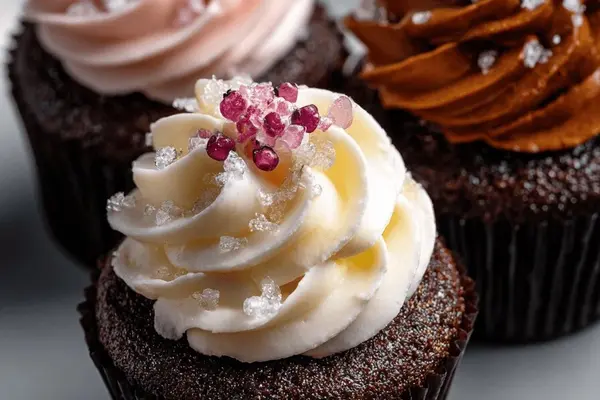
Mini Chocolate Surprise Cupcakes Recipe
By Emma
Certified Culinary Professional
·
Recipe tested & approved
Cut a small hole in the center. Pipe the surprise filling inside. Watch someone bite into chocolate and find something they weren’t expecting. That’s the whole point. Takes 55 minutes of actual work—25 of that is just waiting for batter to chill—then 20 minutes in the oven and you’re done.
Why You’ll Love These Mini Chocolate Surprise Cupcakes
One bite and there’s this pocket of buttercream they didn’t see coming. Texture shifts. Surprise happens.
The batter uses coconut oil with butter so it’s not heavy. Espresso powder sits in there (optional, but don’t skip it) and deepens the chocolate without tasting like coffee. Just makes it taste more like itself.
Small batch thing. 28 cupcakes. Manageable. You’re not spending all day on this. And the filling—you inject it so it stays hidden until the moment someone bites.
Homemade matters here because store stuff tastes like it was made three weeks ago and shipped in a box. These don’t. Eat them the next day and the flavors actually merge.
Maple sugar. Not regular sugar. Different thing. The crumb stays moist longer and has this subtle depth that sneaks up on you.
What You Need for Homemade Chocolate Cupcakes
Unbleached all-purpose flour, quarter teaspoon salt, half teaspoon baking soda. Milk—regular milk, room temperature before you use it. Cocoa powder (sifted, matters for lumps) and melted coconut oil and unsalted butter. Two large eggs. Maple sugar. Dried currants (these go in the batter, not a topping). Instant espresso powder if you want it. The espresso is optional but it shouldn’t be.
For the Swiss meringue buttercream part: sugar, two egg whites, unsalted butter at room temperature, vanilla extract, orange zest finely grated. Beet juice for red color if you want the filling to look dramatic. Spirulina if you’re doing a green thing. Both optional. Salt flakes for the top.
How to Make Mini Chocolate Surprise Cupcakes
Sift the flour with baking soda and salt into a bowl. Set it aside. Warm the milk in a small pot—just warm, not boiling. Whisk the cocoa powder into the warm milk until there are zero lumps. Add the melted coconut oil and butter, stir until it all blends smooth. This part matters. If the milk gets too hot the butter scalds and you get graininess. Keep the temperature low. Stir in the espresso powder if using. Let it cool to lukewarm.
Beat the eggs and maple sugar together with an electric mixer until it’s light and fluffy. Four minutes or so. The sugar has to dissolve completely or you get gritty cupcakes and nobody wants that. At slow speed, add the cocoa mixture in thin streams and alternate with the dry ingredients. Don’t overthink this. Fold gently but thoroughly. Fold in the currants quick—you want them whole, not bleeding color into the batter.
Cover the batter and chill it for 25 minutes. This isn’t optional. The cold tightens the crumb and stops the cupcakes from doming too high and cracking in the oven.
Line your muffin trays with 60 ml paper cups. Twenty-eight slots total. Preheat the oven to 175°C (350°F) and put the rack in the middle. Ladle 30 ml of batter into each cup—about two tablespoons. Don’t overfill or the tops get runny. Bake for 18 to 20 minutes. Watch after 15 minutes. The domes rise. When the edges pull slightly away from the sides and a toothpick picks up crumbs, they’re done. Pull them out too early and they’re gummy. Too late and they’re dry. Cool them completely on a wire rack before you touch them.
How to Get the Filling Right in Your Chocolate Cupcakes
Make the Swiss meringue buttercream in a clean metal or glass bowl over simmering water (bain-marie). Whisk the sugar and egg whites constantly. Don’t let it go above 60°C—that’s thickening and pasteurizing without scrambling. Heat until the sugar dissolves completely. Test it between your fingers. No graininess. Remove the bowl from heat. Switch to an electric mixer and whip the whites into stiff, glossy peaks. Takes 12 to 15 minutes. The meringue needs to be cool before you add the butter or the butter melts and everything separates.
Add the butter a few cubes at a time. Mix thoroughly after each addition. It’s going to look broken and grainy at first. Panic is normal. Don’t panic. Keep beating on medium-high until it turns creamy and smooth. Ribbons form. No fat streaks left. Split off 180 ml of the buttercream and stir in the beet juice for red. Leave the rest plain and stir in the vanilla and orange zest. Cover both until you use them so they don’t dry out.
Use a small paring knife to cut a shallow cross at the center of each cupcake. About 1.5 cm wide. Deep enough to go through the crumb but not so deep you crack the outside. Pipe the red-tinted buttercream into the hole with a narrow round tip. Five ml per cupcake. Just enough. The filling needs to be firm enough to pipe but still soft. Not runny. Top each one with the vanilla buttercream using a larger round or star tip. Swirls or dollops. Sprinkle flaky sea salt on top. It gives texture and amplifies the chocolate.
Small Batch Chocolate Cupcakes Tips and Mistakes
Don’t overmix the dry ingredients once they’re in or the batter gets tough. Beat the eggs and maple sugar until it’s actually fluffy. Flat cupcakes happen when you skip this. Coconut oil can solidify at room temperature and make the batter lumpy. Rewarm it gently but don’t cook it. Use a thermometer in the meringue if you want precision but watching for graininess works just fine. Tactile testing is reliable.
If the buttercream separates, chill the bowl for a minute and remix. For the currants, soak them in hot rum or coffee briefly if they’re too dry. Plumps them up. Frozen currants work but pat them dry first. Keep the buttercream at room temperature when piping. Too cold and it won’t come out. Too warm and it melts.
To test doneness beyond a timer, watch the color shift from shiny to matte. Edges pull away slightly. Press the top gently—if it springs back, it’s done. No toothpick available? Same test works. Bake a small tester cupcake alone before the whole tray so you know what to watch for.
These hold in an airtight container for up to three days. Flavors meld. The surprise filling actually stands out more the next day. Store them somewhere cool but not the fridge or the buttercream hardens too much. Take them out 15 to 20 minutes before serving if they were cold.
Swap maple sugar for coconut sugar if you don’t want the maple flavor. Expect a darker crumb. Orange zest is subtle but swap it for lemon if that’s your thing. Most cupcake recipes are flexible. This one mostly is too.
Mini Chocolate Surprise Cupcakes Recipe
Prep:
55 min
Cook:
20 min
Total:
1h 15min
Servings:
28 cupcakes
Ingredients
- 180 ml (¾ cup) all-purpose flour, unbleached
- 2 ml (½ tsp) baking soda
- 1 ml (¼ tsp) salt
- 180 ml (¾ cup) milk
- 120 ml (½ cup) unsweetened cocoa powder, sifted
- 60 ml (¼ cup) melted coconut oil
- 60 ml (¼ cup) unsalted butter
- 50 g (1¾ oz) dried currants
- 2 large eggs
- 200 ml (¾ cup plus 1 tbsp) maple sugar
- 1 tsp instant espresso powder, optional
- Swiss Meringue Buttercream
- 250 ml (1 cup) sugar
- 2 egg whites
- 375 ml (1½ cups) unsalted butter, room temperature
- 3 drops natural beet juice (red color), about
- 3 drops spirulina powder mixed in water (greenish tint), about
- 5 ml (1 tsp) pure vanilla extract
- 5 ml (1 tsp) orange zest, finely grated
Method
- Cupcake Batter
- 1 Sift flour, baking soda, salt together into bowl. Set aside. In a small pot, warm milk but don’t boil. Whisk cocoa powder into milk till smooth with no lumps. Add melted coconut oil and butter, stir till fully blended. The butter should melt in but not scald milk; keep temperature low to avoid graininess. Stir in espresso powder if using. Let cool until lukewarm. Meanwhile, beat eggs and maple sugar with electric mixer until light, fluffy, about 4 minutes; sugar must dissolve to avoid gritty crumbs. At slow speed, alternate adding cocoa mixture in thin streams and dry ingredients. Fold gently but thoroughly. Fold in currants quickly so they stay whole and don’t bleed. Cover batter and chill for 25 minutes—this step tightens crumb and prevents cupcakes from doming too high and cracking in oven.
- 2 Arrange oven rack middle level. Preheat oven to 175°C (350°F). Line muffin trays (28 slots) with 60 ml paper cups. Ladle 30 ml batter in each cup, about two tablespoons. Best not to overfill to avoid runny tops. Bake 18-20 minutes. After 15 minutes, watch domes rise. When edges pull slightly away from cups and a tester tooth picks crumbs, the cupcakes are done. Pulling out too early or too late yields gummy or dry results. Cool on wire rack completely before filling.
- Swiss Meringue Buttercream
- 3 In a clean metal or glass bowl over simmering water (bain-marie), whisk sugar and egg whites constantly. Don't let mixture go above 60°C—for thickening and pasteurization without scrambling whites. Heat until all sugar granules dissolve; test between fingers, no graininess. Remove bowl. Switch to electric mixer, whip whites into stiff, glossy peaks, about 12-15 minutes. The meringue should be cool before butter addition, else butter melts and cream separates.
- 4 Add butter cubes gradually; mix thoroughly after each addition. Texture will look broken, grainy—don’t panic. Keep beating on medium-high till creamy and smooth, ribbons form and no fat streaks remain. Separate 180 ml of buttercream, stir in beet juice for red shade; leave rest plain and stir in vanilla and orange zest for subtle taste lift. Keep both covered until use to prevent drying.
- Filling and Assembly
- 5 Use small paring knife to cut a shallow cross at cupcake center, about 1.5 cm wide, just deep enough to pierce crumb without cracking outside. With a piping bag fitted with a narrow round tip (approx 0.5 cm), inject about 5 ml red-tinted buttercream into each hole smoothly. Filling needs to be firm but soft to pipe, not runny. Top cupcakes by piping vanilla buttercream with a larger round or star tip, in swirls or dollops. Sprinkle a few flakes of flaky sea salt on top for texture contrast and to amplify chocolate notes.
- 6 Store cupcakes in cool place but not refrigerator to avoid buttercream hardening too firm. If fridge needed, take out 15-20 minutes before serving for optimal texture.
- Troubleshooting & Tips
- 7 If buttercream separates, chill bowl briefly and remix. For currants, soak in hot rum or coffee briefly to plump if dry. Coconut oil can solidify at room temp making batter lumpy; gently rewarm but don’t cook. To test doneness beyond timer, watch color shift to matte and edges pulling. No toothpick? Gently press top for bounce—springs back is done.
- 8 Experiment with swapping maple sugar for coconut sugar if maple flavor undesirable; expect darker crumb. Orange zest is a subtle lift, but can swap with lemon if preferred. Frozen currants can work but pat dry before mixing.
- 9 Always beat eggs and sugar till fluff to avoid flat cupcakes. Overmix dry ingredients and batter will be tough.
- 10 Use thermometers if you want precision in meringue stage but watch for graininess; tactile testing is reliable. For piping, keep buttercream at room temp, too cold won’t pipe easily, too warm melts.
- 11 These cupcakes hold well for up to 3 days in airtight container. Flavors meld, filling surprise stands out. A small batch tester cupcake baked alone helps for visual cues before baking entire tray.
Nutritional information
Calories
230
Protein
3g
Carbs
22g
Fat
15g
Frequently Asked Questions About Homemade Chocolate Cupcakes
Can I skip the espresso powder? You can. It’s optional. But it changes the flavor. The chocolate tastes thinner without it. Just tastes like cocoa instead of something deeper.
Why does the batter need to chill for 25 minutes? Tightens the crumb. Keeps them from doming too high and cracking. The first time I skipped it they dome’d so much they split. Never again.
What if my buttercream separates? Chill the bowl briefly and remix. Happens when the meringue was too warm when you added the butter. Or you added the butter too fast. Just beat it longer.
How long do these keep? Three days in an airtight container. Fourth day they’re still fine but drier. Better on day two actually.
Can I make these ahead and freeze them? Yeah. Freeze the unbaked batter in the cupcake liners. Or bake them, cool completely, wrap them tight, and freeze the cakes. Thaw at room temperature. The filling goes in after thawing. Don’t freeze the assembled cupcakes or the buttercream texture gets weird.
Can I use regular sugar instead of maple sugar? You can but it’s different. Regular sugar makes them drier. Maple sugar keeps moisture better. Not worth switching.
What’s the deal with the beet juice and spirulina? Colors for the filling. Totally optional. Just makes it look like there’s something inside before they bite. Red is dramatic. You can skip both if you want plain buttercream filling.
Why coconut oil and butter instead of just one? Coconut oil keeps it lighter. Butter adds richness. Together they balance. Butter alone is heavier. Just coconut oil and you lose the depth.
You’ll Love These Too
Explore all →
Roaster Chicken with Ground Turkey Stuffing
Apple Pie Recipes: Fresh Apples & Cinnamon
Air Fryer Grilled Cheese with Mayo
Creamy Steel-Cut Oats with Pear & Honey
Gluten-Free Tuna Fritters with Corn Masa
Chocolate Popsicles with Pudding Mix
Glazed Pork Filets with Apricot Jam
Easy Brownie Recipe with Spice Cake Mix
Bacon Wrapped Corn On The Cob Recipe
Slow Cooker Chocolate Brownies with Hazelnuts
Lamb Dishes Middle Eastern: Crispy Kibbeh
Air Fryer Quiche with Bacon and Kale
Beef Pasta with Chipotle, Corn & Cheddar
Chocolate Chip Cookie Recipe with Cake Mix
Apple Upside Down Cake with Brown Butter
Homemade Peanut Butter Cups Recipe
Crunchy Apple Fritters with Cinnamon
Dark Chocolate Sea Salt Tart Recipe
Instant Pot Halloween Deviled Eggs with Avocado