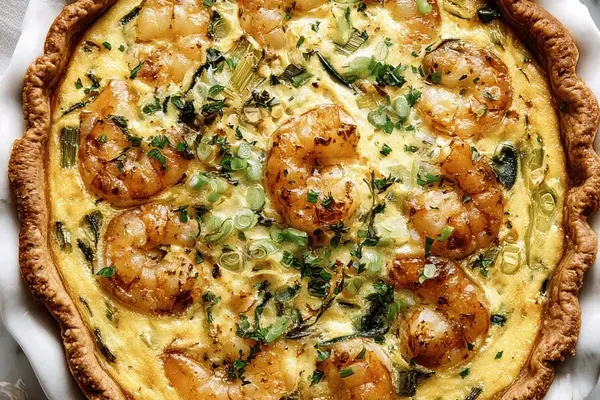
Shrimp Quiche with Leeks and Tarragon
By Emma
Certified Culinary Professional
·
Recipe tested & approved
Heat the oil. Shrimp goes in — garlic, tarragon, barely a minute until they curl. Don’t overcook them now; they finish in the oven. Had a batch turn rubbery once. That was the lesson. Cold dough matters more than you’d think. It shrinks less, holds its shape when the filling hits it. Forty minutes to chill, twenty-five more after you roll it out. Worth it.
Why You’ll Love This Shrimp Quiche
Seafood without the fuss. Shrimp cooks twice — first in the pan, then gently in the custard, so it stays tender and doesn’t turn into rubber.
The crust is actual pâte brisée. Takes time. Tastes completely different from store-bought — flaky, buttery, the kind of thing that makes people ask what you did.
Leeks get soft and barely brown. Not caramelized. Just gentle. They’re the backbone here, soft against the eggs and cream.
Tarragon does something weird with seafood. Can’t explain it. Works though — tried basil once, missed it.
Forty minutes hands-on, fifty in the oven. Not a weeknight thing necessarily, but the actual work is light. Most of it’s waiting.
Reheats fine. Wrapped in foil at 160 degrees. Cold doesn’t really work. Tastes better warm, the crust crisps back up a little.
What You Need for Shrimp Leek Quiche
Pâte Brisée: All-purpose flour — 230 ml. Cold unsalted butter, cubed — 60 ml. One large egg. A tablespoon of ice water, maybe a bit more if the dough’s dry. Salt. Just a third of a teaspoon.
For the filling: Four hundred grams of shrimp, cleaned, chopped into half-inch pieces. Three garlic cloves, minced fine. A tablespoon of fresh tarragon, chopped. Avocado oil — 20 ml. Don’t use olive oil for this part; it’s too heavy. Grapeseed works. Light olive works. Avocado’s better.
Four large eggs beaten together with heavy cream — 200 ml total. Two hundred ml of leeks already sautéed — soft, translucent, barely browned. Salt and pepper after you taste it.
How to Make Shrimp Quiche with Fresh Tarragon
Start with the crust because it needs time. Pulse the flour and salt in a food processor until it’s mixed. Drop the cold butter in, cut into cubes, and pulse until it looks like sand. Not flour. Not chunks. Sand. That matters. Add the egg and ice water and pulse a few more seconds until the dough clumps together. Don’t overwork it. Take the ball, wrap it in plastic, put it in the fridge for forty minutes minimum.
When the dough’s rested, flour a counter and roll it thin — about three millimeters. Transfer it to a 24-centimeter tart pan with a removable bottom. Press it into the corners, trim the edges. Take a fork and dock the bottom all over — little holes prevent bubbling. Back in the fridge for at least twenty-five minutes.
Preheat the oven to 185 degrees Celsius with the rack low. The bottom of the crust needs direct heat; that’s how it gets crisp instead of soggy. Line the crust with parchment paper and fill it with pie weights or dried beans — something to hold the sides up while it blind bakes. Twelve to fifteen minutes until it’s pale gold. Remove the weights and give it five more minutes until the edges start to color. If the edges are burning, cover them with foil strips.
How to Get Shrimp Quiche Crispy and Set Perfectly
Get a heavy skillet hot over medium-high heat. Add the avocado oil. When it shimmers, add the shrimp — chopped, not whole — along with the minced garlic and tarragon. Stir. Watch. It takes about ninety seconds, maybe two minutes, until the shrimp curl and turn that pinkish white. That’s the cue. Pull it off heat immediately. Season it now with salt and pepper. Let it cool slightly while you handle the leeks.
The leeks need their own pan. Slow heat, medium setting. They go in with butter or oil — doesn’t matter much — and sit there for eight to ten minutes until they’re soft, translucent, the edges just barely starting to brown. Don’t let them go dark. Bitter tastes bad. Season them lightly. Set them aside.
Whisk four eggs with the heavy cream in a bowl. Pour in the cooled shrimp first — temperature matters, cold shrimp into hot eggs creates pockets of uneven texture. Then the leeks. Stir gently. Taste it now. Season it hard. The custard should taste almost salty on its own because the crust won’t flavor it. Pour it into the blind-baked crust, filling it just below the rim so it doesn’t spill when you close the oven door.
Bake in the lower third of the oven, 185 degrees, forty-five to fifty minutes. The top will blush gold. The center will jiggle slightly — that’s right. The edges will be set. Insert a toothpick near the middle; if it comes out wet, give it more time. If cracks appear across the surface, the oven’s too hot or you’ve gone too far. Pull it out and cool it on a rack for ten to fifteen minutes. The filling firms up, and you can actually slice it without it collapsing into custard soup.
Shrimp Quiche Tips and Common Mistakes
Don’t skip the dough rest. Even if you’re impatient. Even if it seems pointless. It relaxes the gluten, makes the dough easier to work with, stops it from shrinking. Same thing with the second chill after rolling — that second rest is why the crust stays where you put it.
Overcooked shrimp happen fast. Watch them in the pan like a hawk. The second they change color, they’re done. They cook again in the oven, so pull them out early rather than late.
Leeks need patience. Soft is the goal. Light browning on the edges is fine; going dark is bitter and ruins the whole thing. Render them slowly. It takes time.
Cold ingredients matter for the crust. The butter needs to stay cold — cubed, pulled from the fridge cold — so the dough stays flaky. Warm dough is tough dough. It shrinks. Don’t do it.
If the crust shrinks anyway, dock it more next time and chill it longer. A baking stone helps, too — sits in the oven, keeps the temperature steady. Metal tart pans conduct heat too fast. Use ceramic or glass.
The filling can use half-and-half instead of heavy cream if you want it lighter, but the texture changes — more custard-like, less creamy. Whole milk makes it even lighter. Experiment with your own preference.
Substitutions: tarragon swaps with chives or basil. Avocado oil swaps with grapeseed or light olive. Don’t use regular olive oil; it overwhelms everything.
If the bottom stays soggy despite all your effort, your oven temperature might be off. Check with a separate thermometer. Consistent heat matters more than you’d think.
Leftovers reheat well. Wrap in foil, 160 degrees until warm. Not good cold. Not worth serving cold.
Egg wash on the crust edges before blind baking gives you that golden finish. Brush it on lightly — it matters visually, not much else.
Shrimp Quiche with Leeks and Tarragon
Prep:
40 min
Cook:
50 min
Total:
1h 30min
Servings:
6 servings
Ingredients
- PÂTE BRISÉE
- 230 ml (1 cup) all-purpose flour
- 1.5 ml (1/3 tsp) salt
- 60 ml (1/4 cup) cold unsalted butter, cubed
- 1 large egg
- 10 ml (2 tsp) ice water
- FILLING
- 400 g (14 oz) cleaned shrimp, chopped into 1.2 cm (1/2 inch) pieces
- 3 garlic cloves, minced
- 15 ml (1 tbsp) fresh tarragon, finely chopped
- 20 ml (1 1/2 tbsp) avocado oil
- 4 large eggs, lightly beaten
- 200 ml (3/4 cup) heavy cream
- 200 ml (scant 1 cup) sautéed leeks, soft and lightly browned
- Salt and freshly ground black pepper to taste
Method
- PÂTE BRISÉE
- 1 Pulse flour and salt in food processor just to mix. Drop butter cubes in; pulse until mixture resembles coarse sand. Avoid overworking. Add egg and cold water; pulse a few seconds until dough clumps. Form ball quickly, wrap in plastic. Chill minimum 40 minutes so gluten relaxes; smoother dough easier to roll, prevents shrinkage.
- 2 Flour counter, roll out dough to thin round, about 3 mm thick. Gently transfer to 24 cm (9.5 inch) tart pan with removable bottom. Press evenly, trim edges neat. Dock bottom with fork to prevent bubbling. Chill again at least 25 minutes. Cold pastry shrinks less, holds shape better under wet filling.
- 3 Preheat oven to 185 °C (365 °F) with rack low; crust wants bottom heat crispness. Line crust with parchment, fill with pie weights or dried beans. Blind bake 12–15 minutes till pale golden. Remove weights, bake 5 more minutes till edges just start to color. Edges burning? Shield with foil strips.
- FILLING
- 4 Heat oil in heavy skillet over medium-high. Toss shrimp, garlic, tarragon in pan; sauté stirring just until shrimp curl, turn pinkish white, about 1 1/2 minutes. Avoid overcooking shrimp here; they cook more in oven. Season with salt and pepper. Remove from heat; let cool slightly.
- 5 In separate pan, render leeks slowly in butter or oil until soft, translucent, edges barely caramelized. Season lightly. Roughly 8-10 minutes medium heat. Avoid browning too dark - bitter.
- 6 In bowl, whisk eggs with heavy cream. Add cooled shrimp and leeks. Stir gently to combine; taste now for salt and pepper. Filling should be well seasoned—not bland. Pour into pre-baked crust. Fill should sit just below rim to avoid spillover.
- 7 Bake in lower third of oven 45-50 minutes. Tell finished when custard has slight jiggle in center but edges are set and top begins to blush gold. Insert toothpick near center—if wet, more time. If cracks appear, oven too hot or overbaked.
- 8 Remove quiche, cool on rack 10-15 minutes. Filling firms up as it rests, easier to slice without collapsing. Serve warm with peppery arugula or simple green salad dressed with mustard vinaigrette.
- TIPS AND SUBSTITUTIONS
- 9 Substitute avocado oil with light olive oil or grapeseed oil for neutral taste. Tarragon swapped with chives or fresh basil for different herbal notes. Cream can be half and half or whole milk for lighter texture; affect custard firmness. If no food processor, cut butter into flour with two knives or fingers quickly till sandy. Cold ingredients key; warm dough tough, shrinks.
- 10 If crust shrinks, dock the dough more and chill well. For a nutty twist, sprinkle finely grated pecorino or Parmesan on bottom crust before blind baking. To avoid soggy bottom, oven temp needs to be consistent; consider baking stone.
- 11 Overcooked shrimp are rubbery; watch them like a hawk in pan. Leeks need patience—soft not brown. Mixing shrimp cold into hot eggs creates pockets and uneven texture; cool or room temp.
- 12 If filling too liquid despite cooking, increase egg ratio or bake slightly longer but not browned harshly.
- 13 Leftovers reheat well wrapped in foil, oven 160 °C until warm. Not sublime cold.
- 14 Use heavier pan for sautéing shrimp for quick sear without steaming.
- 15 Egg wash on crust edges before blind baking can give golden beautiful finish. Brush lightly.
- 16 Don't skip resting dough steps—even if impatient. Dough relaxes, easier to handle, less elastic resistance and thus no recoil during baking.
- 17 Line pan edges with foil strips mid-baking if crust is browning too fast but custard needs more time.
- 18 Avoid metal tart pan edges if possible; they conduct heat too fast—favor ceramic or glass pans to moderate and even bake.
Nutritional information
Calories
320
Protein
22g
Carbs
18g
Fat
20g
Frequently Asked Questions About Shrimp Quiche with Cream and Eggs
Can I make the pâte brisée ahead of time? Yeah. Wrap it tight, fridge for a few days, or freeze it for weeks. Thaw in the fridge before rolling if you freeze it. The longer it sits the more relaxed the gluten gets, which is actually good — less shrinkage.
What if I don’t have tarragon? Chives work. Basil works. Dill works weird but kind of good. Tarragon’s best though — it has this thing with shrimp nothing else does. If you don’t have any fresh herbs at all, the quiche still works, it’s just less interesting.
How do I know when the filling is done? Jiggle in the center. Serious jiggle, like a whole inch in the middle. Set on the edges. The top starts to blush gold, maybe light brown. That slight underdone center firms up as it cools. If it looks completely set with no jiggle, you’ve overcooked it. It’ll be rubbery.
Can I use frozen shrimp? Thaw them completely first. Pat them dry. Wet shrimp steam instead of sear. Doesn’t matter after that.
Should I pre-cook the leeks or just sauté them raw with butter? Pre-cook. Render them slow, medium heat, eight to ten minutes until soft. Raw leeks in the custard stay kind of waxy. Cooked leeks integrate into the filling better, taste softer.
What’s the difference between this and a regular egg tart? Shrimp. The seafood changes everything — adds brininess, richness, that umami thing. The tarragon goes with it naturally. Regular egg tart is just custard and maybe some vegetables. This is heavier, richer, more lunch-or-dinner than breakfast.
Can I make this in a regular pie pan instead of a tart pan? Yeah. The shape’s different, the sides are higher, it might bake a bit slower. It works fine. Tart pans just make slicing cleaner.
You’ll Love These Too
Explore all →
Chunky Peanut Butter Chocolate Fudge
Pork Pasta Salad with Yogurt & Green Beans

Turkey Sausage Shrimp Jambalaya with Brown Rice
Pineapple Upside Down Cake Recipe
Beetroot Salad with Trout and Fennel

Curried Beef Stuffed Peppers with Sweet Potatoes
Chicken Stir Fry Rice Noodles with Sesame
Air Fryer Tofu Sandwich with Vegan Cheddar
Macaroni Cheese in a Crock Pot
Roasted Chicken Thighs with Garlic & Rosemary
Blueberry French Toast Casserole
Red Pepper Tomato Sauce with Garlic
Best Seasoned Hamburger with Curry
Raspberry Sorbet with Mint and Lime
Apple Crumble Bars with Oats & Cinnamon
Egg Muffins with Zucchini and Cheese
Apple Caramel Cookies with Brown Butter
Ciabatta Rolls with Garlic Herb Butter
Oklahoma Onion Smash Burger Recipe