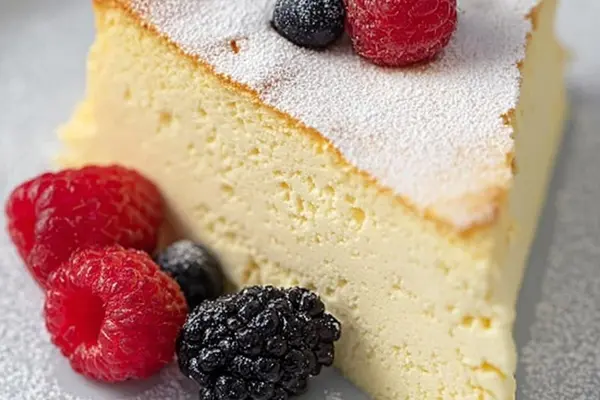
Jiggly Japanese Cheesecake Recipe
By Emma
Certified Culinary Professional
·
Recipe tested & approved
Light, airy jiggly Japanese cheesecake with cream cheese and eggs. Cornstarch creates a fine crumb and fluffy texture. Baked in water bath for moisture.
Prep:
15 min
Cook:
1h 10min
Total:
1h 25min
Servings:
8 servings
Tap the pan bottom, watch the jiggle. That wobble in the center — that’s the whole thing. Jiggly Japanese cheesecake lives in that exact moment between set and not, and most people either overbake it into a brick or underbake it into soup. Made this maybe thirty times now. Still nail it wrong sometimes, but the method doesn’t lie.
Why You’ll Love This Jiggly Japanese Cheesecake
Takes an hour and change but most of it’s just waiting. The actual work part is 15 minutes of prep. Vegetarian dessert that tastes expensive. Feeds eight people from one cake. Costs maybe $8 in ingredients. Wobbles when you move the plate. That’s not a flaw — that’s the whole point. Texture hits different when it’s actually soft. Keeps for days in the fridge. Actually tastes better cold. Leftovers aren’t a problem. Fluffy cheesecake without the dense brick texture. No graham cracker crust to mess with. It’s just cake.
What You Need for Fluffy Jiggly Cheesecake
Cream cheese — eight ounces, softened first. Cold cream cheese lumps. Room temperature ones fold in clean. Unsalted butter. Four tablespoons melted. Salted butter throws off the balance. Whole milk, hot. A third cup. Temperature matters — the heat helps the cream cheese melt smooth without lumps. Eggs — six of them, separated. Yolks go in the base. Whites become the meringue that makes this float. Cornstarch, sifted. Eighty grams. This is what makes it jiggly instead of dense. Regular flour doesn’t work — too heavy. Cornstarch reduces density way down. Granulated sugar. Half a cup total. Split into portions because you add it slowly to the meringue. Lemon juice. Half a teaspoon, fresh squeezed. Bottled stuff doesn’t have the same snap. This sharpens the egg whites and helps them hold volume. Salt. Just a pinch. Sounds like nothing. Does something though.
How to Make Japanese Cheesecake That Actually Jiggles
Line an 8 or 9-inch springform pan with parchment on the bottom and sides. Butter the sides lightly so the parchment doesn’t slip. Preheat to 320F — not the usual 325. The lower heat keeps the rise from collapsing.
Combine the cream cheese, melted butter, and hot milk in a bowl. Whisk it hard until it’s paste-like, no lumps at all. Use a double boiler if lumps keep showing up. Lumps mean uneven texture all the way through the final cake and there’s no fixing that after it bakes.
Fold the egg yolks in one at a time. Fold, not stir — gentle. No streaks of yolk left. Then sift the cornstarch in. Sift it twice if you see any clumps. This is the ingredient that makes it light instead of heavy. Skip the cornstarch or use regular flour and the cake turns into a brick.
Get a clean, completely dry bowl. Electric mixer running, beat the egg whites with the salt. Once it gets frothy, add the lemon juice. Lemon does something to the proteins that helps them hold the volume you’re about to beat into them.
Add the sugar in three separate additions. First third when it’s frothy. Half of what’s left next. Then the last bit. Between each addition, beat for thirty seconds. You’re looking for soft peaks — not stiff, not liquid. Mountain peaks that wiggle but hold their shape.
Take a third of the meringue. Fold it into the yolk base using a spatula. Gentle. Scoops from the bottom up and over. You’re not making it smooth — you’re just combining without deflating. Then the remaining meringue goes in. Fold slow. Stop the second it’s combined and light with bubbles spread through. Overmix and it gets heavy. Undermix and you get streaks.
Pour it into the pan. Tap the bottom lightly, run the spatula through to pop the giant bubbles. Those big air pockets become holes in the finished cake. You want even tiny bubbles, not the massive ones.
How to Get Perfect Water Bath Cheesecake Texture
Wrap the springform in thick aluminum foil — bottom and all the way up the sides. This stops water from seeping in and ruining the edges with moisture.
Set the wrapped pan in a larger roasting pan. Deep enough to hold hot water. Pour boiling water up about an inch on the sides. This water bath creates steam and distributes heat evenly. That’s what keeps the center from cracking.
Into the oven at 320F for the first 30 minutes. Watch for golden color on top. You might hear faint sizzling — that’s the water doing its job.
After 30 minutes, crack the door open for maybe 10 seconds. Sounds backward but releasing a tiny bit of steam prevents a soggy top. Close it back up, drop the temperature to 220F. Another 35 to 45 minutes. Low and slow. This is what gives you that wobble instead of a firm set.
The cake is done when the center moves slightly when you nudge the pan, but the edges are firm. Golden on top. No wet batter showing. Not dry crust either. If you’re not sure, push the side gently with a spatula. A slight bounce means it’s ready.
Turn off the oven. Crack the door. Leave it in there for 30 minutes while it cools slowly. If you pull it out hot and let it hit room temperature fast, the texture falls apart and cracks form. Slow cooling is what locks in the wobble.
Japanese Cheesecake Tips and Common Mistakes
Get the egg whites to the right peak stage or the cake won’t hold. They need to wiggle but not be stiff. Stiff peaks and the texture turns grainy. Not fluffy enough and it won’t rise. The difference is maybe 10 seconds on the mixer so watch it.
Meringue refuses to peak? Check that the bowl is completely dry and the egg whites have zero fat in them. Even a speck of yolk ruins the whole batch. Use room temperature eggs too — cold eggs take forever to whip.
Bubbles too big in the batter? Tap the pan longer and fold more gently. You’re popping air, not making the batter smooth.
Cake sinking in the middle? You opened the oven too many times. The steam escape messes with the rise. Use the light in the oven to peek. Only open when you do the 30-minute steam release.
Overbaking is the most common mistake. It gets dry. Trust the wobble test, not the clock. Every oven runs different. Mine takes closer to 50 minutes total. Yours might be 40. The jiggle tells you the truth.
Springform leaking? Double wrap with foil and set it on a rack inside the water bath so water can’t touch the pan directly. Wet edges mean a soggy cake bottom.
Best eaten at room temperature or slightly chilled. Warm cake is too soft and fragile. Cold cake sets hard and the texture changes. Somewhere in between is the sweet spot.
Jiggly Japanese Cheesecake Recipe
Prep:
15 min
Cook:
1h 10min
Total:
1h 25min
Servings:
8 servings
Ingredients
- 8 ounces cream cheese softened
- 4 tablespoons unsalted butter melted
- 1/3 cup whole milk hot
- 6 large eggs separated
- 80 grams cornstarch sifted
- 1/2 teaspoon lemon juice freshly squeezed
- 1/2 cup granulated sugar divided
- pinch salt
Method
- 1 Line an 8 or 9-inch springform pan with parchment paper on bottom and sides. Butter sides lightly for extra security. Preheat oven to 320F instead of usual 325F for steadier rise.
- 2 Combine cream cheese, melted butter, and hot milk in a bowl. Whisk relentlessly until paste-like with no lumps. Use double boiler if needed. Lumps mean uneven texture later.
- 3 Add egg yolks into cream cheese mix — one by one, folding gently but fully. No streaks. Incorporate sifted cornstarch next. Use a whisk and sieve twice if clumps persist. Cornstarch swap reduces heaviness.
- 4 In a clean dry bowl, beat egg whites and a pinch of salt with an electric mixer. Once frothy, add lemon juice. Lemon sharpens proteins, helps volume hold.
- 5 Add sugar in 3 parts; initial third when frothy, half of remainder next, then final bit last. Each addition beat 30 seconds. Look for medium peaks — not stiff or runny — like soft mountain peaks that wiggle but hold shape.
- 6 Fold one third of meringue gently into yolk base using spatula. Folding is key — no beating or stirring, or air escapes. Think gentle scoops, under and over the batter.
- 7 Add remaining meringue, folding slowly to avoid deflating the fluff. Stop folding once combined and batter looks light with airy bubbles evenly dispersed. Overmix and you’re heavy, undermix and you get lumps.
- 8 Pour batter into pan. Tap bottom lightly, run spatula through batter to pop large bubbles. Essential to avoid giant holes or dense spots.
- 9 Wrap springform pan in thick aluminum foil to stop water from seeping in—prevents ugly soggy edges. Set pan in larger roasting pan deep enough to hold hot water.
- 10 Pour boiling water about 1 inch up the side of larger pan. This water bath creates steam and even heat. Oven temperature at 320F for first 30 minutes. Watch golden color forming on top, listen for faint sizzling or crackling sounds of water.
- 11 After 30 minutes, open oven door for about 10 seconds. It’s counterintuitive but releasing some steam avoids soggy finish. Return to oven, reduce temperature to 220F for 35-45 minutes more. Low and slow helps that jiggle set gently.
- 12 Cake should wobble slightly in center when done, but hold edges firm and golden brown on top. No wet batter, no dry crust. If unsure, nudge side with spatula, slight bounce means ready.
- 13 Turn off oven, crack door, leave cake inside 30 minutes so it cools slowly. Sudden temperature drop ruins the bounce and causes cracks.
- 14 Remove cake from oven. Chill cake minimum 4 hours or overnight. Chill firms texture and tames sweetness.
- 15 Dust with icing sugar before serving or brush top lightly with warm apricot jam, honey, or even a thin syrup glaze. Adds shine and taste contrast. Leftovers keep well refrigerated in airtight container.
- 16 Variations: Replace lemon juice with yuzu if you find it for floral twist. For dairy-free, swap cream cheese for vegan alternative; use coconut milk instead of dairy milk but expect denser texture. If meringue refuses stiff peaks, check for fat contamination or cold egg whites. Use room temp eggs always.
- 17 Troubleshooting tips: Bubbles too big? Fold batter more gently and tap pan longer. Cake sinking? Avoid opening oven door early except the brief steam release. Overbaking leads to dry cake; trust wobble cues—not just time.
- 18 If springform leaks, double wrap with foil and set pan on a rack inside water bath to avoid direct water contact.
- 19 Best eaten at room temp or slightly chilled. Warm cake too fragile, cold cake sets texture.
Nutritional information
Calories
250
Protein
6g
Carbs
15g
Fat
18g
Frequently Asked Questions About Jiggly Japanese Cheesecake
Can I substitute the cornstarch with regular flour? No. Flour makes it dense and heavy. Cornstarch is what keeps it light and gives you that wobble. They’re not interchangeable here.
What does the cornstarch actually do in this cheesecake recipe? Reduces the density. Makes it fluffy instead of brick-like. The cornstarch structure sets softer than regular flour would, so the cake stays jiggly in the center.
How do I know when the cheesecake is done baking? Nudge the side with a spatula. The edges should be firm and golden. The center should wobble slightly but not slosh. No wet batter. If you’re watching time, aim for 35 to 45 minutes at 220F after the initial 30 minutes at 320F, but the wobble test is more reliable than the timer.
Why do you release steam at the 30-minute mark? Keeps the top from getting soggy. The steam buildup creates moisture on the surface. Letting a tiny bit escape prevents that condensation. Only open the door for about 10 seconds.
Can I make this without a water bath? Technically yes. Don’t. The cake will crack and bake unevenly. The water bath creates the gentle, even heat that makes this work. It’s not optional.
Does the cheesecake need to chill, or can I eat it warm? It needs to chill at least 4 hours, preferably overnight. Warm cake is too fragile and falls apart. Cold cake sets the texture and the wobble becomes more noticeable. Room temperature is fine too, pulled out maybe 30 minutes before serving.
How long does jiggly Japanese cheesecake keep? Days. Keep it in an airtight container in the fridge. Probably a week, maybe longer. Haven’t had it last that long because it gets eaten first.
What can I dust on top for serving? Icing sugar. Or brush it with warm apricot jam for shine. Honey works too. Even a thin syrup glaze. Adds taste and looks better. Plain is fine too.
What if the meringue won’t form stiff peaks? Egg whites probably have fat in them — even a bit of yolk ruins it. Or the bowl isn’t clean. Or the eggs are cold. Start over with room temperature eggs and a spotless bowl.
Can I use a different size pan? Eight or 9-inch springform works. Smaller pan and it bakes faster and might overbake. Larger pan and it stays too soft in the center. Stick with the size.
You’ll Love These Too
Explore all →
Fig Jams with Onion & Apple Cider Vinegar
No Bake Cheesecake with Peach Preserves

Creamy Pumpkin Soup with Pistachios
Almond Pizzelle Recipe with Lemon Zest
Grapefruit Loaf Cake with Cardamom
BBQ Chicken Marinade with Smoked Paprika

Creamy Coconut Mussels with Lemongrass

Crunchy Asparagus Tuna Salad with Eggs
Honey Oat Muffins with Raspberry Jam
Pineapple Ham Glaze with Orange Juice

Green Salsa Mussels with White Wine Sauce

Vegetarian Soup with Quinoa and Zucchini
Lemon Dessert Bars with Ricotta Filling

Mint Mojito Twist with Tequila & Lime
Coconut Cream Pie Bites with Almond Bark
Creamy Mashed Potatoes with Mushroom Stock

Cheese Croquettes with Ricotta and Walnuts

Cherry Citrus Punch with Moscato & Rum
Brookies Recipe: Chocolate Chip Cookie Brownie