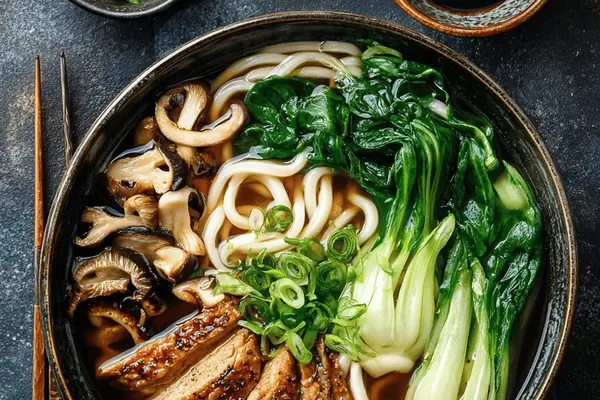
Japanese Pork Shabu-Shabu with Kombu Broth
By Emma
Certified Culinary Professional
·
Recipe tested & approved
Three hundred milliliters of concentrated beef broth mixed with chicken stock, ginger sliced thin, kombu floating for six minutes, then gone. Daikon goes in next—tender-crisp in seven. The pork comes raw, paper-thin, dipped for maybe five seconds into a broth that must never boil hard. This is shabu-shabu. One pot, twenty minutes of actual cooking, and your table becomes the kitchen.
Why You’ll Love This Japanese Hot Pot
Takes forty-five minutes total—twenty of that is just sitting around watching things cook in front of you. One pot. Electric burner on the table. Udon noodles already cooked. Pork comes sliced. Basically assembly. Tastes like something you’d pay thirty dollars for at a restaurant. Costs maybe ten. Works for two people or six. Scale the platters. The broth stays the same. Something about dipping your own food into hot liquid makes it taste better. Not sure why. But it does. No cleanup nightmare—one pot, serving bowls, done.
What You Need for Japanese Hot Pot with Pork and Udon
Low-sodium chicken stock. Nine hundred milliliters. Not the salty kind. Concentrated beef broth from a can. Two hundred milliliters. The condensed stuff actually tastes better here than the box version. Soy sauce. Fifteen milliliters. Just enough to darken it slightly. Fresh ginger. A three-centimeter piece, peeled, sliced thin. Gets the aromatics going fast. Kombu kelp sheet. Five by five centimeters. Six minutes in the broth, then out. Overstay and it gets bitter. Daikon radish. One medium. Peel it, slice into matchsticks about six centimeters long. The texture matters—crunchy when it hits the bowl. Pork shoulder sliced thin. Five hundred grams. Already sliced. Just ask the butcher. Don’t try to slice it yourself when it’s cold. Udon noodles cooked. Two hundred fifty grams. Toss lightly in sesame oil so they don’t stick. Shiitake mushroom caps. Two hundred twenty-five grams. Cleaned, not washed. Brush them with a paper towel. Baby bok choy leaves. Thirty grams. Whole leaves. They cook in seconds. Scallions cut into five-centimeter lengths. Two of them. Ponzu sauce mixed with fresh grated ginger. That’s your dipping sauce. Wasabi optional. Most people skip it. Some people add it. Both are fine.
How to Make Japanese Hot Pot Step by Step
Heat the chicken broth and beef broth together with soy sauce, ginger slices, and kombu in a fondue pot or medium saucepan. Watch for tiny bubbles at the edges first—that’s the signal it’s almost there. Don’t let it boil hard. A gentle simmer keeps the broth clear and the pork from getting tough. Six minutes in, the ginger aroma gets sharp. That’s when you pull both the ginger and kombu out. Wait longer and it turns bitter. Toss the daikon matchsticks into the broth. Seven minutes, maybe eight. Test one with a fork. Should still have a slight bite—not mushy. Pull them out with a slotted spoon and move them to a serving bowl. Place the hot pot on a portable burner or electric hot plate in the center of the table. Set it to low. This is where the cooking actually happens, but in front of everyone.
How to Cook Shabu-Shabu at the Table
Arrange everything on platters before you sit down. Pork slices. Udon. Mushrooms. Bok choy. Scallions. Ponzu sauce in a small bowl with grated ginger already stirred in. Use chopsticks to grab a pork slice. Dip it into the hot broth for maybe three to five seconds. Edges should just turn pale pink. That’s it. Meat cooks fast when it’s that thin. Pull it out, dip in ponzu, eat it. Mushrooms and greens cook the same way—dip until tender. Bok choy especially. It goes from raw to perfect in maybe two minutes. Udon just needs a quick warm. Drop it in, stir once, pull it out in under a minute or it gets mushy. The broth cools down as you cook. If it gets too cool, turn the burner up slightly. You’ll feel the difference. The dipping happens faster when the broth is hot enough. Multiple rounds happen in shabu-shabu. Cook, eat, cook more. The broth gets better as it goes, picking up flavors from everything you’ve dipped into it. That’s the point.
Japanese Hot Pot Tips and Common Mistakes
The broth can’t boil vigorously. Vigorous boil makes it cloudy and the pork texture gets wrong—rubbery instead of tender. Low simmer only. Kombu in too long tastes like seaweed and salt. Six minutes is correct. Not five, not seven if you’re uncertain. Six. Don’t overcrowd the pot when you’re cooking. One mushroom. A couple pork slices. A handful of greens. Keep things moving so they cook evenly and stay in that broth instead of stewing on top of each other. Pork shoulder is fattier than beef. Changes how it tastes. Use well-marbled pieces. The fat melts into the broth and that’s fine. That’s actually good. Daikon gives a refreshing contrast to the heavier meat. If you can’t find it, asparagus tips work. Cook them faster though—maybe four minutes instead of seven. No kombu or ginger? Crushed garlic cloves work. A dried shiitake stem also adds depth. Not the same but close enough. Pork slices sometimes stick together when they’re raw. That’s fine. They separate in the broth as they cook.
Japanese Pork Shabu-Shabu with Kombu Broth
Prep:
25 min
Cook:
20 min
Total:
45 min
Servings:
4 servings
Ingredients
- Broth
- 900 ml low-sodium chicken stock
- 200 ml concentrated beef broth (canned)
- 15 ml soy sauce
- 1 piece of fresh ginger 3 cm peeled, sliced thin
- 1 piece kombu kelp sheet about 5x5 cm
- 1 medium daikon radish peeled, sliced into 6 cm matchsticks
- Accompaniments
- 500 g thinly sliced pork shoulder for shabu-shabu
- 250 g cooked udon noodles, tossed lightly in sesame oil
- 225 g shiitake mushrooms caps only, cleaned
- 30 g baby bok choy leaves
- 2 scallions cut into 5 cm lengths
- Ponzu sauce mixed with grated fresh ginger
- Wasabi optional
Method
- Broth preparation
- 1 Heat chicken and beef broth joined by soy sauce, ginger slices and kombu in fondue pot or medium saucepan until just before boiling; watch for tiny bubbles at edges. That gentle simmer keeps clear broth. Remove ginger and kombu after about 6 minutes, once aroma becomes sharp but before bitterness.
- 2 Toss in daikon sticks, cook until tender-crisp about 7 minutes. Daikon should still have slight bite; test one. Remove with slotted spoon; transfer to serving bowl.
- 3 Place hot fondue pot on portable burner or electric hot plate in center of table, set to low simmer.
- For serving
- 4 Arrange pork slices, udon, shiitakes, baby bok choy and scallions on platters.
- 5 Use chopsticks to dip thin pork slices briefly into broth until edges just turn pale pink. Meat should be barely cooked through; timing varies but seconds, not minutes.
- 6 Cook mushrooms and greens similarly, pick up as they become tender. Udon warms quickly, do not overcook.
- 7 Serve with ponzu-ginger sauce on the side for dipping; a dab of wasabi adds heat if you like.
- Notes on timing and texture
- 8 Broth must not boil vigorously, or stock turns cloudy and toughens meat texture.
- 9 Skipping kombu or ginger? Substitute with a few crushed garlic cloves or a strip of dried shiitake stem for depth.
- 10 Pork richer and fattier than beef, changes mouthfeel, use well-marbled pieces for best result.
- 11 Daikon offers refreshing contrast to heavier meat; replace with asparagus tips if unavailable but reduce cook time.
- 12 Don’t overcrowd pot; keep ingredients moving to prevent stewing.
- 13 Multiple rounds are expected in shabu-shabu. Reheat broth between rounds if it cools too much.
Nutritional information
Calories
350
Protein
28g
Carbs
30g
Fat
12g
Frequently Asked Questions About Japanese Hot Pot with Pork
Can I use a different cut of pork? Pork belly works. Pork loin works less well—it’s leaner, dries out faster. Shoulder is best because the fat. Butcher will slice it if you ask.
How thin should the pork actually be? Thin enough to be slightly translucent when you hold it to the light. That thin. If it’s thicker it needs longer in the broth. Defeats the point.
What if my broth boils by accident? Turn the heat down. It’ll clear again in maybe three minutes. The cloudiness is just proteins. Doesn’t taste bad. Looks bad though.
Do I have to cook everything in the same broth? Yes. That’s the whole thing. Everything goes in the same pot so the flavors build. By the end of a meal the broth tastes like pork and mushrooms and ginger and all of it mixed.
Can I make this without kombu? Yeah. Use crushed garlic cloves instead or skip it. The broth won’t have quite the same umami depth. Not a disaster. Just less interesting.
How long do leftovers last? Broth stays good three days in the fridge. Leftover cooked pork, don’t bother. The noodles get soft. The greens get sad. Just make fresh pork next time.
Can I use chicken instead of pork? Chicken thigh sliced thin works. Chicken breast doesn’t. It gets dry in seconds.
What’s the actual cook time at the table? Twenty minutes if people are eating slowly and doing multiple rounds. Could be fifteen if everyone’s hungry and rushing. Depends on the group.
You’ll Love These Too
Explore all →
Club Sandwich with Bacon, Eggs & Tomato
Raspberry Lemon Tart with Coconut Oil Crust

Chunky Pimento Melt with Bacon & Cheddar

Sausage Shepherd's Pie with Parmesan

Crunchy Veggie Salad with Ginger Lime

Cheesy Risotto Arancinis with Taleggio

Coconut Oil Baking: Ginger Steamed Pudding
Bavette Steak with Shallot Sauce & Crispy Fries
Macaroni Cheese in a Crock Pot
Best Seasoned Hamburger with Curry

Strawberry Short Cake with Flaky Tartlets
Gazpacho Recipe with Yellow Peppers & Cucumber
Pan Roasted Turkey with Cranberry Sausage
Lego Block Cake with Almond Flour & Buttercream
Barbeque Sauce Recipe with Ancho Chili

BBQ Chicken Quesadillas with Pineapple
Caramelized Onions with Honey and Butter
Homemade Reese's Peanut Butter Cups Recipe
Honey Puffed Quinoa Vanilla Yogurt Bowl