
Deviled Eggs: Three Elegant Styles
By Emma
Certified Culinary Professional
·
Recipe tested & approved
Three deviled eggs recipes with smoked salmon, wasabi, and horseradish. Features steamed eggs with cream, mayo, and fresh dill for elegant holiday appetizers.
Prep:
25 min
Cook:
15 min
Total:
40 min
Servings:
4 servings
Twelve eggs. Three ways. Forty minutes, maybe less if you move.
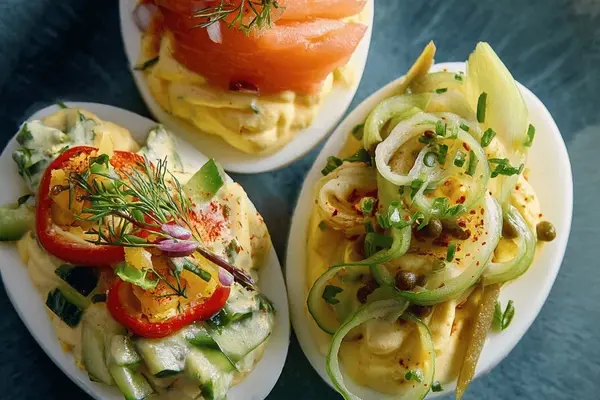
These aren’t your grandmother’s deviled eggs—though your grandmother might steal them anyway. Steamed instead of boiled means the yolks stay creamy instead of turning gray-green. The whites set firm without going rubbery. Three separate fillings: one tastes like blini, one like sushi, one like the best egg sandwich you’ve ever had. Pick one. Make all three. Build them yourself or let people assemble their own bites.
Why You’ll Love This Creamy Deviled Eggs Trio
Looks fancy. Takes forty minutes total. Works as an appetizer for literally any occasion—weddings, holidays, Tuesday night with friends, doesn’t matter. Steamed eggs with smoked salmon, wasabi, horseradish. Pick your vibe. You control the heat. Spicy deviled eggs if you want them that way. Mild if you don’t. Wasabi goes in gradually so it doesn’t take over. Interactive. People like building their own bites. Keeps the whites crisp, keeps the salmon from getting soggy. The egg halves stay firm instead of falling apart under wet filling. Vegetarian options built in—skip the salmon, the roe, add more cucumber. Works either way. Can prep ahead. Components live separate in the fridge. You assemble right before serving.
What You Need for Deviled Eggs with Three Different Fillings
A dozen large eggs. That’s the base everything else hangs on.
For the blini-style filling: heavy cream—the 35 percent kind, whipped just until soft peaks form, not stiff. Prepared horseradish. Smoked salmon strips rolled into small shapes. Mullet roe. Fresh dill chopped rough.
For the sushi-style filling: mayonnaise. Wasabi paste—prepared, from a tube or jar. Toasted sesame oil. A Lebanese cucumber sliced thin into half moons. Pink pickled ginger. Black or white sesame seeds, or mix them.
For the egg sandwich-style filling: three small celery stalks diced small. Olive oil. White wine vinegar. Tart pickles diced fine. Fresh tarragon. Plain yogurt. Mayonnaise. Whole grain mustard. A tiny bit of sugar.
Salt and pepper for tasting. That matters more than people think.
How to Make Steamed Eggs with Creamy Yolks
Steaming changes everything. Not boiling. Different technique, different result.
Put a steaming rack or folding steamer insert at the bottom of a large pot. Add water until it just reaches the base of the rack. Cover it. Bring to a vigorous boil—actually boiling, not just hot water. This takes five minutes, maybe six. You’ll hear it rolling.
Lower the eggs onto the rack gently using a spoon. Don’t just drop them. Cover immediately. Seven minutes if you want the yolks soft and creamy inside. Nine to eleven minutes if you want them firmer. Your steamer’s heat matters—adjust a minute either way based on what you’ve got. If you’re not sure, go seven minutes the first time. You can always cook longer next batch.
What you’re looking for: whites that are firm all the way through. Yolks where the surface’s turning matte and opaque but the inside still gives when you press it. That’s done.
Ice bath right after. No waiting. Transfer them straight into a bowl of ice water. Let them sit twenty minutes until they’re completely cold. This stops the cooking dead. Makes peeling easier too.
Peel under running water if they’re stubborn. Crack the shell all over—tap them on the countertop hard enough to loosen it everywhere. Use your thumb to work the shell off. If it sticks, let them soak another minute. The whites should be smooth, not pitted.
How to Get Deviled Eggs with Smoked Salmon, Wasabi, or Horseradish Right
Cut the eggs in half lengthwise just before you serve them. This matters. Dry the cut edges with a paper towel. Wet yolks won’t hold the filling right.
For the blini version: whip the heavy cream until soft peaks form—that means peaks that fold back on themselves, not stiff ones. Stiff turns gluey. Stir the horseradish into the cream. Salt it lightly. Horseradish has heat and moisture already, so you don’t need much. On the serving tray, lay out the egg halves. Put the salmon rosettes next to them, dill sprinkled around, mullet roe in a small bowl. Let people spoon the horseradish cream onto their own halves, then add salmon and roe. The whites stay firm. The salmon stays fresh instead of getting watery.
For the sushi version: mix the mayonnaise, wasabi, and sesame oil into something smooth. Taste it. Wasabi ramps fast—add the paste slowly, a little at a time. You can’t take it back once it’s in. Arrange the cucumber slices, pickled ginger, sesame seeds, and egg halves on a platter. Let people layer their own. The cucumber crunch cuts through the richness. The ginger sharpness resets your mouth between bites.
For the egg sandwich version: combine the diced celery, olive oil, vinegar, pickles, and tarragon in a bowl. Salt and pepper it. The acid from the vinegar makes the celery stay crisp. In another bowl, blend the yogurt, mayonnaise, mustard, and sugar. The sugar balances the tang so it doesn’t get sour. Set both next to the egg halves. People layer the celery mix first, then the sauce, like they’re building an egg salad sandwich but fresher and less dense.
Serve right after assembly. The longer they sit, the more moisture soaks into the whites. If you’re making these ahead, keep everything separate—eggs in the fridge, fillings in the fridge, assemble when people arrive.
Steamed Eggs with Smoked Salmon, Wasabi, and Horseradish—Tips and Tricks
Steaming works for any hard-boiled situation. Learn it once, use it for everything. You get fewer cracked whites. Peeling’s easier. Yolks come out creamy instead of mealy.
Don’t peel eggs until you’re ready to cut them. Peeled eggs sitting around get watery. The moisture soaks in from air.
Horseradish or wasabi—start small. Both pack heat that sneaks up on you. You taste it light at first, then your sinuses clear ten seconds later. Add more once you’ve tasted it. Easier than dialing it back.
If you’re making the blini version and horseradish cream seems too thick, add a touch of the soaking water from the dill. Or nothing. It’ll loosen as it sits.
The egg sandwich filling tastes better the next day if you need to make it ahead. The flavors meld. Keep the eggs separate though. Celery salad’s fine cold. Egg whites get sad sitting in moisture.
Substitutions: crème fraîche or sour cream instead of heavy cream for the blini mix. Works. Horseradish with a dash of soy instead of wasabi for the sushi version if you can’t find wasabi. Greek yogurt for the plain yogurt. Chives or tarragon instead of dill. Smoked trout instead of salmon—different smoky note, still good.
The mistake people make: overcooked yolks turn gritty. Watery whites from eggs sitting peeled too long. Horseradish or wasabi overpowering everything so you can’t taste the egg. Always taste your filling on its own before you serve it. Adjust the salt. Adjust the heat. Make sure it works.
Deviled Eggs: Three Elegant Styles
Prep:
25 min
Cook:
15 min
Total:
40 min
Servings:
4 servings
Ingredients
- 1 dozen large eggs
- Eggs like a blini
- 50 ml heavy cream 35 percent, lightly whipped
- 5 ml prepared horseradish
- 40 g thin smoked salmon strips, rolled into small rosettes
- 20 ml mullet roe
- 25 ml roughly chopped fresh dill
- Eggs like sushi
- 40 ml mayonnaise
- 5 ml prepared wasabi paste
- 1 ml toasted sesame oil
- 1 Lebanese cucumber, thinly sliced into half moons
- 25 ml pink pickled ginger
- 20 ml black or white sesame seeds
- Eggs like egg sandwich
- 3 small celery stalks, diced small
- 10 ml olive oil
- 7 ml white wine vinegar
- 8 ml finely diced tart pickles
- 2.5 ml chopped fresh tarragon
- 25 ml plain yogurt
- 10 ml mayonnaise
- 3 ml whole grain mustard
- 2.5 ml sugar
Method
- 1 Start by steaming eggs, not boiling. Place a steaming rack or folding steamer insert at bottom of large pot. Add water to just reach base of rack. Cover and bring to vigorous boil.
- 2 Gently lower eggs onto rack using a spoon; cover immediately. Steam 7 minutes for tender whites, slightly runny yolks. 9–11 minutes for firmer yolks, adjust ±1 minute based on your steamer's heat and egg size. Visual check: whites firm but not rubbery, yolks surface turning matte and set but still creamy.
- 3 Transfer eggs into an ice water bath immediately to halt cooking. Let chill 20 minutes or until eggs feel cold to touch. This stops overcooking and makes peeling easier. Peel carefully under running water if stubborn. Use thumb to gently crack shell all over, then peel, or tap on countertop hard to loosen shell but avoid breaking whites.
- 4 Cut eggs in half lengthwise just before serving. Dry the cut edges with paper towel to avoid watery filling.
- Eggs like a blini
- 5 Whip cream until soft peaks form — not too stiff or your filling turns gluey. Stir horseradish into cream; season lightly with salt; horseradish packs heat and moisture—balance is key. On serving tray, arrange egg halves, smoked salmon rosettes, dill, mullet roe. Provide spoonfuls of horseradish cream alongside. Encourage guests to build their own bites to keep whites firm and salmon rosiny fresh.
- Eggs like sushi
- 6 Mix mayonnaise, wasabi, and sesame oil into a smooth emulsion. Taste for heat; wasabi can overpower fast, add gradually. On serving platter put cucumber slices, pickled ginger, sesame seeds, and egg halves so people can assemble crunchy, spicy bites. The crunch of cucumber cuts richness; ginger sharpness resets the palate between bites.
- Eggs like egg sandwich
- 7 In a bowl combine diced celery, olive oil, vinegar, pickles, tarragon. Salt and pepper lightly. The acid brightens celery’s crunch. In a separate bowl, blend yogurt, mayonnaise, mustard, and sugar to balance tang and sweetness. Place both mixtures next to halved eggs so guests layer celery mix then sauce, mimicking classic egg salad texture but fresher and less dense.
- 8 Serve immediately after assembly for best texture. If making ahead, keep components separate and unassembled to avoid moisture soaking whites.
- 9 Use egg steaming technique learned here for other hard-boiled projects—steam yields less cracked whites, better peeling, and creamy yolks with gentle heat.
- 10 Substitutions: Heavy cream can be crème fraîche or sour cream for blini mix; wasabi paste replaced by horseradish with a dash of soy for sushi mix if unavailable; Greek yogurt OK for yogurt base; dill swap with chives or tarragon if you want herbal variation; smoked trout can replace salmon for a different smoky note.
- 11 Common pitfalls: Overcooked eggs gritty yolk, waterlogged whites from resting too long peeled in moisture, overpowering horseradish or wasabi dulling delicate eggs. Always taste your fillings separately and adjust seasoning.
- 12 Efficiency tricks: Steam all eggs at once; prep fillings while eggs cook and cool; keep cold so assembly is quick; guests love interactive plating, layer presentation in serving vessels for elegant but casual touch.
Nutritional information
Calories
160
Protein
10g
Carbs
2g
Fat
12g
Frequently Asked Questions About Holiday Deviled Eggs with Three Fillings
How long do steamed eggs actually take? Seven minutes from when the water boils hard. Nine to eleven if you want firmer yolks. That’s it. Actual time, not approximate.
Can you make these ahead for a party? Eggs keep three days peeled and cold. Fillings keep two to three days separate. Assemble them the day of, or an hour before at most. Once the filling touches the white, clock’s ticking on texture.
What if you can’t find mullet roe for the salmon version? Skip it. Or use caviar if you’ve got it. Or capers. Or nothing. The salmon and horseradish cream are doing the work.
Does the wasabi get less spicy if it sits? No. It gets worse. More time = more heat develops. Add it when you’re ready to serve, or add less than you think you need.
Is there a way to make these less spicy deviled eggs without wasabi and horseradish? Do the egg sandwich version. It’s not spicy. Mild, balanced, fresh. Tarragon and pickles instead of heat. Tastes completely different, still excellent.
Can you substitute Greek yogurt for the plain yogurt? Yeah. It’ll be thicker—thicker than you probably want. Add a splash of water to loosen it. Or use sour cream. Both work.
Why steam instead of boil? Does it actually matter? Boiling eggs bangs them around, sometimes cracks the shells, tends to overcook them slightly because the water’s at a rolling boil the whole time. Steam’s gentler. Whites come out smooth, yolks stay creamy. Once you do it this way you won’t go back.
What’s the difference between wasabi and horseradish? Wasabi hits your sinuses. Horseradish hits your sinuses differently, more lingering, warmer. Both are sharp. Both sneak up. Wasabi’s more common in sushi situations. Horseradish’s more classic with salmon and cream. You can swap them but the flavor’s different.
You’ll Love These Too
Explore all →
Lemon Chicken Thighs with Vermouth Sauce

Salad With Avocado, Ground Beef & Poppy
Scalloped Potatoes with Sole and Swiss Chard
Chocolate Hazelnut Madeleines Recipe

Croissant Pizza with Pepperoni & Mozzarella

Rustic Veal Ragu with Wine & Capers
Dairy-Free Pesto with Roasted Cashews

Leek Shrimp Tart with Dill & Parmesan

Spice and Hot Chocolate with Cinnamon
Citrus Mousse Cookies with Finger Lime

Saffron Aioli with Tomato Paste & Garlic

Peanut Butter Cake with Chocolate Ganache
Porcini Sauce for Roasted Veal Rack

Ground Beef Enchiladas with Cheddar

Corn Casserole Dish with Creamed Corn
Rustic Onion Gratinée with Sherry

Citrus Syrup Recipe with Fresh Lemon Juice

Iced Coffee Dessert with Vanilla Ice Cream

Meatball Sauce with Beef, Veal & Fresh Basil