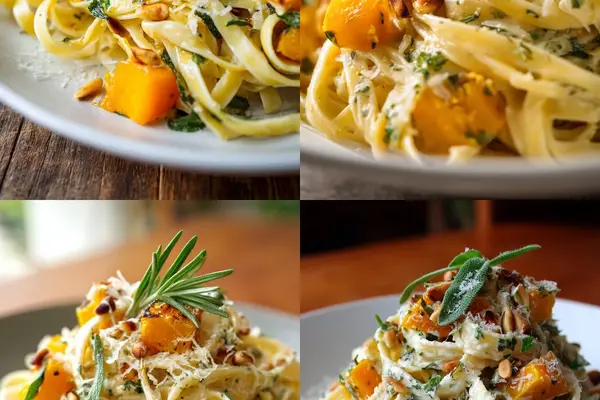
Butternut Squash Pasta with Sage Cream
By Emma
Certified Culinary Professional
·
Recipe tested & approved
Butternut squash pasta with roasted garlic, sage, and rosemary cream sauce. Fettuccine tossed with pecorino cheese, fresh herbs, lemon zest, and toasted pine nuts for a bright, satisfying meal.
Prep:
25 min
Cook:
50 min
Total:
1h 15min
Servings:
4
Preheat to 190 degrees. Cube the squash. Toss it with garlic cloves still in their skin, olive oil, half the sage, salt, pepper. Roast for 28 to 32 minutes until the edges brown and the flesh collapses when you press it. Halfway through, shake the pan. Doesn’t matter which direction.
Why You’ll Love This Butternut Squash Fettuccine
One hour fifteen minutes total. Actual hands-on time maybe ten minutes. Everything roasts while you do something else.
It’s vegetarian pasta that doesn’t taste like you’re eating around the protein. Tastes like something you’d order and pay a lot for.
The sauce comes together two ways — roasted garlic that goes sweet, cream with herbs steeped in it. Both finish in the pasta water, which thickens everything without cream sitting there being heavy.
Leftovers, if you have them, are better cold the next day. Texture changes. Flavor settles into itself somehow.
Pine nuts on top. Not fancy — just crunchy when you bite through the soft squash. Changes the whole thing.
What You Need for Roasted Butternut Squash Fettuccine with Sage
Butternut squash. Six hundred grams. Peel it raw or roast it in the skin first — your call. Peeling raw is faster but makes your hands sticky.
Garlic. Six cloves. Don’t peel them. The skin keeps them from burning, and you squeeze the pulp out after roasting anyway.
Olive oil. Not too much. Twenty-five milliliters. Enough to coat everything.
Fresh sage. A small bunch. Split it — half goes in the roast pan, half goes in the cream. Dried sage doesn’t work here. Different plant basically.
Heavy cream, 35 percent. One hundred seventy milliliters. That’s about three-quarters of a cup if you’re guessing. Half and half works in a pinch. Whole milk doesn’t.
Rosemary. A bunch. This goes in the cream. Fresh or dried — fresh is better but dried won’t ruin it.
Fettuccine or egg tagliatelle. Three hundred forty grams. The egg pasta matters more than the shape. It tastes different. Holds the sauce better.
Pecorino cheese. Grated. Forty grams. Not parmesan. Pecorino’s sharper. Do the substitution if you have to, but it changes it.
Lemon. One small one. Just the zest. The juice goes nowhere.
Fresh basil, chives, parsley, oregano. Mix of all four. Two hundred milliliters total roughly. Chop them all separately — they go in at different times. Some stays raw on top.
Pine nuts. Thirty grams. Toasted. Raw ones taste like cardboard.
Salt and pepper. Kosher salt. Coarse black pepper, ground fresh. Not the tin stuff.
How to Make Butternut Squash Fettuccine with Rosemary Cream
Preheat oven to 190 degrees Celsius — that’s 375 Fahrenheit. Rack in the middle.
Line a sheet pan with parchment. Peel your squash and cut it into cubes maybe three-quarters of an inch. They don’t have to be perfect. Rough is fine.
Put the squash in a bowl with six unpeeled garlic cloves. Pour olive oil over it. Throw in half your sage leaves — tear them a bit. Salt and pepper it generously. Toss until everything’s coated.
Spread it on the pan in a single layer, somewhat. Some pieces on top of each other is okay. Turn it halfway through roasting — that’s about 15 minutes in. You’re looking for the edges to turn brown and the flesh to be so soft it collapses when you poke it. Takes 28 to 32 minutes total.
While that’s roasting, pour cream into a small pot. Throw your whole rosemary bunch in, and the rest of the sage. Turn the heat to medium. You want it to just barely boil — little bubbles at the edges, not a rolling thing. Then take it off heat and let the herbs sit in there for six minutes. They’re steeping. The cream gets the flavor.
Pull out the herbs with a fork and throw them away. Squeeze the roasted garlic out of its skin and mash it in the cream with a fork until it’s smooth. Season it. Salt and pepper. Taste it. Keep it warm on the lowest heat, or cover it and it’ll stay warm fine.
How to Make the Pasta Creamy Without Breaking the Sauce
Get a big pot of salted water boiling. Not ocean-level salted. But salty enough you’d eat it as broth.
Cook your pasta almost all the way — two minutes less than the box says. Al dente for real. It’s going to cook another few minutes in the sauce so don’t be tempted.
Measure out 250 milliliters of pasta water before you drain. Just set a cup aside. Drain the pasta fast. Not shaking it dry forever — just drain it.
Dump the pasta back in the pot. Pour in that pasta water you saved. Add the hot cream and all the garlic and rosemary that’s in it. Turn heat to medium.
Stir constantly. Don’t stop. The starch from the pasta water thickens everything into a sauce. It takes three to five minutes. You’ll see it happen — it goes from sloppy to coating the back of a spoon. When a line stays in the sauce when you drag your spoon through it, you’re done.
Take it off heat immediately. This is important. Off heat.
Stir in the grated pecorino and lemon zest until the cheese melts and disappears into it.
Fold in the roasted squash pieces and half your fresh herbs — basil, chives, parsley, oregano split between now and later. Fold in the pine nuts.
Plate it fast. Garnish with whatever herbs you didn’t use. Crack some pepper over it. Done.
Butternut Squash Pasta Tips and What Goes Wrong
The squash breaks down a little. That’s okay. It’s supposed to. It’s not a vegetable plate situation — it becomes part of the sauce basically.
If your sauce breaks — like it looks grainy and separated — you got the heat too high at the end or didn’t stir enough. Next time keep the heat medium and don’t stop stirring. If it already happened, blend it. Tastes the same.
Lemon zest at the end matters. Sounds small. It’s not. Cuts through the richness and makes it taste fresh instead of heavy. Zest before you cut the lemon. Easier.
The fresh herbs on top aren’t decoration. They’re the difference between “I made pasta” and “I made something.” Use them. All of them.
Sage in the roast pan, sage in the cream — two different things. The roasted sage gets bitter and weird, so you throw it away. The fresh sage in the cream mellows and becomes part of the sauce. Different enough that it matters.
Cold pasta water thickens nothing. It has to be hot. It has to be starchy pasta water, not just water. If you already poured it out and rinsed your pasta in cold water — that’s an old thing nobody needs to do — make new starchy water by scooping some boiling pasta water mid-cook before you drain.
Butternut Squash Pasta with Sage Cream
Prep:
25 min
Cook:
50 min
Total:
1h 15min
Servings:
4
Ingredients
- 600 g butternut squash, peeled and cubed
- 6 garlic cloves, unpeeled
- 25 ml olive oil
- 1 small bunch fresh sage
- 170 ml heavy cream 35%
- 1 bunch rosemary
- 340 g fettuccine or egg tagliatelle
- 40 g fresh pecorino cheese grated
- 1 small lemon, zest only
- 10 g fresh basil, chopped
- 10 g fresh chives, chopped
- 20 ml fresh oregano, chopped
- 20 ml fresh flat-leaf parsley, chopped
- 30 g toasted pine nuts
- salt and pepper
Method
- 1 Preheat oven 190°C (375°F) with rack in middle position
- 2 Toss squash cubes, unpeeled garlic, olive oil, and half the sage leaves with salt and pepper on a baking sheet lined with parchment
- 3 Roast 28-32 minutes, turning once halfway, until squash tender and edges browned
- 4 Remove garlic, squeeze pulp out, mash into a smooth paste, discard roasted sage leaves
- 5 Meanwhile, heat cream in a small pot with rosemary and remaining sage
- 6 Bring to gentle boil, then remove from heat and steep herbs 6 minutes
- 7 Strain out herbs and stir in roasted garlic paste, season with salt and pepper, keep warm
- 8 Boil salted water, cook pasta until very al dente, about 2 minutes less than package suggests
- 9 Reserve 250 ml pasta water, drain pasta quickly
- 10 Return pasta to pot; add reserved water and hot herb cream
- 11 Cook over medium heat, stir constantly until sauce thickens and pasta coats well, 3-5 minutes
- 12 Remove from heat, stir in grated pecorino and lemon zest until melted
- 13 Fold in roasted squash, half the fresh herbs, and pine nuts
- 14 Serve immediately, garnish with remaining herbs
Nutritional information
Calories
490
Protein
15g
Carbs
55g
Fat
24g
Frequently Asked Questions About Roasted Butternut Squash Fettuccine
Can you make this ahead? Cook it, eat it. Refrigerate leftovers in an airtight container. Cold the next day it tastes better actually. Reheat gently with a splash of water if it’s too thick. Don’t microwave it.
What if you don’t have pecorino? Parmesan works. It’s milder. You might need a tiny bit more. Asiago works too. Don’t use pre-grated stuff — the coating makes it clump.
How do you know when the squash is actually done roasting? Poke it. If your finger goes through without resistance, it’s done. The edges should be brown, almost caramelized. If it’s still firm in the middle, it needs more time. Takes 28 to 32 minutes usually. Your oven might be different.
What if you use dried herbs instead of fresh? Dried rosemary and sage work fine in the cream. Use less — maybe a teaspoon of each. The fresh herbs on top won’t work as a substitute. They’re raw and bright. Dried is cooked and dull. Just buy a little fresh basil if you can.
Should you salt the pasta water? Yeah. A lot. If you wouldn’t drink it, it’s probably right. The pasta absorbs the salt as it cooks. Everything’s better this way.
Can you add protein? Pancetta or guanciale if you want. Crisp it first, crumble it over the top. Stays vegetarian without it though. That’s kind of the point.
How long does it actually take? Twenty-five minutes of prep — peeling, chopping, boiling water. Fifty minutes of roasting and cooking. So one hour fifteen minutes total like the card says. Most of that’s roasting though. You’re doing other stuff.
You’ll Love These Too
Explore all →
Apple Pecan Cake Recipe with Almond Extract
Berry Buttermilk Bundt Cake Recipe
Chocolate Icing Recipe with Mascarpone
Ground Beef Pasta Recipes with Southwestern Twist
No Bake Cheesecake with Strawberries
Iced White Chocolate Mocha with Lemon Zest
Pineapple Cilantro Slaw with Creamy Mayo
Sundae Cookie Fudge with Oreos
Lemon Arugula Tortellini Skewers with Mozzarella
No Bake Blueberry Cheesecake Recipe
Poached Salmon in Horseradish Milk with Dill
Cajun Chicken Pasta with Creamy Tomato Sauce
Sausage Stuffed Tomatoes with Parmesan
Fudgy Brownies with Black Beans & Cocoa
Maple Glazed Sausage Fingers Recipe
Maple Slow Cooker Pudding with Bourbon

Lemon Pineapple Tartelettes with Meringue
Cajun Chicken Pasta with Creamy Sauce
Coconut Oil Baking: Ginger Steamed Pudding