
Herb Goat Cheese Dip with Greek Yogurt
By Emma
Certified Culinary Professional
·
Recipe tested & approved
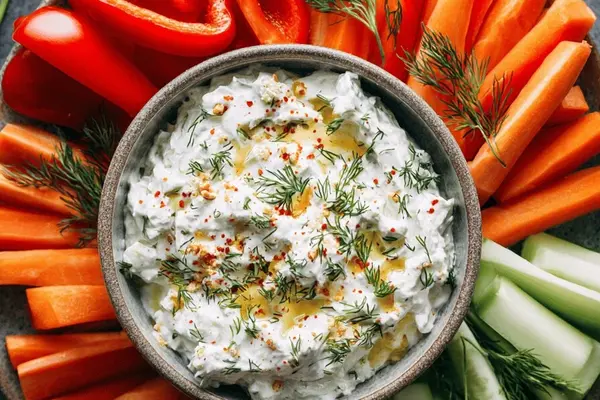
Creamy goat cheese dip made with Greek yogurt, fresh dill, tarragon, and Dijon mustard. Serve with carrot sticks, celery root, and bell pepper for a bright, herbaceous appetizer.
Prep:
20 min
Cook:
0 min
Total:
20 min
Servings:
4 servings
Pulse the goat cheese and yogurt until it’s creamy but not smooth—you want texture to chew on, not a mousse. Stir in the dill, tarragon, and Dijon. Taste it. Add salt, pepper. If it’s too tangy, water it down a tiny splash. Takes 20 minutes total.
Why You’ll Love This Herb Goat Cheese Dip
No cooking. Just mixing. Throw it together while everyone’s still arriving. Works as a vegetarian appetizer at any gathering—people actually eat all of it instead of picking around the edges. Celery root is the thing here. Earthy. Snappy. Changes everything about what a vegetable dip can be. Creamy meets crunch, tangy meets sweet from the maple syrup. The contrast is what makes it stick around. Tastes better cold. Really cold. Not icy, just properly chilled. Jars do double duty—no extra plating, no mess, guests grab and go at a party.
What You Need for Herb Goat Cheese Dip with Maple Syrup
Goat cheese. Three ounces. Softened—not room temp, just soft enough to pulse without fighting. Greek yogurt. Three quarters cup. Two percent works. The thickness matters more than the brand. Maple syrup. A teaspoon and a half. Not honey. Maple has a different sweetness, less floral. Dill and tarragon. Fresh. Chopped fine but not paste. Both of them. One brings brightness, the other adds that subtle anise note. Dijon mustard. A tablespoon. Not yellow mustard. The grain and sharpness matter. Onion powder. Half a teaspoon. Avoids the raw bite of fresh onion but still gets the depth. Salt and black pepper.
For the vegetables. Two carrots cut into sticks. One celery root stalk, peeled and cut into sticks—this is the swap that makes it different. One red bell pepper, seeded and sliced. Half an English cucumber, cut into sticks.
How to Make Herb Goat Cheese Dip with Vegetables
Pulse the goat cheese, yogurt, and maple syrup in a mini food processor until creamy but still rustic. The point is texture. Over-blend it and you lose that. If you’re mixing by hand, just fold it until it comes together—don’t beat it. Stir in the dill, tarragon, Dijon, and onion powder. Taste it now. Season with salt and black pepper. If it tastes too sharp or tangy, add a tiny splash of water to loosen it and smooth it out.
Spoon the dip evenly into four jars. About a cup and a half measure in each one. Smooth the surface. Vertically tuck the carrot sticks, celery root, pepper slices, and cucumber sticks into the dip. Stand them erect like mini bouquets. They should hold themselves up. Seal the jars tightly. Chill for at least 15 minutes. The flavors need time to integrate and the dip needs to firm just a bit.
How to Get the Texture Right and Keep Vegetables Crisp
Serve it cold. Or room temperature. Cold dip is thicker, lusher. Room temp is more spreadable. The choice depends on what you want. Don’t let it get warm. That’s when it starts to separate.
Cut your vegetables just before assembly or right before serving. The water they release will thin out the dip if you do it too early. Keep them refrigerated until the last minute. If you’re prepping ahead—up to 3 hours—mix the dip early, but assemble the jars with veggies right before people arrive.
Celery root will start to brown if you leave it sitting. Soak the sticks in cold water with lemon juice for a few minutes before assembly. It stops the oxidation. Dry them well after, though, or they’ll water down the dip.
The dip itself should hold its shape when you poke it. It should give under pressure but not collapse. If it looks lumpy after mixing, that’s fine—those are goat cheese chunks adding rustic texture. Don’t stir it vigorously after you add the herbs. You’ll bruise them and lose color. A gentle stir is enough.
Herb Goat Cheese Dip Tips and Common Mistakes
Don’t overmix. Overworked goat cheese separates. It gets thin and watery. Use a light pulse or fold it by hand instead. Mini food processor works better than a blender for this reason—more control, less chance of turning it into liquid.
Fresh herbs only. Dried herbs dull the flavor and change the moisture content of the whole thing. The dill and tarragon are doing the real work here. Don’t skimp. If you can’t find fresh tarragon, use chives or parsley instead—the flavor shifts but it still works. If dill isn’t available, more parsley or chives fill that gap.
The maple syrup is the thread tying the tangy yogurt and sharp Dijon together. It’s not sweet—it’s the balancing act. If the dip tastes too sharp or too sour, a tiny pinch more syrup or a splash more water smooths it out. Don’t add sugar. Syrup works differently.
Greek yogurt matters. Thick Greek yogurt. If yours is runny or watery, strain it first through a fine mesh sieve for 30 minutes. Remove the whey and you get a thicker base. Cheaper yogurt can ruin the whole texture.
Goat cheese must be fresh. Old goat cheese tastes bitter. You’ll know it the moment you taste it. If you can’t find goat cheese, tangy cream cheese can stand in, but the flavor shifts. It won’t taste quite like this.
Black pepper goes last. Coarse grind preferred. You want the texture of it, not just the flavor. Fresh cracked matters here.
Keep the jars upright in the fridge. Lay them on their side and the dip settles, veggies fall over, the whole thing gets sloppy. Airtight containers with silicone seals prevent fridge odors from leaking in.
Leftovers keep in the fridge up to two days. If the dip firms up too much, let it sit out for ten minutes or stir in a tiny splash of yogurt or water to loosen it again. It’ll reincorporate.
Herb Goat Cheese Dip with Greek Yogurt
Prep:
20 min
Cook:
0 min
Total:
20 min
Servings:
4 servings
Ingredients
- Dip
- 80 g (3 oz) fresh goat cheese, softened
- 200 ml (3/4 cup) Greek yogurt 2 %
- 7 ml (1 1/2 tsp) maple syrup
- 20 ml (1 1/2 tbsp) chopped fresh dill
- 15 ml (1 tbsp) chopped fresh tarragon
- 15 ml (1 tbsp) Dijon mustard
- 3 ml (1/2 tsp) onion powder
- salt and black pepper to taste
- Crudités
- 2 carrots, cut into sticks
- 1 celery root stalk, peeled and cut into sticks
- 1 red bell pepper, seeded and sliced
- 1/2 English cucumber, cut into sticks
Method
- Dip
- 1 Pulse goat cheese, yogurt, maple syrup in mini food processor or bowl using whisk attachment until creamy but still rustic. Don’t over-blend; want some texture to chew. Stir in dill, tarragon, Dijon, onion powder. Taste. Season with salt and crunchy black pepper. If too tangy, add tiny splash water to loosen.
- Assemble
- 2 Spoon dip evenly into four wide-mouthed jars, around 1 1/2 cup measure. Smooth surface. Vertically tuck carrot, celery root, pepper and cucumber sticks into dip. They should stand erect like mini bouquets.
- 3 Seal jars tightly. Chill minimum 15 minutes to integrate flavors and firm dip just a bit. Serve cold or at room temp. Dip coats veggies; creaminess meets snap and earthiness from celery root sticks.
- 4 Store leftovers in fridge up to 2 days. If dip firms too much, let warm 10 minutes or stir in tiny splash yogurt or water to loosen.
- Notes
- 5 Swap celery root with classic celery only if you want crunch but expect less earthy depth. Dijon mustard replaces horseradish for subtler heat—adds tang without bite that overwhelms. Maple syrup instead of honey for different sweetness note, less floral, more caramel. Don’t skimp on herbs; dill and tarragon bring brightness and a hint of anise. Feel free to swap herbs depending on fresh availability.
- 6 When cutting veggies, aim for uniform size so they fit well in jars and dip evenly. Razor-sharp knife prevents bruising; older carrots may be bitter, best choose fresh crisp ones.
- 7 Avoid overmixing dip—overworked goat cheese separates. Light pulse or manual folding advised.
- 8 Crunch and cream combo keeps snacks lively. A trick to keep celery root from browning: soak sticks briefly in cold water with lemon juice before assembling.
- 9 Jars double as serving vessels—no extra mess. Wash and dry veggies thoroughly to avoid watering down dip.
- 10 Experiment with herbs—chives or parsley could work if dill or tarragon unavailable. Experiment with seeded mustard for texture addition.
- 11 Tactile cue: dip should hold shape but yield when poked with finger or spoon.
- 12 Use small food processor blades for better control; blender may turn dip too watery.
- 13 Visual cue: color changes slightly after mixing; herbs disperse evenly. Dip should be pale with green flecks.
- 14 Serving tip: chilled dip thicker and more luxurious, room temp dip more spreadable. Depending on preference, adjust fridge time.
- 15 Aroma is subtle herbaceous with sour cream and slight sweetness from syrup. Good sign if smell is fresh, not rancid or overly sour.
- 16 If you can’t find goat cheese, tangy cream cheese can substitute but flavor shifts.
- 17 If fridge time tight, prep dip up to 3 hours ahead then assemble with veggies last minute to keep crispness.
- 18 Dipping sounds: soft scrape, gentle resistance when veggie bites into creamy base.
- 19 Always use fresh herbs. Dried herbs dull flavor and alter moisture content.
- 20 Cut vegetables on bias for visual appeal and crisp bite.
- 21 Instead of cucumber sticks, try jicama or daikon for crunch variation.
- 22 Make jars slightly bigger to accommodate large veggie sticks without crowding. Crowding causes veggies to sweat and lose snap.
- 23 If dip looks lumpy, stir gently; lumps from goat cheese chunks are fine, add rustic texture.
- 24 Do not stir dip vigorously after adding herbs—prevents bruising herbs and losing color.
- 25 Add black pepper last, coarse grind preferred for textured bite.
- 26 Try swapping bell pepper color for aesthetics—yellow or orange bring freshness.
- 27 Store assembled jars upright to prevent dip settling and veggies falling.
- 28 Use airtight containers with silicone seals; prevents fridge odors leaching in.
- 29 After tasting, if dip too tart or sharp, tiny pinch sugar or more syrup smooths edges.
- 30 For smoother dip, strain yogurt before mixing to remove excess whey.
- 31 If blues from oxidation on herbs start to show, blitz quickly once more or add herbs at end.
- 32 Try sprinkling freshly chopped herbs on top of dip before sealing for visual punch.
- 33 To make vegan, swap goat cheese for soft tofu or vegan cream cheese; adjust seasonings carefully.
- 34 When stirring, use silicone spatula to scrape sides and fold gently to preserve texture.
- 35 The sweet note from syrup is the thread tying tart yogurt and tangy Dijon.
- 36 You’ll find celery root adds a fascinating hint of earthiness missing from usual celery. Try it; once tried, no going back.
- 37 Keep dip firm but spreadable; if unexpectedly runny, it means overwhipped or watery yogurt—use thicker Greek or strain source.
- 38 For make-ahead snacks, store veggies separately in cold water; assemble last minute to retain snap.
- 39 Serve pots chilled but not icy; numb taste buds kills the experience.
- 40 If Dijon mustard is strong, reduce amount slightly and balance with extra herbs or syrup.
- 41 Feel free to swap raw veggies to what’s freshest or preferred: cauliflower, snap peas, cherry tomatoes work too but modify chopping.
- 42 A tiny bit of lemon zest adds brightness if you want to experiment.
- 43 Onion powder avoids raw onion bite but adds umami depth; no substituting with fresh onion or smell dominates.
- 44 No oil in this dip; adding can weigh it down and lose fresh texture.
- 45 Use medium heat tools; low and slow blending best to maintain creaminess.
- 46 Tasting between additions avoids overpowering with mustard or herbs.
- 47 Don’t overfill jars; leave small air gap prevents pressure build-up when sealed.
- 48 Prioritize freshness. Old goat cheese gets bitter. Sour yogurt obvious by smell and taste.
- 49 Cut veggies just before serving or assembly to avoid dryness or moisture release. Keep refrigerated till last minute.
- 50 If dip separates after a night, stir gently to reincorporate. No harm done.
- 51 Crunch against creamy, tangy dip aligns with ideal textural contrast—listen to the bite.
- 52 Use ceramic or stainless steel bowls for mixing to avoid off-flavors.
- 53 Rustic texture preferred; not a mousse. Too whipped kills substance.
- 54 Chop herbs fine but not paste; bits should remain visible inside dip.
- 55 Maple syrup texture helps bind dip; honey or agave can stand in but changes final flavor.
- 56 Plan on 5 minutes extra if you adjust ingredient quantities or mix by hand.
- 57 Visual: dip looks fresh, glossy; herbs vivid; veggies bright and firm.
- 58 These jars are conversation starters. No presentation fuss; fuss is flavorless.
Nutritional information
Calories
150
Protein
5g
Carbs
10g
Fat
7g
Frequently Asked Questions About Herb Goat Cheese Dip with Vegetables
Can I make this dip ahead of time? Up to 3 hours. Mix the dip, store it in the fridge, assemble with veggies at the last minute to keep them crisp.
What if I don’t have celery root? Classic celery works. You’ll lose the earthy depth—it’s just crunch instead. But it still tastes good. Not the same thing though.
Can I swap the herbs? Dill and tarragon are the combo. If tarragon’s hard to find, parsley or chives work fine. If dill’s unavailable, parsley again or more chives. The flavor changes but it doesn’t break.
Why does my dip look separated or watery? Overwhipped or watery yogurt. Use thicker Greek yogurt next time or strain it first. Over-blending also causes this. Keep the pulse short and gentle.
Can I make this vegan? Swap the goat cheese for soft tofu or vegan cream cheese. Adjust the seasonings carefully—it’ll taste different. The texture works. The flavor needs tweaking.
What vegetables work besides the ones listed? Cauliflower, snap peas, cherry tomatoes, jicama, daikon. Cut them into pieces that stand up in the dip. Uniform size matters so they dip evenly and fit the jars without crowding.
How long does the dip keep? Two days in the fridge. If it separates after sitting, stir it gently. No harm done. Veggies keep separate in cold water up to a day.
What if the dip tastes too tangy? Add a tiny splash of water or a pinch more maple syrup. Not sugar. The syrup balances it differently than granulated does.
Can I use a blender instead of a food processor? Not really. Blenders over-whip it. Mini food processor is better. If you’re mixing by hand with a whisk, that works too—takes longer, way more control.
Should I serve it cold or room temperature? Cold. The dip is thicker, creamier when chilled. Room temperature makes it spreadable but less luxurious. Cold is the move.
You’ll Love These Too
Explore all →
Maple Cinnamon Brioche Rolls with Butter Glaze

Rolled Out Sugar Cookie Recipe with Hazelnut

Slow Cooker Chili with Ground Turkey
Braised Endives with Maple Syrup
Slow Braised Brisket with Red Wine & Beef Stock

White Port Cocktail with Grapefruit

Asian Chicken Salad with Ginger Marinade

Fluffy Pancakes Recipe with Buttermilk

Blueberry Danish with Cream Cheese & Lemon

Caramelized Figs with Greek Yogurt & Honey
Slow Braised Lamb Leg with Thyme & Sherry

Cinnamon Toast Crunch Cheesecake Bites

Maple Rum Babas Recipe With Dark Spiced Rum

Mini Chicken Pot Pies with Cheddar Biscuits
Edible Cookie Dough Recipe with Oat Flour

Savory Pastry Dough with Pork Fat

Brown Butter Chocolate Chip Cookies
Omble Crudo with Cranberry Vinaigrette
Coleslaw Recipe with Red Cabbage and Apple Cider Vinegar