Herb Pesto with Walnuts and Pecorino
By Emma
Certified Culinary Professional
·
Recipe tested & approved
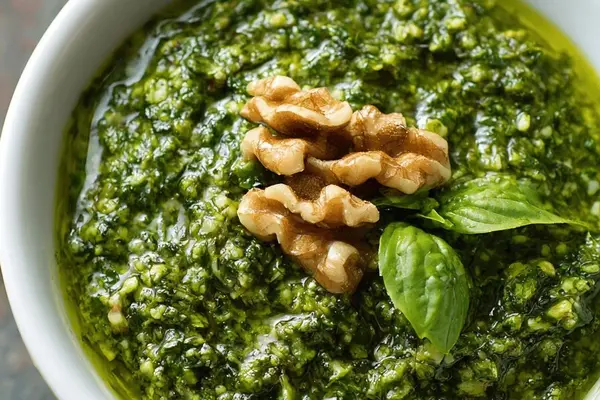
Fresh herb pesto made with toasted walnuts, Pecorino Romano, basil, lemon and lime juice. Creamy, zesty, and perfect for pasta or bread.
Prep:
12 min
Cook:
0 min
Total:
12 min
Servings:
4 servings
Toss basil, walnuts, Pecorino straight into the processor—pulse before it becomes paste. That’s it. Takes 12 minutes if you’re not fussing, and honestly you shouldn’t be. Fresh basil pesto without pine nuts hits different. The lemon and lime juice do something the original never figured out.
Why You’ll Love This Herb Pesto
Makes actual condiment out of what’s in your garden or the produce section. Not some precious thing. Just works. Cold pasta, warm pasta, doesn’t care. Dollop it on fish. Stir into Greek yogurt. Spread on garlic bread and you’re basically done with dinner. Walnut pesto tastes nuttier than the traditional version—toasted ones especially. Vegetarian and dense enough that a little goes a long way. Oil separates sometimes when it sits. Just whisk it back. Not a flaw.
What You Need for Walnut Pesto with Lemon and Lime
Fresh basil. Three cups packed. Not wilted. If it’s been sitting around, skip it. Toasted walnuts—a third cup roughly. Raw walnuts are boring. Toast them first or buy them already done. Pecorino Romano. Finely grated. Not the stuff in the green can. One quarter cup. Garlic. One large clove, chopped. Not minced. Rough pieces work better with the pulse action. Lemon juice and lime juice. Fresh. Both. A tablespoon each. This is where the herb citrus pesto angle lives. Extra virgin olive oil. A cup and a half. You’ll drizzle more at the end, maybe. Salt. Nothing fancy.
How to Make Fresh Basil Pesto
Drop the basil into the food processor bowl first. Add walnuts, Pecorino, and garlic. Don’t overthink the order. Pour in the lemon and lime juice. This is important—acid goes in before oil because it helps break things down. Now pulse. Don’t just run it. Short bursts. Stop when you can still see leaf fragments. That’s the whole point. Some pesto should feel grainy, not velvet.
Turn the machine to low speed. Stream the olive oil in slowly—not all at once. Watch the color get richer, darker green. The texture thickens as the oil mixes in. You want thick but still loose enough that it moves around the bowl. This takes maybe a minute. Stops before it becomes glossy and paste-like.
Scrape the sides down with a rubber spatula. See where the oil’s pooled separate from the herb base. That’s normal right now.
How to Get Walnut Pesto Perfectly Textured
Taste it. The basil pesto with toasted walnuts and pecorino should taste bright and nutty at the same time. If it’s too sharp—that citrus can be aggressive—add another tablespoon of oil. Oil mellows things. Or a pinch of sugar. Not sweetness. Just takes the edge off. Salt goes in last, and gradually. Half a teaspoon, taste, add more if needed. Too much salt hides everything.
The grainy texture matters. That’s where the walnut stays walnut instead of becoming invisible. Some people want it smoother. Fine. Pulse longer. But stop before it’s glossy paste.
Lemon Lime Pesto Tips and Storage
Oil separates when it sits in the fridge. Totally fine. Whisk it back together before you use it, and it comes back creamy. Bring it to room temperature first—cold pesto is thick and won’t coat pasta right. Five minutes on the counter and it’s ready.
Store it in an airtight jar. Cover the surface with a thin layer of oil—like a quarter inch—to keep the air off the basil. Prevents browning. Keeps about a week. Maybe two if you’re lucky and the jar’s clean.
Homemade herb citrus pesto sauce doesn’t keep as long as the stuff with pine nuts. No idea why. Just doesn’t. Use it fresh when you can. That’s when the basil actually tastes like basil.
Warm pasta still clinging to strands. Mix the pesto in off heat. If you stir it into boiling pasta water the heat kills some of the basil’s brightness. Same with garlic bread—spread it on, don’t bake it into submission.
Herb Pesto with Walnuts and Pecorino
Prep:
12 min
Cook:
0 min
Total:
12 min
Servings:
4 servings
Ingredients
- 85 g fresh basil leaves packed (about 3 cups)
- 40 g toasted walnuts (about 1/3 cup)
- 25 g Pecorino Romano finely grated (about 1/4 cup)
- 1 large clove garlic roughly chopped
- 15 ml fresh lemon juice (1 tablespoon)
- 15 ml fresh lime juice (1 tablespoon)
- 150 ml extra virgin olive oil, plus extra to adjust
- Salt to taste
Method
- 1 Toss basil, walnuts, Pecorino, and garlic into food processor bowl.
- 2 Add lemon and lime juice before pulsing gently to combine. Stop before complete pureeing; want some rough texture.
- 3 Turn machine on low; stream in olive oil slowly until mixture thickens but not too loose.
- 4 Scrape down sides intermittently. Watch for rich green color and slight grainy texture.
- 5 Taste. Salt gradually. Too sharp? Add more oil or a pinch sugar.
- 6 Use immediately or refrigerate in airtight jar, covering surface with thin oil layer to prevent browning.
- 7 Bring to room temp before using if chilled. Whisk gently to revive creaminess if oil separates.
- 8 Great tossed in warm pasta still clinging to strands; classic garlic bread drizzle; or as dressing base.
Nutritional information
Calories
320
Protein
6g
Carbs
4g
Fat
31g
Frequently Asked Questions About Herb Pesto
Can I make walnut pesto without a food processor? Mortar and pestle. Takes longer. Twenty minutes maybe. Crush the garlic first, then walnuts, then basil with the Pecorino. Add lemon and lime juice, grind until it looks right, drizzle oil in while you work. Works fine. Some people say it tastes better this way. Not sure I believe them but it definitely feels more intentional.
What’s the difference between walnut pesto and pine nut pesto? Pine nuts cost more and soften easier. Walnuts stay toasted and firm. Flavor’s different—walnuts are earthier, kind of bitter in a good way. Pine nuts are buttery. Both work. Pecorino walnut pesto tastes less precious, which I like. Doesn’t try to be traditional.
Can I use dried basil instead of fresh? No. Don’t bother.
How do I use this with pasta? Warm the pasta, drain it but don’t rinse it—starch helps the pesto stick. Put it in a bowl. Spoon pesto over the top. Toss gently. Add pasta water a little at a time if it’s too thick. Or just use it thick. Depends on your mood. Add lemon zest on top if you want more brightness. Not required.
Why does my pesto separate? Oil and water don’t mix. Basil’s full of water. Happens to everything eventually. Whisk it before serving and it comes back together. If it separates the second you make it, you added oil too fast. Doesn’t matter for flavor but it looks weird.
Can I freeze lemon lime pesto? Yeah. Leave the oil off the top, freeze it in ice cube trays, pop them out into a bag. When you’re ready, thaw it in a bowl and stir in fresh oil. Basil tastes a little muted after freezing but it still works. Useful if you have too much basil at the end of summer and nowhere to use it.
You’ll Love These Too
Explore all →
Buttermilk Rye Crumpets Recipe

Pumpkin For Pie Cinnamon Roll Cups
Baked Jalapeno Poppers with Cream Cheese
Rustic Chicken Pot Pie with Buttermilk Crust
Beef Pasta with Smoked Paprika and Cheddar
Piquante Pepper Sauce Recipe

Banana Coffee Shake with Raw Cacao
Japanese Pork Shabu-Shabu with Kombu Broth

Bacon & Egg Burger with White Cheddar
Creamy Chili Crab Pasta with Lemon
pan fried steak cast iron

Jalapeño Popper Potato Skins with Bacon

Crispy Coconut Chicken Tenders Recipe

Making Tomato Soup with Bacon & Pecorino
Sheet Pan Sesame Chicken with Broccoli

Red Velvet Chocolate Chip Cookies
Sesame Beef Noodles with Soy Sauce
Basil Mozzarella Tomato with Veal

White Chicken Chili with Beans