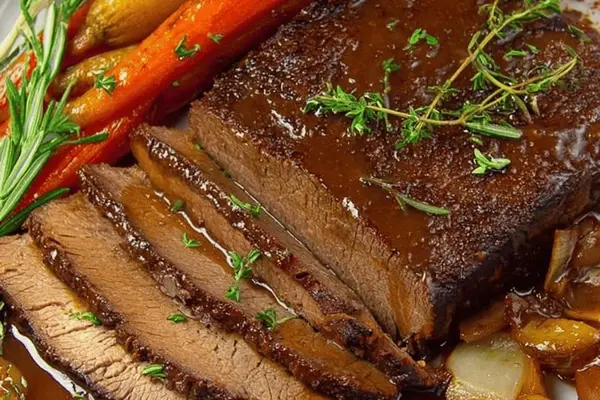
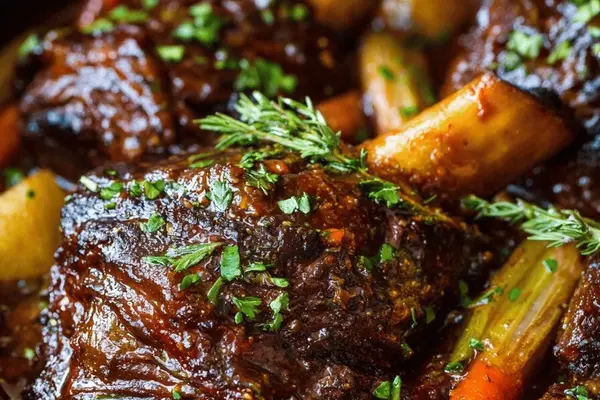
Glazed Lamb Shanks with Buckwheat Honey
By Emma
Certified Culinary Professional
·
Recipe tested & approved
Glazed lamb shanks braised with buckwheat honey, cognac, and sherry vinegar. Tender meat with carrots, parsnips, and celery. Rich, aromatic comfort food that’s naturally gluten-free.
Prep:
25 min
Cook:
2h 50min
Total:
3h 15min
Servings:
6 servings
The shanks go in first—oil and butter gets them brown on all sides, then everything sits in the oven for three hours until the meat falls off the bone. It’s the kind of thing you start before lunch and dinner’s ready. Tried once with short ribs. They work. But lamb shanks have something that just melts.
Why You’ll Love This Glazed Lamb Shanks Recipe
Comfort food that doesn’t ask much once it’s going. Three hours total but you’re mostly not touching it—baste every twenty minutes, that’s the whole job. The buckwheat honey makes a glaze that’s dark and almost sharp, nothing like regular honey. Slow cooker stew energy but you get that brown crust on the meat from the sear first. Root vegetables soften into the liquid so they taste like whatever the lamb was thinking about. Works cold the next day, maybe better. One skillet and a dutch oven. Cleanup’s not nothing, but the oven does most of the work.
What You Need for Slow Cooker Lamb Shanks
Six lamb shanks—about 400 grams each. Bigger pieces are actually better here because smaller ones fall apart too fast. Buckwheat honey. Not regular honey. The buckwheat one’s darker, tastes almost molasses-like in a way that matters. Olive oil and butter—both go in the pan at the start. Sherry vinegar and cognac. Not wine. The vinegar’s sharper, the cognac brings something the wine doesn’t. Chicken stock. Beef works too but lighter stock tastes better. Blood orange sliced thin—the acid and bitterness cut through the richness. If blood oranges aren’t around, regular orange works, so does a lemon. Red onion halved, garlic split (not minced—whole cloves matter here), carrots and celery and parsnips all sliced bias so they’re flat and cook faster. Thyme sprigs and a bay leaf. Salt and pepper.
How to Make Glazed Lamb Shanks with Buckwheat Honey
Oven sits at 175 Celsius. Heat oil and butter in a large skillet until it’s actually hot—smell matters here, once the butter stops foaming it’s ready. Pat the shanks dry or they won’t brown right. Get them in the pan—they should sizzle. Don’t move them. Let one side go dark, flip, let the other side go dark. This takes maybe ten minutes total. Both sides should look almost burnt. That’s the point. Once they’re all brown, salt and pepper them, move them to a plate.
Pour the sherry vinegar and cognac into the same hot pan. Scrape the browned bits up with a wooden spoon—those bits are flavor. Let it bubble hard on medium heat until it’s reduced by half. You’ll see it get darker and thicker. Smells sharp. Add the chicken stock and the buckwheat honey, stir until the honey dissolves, bring it to a simmer. Taste it—salt lightly now, you’ll adjust later.
Put the shanks back in. Lay the blood orange slices on top, tuck the red onion halves and garlic cloves around them. Cover the skillet with a lid or foil and slide it into the oven. This is the first bake—one hour. Every twenty minutes pull it out and spoon that liquid over the meat. Gets tedious but it matters. The glaze builds from basting.
After an hour, pull the skillet out. Nestle the carrots and celery and parsnips into the liquid around the shanks—they go in now because they’ll turn to mush if they cook the whole time. Throw in the thyme sprigs and bay leaf. This time don’t cover it. Back in for fifty minutes. The liquid reduces, the vegetables soften, the glaze starts to look like an actual glaze. Baste again if you feel like it.
After fifty minutes, cover it again and cook another thirty minutes or until the meat’s falling from the bone. You’ll know because when you push it with a fork the meat just comes apart.
Glazed Lamb Shanks Tips and Common Mistakes
Don’t skip the initial sear. Pan has to be hot enough that the meat browns, not steams. If it’s not brown it tastes like boiled meat instead of braised. The basting matters more than the time—if you skip it the top dries out and the glaze doesn’t build. Heat matters too. Too hot and the vegetables turn into paste before the meat’s done. Too low and you’re waiting five hours. 175 is the right temperature. Haven’t tried going higher. Probably not worth it.
Brown the meat properly the first time and you don’t have to fix it later. The sherry and cognac smell sharp when they go in—that’s correct. Once it’s cooked for three hours it mellows into the background. The orange slices do two things: they add flavor and they look good. You can eat them if you want. Most people don’t. The root vegetables can be swapped—parsnips for parsnips, carrots for carrots, celery for celery or skip it entirely. Just keep the ratio roughly the same. Rest the whole thing for five minutes before you serve it. Doesn’t sound like much but the meat firms up just enough to plate without falling apart completely.
Glazed Lamb Shanks with Buckwheat Honey
Prep:
25 min
Cook:
2h 50min
Total:
3h 15min
Servings:
6 servings
Ingredients
- 6 lamb shanks approx 400 g each
- 40 ml olive oil
- 25 g butter
- 50 ml sherry vinegar
- 30 ml cognac
- 450 ml chicken stock
- 100 ml dark buckwheat honey
- 1 blood orange sliced
- 1 large red onion halved
- 3 cloves garlic split
- 5 carrots sliced bias
- 3 celery stalks sliced bias
- 3 parsnips sliced bias
- 2 thyme sprigs
- 1 bay leaf
- Salt and freshly ground black pepper
Method
- 1 Set oven rack mid-level and preheat to 175 C
- 2 Heat oil and butter in large skillet; sear lamb shanks until well browned all sides, season with salt and pepper, transfer to plate
- 3 Pour vinegar and cognac into skillet, scrape browned bits, reduce liquid by half on medium heat
- 4 Add chicken stock and honey, bring to simmer, season lightly
- 5 Return shanks, add orange slices, onion halves, garlic cloves, cover skillet with lid or foil
- 6 Bake in oven 1 hour, baste meat with cooking liquid every 20 minutes
- 7 Remove skillet, nestle carrots, celery, parsnips around shanks into liquid
- 8 Add thyme and bay leaf, return to oven uncovered
- 9 Cook 50 minutes more until glaze thickens and veggies soften, basting occasionally
- 10 Cover again, cook extra 30 minutes or until meat is falling from bone
- 11 Rest briefly before serving
Nutritional information
Calories
560
Protein
45g
Carbs
20g
Fat
35g
Frequently Asked Questions About Lamb Shanks with Buckwheat Honey
Can you make this in a slow cooker instead of the oven? Yeah. Sear the shanks on the stovetop first—that step doesn’t change. Then everything goes into the slow cooker on low for eight hours. Add the vegetables after four hours or they’ll disintegrate. The glaze won’t be as thick because there’s no reduction happening, but you can boil it down on the stove after if it matters to you.
What if you don’t have buckwheat honey? Regular honey works. The result’s sweeter, less complex. Not worse. Different. Molasses would be closer to buckwheat honey’s taste if you have it.
How long does this actually take? Prep is 25 minutes if you’re moving. Cook time is two hours 50 minutes in the oven. Total three hours 15 minutes. First bake is one hour, second is fifty minutes, third is thirty. Do the sear while the oven preheats.
Can you double the recipe? Sure. Use two skillets or a large roasting pan instead. Cooking time stays the same because the oven’s the limiter, not the amount of food. More liquid might take slightly longer to reduce but not much.
What wine can you use if you don’t have sherry vinegar and cognac? Don’t. They’re different. Sherry vinegar’s sharp and that sharpness matters. Cognac brings something brandy-like. White wine’s flabby by comparison. Stick with what’s called for or skip the alcohol entirely and add more vinegar and stock instead.
Does the meat really fall off the bone? If you cook it all the way—yes. Three hours total, full cooking time, properly basted. By the end the meat’s so soft it’s almost collapsing. If it’s still tough add time. Lamb shanks vary in size and toughness depending on the animal.
You’ll Love These Too
Explore all →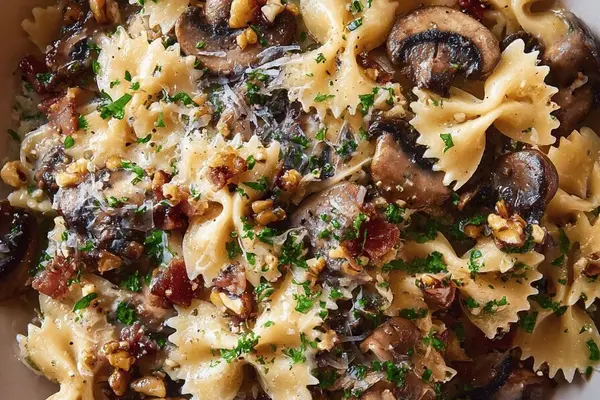
Mushroom Pasta with Pancetta & Cream Sauce
Bacon Cheese Ball with Ranch & Walnuts
How Do You Make An Omelet with Shrimp
Cinnamon Rolls with Cherry Preserves & Cream Cheese
Homemade Cinnamon Rolls with Honey Caramel
Oven-Baked Steak Hash Omelet with Cheddar
Peppermint Chocolate Shards with Candy Canes
Pork Ginger Lemongrass Skewers with Cashew Sauce
Breakfast Tater Tot Casserole with Bacon
Mediterranean Orzo Salad with Goat Cheese
Turkey Sandwich with Spicy Mayo and Avocado
Greek Yogurt Bagels Air Fryer: No Yeast
Crispy Tofu Avocado Wraps with Arrowroot
Maple Rosemary Twist Cocktail Recipe
Rustic Slow Chicken Stew with Bacon
Homemade Zeppole: Crispy Fried Dough Balls
Herb Vinaigrette Remix with Tarragon
Instant Pot Halloween Deviled Eggs with Avocado
Beef Stew Slow Cooker with Rotel & Cheese