Olive Oil for Dipping Bread Recipe
By Emma
Certified Culinary Professional
·
Recipe tested & approved
Tangy olive oil dipping sauce with garlic, pecorino romano, and red wine vinegar. Herb-infused blend with oregano and red pepper flakes for rustic bread.
Prep:
6 min
Cook:
0 min
Total:
6 min
Servings:
8 servings
Pour the olive oil slow. Watch it pool around the spices first—that’s when you know the garlic’s gonna release everything. Three teaspoons minced, not sliced. It matters.
Why You’ll Love This Bread Dipping Oil
Takes six minutes. Not an exaggeration. Literally just measuring and stirring.
Works as an appetizer before literally any meal. Bread, cheese, oil—that’s mediterranean eating right there. People see a bowl of this and they stop talking.
No cooking. No heat. Just assembly, and the flavors snap together while you’re still holding the spoon.
Tastes better the next day. Not immediately better—like actually better. The garlic mellows, the vinegar settles into everything.
Cheese gets suspended in the oil instead of sinking. Silky texture with little clumps that cling to bread. That’s the move.
What You Need for an Olive Oil Bread Dip
Garlic goes in as minced—finely minced, the kind that releases oil when you press it. Three teaspoons. Not powder. Not whole cloves. Shallots work if you want sharper, but the recipe’s built for garlic.
Dried oregano. One teaspoon. The dried kind holds up better than fresh here.
Crushed red pepper flakes. Half a teaspoon. Sounds small. It’s not. Heat builds as it sits.
Cracked black pepper, the flaky kind if you can find it. Half a teaspoon. Matters more than it sounds.
Flaky sea salt. One teaspoon. Kosher salt dissolves too fast, disappears into the oil. You want the salt to stay visible, to catch your tongue.
Extra virgin olive oil. Half a cup. Not light olive oil. Not vegetable oil. The good stuff—fruity, peppery, alive.
Red wine vinegar. Two tablespoons. Not balsamic. Balsamic’s too sweet, too syrupy. Red wine vinegar punches through, cuts the richness, breaks the oil into little trails. That’s the whole point.
Pecorino romano. A quarter cup, shredded fresh. Not the green can. Parmesan’s too mild. Pecorino’s sharp, salty, holds its texture suspended in oil instead of melting into nothing.
How to Make Bread Dipping Oil
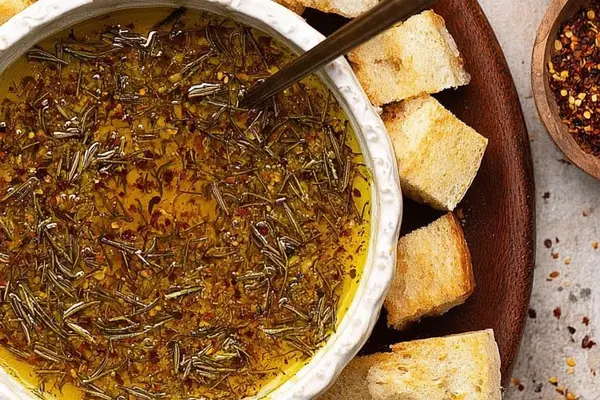
Smallest bowl you have. Add the garlic first—minced fine enough that you can smell it jumping out of the bowl the second it hits ceramic. Oregano next. Red pepper flakes. Black pepper. Sea salt. Toss it around with a fork, just enough to break up the garlic clumps, let the spices start knowing each other.
Now the oil. Pour it slow. Watch it pool around the spices, see the red pepper flakes float up a second then settle. This is the moment everything changes. The oil coats the raw garlic, mellows it slightly, carries the oregano heat. Stop pouring once it’s half a cup.
Red wine vinegar goes in next. Pour it straight into the oil and watch what happens—the vinegar doesn’t mix, it breaks the oil into little trails, tiny threads that dance before they settle. Stir briskly. That acid tames the sharp raw garlic bite. Might sting a bit when you smell it. That’s expected. That’s working.
Shredded pecorino comes in last. Whisk it slow, deliberate. You want the cheese suspended in the oil, little clumps held up by the liquid instead of sinking to the bottom. A gentle hand does this. Overwork it and the cheese turns gluey, sticks together, loses the whole texture. Stop whisking the second you can’t see the individual shreds anymore.
How to Get Your Bread Dipping Oil Right
Taste it now. This matters. Too sharp? Too much raw garlic still hitting. Add a splash more oil—not vinegar. Oil softens the edge. Needs heat? Pinch more crushed red pepper. Sitting longer mellows the sharp parts anyway, but if you want immediate kick, the pepper does it. Thickness off? Grate more cheese in, stir just enough to suspend it.
The oil should feel silky. Not thick. Not thin. Like it’ll cling to bread without pooling under it. Color should be golden with red pepper flakes visible, suspended, not all sunk. Smell it—garlic should be there but not aggressive. Oregano should be background. Vinegar should cut through everything.
Serve immediately with warm crusty bread. Pull apart a chunk, drag it through the olive oil bread dipping sauce. Let it soak up the oil, the cheese, the garlic. Edges of toasted bread get crispy, then turn soft in the oil. The cheese doesn’t quite melt—it stays firm but gets almost creamy from the oil heat. Garlic’s mellowed by now. Sharp tang from the vinegar comes in last. Spice warms the back of your throat.
Pull a second piece. The flavors sit different now—less aggressive, more together. The oil’s doing something to the bread. Making it better than it was.
Bread Dipping Oil Tips and Mistakes
Don’t use balsamic. I know it sounds right. It’s not. Too thick, too sweet, makes the whole thing syrupy instead of silky. Red wine vinegar cuts through. Use it.
Fresh garlic only. Powder tastes like nothing. Fresh minced, pressed so it releases oil—that’s the whole foundation.
Pecorino instead of parmesan. Parmesan’s mild, disappears into the oil. Pecorino’s sharp enough to stay present, salty enough to matter. You taste the cheese in every bite.
The cheese has to be shredded fresh. Pre-shredded comes with cellulose that keeps it from clumping, keeps it from suspending right. Fresh shredded is grainier, holds the oil better, texturizes everything.
Temperature of bread matters. Warm bread soaks faster. Cold bread just sits on top of the oil. Warm it before serving. Toast it if you want the edges crispy—the oil softens them back up as you eat.
Don’t make it hours ahead. The garlic gets meaner as it sits at room temp. Six minutes to serving is the sweet spot. Maybe twelve if your kitchen’s cold. After that, eat it or store it. Comes back if you let it sit overnight in the fridge—the garlic mellows, the flavors settle, tastes better actually.
One bowl, one spoon. Cleanup is nothing. This is the appeal.
Olive Oil for Dipping Bread Recipe
Prep:
6 min
Cook:
0 min
Total:
6 min
Servings:
8 servings
Ingredients
- 3 teaspoons finely minced garlic (substituted shallots for sharper hit)
- 1 teaspoon dried oregano
- ½ teaspoon crushed red pepper flakes
- ½ teaspoon cracked black pepper
- 1 teaspoon flaky sea salt
- ½ cup extra virgin olive oil
- 2 tablespoons red wine vinegar (replaces balsamic for punch)
- ¼ cup freshly shredded pecorino romano cheese (instead of parmesan)
Method
- ===
- 1 Add minced garlic, oregano, red pepper flakes, black pepper, and sea salt into your smallest bowl. Toss it around — aroma jumps out immediately. That’s your green light.
- 2 Drizzle olive oil in slowly, watch it pool around the spices. Now pour red wine vinegar. Stir briskly, notice the vinegar breaking the oil like little trails; that acid tames the sharp raw garlic. Might sting a bit, that’s expected.
- 3 Whisk in shredded pecorino slowly. You want the cheese suspended, a silky texture with little clumps. Don’t overwork it or the cheese turns gluey. A gentle hand stops it right here.
- 4 Taste now. Too sharp? Add a splash more oil, not vinegar. Needs kick? Toss in a pinch more crushed red pepper. Thickness off? Grate more cheese in, stir just enough.
- 5 Serve immediately with warm crusty bread. Pull apart bread or baguette crumbs perfect to soak. Oil clings, cheese melts on contact. Garlic mellowed, sharp tang from vinegar, spice warming. Sizzle of oil on toasted bread edges. Melted cheese pulls threads, gooey but firm.
- ===
Nutritional information
Calories
150
Protein
4g
Carbs
1g
Fat
15g
Frequently Asked Questions About Olive Oil Bread Dipping Sauce
Can I make this ahead? Not really. Six minutes before you serve it. The garlic gets sharp sitting around. Overnight in the fridge actually works—flavors settle, mellow out. But not on the counter for hours. That’s just angry garlic.
What bread works best for dipping? Anything crusty. Baguette, ciabatta, focaccia. Soft bread falls apart in the oil. Warm it first. Cold bread just sits on top instead of soaking.
Can I use fresh oregano instead of dried? Not the same. Fresh wilts, turns bitter in oil. Dried holds up, stays present. Stick with dried.
Do I really need pecorino? Can I use parmesan? Parmesan’s too mild. Disappears. Pecorino’s sharp, salty, stays suspended. If you only have parmesan, use it, but you’ll taste the difference. Grana padano works if you have it.
Why red wine vinegar and not balsamic? Balsamic’s sweet and thick. Makes the whole thing syrupy. Red wine vinegar cuts through, breaks the oil, punches through the richness. Two completely different results.
Can I add more heat? Yeah. Extra red pepper flakes. Or fresh hot pepper minced in. The longer it sits, the hotter it gets though. Start conservative.
How long does this keep? Refrigerated, maybe a week. Oil gets cloudy when cold, clears back up at room temp. The flavors stay solid. After a week the garlic starts turning funky. Don’t push it.
Can I use garlic powder instead of fresh? No. Powder tastes like nothing. Fresh minced is the whole point. This is a six-minute recipe—spend one of those minutes mincing garlic.
You’ll Love These Too
Explore all →
Clementine Mint Water Infusion Recipe

Broccoli Cheddar Potato Skins with Sour Cream

Cheesy Broccoli Potato Soup with Smoked Gouda

Slow Cooker Pulled Pork with Orange & Lime
Cheese Mozzarella Sticks Meatloaf Recipe
Pear Almond Muffins with Cinnamon
Maple Glazed Sausage Fingers Recipe
Lemon Raspberry Bars with Coconut Oil Shortbread
How to Make Boiled Peanuts in Pressure Cooker

Crispy Tofu Rice Bowls with Snow Peas
Banana Blondie Bars with Cream Cheese Frosting

Roasted Carrots Lentil Couscous with Halloumi
Grilled Salmon Meals with Green Beans

Lemon Ricotta Danishes with Puff Pastry
Creamy Carrot Soup with Tahini Sauce
Black Bean Brownies with Apple Butter
Lemon Fennel Roasted Chicken Breasts
Rum Butterscotch Taffy Made on Snow

Ginger Tea For Sore Throat Relief