Crispy Chicken Breasts with Parmesan Crust
By Emma
Certified Culinary Professional
·
Recipe tested & approved
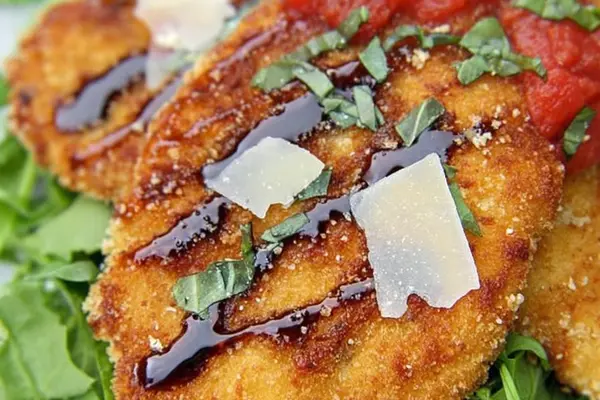
Make crispy chicken breasts coated in Parmesan and bread crumbs, served over peppery arugula with balsamic glaze. Pan-fried till golden with juicy interiors.
Prep:
16 min
Cook:
32 min
Total:
48 min
Servings:
4 servings
Flour, eggs, bread crumbs—that’s it. Sixteen minutes prep, thirty-two minutes cooking. Crispy fried chicken that doesn’t taste like the oil, just tastes like chicken that actually learned how to crunch.
Why You’ll Love This Crispy Fried Chicken
Takes 48 minutes total and most of that’s the tomatoes doing their own thing in the oven while you deal with the chicken. Makes an actual dinner, not a side—the roasted garlic and tomatoes turn it into something that feels intentional.
Cleanup’s fast. One pan for frying, one tray for tomatoes, three plates for breading. Wire rack means no soggy bottom. Leftover crispy chicken tastes fine cold, which nobody expects but happens anyway.
Works for easy dinners because there’s no weird technique hiding in here. Pound the breasts, bread them, fry them. The nutmeg in the coating does something—can’t explain it exactly, but leave it out once and you’ll notice.
What You Need for Crispy Fried Chicken Breasts
Four chicken breasts pounded thin. Matters. Thickness makes it cook through before the crust burns. One and a half pounds of tomatoes—firm ones, not the soft kind that collapse immediately. Quarter them, scoop the seeds and pulp out with your fingers or a spoon. Gets less watery that way. Six garlic cloves, whole, unpeeled if you’re lazy about it. They soften in the oven anyway. Three tablespoons olive oil for the roast. One cup flour mixed with half a teaspoon nutmeg, salt, white pepper. The nutmeg sounds weird. Do it anyway. Bread crumbs—panko or plain, doesn’t matter much—mixed with a third cup grated Parmesan. Two large eggs beaten smooth. One inch of vegetable oil for frying. Not olive oil. Vegetable oil doesn’t smoke as fast. Handful of arugula or spinach for plating. Balsamic glaze or reduction for drizzling at the end. Fresh basil if you have it, oregano if you don’t.
How to Make Crispy Fried Chicken
Oven goes to 290 degrees. Not 350. Low and slow for the tomatoes. Quarter them, get the woody stem part off, rip out the juicy insides with your fingers—seeds, pulp, all of it. The flesh is what you want concentrated. Skins stay on unless you’re fussing, which I’m not doing today. Toss tomatoes and whole garlic cloves with three tablespoons olive oil, half the salt, quarter teaspoon white pepper. Spread flat on foil-lined tray. Into the oven for an hour. Check every twelve minutes, let steam escape. If you cover it, it steams instead of roasts. You want roasting.
While that’s going, set up your breading station. Three plates or bowls. First one: flour mixed with nutmeg, a quarter teaspoon salt, quarter teaspoon white pepper. Second: beaten eggs. Third: bread crumbs mixed with Parmesan. Pound chicken breasts until they’re thin and even. Not paper-thin, just—thinner than they came. Dust each one in flour first. Quick dip in egg. Then bread crumbs, pressed on with your fingers so they actually stick. Rest them twelve minutes. This matters. The coating needs time to grip.
Heat one inch of vegetable oil in a heavy pan over medium-high. Test it with a small piece of bread crumb. Should bubble aggressively, not burn fast. Fry chicken flat. No crowding. Four minutes each side. Listen for crackling. That’s how you know. The crust should come up golden brown and actually crunchy. Don’t flip early or the coating tears off.
How to Get Crispy Fried Chicken That Stays Crispy
Drain on a wire rack. Not paper towels sitting in a puddle. Wire rack. Let the oil drip through, not pool underneath. Transfer to a warm oven—205 degrees or whatever your lowest setting is. Keeps it warm without drying it out. The tomatoes should be done around the same time. Pull them out. They’ll be flattened, edges deepened, almost shriveled. Diced garlic cloves soft enough to mash. Collect all the juices from the tray into a bowl with the tomatoes.
The breading stays crisp because you use a wire rack and a hot enough oil and you don’t pile them on top of each other while they cool. That’s it. No fancy trick. Just don’t steam them.
Crispy Fried Chicken Tips and Common Mistakes
Oil temperature’s the thing. Too cold and the chicken absorbs grease, comes out heavy. Too hot and the outside burns before the inside cooks. Medium-high usually works. Test it. Nutmeg in the coating sounds wrong until you taste it—subtle, not overpowering, brings everything up a notch. Skip it if you hate nutmeg, but try it first. Crowding the pan kills the oil temperature. Do batches if you need to. One or two breasts at a time, not four. Tomatoes release a ton of water. That’s why you dig out the seeds and pulp. Drier tomatoes, concentrated flavor, less watery result. Garlic goes soft and buttery in the oven—you can mash it into the tomatoes if you want a spreadable situation. Bread crumbs clumping or sliding off means either you didn’t rest them long enough or you didn’t press hard enough when coating. Press with your fingers. Make it stick. Oven temperature for holding shouldn’t be hot. Low and slow. You’re not cooking anymore, just keeping warm without turning the outside tough.
Crispy Chicken Breasts with Parmesan Crust
Prep:
16 min
Cook:
32 min
Total:
48 min
Servings:
4 servings
Ingredients
- 1 1/2 pounds tomatoes firm but ripe
- 6 cloves garlic peeled whole
- 3 tablespoons olive oil
- 1 teaspoon salt divided
- 1/4 teaspoon white pepper divided
- 1/2 teaspoon nutmeg ground
- 1 cup all-purpose flour
- 2 large eggs beaten
- 1 1/4 cups bread crumbs plain or panko
- 1/3 cup grated Parmesan cheese
- 4 chicken breasts thin pounded
- 1 inch vegetable oil for frying
- Arugula or baby spinach handfuls for plating
- Balsamic glaze or reduction for drizzling
- Fresh basil handful leaves (optional twist, swapped for oregano)
Method
- Make Roast Tomatoes Garlic
- 1 Heat oven to 290°F low and slow. Quarter tomatoes, scrub woody stems off. Rip out juicy pulp seeds stubbornly with fingers or spoon for less soggy roast. Skins optional — if bothered, blanch peel first, but I don’t bother fussing here. Toss tomatoes cloves garlic in olive oil salt pepper spread out single layer on foil-lined rimmed tray. Roast hour check every 12 mins let steam escape — lids trap moisture dull browning. Tomatoes flatten, slightly shriveled edges deepening scent, garlic softens till almost buttery. Dice tomatoes gently, scoop garlic whole, collect basil or oregano and juices into bowl. Set aside or strain skins now if needed — I leave skins for rustic texture.
- Prepare Chicken Cutlets
- 2 Set oven to 205°F or lowest warm setting. Setup breading stations — flour nutmeg salt pepper mix in plate one; beaten eggs simple bowl two; bread crumb Parmesan blend third plate. Coat chicken breasts, first flour dust for sticky base, quick egg dip for glue, heavy bread crumb pressing with fingers to really stick - key for crunch hold on frying. Rest 12 minutes lets crust settle not slide off. While resting heat one inch vegetable oil medium-high pan – test drop part of crumb should bubble aggressively but not burn fast. Fry chicken flat no crowding, 4 minutes each side rich golden brown crust forming crackling sounds. Do not flip too soon or crust tears. Drain on wire rack paper towel avoids soggy bath. Transfer finished breasts to warm oven rack to hold crisp without drying.
- Assembly
- 3 Scatter arugula or spinach sharp green bed, plate juicy cutlets on top. Spoon roasted tomato pieces garlic cloves and juices over and around. Final rain balsamic glaze for acid balancing sweet brightness. Basil or oregano sprinkle adds fresh earthiness. Serve hot offsetting crunch tender chicken with silky garlic and tangy roasted tomatoes.
- Notes & Tips
- 4 Nutmeg subtle but elevates breading, no substitute needed though grated mace close. Cheese bring umami and melds breadcrumbs crisp better than plain. If breadcrumbs clump or fall off, skip resting or press crumbs harder. Avoid crowded frying; temperature drops greedy oil sucks heat make greasy chicken. Holding chicken in too hot oven risks drying — low and slow keeps texture crisp soft warm. Tomatoes release lot of water, pulling seeds+ pulp stops watery roast you want concentrated flavor. Garlic cloves roast soft mellow, can mash into tomatoes for spreadable addition. Oregano swap brings woodsy aroma over basil if pantry empty. Balsamic glaze store-bought or reduced from vinegar plus honey simmered thick. If you lack wire rack, drain on doubled paper towels and flip often to avoid steam sogginess. For gluten-free, swap flour bread crumbs with cornstarch and almond meal respectively; skip nutmeg if almond meal spices overlap oddly.
Nutritional information
Calories
420
Protein
35g
Carbs
18g
Fat
22g
Frequently Asked Questions About Crispy Fried Chicken
How do I know when the chicken’s actually done inside? Four minutes per side, and the juices run clear. Or cut into the thickest part. No pink. The pounding makes it cook faster—thin chicken, less guessing.
Can I use buttermilk instead of egg for the breading? Haven’t tried it. Egg works. Buttermilk might work, probably makes it tangier, but I can’t promise the crust sticks the same way. Egg’s glue.
What if my bread crumbs keep falling off? Rest them longer. Twelve minutes minimum. Or press harder when you’re coating. The crumbs need to grip. Sometimes both.
Does the fried chicken in a air fryer version work? Different technique entirely. This is pan-frying. Crust’s different. Air fryer would be faster, less oil, but you lose the sear.
How long does crispy fried chicken keep in the fridge? Three days, maybe four. Cold’s fine. Reheats okay in a 300-degree oven for ten minutes if you want it warm again, but it won’t be as crispy. Cold and crispy is better anyway.
Can I skip the roasted tomatoes and just serve the fried chicken? Yeah. Chicken stands on its own. Tomatoes just make it feel like dinner instead of just protein. But if you want just the chicken, do that.
Should I use panko or regular bread crumbs? Panko’s bigger, crunches louder. Regular’s finer, crisps tighter. Both work. Panko if you want dramatic crunch, regular if you want crust that holds together better.
You’ll Love These Too
Explore all →
Hasselback Potatoes with Cheddar and Pancetta
Simplest Beef Lasagna with Ricotta

Cookies With Lemon Glaze: Vegan Royal Icing
Creamy Chicken Pasta with Garlic Butter Sauce
Strawberries Mousse with Gelatin and Whipped Topping
Braised Veal Marsala with Potatoes
Pork Tender Loin Recipe with Honey Garlic
Mint Chocolate Crisps with Peppermint Extract
Apple Tart with Granny Smith and Fuji
Salmon Miso Papillotes with Asparagus
Bacon Lettuce Tomato Sandwich Recipe
Chocolate Hazelnut Madeleines Recipe
Chocolate Hazelnut Pancakes with Nutella
Cucumber Red Onion Salad Recipe
Honey Sumac Candied Nuts with Cumin
Chicken Marbella Recipe with Olives & Prunes
Sour Cherries For Pie With Brandy
Baked Jalapeno Poppers with Cream Cheese
Gingerbread-Spiced Truffles with Bourbon