
Salmon Terrine with Cod, Asparagus & Dill
By Emma
Certified Culinary Professional
·
Recipe tested & approved
Chill the fish first—15 to 20 minutes in the freezer. Sounds pointless. It’s not. Cold fish purees smooth instead of turning into mush, which is basically the whole battle here. This is a French appetizer that looks like you spent actual time on it, but the technique’s straightforward once you know what you’re doing.
Why You’ll Love This Salmon Terrine
Looks fancy enough to serve when people come over. Tastes like something from a restaurant. Takes maybe 40 minutes of actual work, then the oven does the heavy lifting.
Seafood done in a way that feels special—layers of cod and salmon that hold their shape instead of turning into paste.
You can make it the day before. Actually tastes better the next day. Cold, sliced neat, nothing complicated about serving it.
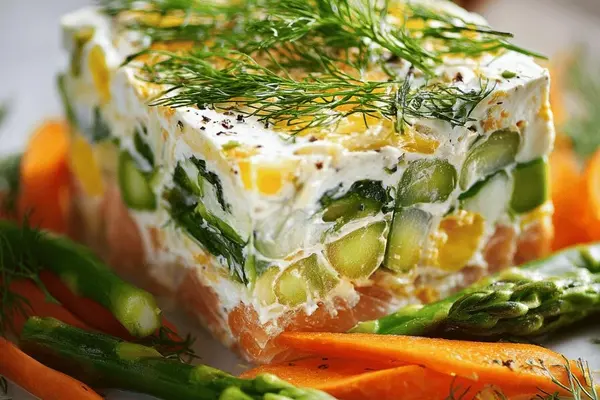
Asparagus and carrot running through the middle—you see them when you slice it, which is the whole point.
Works as an appetizer or a light dinner if you’re not starving. Pair it with sourdough or rye and maybe some pickled cucumber. The acid cuts through the richness.
What You Need for Salmon Terrine
Cod and salmon. Wild if you can get it, but just pick whatever’s actually fresh in your case. The terrine’s only as good as the fish. You’re chopping them up anyway—320 grams of cod, 160 grams of salmon. The ratio matters a bit. More cod than salmon means the flavor stays subtle, not overpowering.
Crème fraîche. Not heavy cream. Not sour cream. Crème fraîche. It stays thick instead of breaking, which is what happens when you overmix the mousse. One 125 ml container, thick stuff.
Four eggs. They bind everything together and add air when you pulse them in. Large ones.
Fresh dill. 45 ml, chopped fine. Don’t use dried. Dried tastes like dust.
Lemon zest. Grated fine. Maybe a teaspoon. It sits there tasting like nothing until you swallow, then it hits you.
Three asparagus spears, cooked until just tender. Not soft. Just tender. And a carrot peeled and cut into sticks the same length. These go in the middle as a surprise when you slice it.
Salt and pepper. Butter for the pan. Parchment paper.
How to Make Salmon Terrine
Preheat your oven to 175°C. Get a 22 by 12 centimeter loaf pan and line it with buttered parchment, leaving some hanging over the edge so you can pull the whole thing out later.
Chop your cod and salmon into chunks. Throw them in the freezer for 15 to 20 minutes. They should be very cold but not actually frozen. This is the part everyone skips and then wonders why their mousse turns grainy.
Pulse the cold fish in a food processor until it’s fine and consistent—not paste, not chunky. Just even. Scrape the sides down. You’ll see lumps hiding in there.
Add your eggs one at a time, pulsing between each one. Pour in the crème fraîche. Pulse maybe three times total to combine it into a thick batter. Stop before it looks smooth. That’s when it gets gluey and breaks.
Stir in the dill and lemon zest with a spatula. Season with salt and pepper. Taste it raw. You’re looking for fresh, herbal, slightly tangy. Adjust now because you can’t fix it after it bakes.
How to Layer and Bake Salmon Terrine
Spread half the fish mixture flat in your prepared pan. It should be even. Take your asparagus and carrot sticks and lay them in neat rows on top—alternating, just one layer. Don’t pack them. There should be room for mousse between each one.
Pour the rest of the fish mixture over the top. Press gently with a spatula to work out air pockets and level the surface. You want it smooth, not compacted.
This is the water bath part. Place your loaf pan inside a larger baking dish. Pour hot water into the bigger pan until it comes halfway up the sides of your terrine. The water keeps everything from drying out and cracking during the bake.
25 to 30 minutes in the oven. You’re watching for the edges to firm up and the center to just set but still feel tender when you press it. Insert a knife—it should come out mostly clean but still moist. If it comes out dry, you’ve already overcooked it and it’ll be grainy when you slice it.
Let it sit in the water bath for another 10 minutes after it comes out of the oven. Then lift the whole thing out and let it cool to room temperature on the counter.
Cover it and put it in the fridge. Minimum four hours. Overnight is better. The terrine firms up properly and the flavors settle into each other.
Salmon Terrine Tips and Common Mistakes
Run a small knife around the inside edges to loosen it, then use the parchment overhang to lift the whole thing out. If you try to invert it or flip it, you’ll break it. Just pull straight up.
Slice with a sharp serrated knife. Wipe the blade between cuts with a damp cloth. Clean slices matter because they fall apart if you saw at them.
The bain-marie is not optional. It’s what keeps this from cracking and drying out. Hot water matters. Use actually hot water, not lukewarm.
Don’t over-process the fish mousse. It happens fast. One second it’s perfect, the next second it’s broken and gluey. Stop early.
Asparagus should be cooked until just tender, not soft. If it’s soft, it’ll turn to mush inside the terrine and you won’t see it when you slice. Carrot the same way.
You could make this with smoked salmon instead of fresh—but then do a smoked salmon terrine with different herbs, like tarragon instead of dill. Don’t mix. It gets confused.
Cold fish before pulsing. This is worth repeating because it’s the one thing that determines whether your mousse comes out clean or grainy.
Salmon Terrine with Cod, Asparagus & Dill
Prep:
35 min
Cook:
25 min
Total:
4h 20min
Servings:
6 to 8 servings
Ingredients
- 320 g fresh wild cod fillets cut into chunks
- 160 g fresh wild salmon fillets chopped roughly
- 4 large eggs
- 125 ml crème fraîche (thick, not whipping cream)
- 45 ml finely chopped fresh dill
- 1 lemon zest grated finely
- 3 fresh asparagus spears cooked until just tender
- 1 peeled carrot cooked, cut into sticks matching asparagus length
- 3 ml salt
- Freshly ground black pepper to taste
- Butter for greasing
- Parchment paper
Method
- 1 Chill the fish pieces in freezer for 15-20 minutes until very cold but not frozen solid. This firms up fish and helps smoother puree, avoids warming in processor.
- 2 Preheat oven to 175°C (350°F). Prepare mold by lining a 22 x 12 cm loaf pan with buttered parchment leaving an overhang on two sides for easy lifting.
- 3 In a food processor pulse the cod and salmon together briefly until fine consistent texture but not turning to paste. Scrape sides down to avoid lumps.
- 4 Add eggs one by one, pulsing between additions. Pour in crème fraîche. Pulse 2-3 times to combine into thick batter - avoid over-processing or mixture becomes gluey.
- 5 Stir in dill and grated lemon zest with a spatula. Season with salt and pepper. Taste the mixture raw—should be fresh, herbal, slightly tangy.
- 6 Spread half the fish mixture evenly in the mold. Layer the asparagus and carrot sticks alternately on top in neat rows. Don’t crowd, just one layer.
- 7 Cover with remaining fish mix. Press gently with spatula to remove air pockets and level the surface.
- 8 Place the loaf pan in a larger baking dish. Pour hot water into the larger pan until it reaches halfway up the sides of the terrine mold—the bain-marie prevents drying and cracks.
- 9 Bake in center of oven for 25-30 minutes. Look for the terrine edges to firm up and center just set but still tender. A knife inserted should come out mostly clean but moist. Avoid overcooking or it crumbles.
- 10 Remove from oven and let cool in water bath 10 min, then lift from bath and cool to room temperature. Cover and chill minimum 4 hours, preferably overnight to develop firm texture.
- 11 To unmold, run a small knife around inside edges, use parchment overhang to lift. Slice with a sharp serrated knife, wipe between cuts for clean slices.
- 12 Serve chilled, slathered on crusty sourdough or rye, perhaps alongside pickled cucumber or lemon aioli to cut richness.
Nutritional information
Calories
220
Protein
22g
Carbs
3g
Fat
14g
Frequently Asked Questions About Salmon Terrine
Can I use frozen fish? Thaw it completely first. Frozen fish releases water when it cooks and the terrine gets watery. Not worth it.
What if I don’t have crème fraîche? You could use Greek yogurt. It won’t be exactly the same texture, but it works. Don’t use heavy cream—it breaks when you mix it. Don’t use sour cream either.
How long does it keep? Three days in the fridge, wrapped tight. You could freeze it but it gets grainy when it thaws. Not recommended.
Can I use a different mold shape? Yeah. Whatever loaf pan you have. Just adjust the bake time depending on how wide it is. Wider means faster. Watch it carefully the first time.
Should I peel the skin off the fish first? Yes. Pull it off before you chop. The skin doesn’t puree well and you’ll get little shreds in your mousse.
What goes with salmon and cod terrine besides bread? Pickled cucumber. Lemon aioli. Nothing heavy. The point is to let the fish taste like fish. A thin slice, cold, on something with crunch.
Can I make this without the vegetables in the middle? You could. It won’t be as pretty when you slice it, but the mousse itself is still good. The asparagus and carrot are there for looks and texture.
Is this actually French? Yeah. It’s terrine de poisson or something close to it. The technique came from French charcuterie—you make a forcemeat and bake it in a water bath. They do it with pork. Fish is the same idea.
You’ll Love These Too
Explore all →
Carrot Ginger Rum Cocktail with Elderflower

Black Eyed Peas with Smoked Pork
Lemon Fennel Roasted Chicken Breasts
Creamy Coconut Mussels with Lemongrass

Chocolate Cake House with Cream Cheese Frosting

Pineapple Cilantro Slaw with Creamy Mayo

Whole Wheat Bran Loaf with Honey & Apricots

Fingerling Potato Salad with Lemon & Fresh Herbs

Dolmas with Ground Veal and Walnuts

Nutty Reindeer Rice Cakes with Hazelnut

Lemon Pavlova with Yuzu Filling Recipe

Chocolate Swirl Babka with Espresso
Caramel Apple Cheesecake Dip Recipe

BBQ Chicken Marinade with Smoked Paprika

Fried Cabbage Dish with Bacon and Onion

Creamy Pumpkin Pie Shake with Avocado

Everything Bagel Breakfast Casserole Recipe

Kitchen Sink Cookies with Chocolate Chips

Cherry Pie with Yogurt Crust Recipe